Artwork
Jacob Meeting Rachel
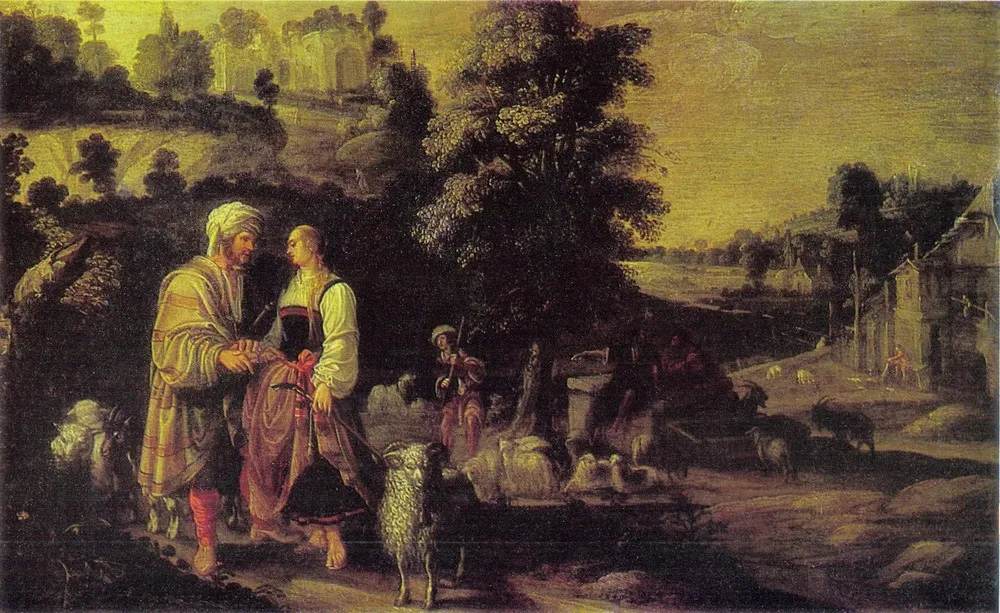
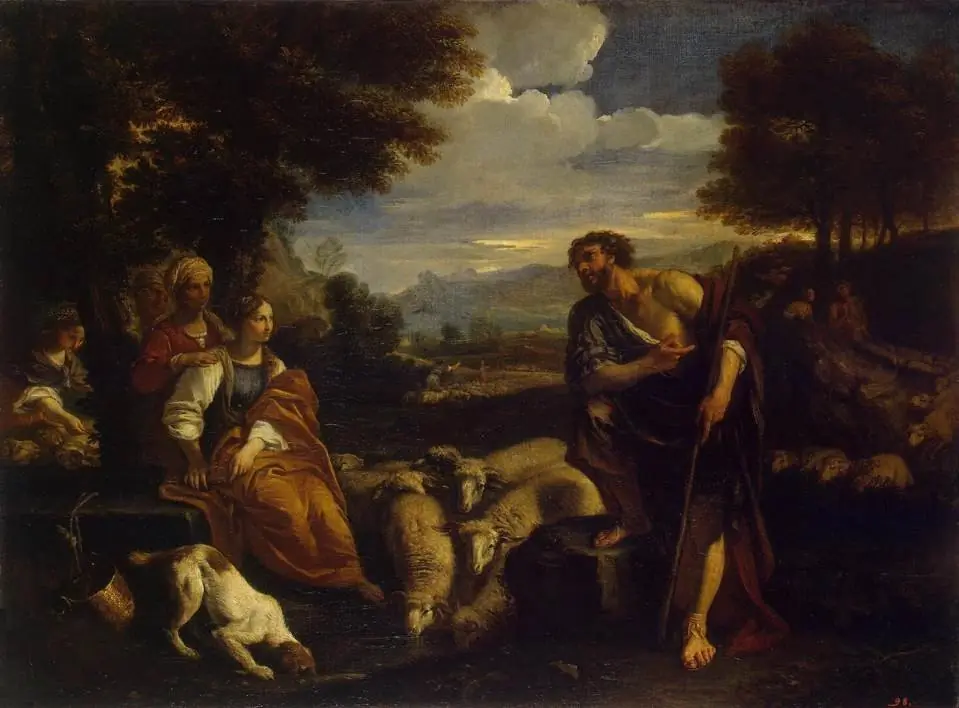
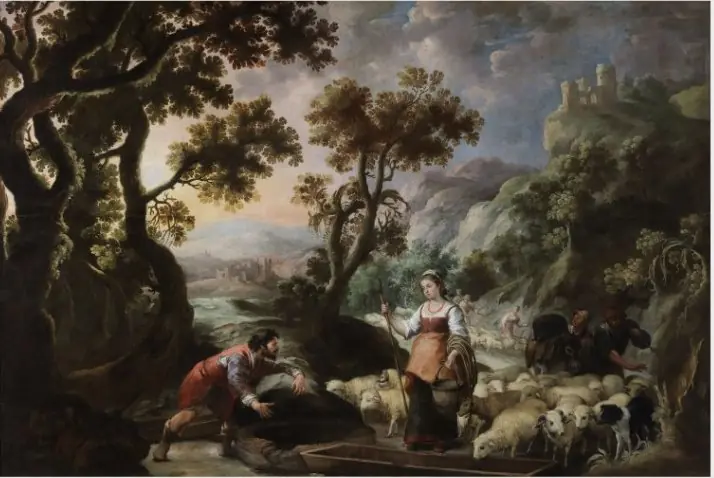
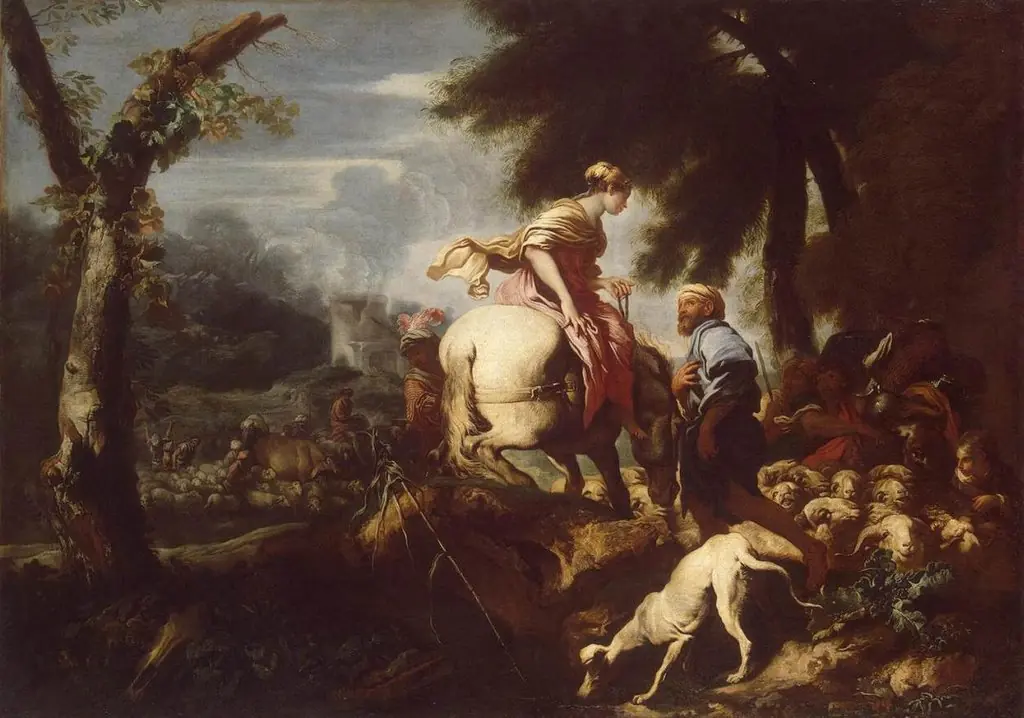
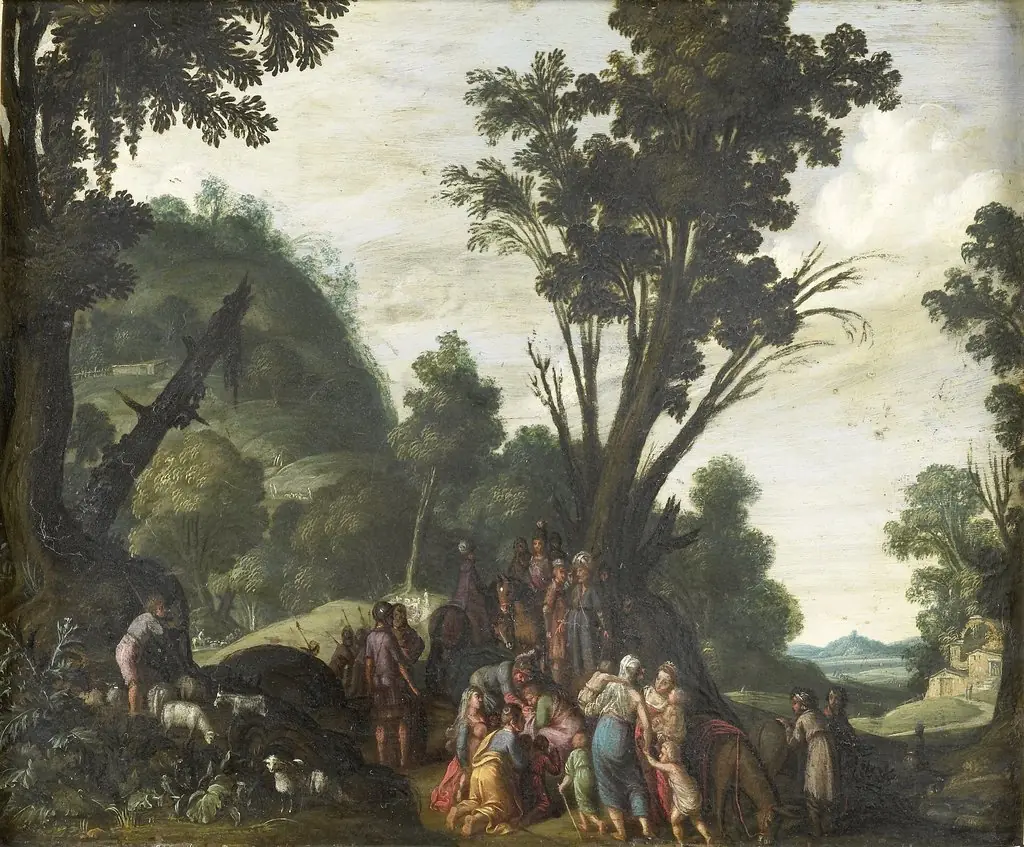
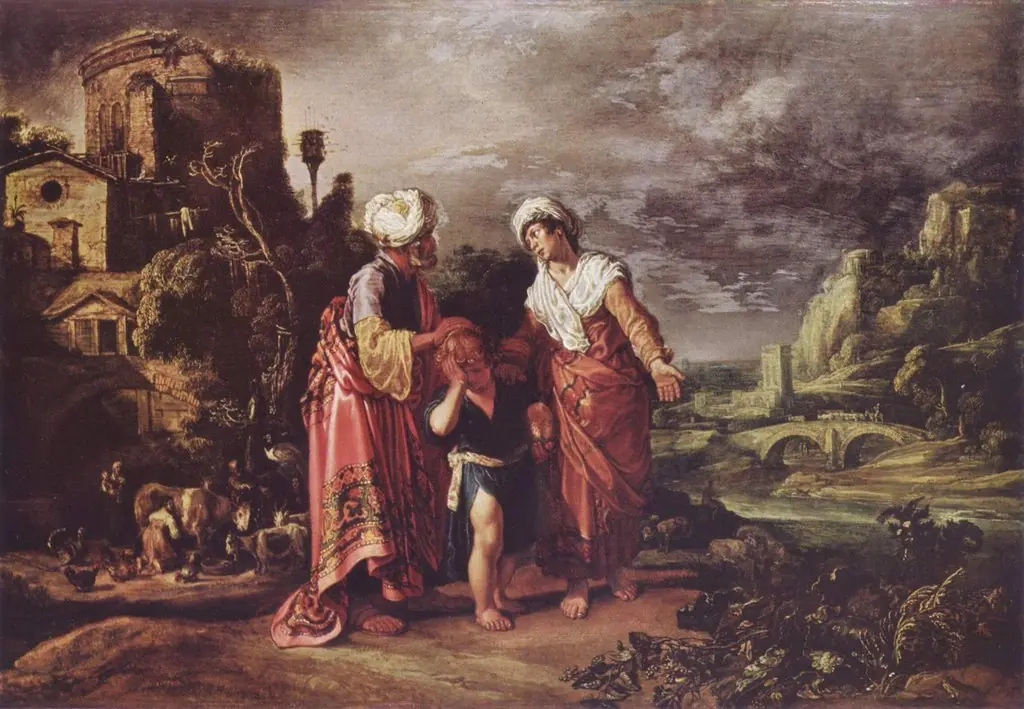
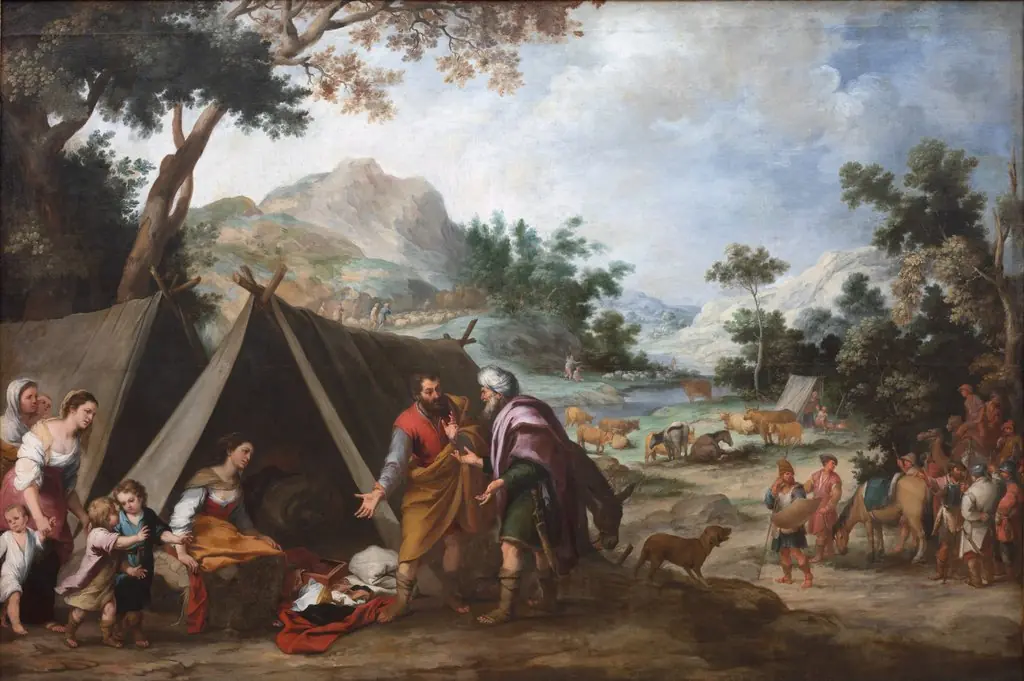
Jacob Meeting Rachel is an oil painting by the Dutch Golden Age artist Jacques Waben. It dates from 1624 and is held in the collection of the Hermitage Museum.
About this work
Overview
Painted in 1624 by Dutch artist Jacques Waben, this oil-on-canvas work depicts a biblical episode from the Book of Genesis. The scene captures Jacob’s first encounter with Rachel, set in a pastoral landscape. The painting is part of the collection at the State Hermitage Museum in Saint Petersburg, where it has been held since the 18th century.
Subject & Meaning
The composition emphasizes personal connection within a broader communal setting, aligning with Protestant interpretations of biblical family life.
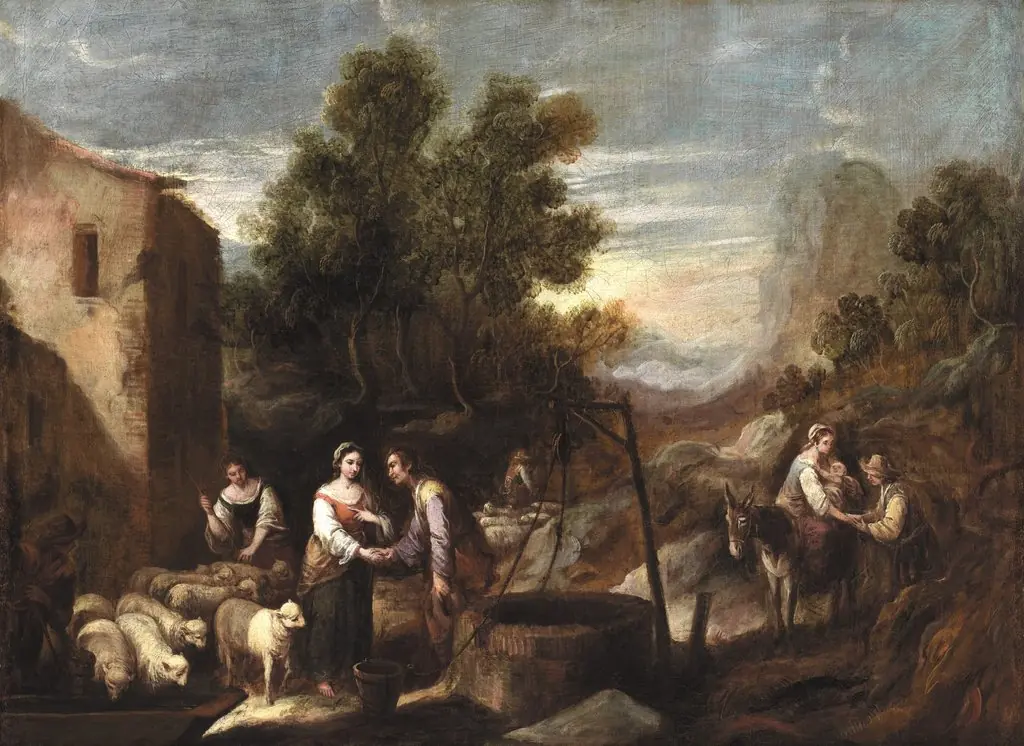
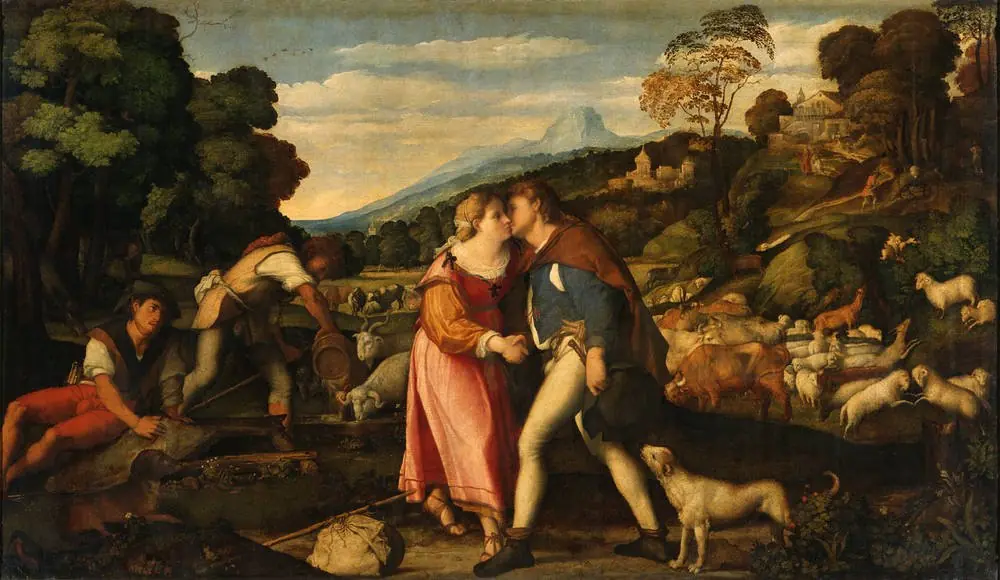
The painting illustrates the moment Jacob meets Rachel at a well, as described in Genesis 29. Their clasped hands signify the beginning of their union, a pivotal event in the lineage of the Israelites. Surrounding figures tend to flocks, reinforcing the pastoral context of the narrative. The composition emphasizes personal connection within a broader communal setting, aligning with Protestant interpretations of biblical family life.
Technique & Style
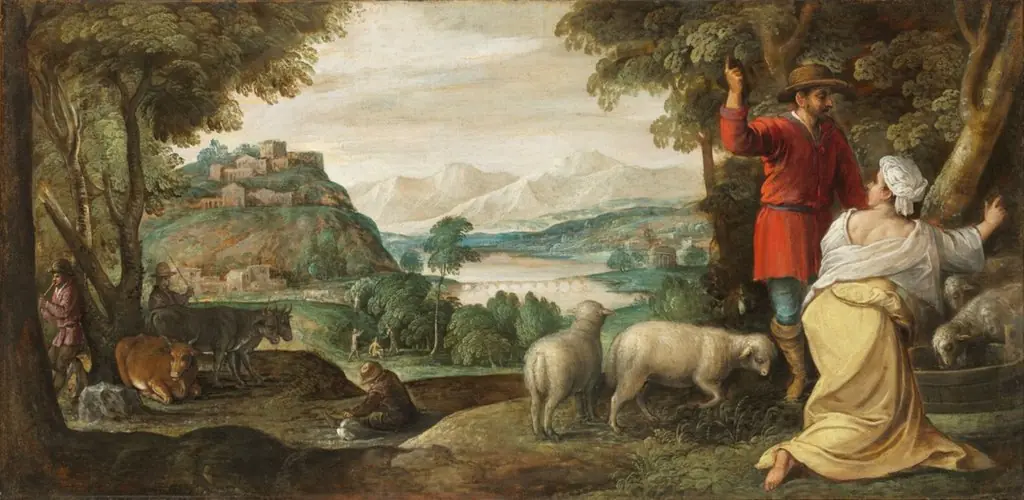
Waben employs chiaroscuro to isolate the central figures against a dimmer landscape, enhancing their emotional presence. Warm light falls on Jacob’s yellow robe and Rachel’s sash, drawing attention to their interaction. The brushwork is precise yet unobtrusive, with soft transitions between tones. Background elements like the bridge and distant buildings are rendered with subtle detail, grounding the scene in a believable environment without distracting from the main figures.
History & Provenance
Commissioned during the Dutch Golden Age, the painting entered the Hermitage collection in the late 1700s, likely through imperial acquisitions of Northern European works. Its presence in Russia reflects Catherine the Great’s interest in biblical and moral narratives from Western art. No significant alterations or restorations are documented, and it has remained in stable condition since its acquisition.
Context
Waben’s work emerged in a period when Dutch artists increasingly turned to biblical subjects for private and civic patrons, moving away from purely secular themes. Unlike grand historical paintings, this piece favors intimacy and quiet observation. Its composition reflects the influence of Flemish realism and the Dutch emphasis on naturalism, blending religious narrative with everyday rural life.
Legacy
Though not widely reproduced, the painting exemplifies how 17th-century Dutch painters interpreted biblical stories with psychological nuance and environmental authenticity. It contributes to a broader tradition of domesticated sacred imagery, where divine moments unfold in ordinary settings. Its preservation in a major European museum underscores its role as a quiet but significant artifact of Protestant visual culture.
Artist & collection