Artwork
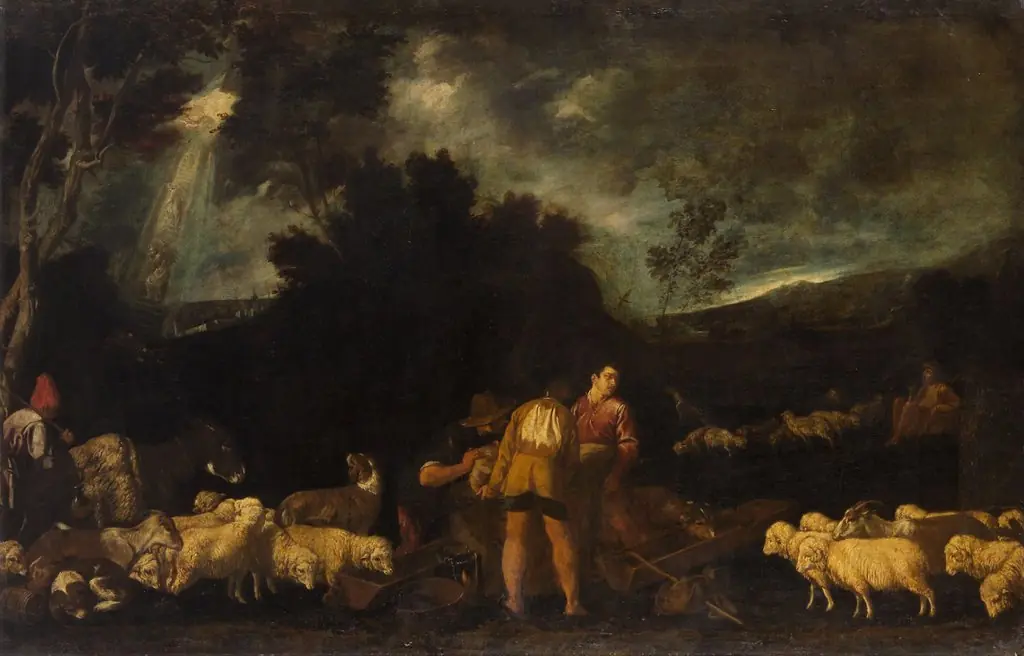
Jacob meeting Rachel at the Well
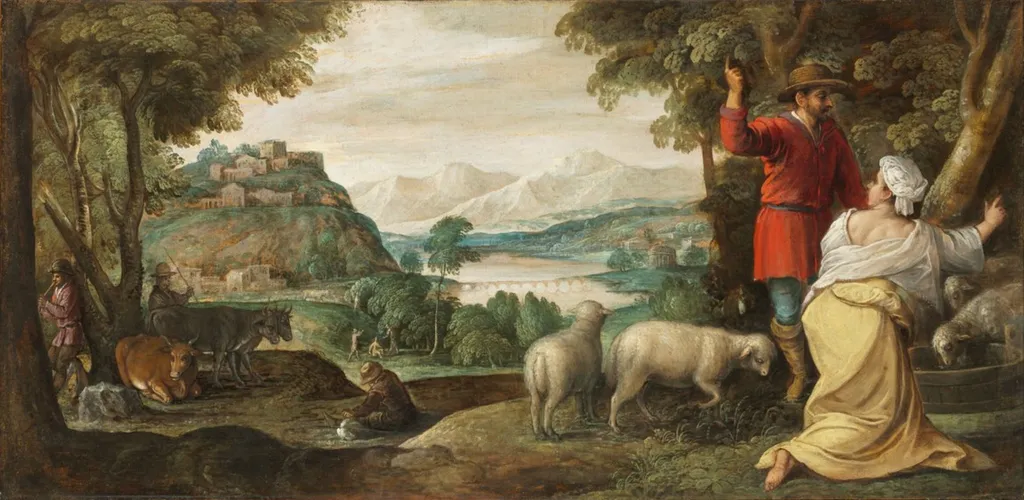
Jacob meeting Rachel at the Well is an oil painting by the Mannerist artist Paolo Fiammingo. It dates from 1590 and is held in the collection of the Museum of Fine Arts, Budapest.
About this work
Overview
The painting resides in the Museum of Fine Arts, Budapest, where it represents the fusion of Northern European detail with Italian compositional traditions.
Painted in 1590 by Paolo Fiammingo, a Flemish artist working in Venice, this oil-on-canvas work depicts a biblical moment from Genesis. Fiammingo, known for integrating narrative scenes into expansive landscapes, employed a Mannerist approach shaped by Venetian masters like Tintoretto and Veronese. The painting resides in the Museum of Fine Arts, Budapest, where it represents the fusion of Northern European detail with Italian compositional traditions.
Subject & Meaning
The scene illustrates Jacob’s first encounter with Rachel, as described in Genesis 29. Jacob, dressed in red, gestures toward Rachel, who kneels by a well, her head covered and dress yellow. The moment signifies divine providence and the beginning of a key lineage. Surrounding figures—a shepherd tending sheep and grazing flocks—reinforce the pastoral setting and the cultural importance of water sources in ancient Near Eastern life.
Technique & Style
Fiammingo used layered oil glazes to achieve luminous color transitions, particularly in the fabric of Rachel’s dress and the shadows of the landscape. Visible brushwork adds texture to foliage and skin tones, while the composition balances figures within a deep, atmospheric space. His style reflects Venetian influences—rich hues and loose handling—yet retains Northern precision in rendering details like wool, stone, and foliage.
History & Provenance
Created during Fiammingo’s time in Venice, the painting likely entered Hungarian collections in the 18th or 19th century, possibly through aristocratic or ecclesiastical channels. It was acquired by the Museum of Fine Arts, Budapest, in the early 20th century. Its documented history is limited, but its stylistic traits align with other works from Fiammingo’s mature period, confirming its attribution and date.
Context
In late 16th-century Venice, Flemish artists like Fiammingo adapted to local tastes by blending Northern realism with Italian grandeur. Religious subjects remained popular among patrons, but were increasingly framed within elaborate landscapes. This painting reflects a trend where biblical narratives were embedded in idealized natural settings, appealing to both devotional and aesthetic sensibilities of the time.
Legacy
Though not widely exhibited outside Hungary, the painting exemplifies the cross-cultural artistic exchange between Flanders and Italy during the Renaissance. Fiammingo’s synthesis of narrative clarity and environmental richness influenced lesser-known Venetian painters of his circle. Today, it serves as a quiet testament to the mobility of artistic styles across Europe in the late 1500s.
Artist & collection
Artist
Pauwels Franck, known in Italy as Paolo Fiammingo and Paolo Franceschi (c. 1540–1596), was a Flemish painter, who, after training in Antwerp, was active in Venice for most of his life. He is mainly known for his…

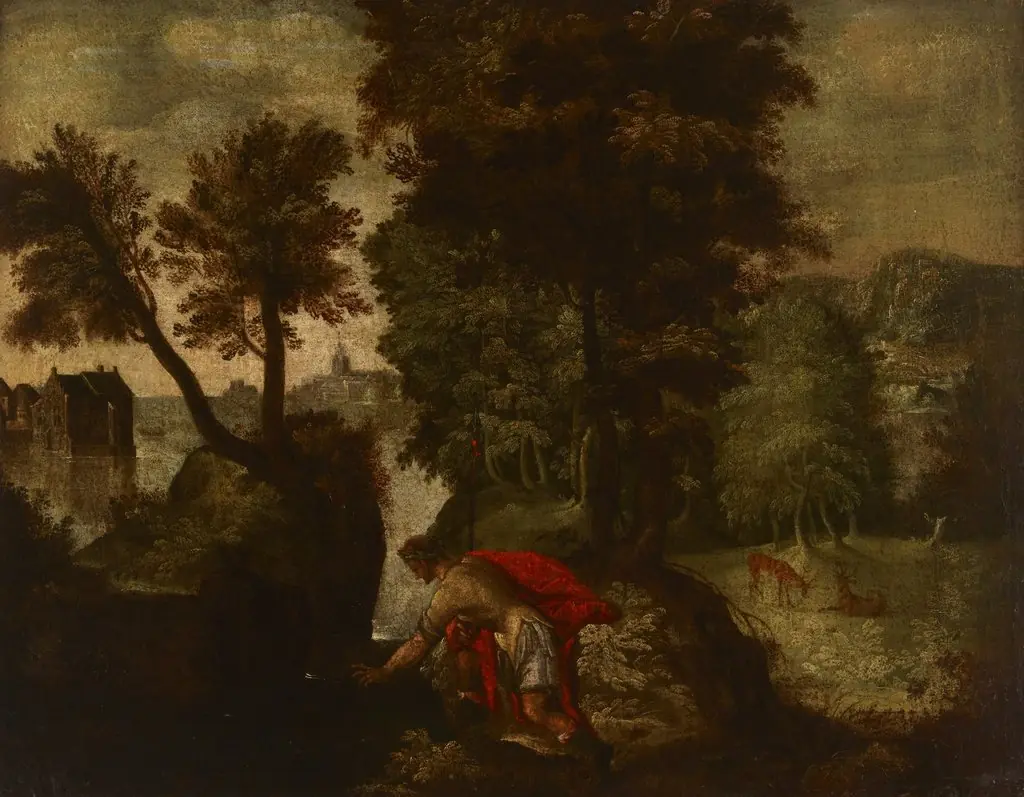 Landscape with a Kneeling Knight (Theseus?)
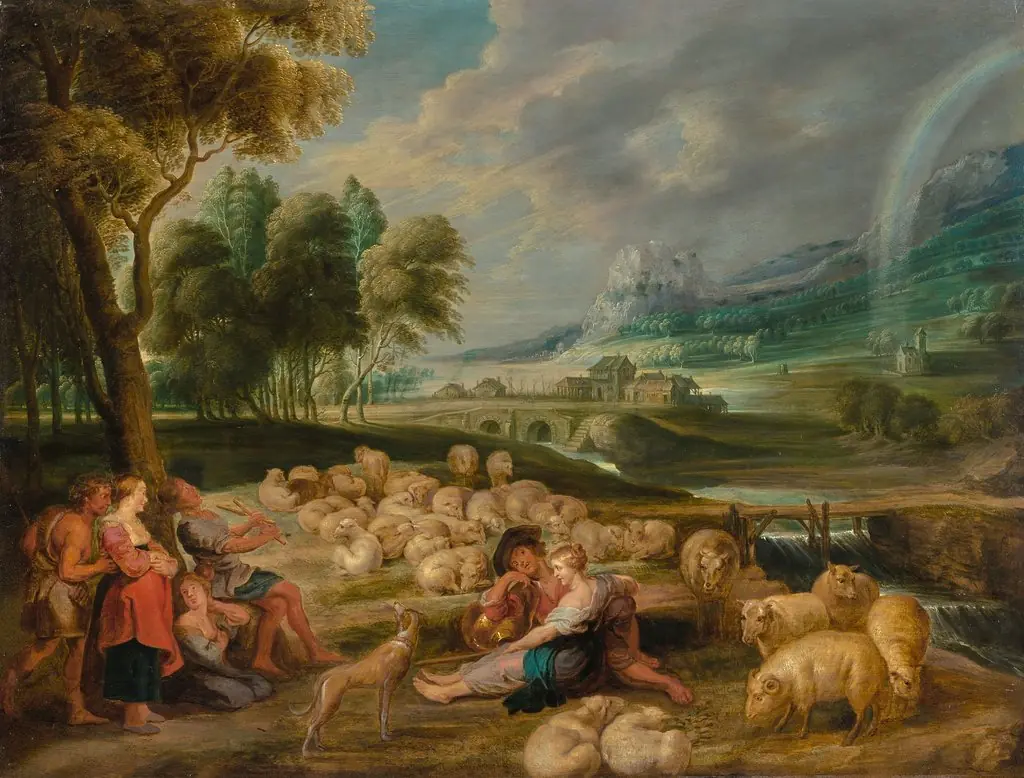 Landscape with a rainbow
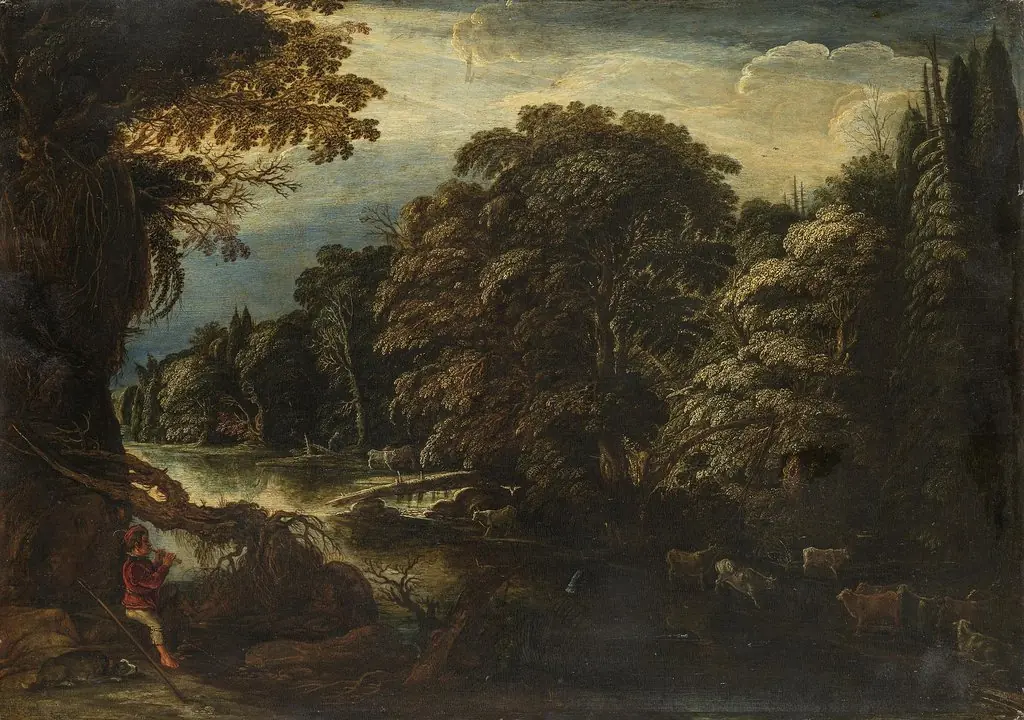 Forest
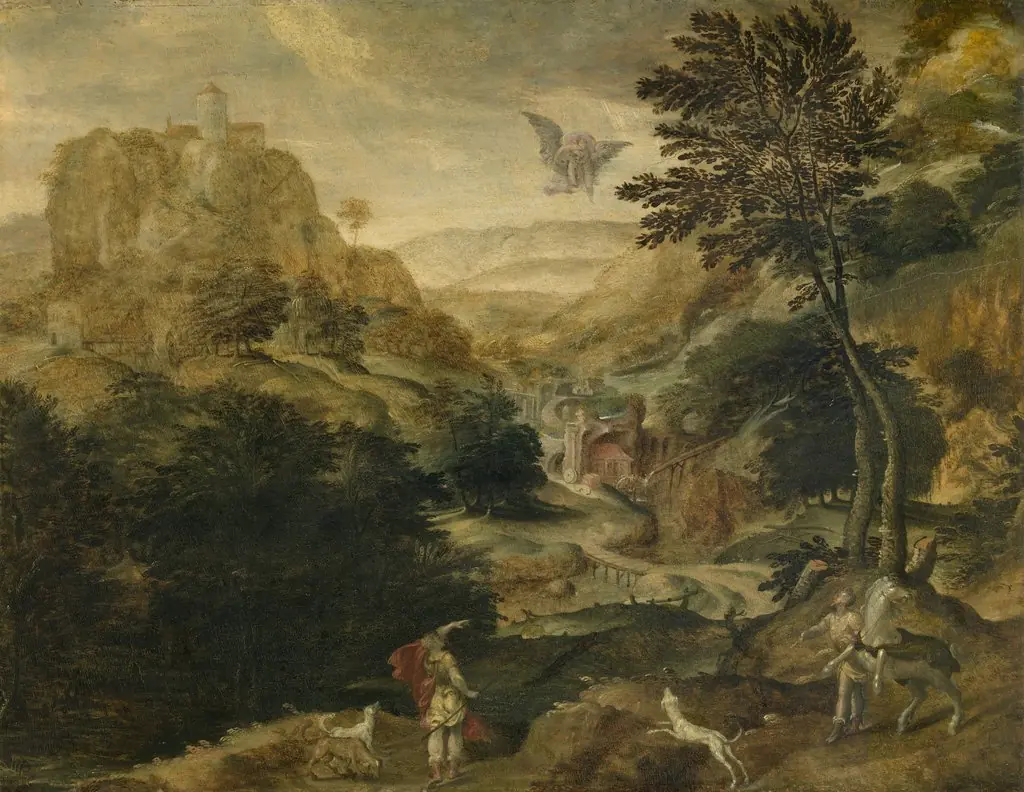 Abduction of Ganymedes
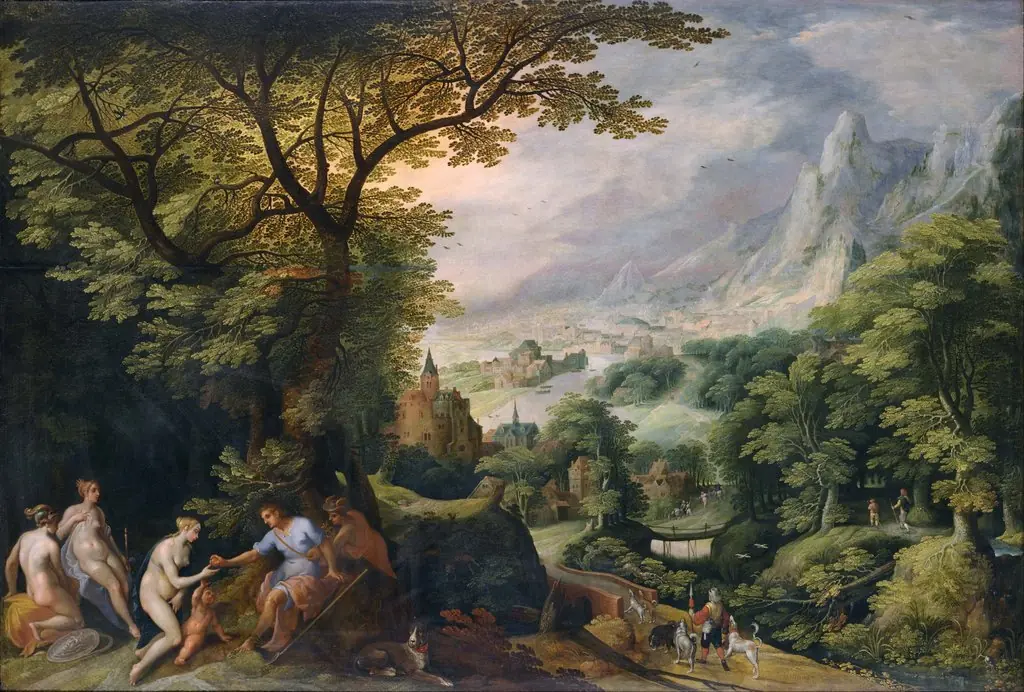 Landscape with the Judgement of Paris
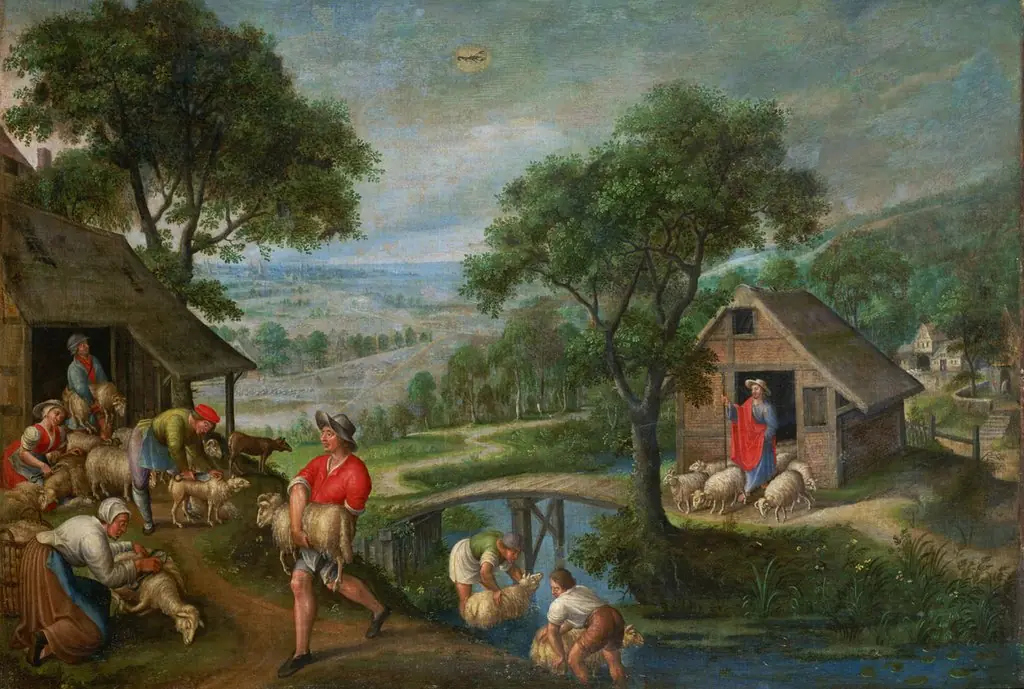 Parable of Christ as the Good Shepherd (June)
 Landschaft mit Merkur und Argus
 Forest Landscape with Hunters
 Landscape with Mercury and Argus
 The Sower, Parable of Christ
 Jacob at the Well (In the background: Jakob's dream of the heavenly ladder)