Artwork
Crucifixion of a Thief
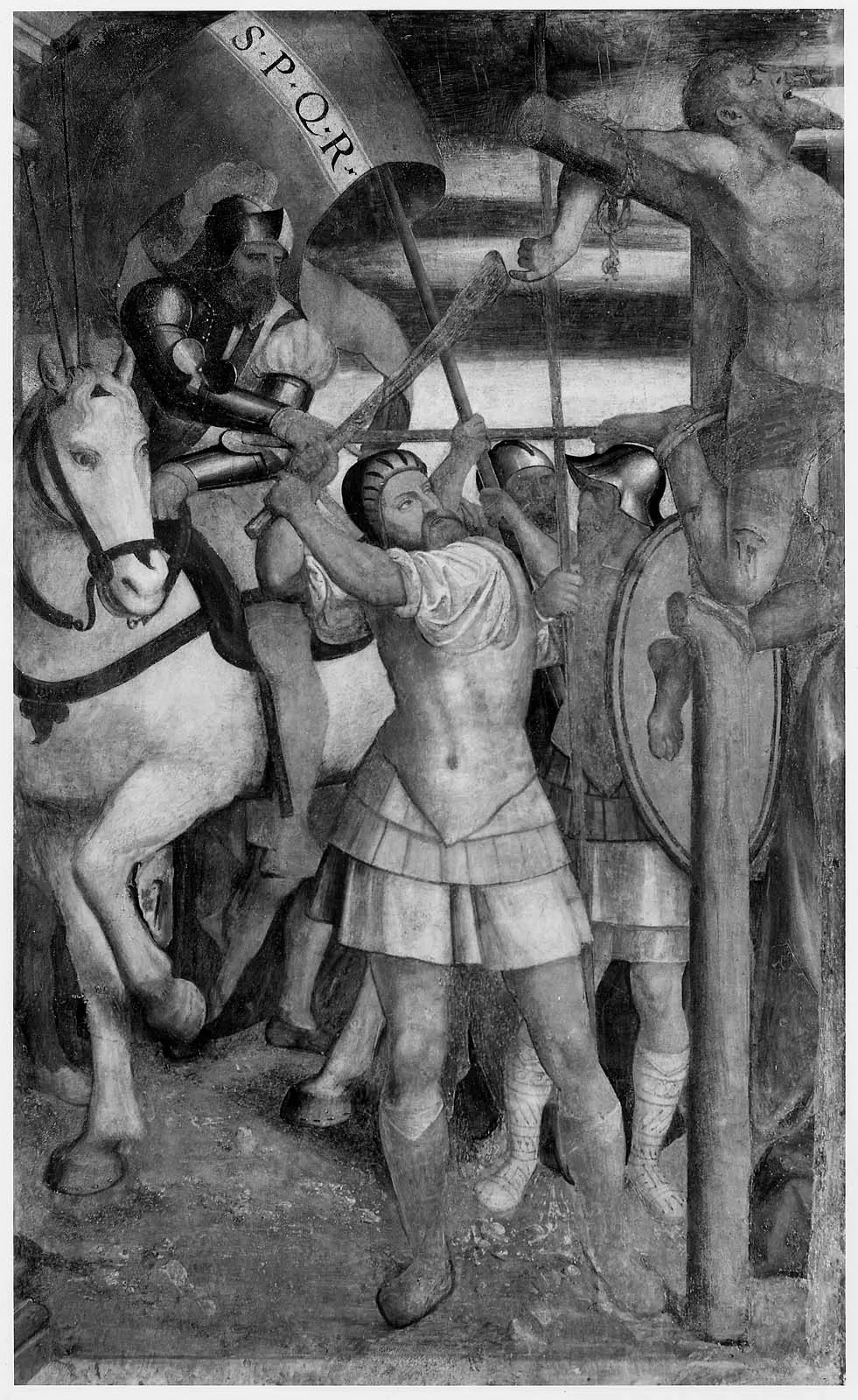
Crucifixion of a Thief is an unspecified painting by Paolo da Caylina il Giovane. It dates from 1525 and is held in the collection of the Museum of Fine Arts Boston.
About this work
Overview
Paolo da Caylina il Giovane’s early‑sixteenth‑century work, Crucifixion of a Thief, portrays a moment of execution set against a somber backdrop. The canvas, now in the Museum of Fine Arts, Boston, measures the suffering of a condemned man on a cross, surrounded by armed soldiers whose presence intensifies the scene’s tension.
Subject & Meaning
The composition centers on a thief suspended from a cross in the upper right, his twisted form conveying acute pain. A cluster of soldiers occupies the foreground, their gazes alternating between curiosity and disdain, suggesting a commentary on the brutality of Roman punishment and the broader theological theme of redemption through suffering.
Technique & Style
Caylina employs pronounced chiaroscuro, allowing stark light to illuminate the central figures while the surrounding space recedes into darkness. This contrast creates depth and heightens emotional impact. The figures are rendered with detailed armor and weaponry, and the painter’s handling of musculature and drapery reflects the influence of High Renaissance anatomical study.
History & Provenance
Executed around 1525, the painting entered the collection of the Museum of Fine Arts, Boston, through acquisition in the early twentieth century. Its attribution to Paolo da Caylina il Giovane, a Lombard artist active in the Venetian sphere, is supported by stylistic analysis and archival references linking the work to his workshop.
Context
Created during a period when religious narratives were frequently depicted for devotional and didactic purposes, the work aligns with contemporary Italian practices of dramatizing biblical episodes. The emphasis on a peripheral criminal’s crucifixion reflects a broader interest in the marginal figures of the Passion, offering viewers a stark visual meditation on justice and mercy.
Artist & collection
Artist
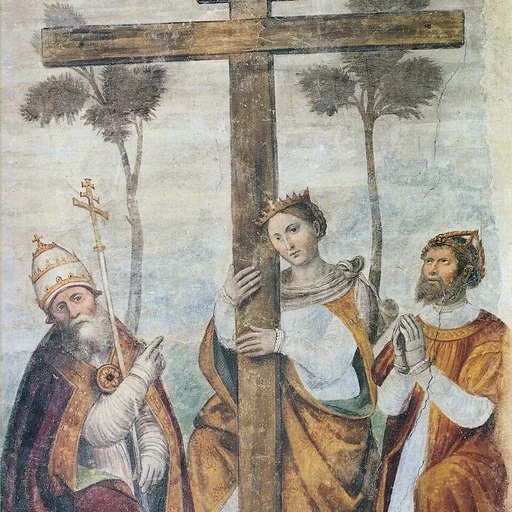
Paolo da Caylina il Giovane (1485–1545) was an artist, born in Brescia.

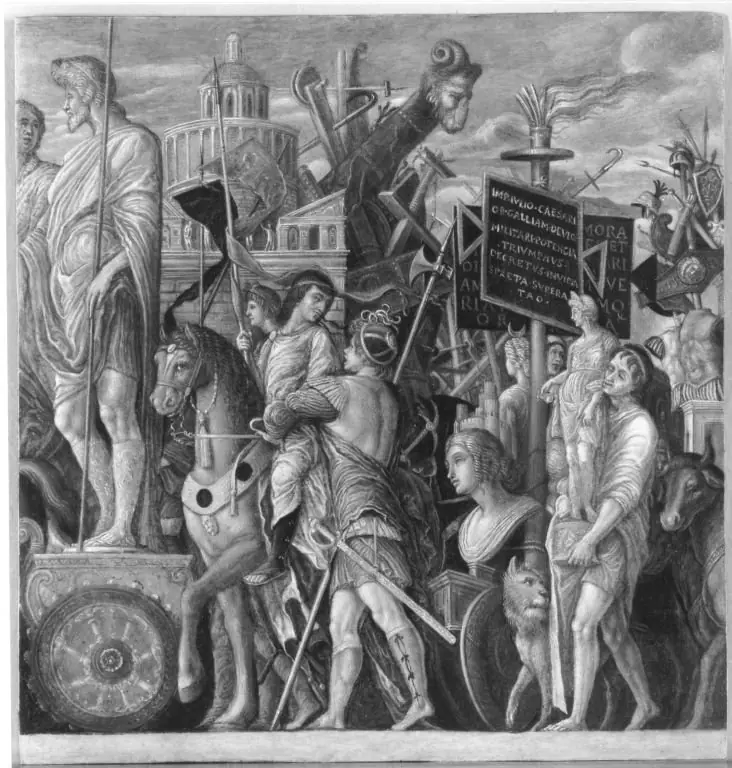 Triumphs of Caesar I
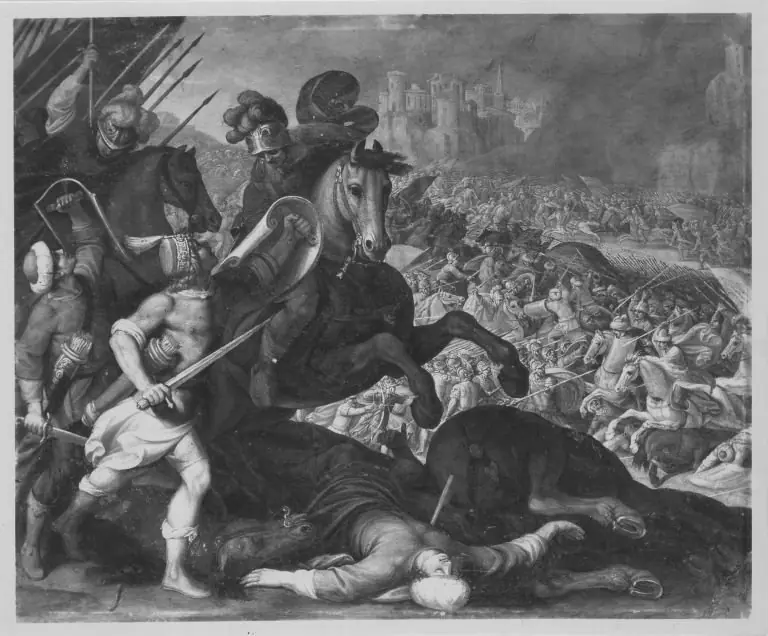 Schlachtenbild
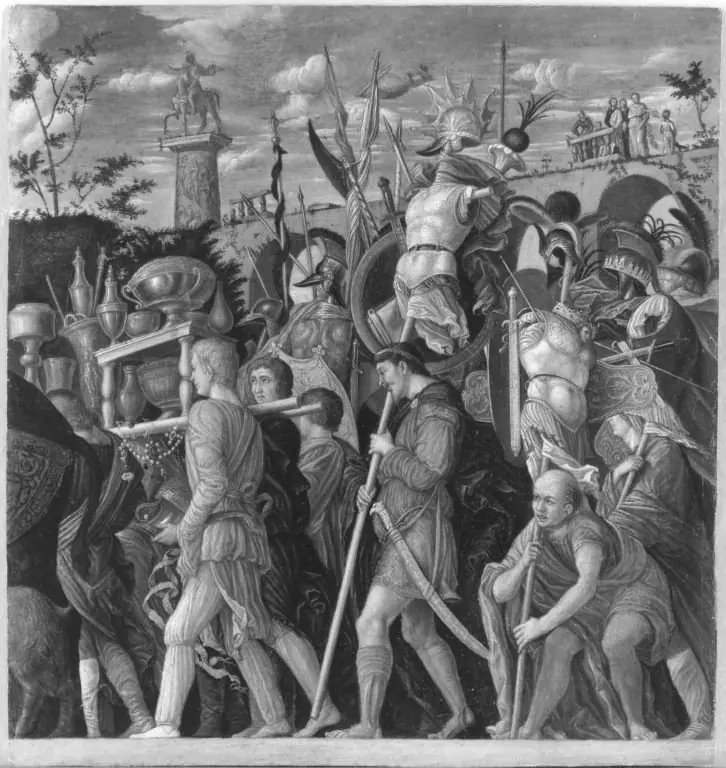 Triumphs of Caesar III
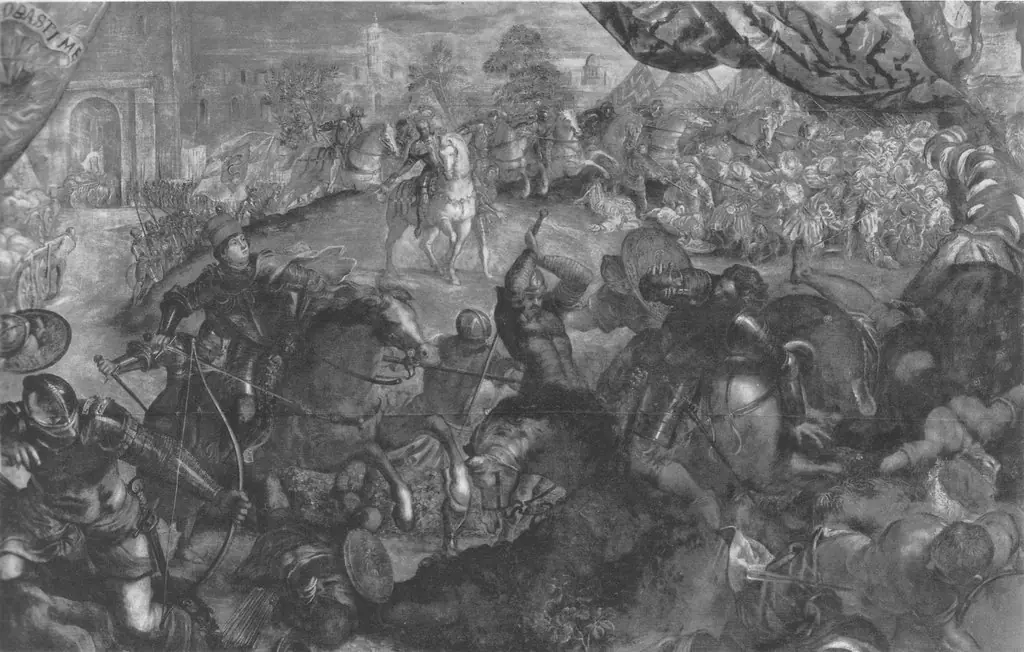 Gonzaga-Zyklus, I. Reihe, 3. Entsetzung von Legnano
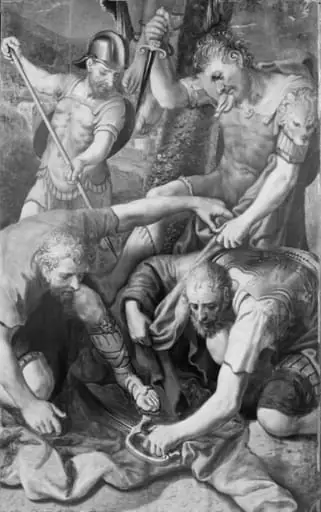 The Soldiers Fighting over Christ's Cloak
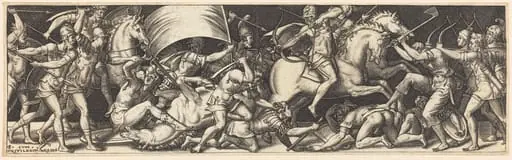 Battle of Horsemen and Foot Soldiers
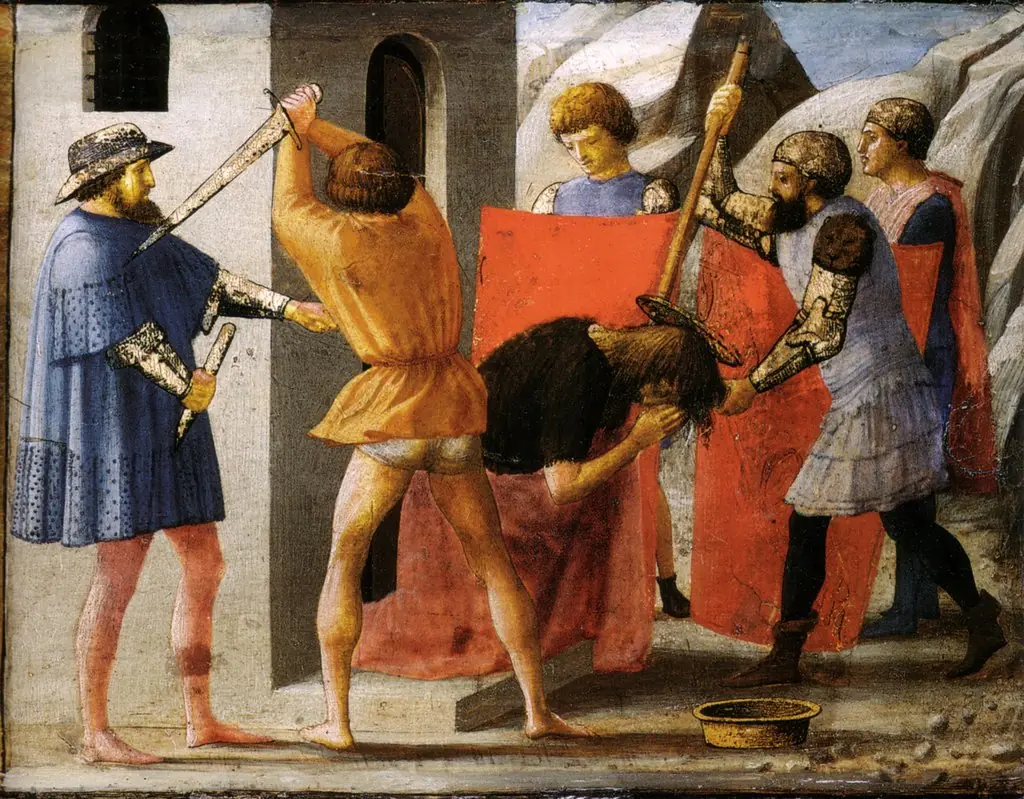 The Decapitation of Saint John the Baptist
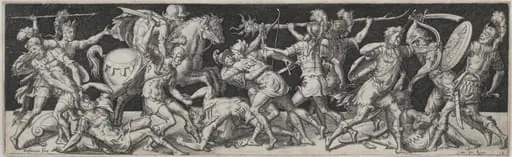 Combats and Triumphs No. 10
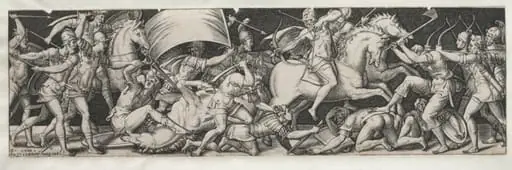 Combats and Triumphs No. 9
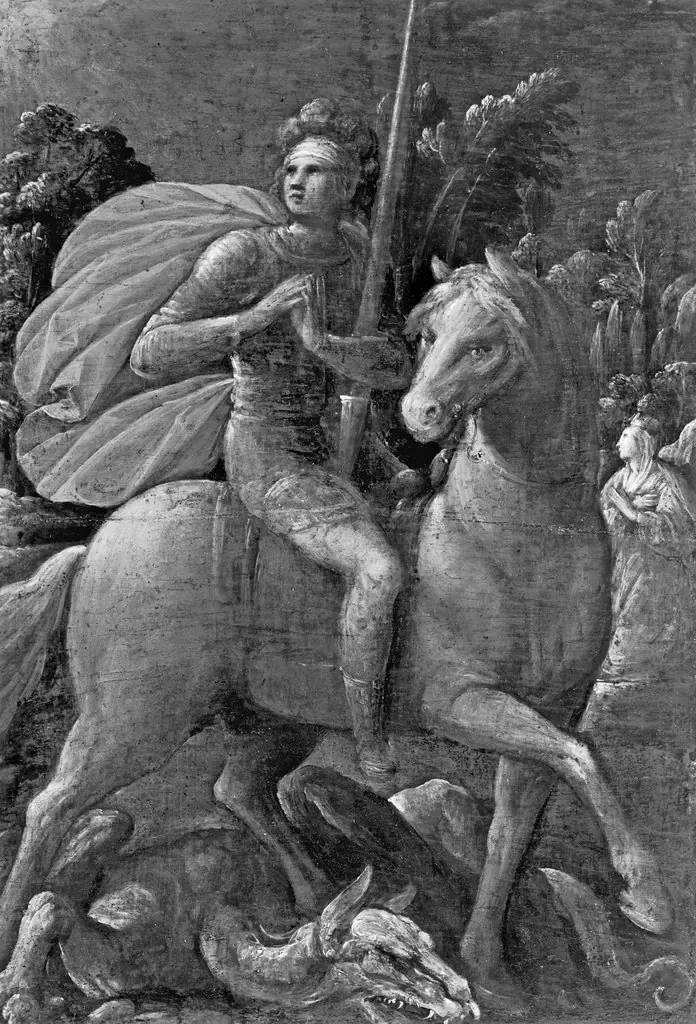 Saint George and the Dragon
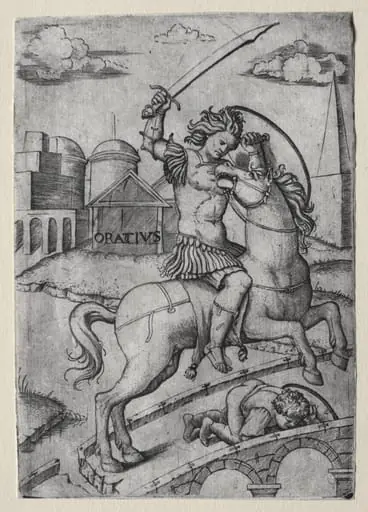 Horatius Cocles Defending the Sublician Bridge