Artwork
Judas Betraying Christ
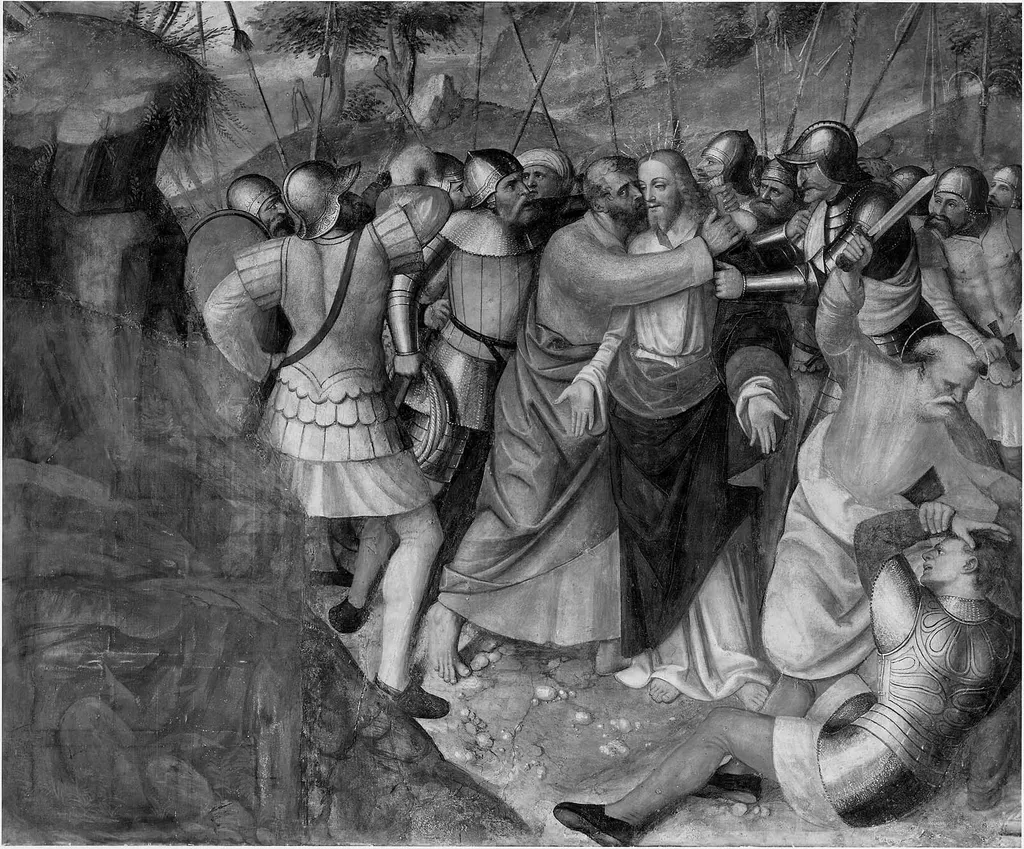
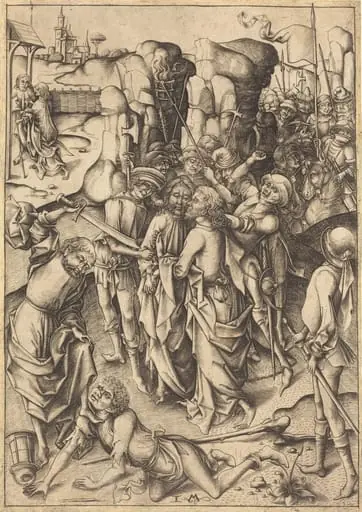
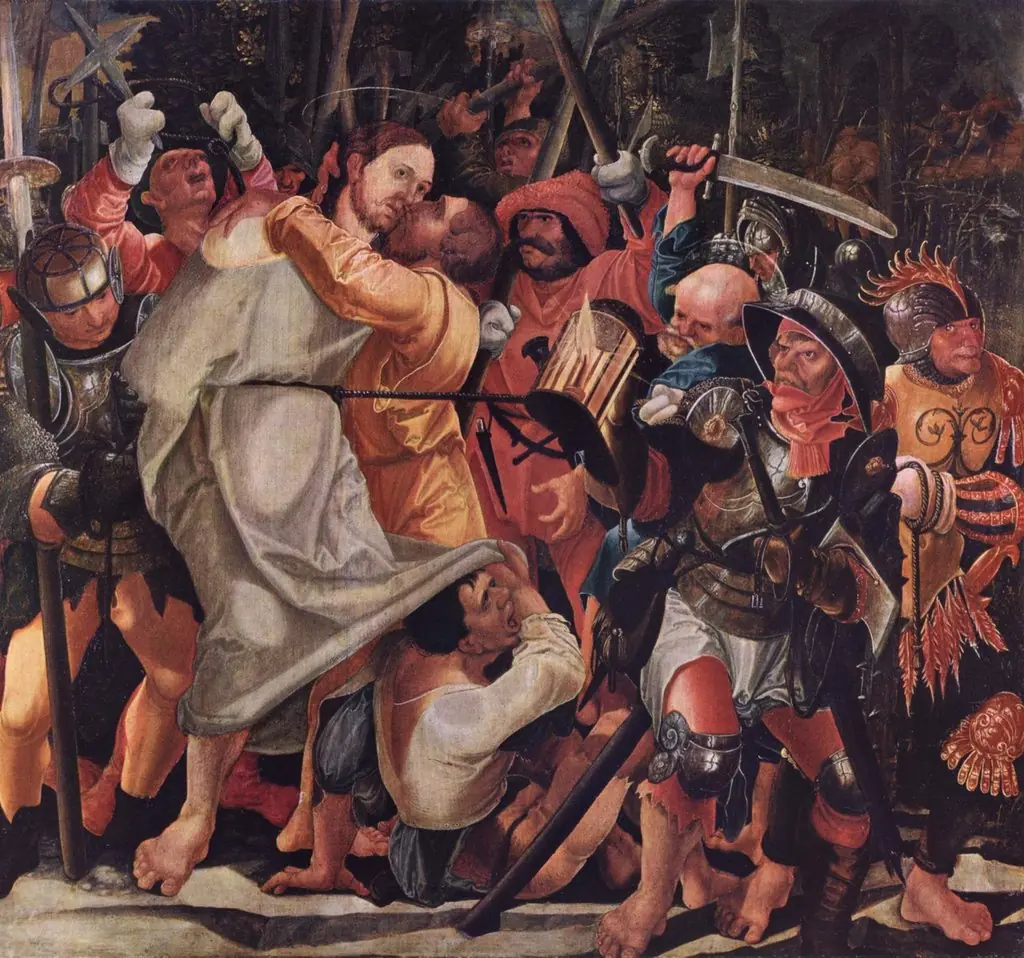
Judas Betraying Christ is an unspecified painting by Paolo da Caylina il Giovane. It dates from 1525 and is held in the collection of the Museum of Fine Arts Boston.
About this work
Overview
The composition captures a tense, intimate encounter in an open landscape, emphasizing emotional gravity over grandeur.
Painted around 1525 by Paolo da Caylina il Giovane, this work depicts the moment of Christ’s betrayal by Judas. It resides in the Museum of Fine Arts, Boston, as part of its European painting collection. The composition captures a tense, intimate encounter in an open landscape, emphasizing emotional gravity over grandeur. The scene is rendered with restrained tones and careful lighting to heighten its narrative weight.
Subject & Meaning
The painting illustrates the biblical moment when Judas identifies Jesus to Roman soldiers with a kiss. Christ, calm and cloaked in a simple robe, stands as the focal point, while Judas, clad in armor and helmet, appears militarized and alienated. Surrounding figures reach toward Christ, conveying chaos and urgency. The contrast between Christ’s serenity and Judas’s armored form underscores themes of loyalty and treachery.
Technique & Style
The artist employs chiaroscuro to model forms and direct attention to the central figures, using subtle shifts in light and shadow to create volume. The palette is dominated by earthy browns and grays, avoiding vivid hues to sustain a somber mood. Figures are tightly grouped, their gestures overlapping to suggest crowded tension. The background, with distant hills and sparse trees, recedes softly, keeping focus on the human drama.
History & Provenance
The painting entered the Museum of Fine Arts, Boston, in the early 20th century as part of a broader acquisition of Italian Renaissance works. Its attribution to Paolo da Caylina il Giovane has been consistently supported by stylistic analysis and archival records. Little is known of its earlier ownership, but its condition suggests it was preserved in a private or ecclesiastical collection before its museum acquisition.
Context
Created during the High Renaissance, the painting reflects regional Lombard traditions that favored emotional immediacy over idealized forms. While contemporaries like Leonardo explored psychological depth, Caylina’s approach remains grounded in narrative clarity and tactile realism. The choice to depict Judas in armor may reflect contemporary anxieties about violence and political betrayal in early 16th-century Italy.
Legacy
Though not widely reproduced, the work exemplifies how smaller Italian studios adapted Renaissance innovations for devotional purposes. Its restrained palette and focus on psychological tension influenced later regional painters seeking emotional authenticity over theatricality. Today, it serves as a quiet but potent example of how religious narratives were rendered with human vulnerability in early 16th-century northern Italy.
Own this work as a print
Artist & collection

Artist
Paolo da Caylina il Giovane (1485–1545) was an artist, born in Brescia.