Artwork
Mourning over the Dead Body of Christ
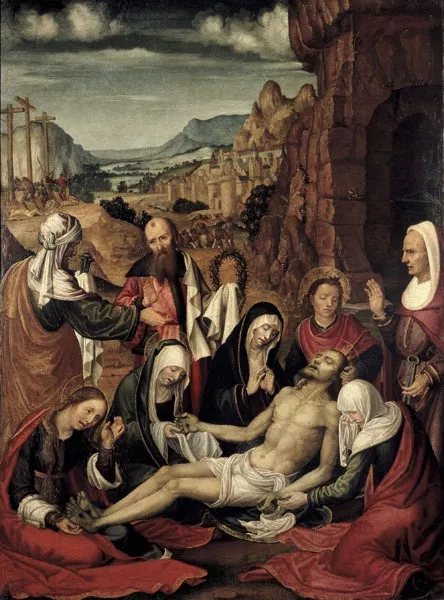
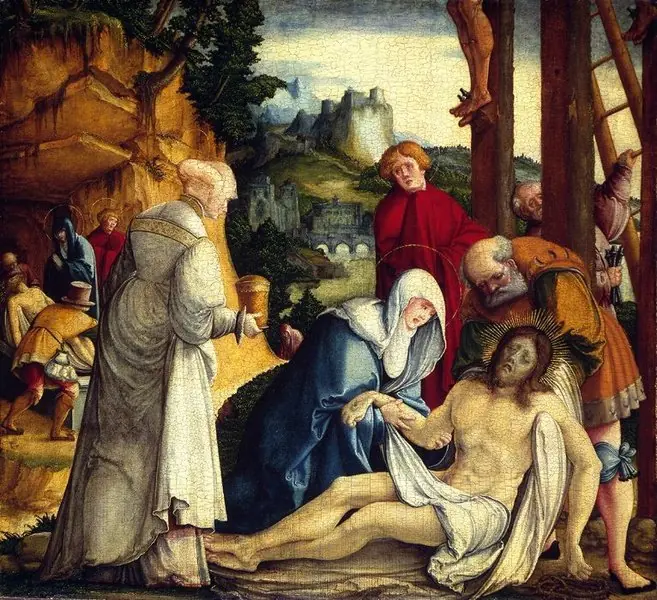
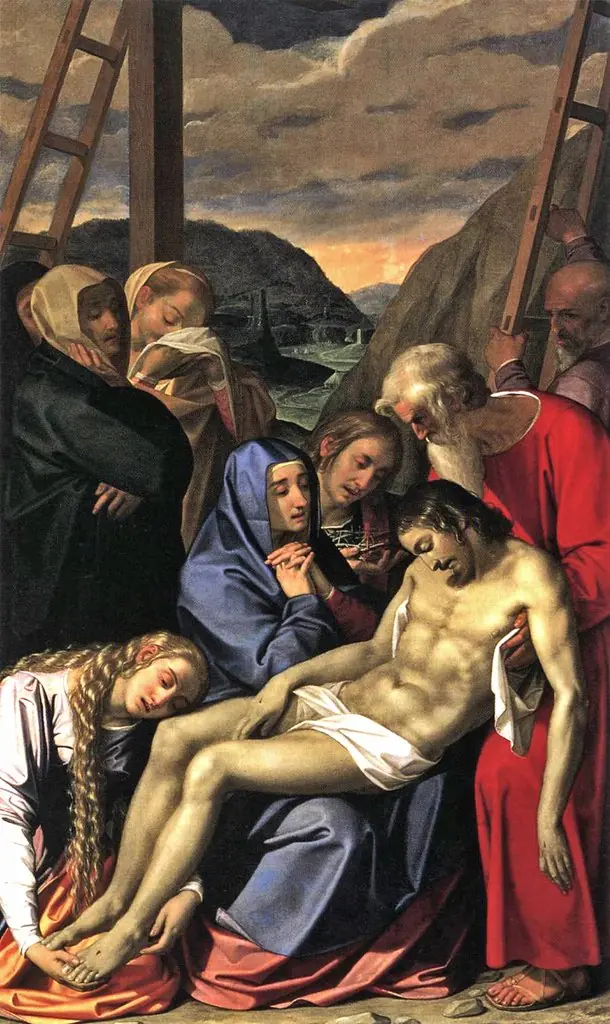
Mourning over the Dead Body of Christ is an unspecified painting by the Early Renaissance artist Paolo da San Leocadio. It dates from 1507 and is held in the collection of the Museu Nacional d'Art de Catalunya.
About this work
Overview
Executed in oil on panel, it was created during the early Renaissance and now resides in the Museu Nacional d'Art de Catalunya.
Painted in 1507 by Paolo da San Leocadio, an Italian artist active in Spain, this devotional work depicts the lamentation over Christ’s body after the Crucifixion. Executed in oil on panel, it was created during the early Renaissance and now resides in the Museu Nacional d'Art de Catalunya. The composition centers on a quiet, intimate moment of grief, avoiding dramatic spectacle in favor of restrained emotion.
Subject & Meaning
The painting portrays Christ’s lifeless body laid on the earth, surrounded by mourners—Mary, John, and other followers—each expressing sorrow through posture and gaze. The absence of divine light or supernatural elements emphasizes human grief, aligning with devotional practices that encouraged personal contemplation of Christ’s suffering. The scene invites viewers to share in the emotional weight of loss, not as spectators but as participants in sacred mourning.
Technique & Style
The artist employs muted earth tones and soft modeling to convey solemnity. Figures are rendered with careful attention to drapery, their robes folded with subtle realism to suggest weight and movement. Facial expressions are understated but distinct, avoiding theatricality. The background, with distant hills and sparse trees, recedes gently, focusing attention on the central group without distracting detail.
History & Provenance
Commissioned for a Spanish religious context, the painting reflects the cultural exchange between Italian Renaissance techniques and Iberian devotional traditions. It entered the collection of the Museu Nacional d'Art de Catalunya in the early 20th century, having likely remained in a Catalan ecclesiastical setting since its creation. Its survival through centuries of religious upheaval underscores its enduring role in private and communal piety.
Context
Created during a period when Spanish religious art increasingly favored emotional immediacy over Italian grandeur, the work aligns with Northern European influences that prioritized intimate, human-centered narratives. While Italian painters often emphasized idealized forms, San Leocadio’s approach—grounded, tactile, and quiet—resonated with local tastes for contemplative, accessible sacred imagery.
Legacy
Though not widely known outside regional collections, the painting exemplifies how Italian-trained artists adapted Renaissance principles to serve Spanish spiritual needs. Its quiet power influenced later devotional works in Catalonia, reinforcing a tradition of restrained, emotionally resonant religious imagery that valued inner reflection over public spectacle.
Artist & collection
Artist
Pablo da San Leocadio or Paolo da Reggio (10 September 1447 – c. 1520) was an Italian painter from Reggio Emilia, who was mostly active in Spain.