Artwork
Mystical Marriage of St Catharine
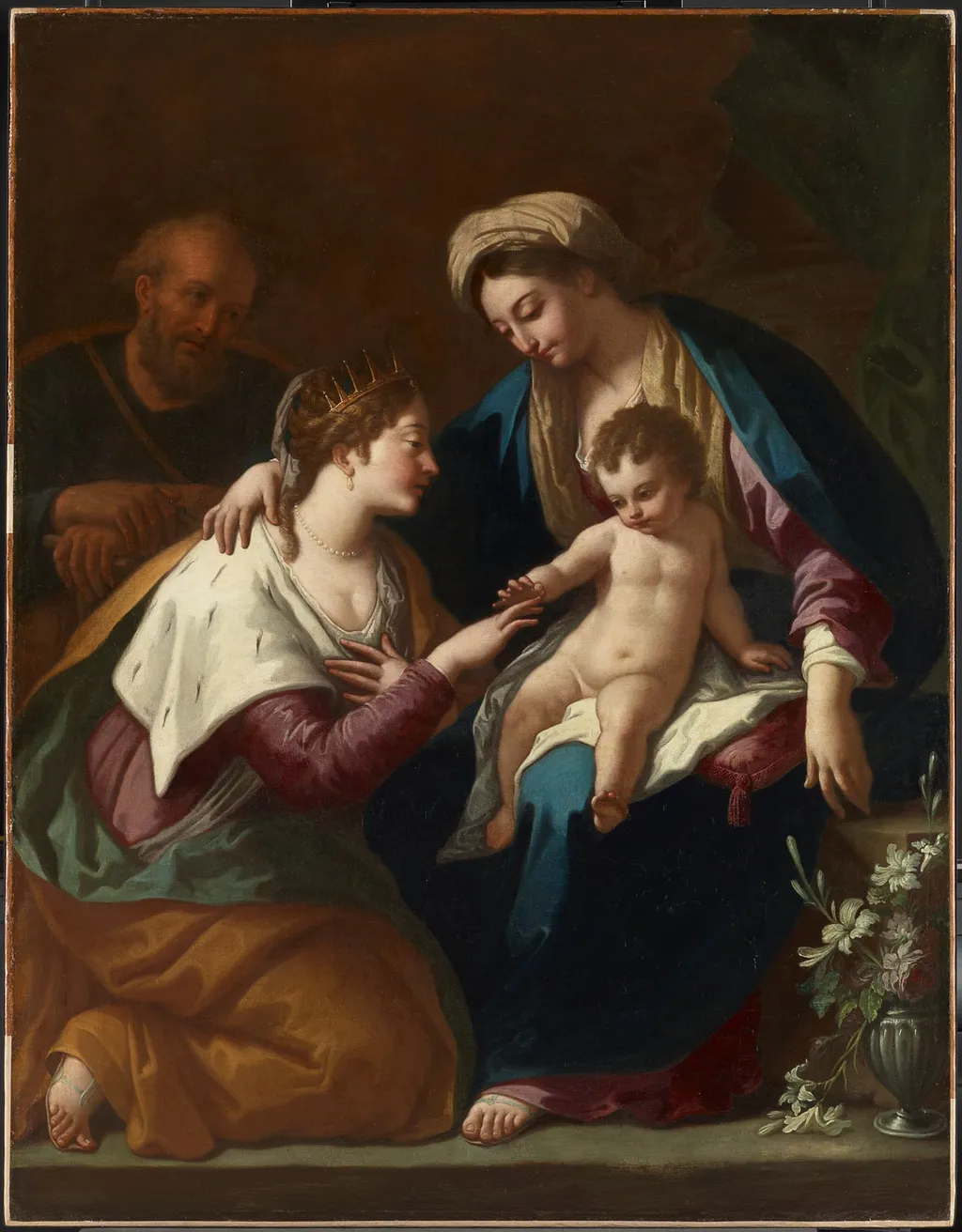
Mystical Marriage of St Catharine is an unspecified painting by the Early Baroque Italian artist Paolo de Matteis. It dates from 1712 and is held in the collection of the Kunsthistorisches Museum.
About this work
Overview
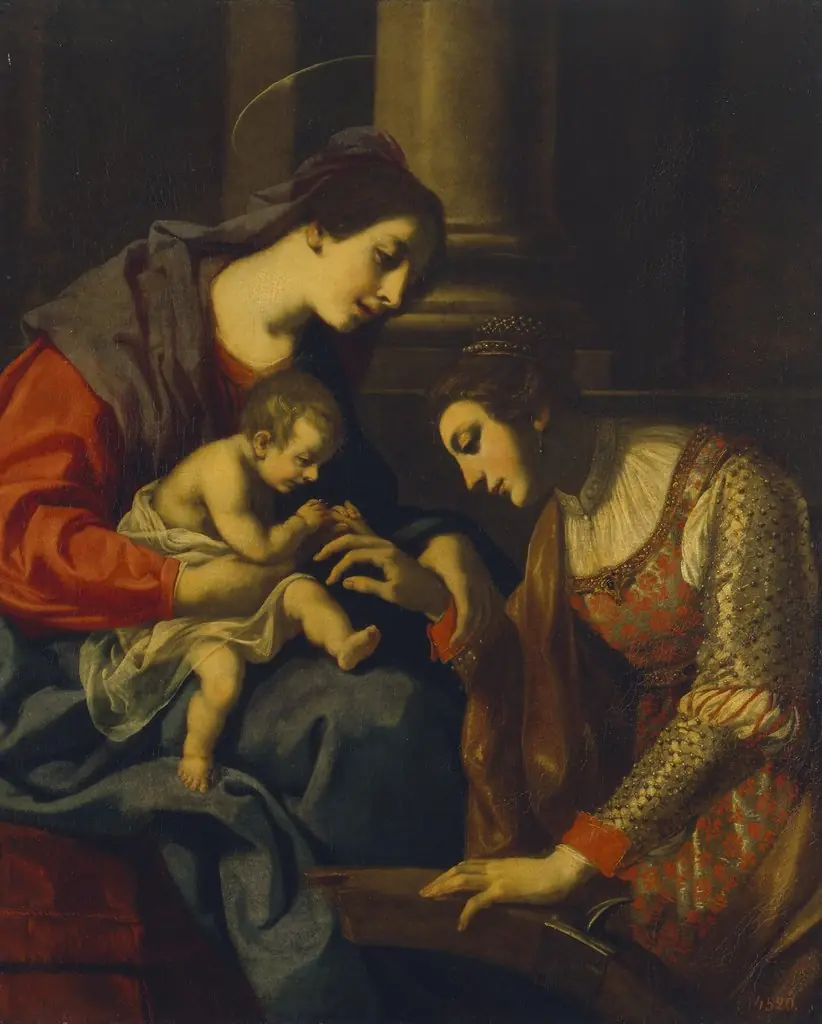
The composition centers on the Virgin seated in a blue robe with a white head covering, holding the nude Christ Child, who wears a white cloth around his waist.
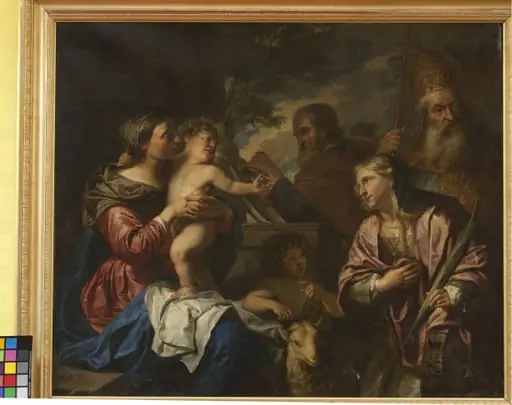
Paolo de Matteis's 'Mystical Marriage of St. Catherine,' painted in 1712 on canvas, depicts the moment the Virgin Mary presents the Christ Child to Saint Catherine of Alexandria. The composition centers on the Virgin seated in a blue robe with a white head covering, holding the nude Christ Child, who wears a white cloth around his waist. Kneeling before them is Saint Catherine, dressed in white and red, extending her hand to receive the ring from the infant. Behind the group, an older man, likely Saint Joseph or a donor figure, observes the sacred union. The work exemplifies the late Baroque style prevalent in early 18th-century Italy, characterized by its dynamic arrangement, soft modeling of figures, and rich color palette. Created during the height of de Matteis's career, this painting reflects his ability to synthesize the dramatic intensity of the Roman Baroque with the refined elegance favored by Neapolitan patrons. The scene illustrates the mystical marriage, a popular subject in Counter-Reformation art, symbolizing the soul's union with the divine. De Matteis, a student of Luca Giordano, brings a theatrical clarity to the religious narrative, ensuring the spiritual significance of the event is immediately accessible to the viewer through the expressive gestures and intimate grouping of the figures.
Subject & Meaning
The central woman is identified as Catherine of Siena, shown holding an infant—an allegorical representation of the Virgin’s child—while a young woman in white and red reaches toward the baby’s hand, suggesting a spiritual union. An elderly man observes the exchange, reinforcing the theme of mystical marriage as a symbolic bond between the saint and divine love.
Technique & Style
De Matteis employs a rich palette of deep blues, reds, and softened whites, allowing the infant’s luminous skin to stand out against a shadowy backdrop. The handling of light creates a subtle chiaroscuro that models the figures with a gentle glow, while the background hints at foliage, adding depth without detracting from the intimate grouping.
History & Provenance
Executed in the early eighteenth century, the painting entered the holdings of the Kunsthistorisches Museum, where it remains on display. Its provenance traces back to the artist’s workshop in Naples, reflecting the spread of Baroque devotional imagery across European collections during the period.
Context
Created during the late Baroque era, the work reflects contemporary interest in mystic visions and the veneration of saints. De Matteis, a prolific Neapolitan painter, often combined dramatic narrative with refined coloration, aligning this piece with the broader religious artistic currents that emphasized emotional engagement and spiritual contemplation.
Artist & collection