Artwork
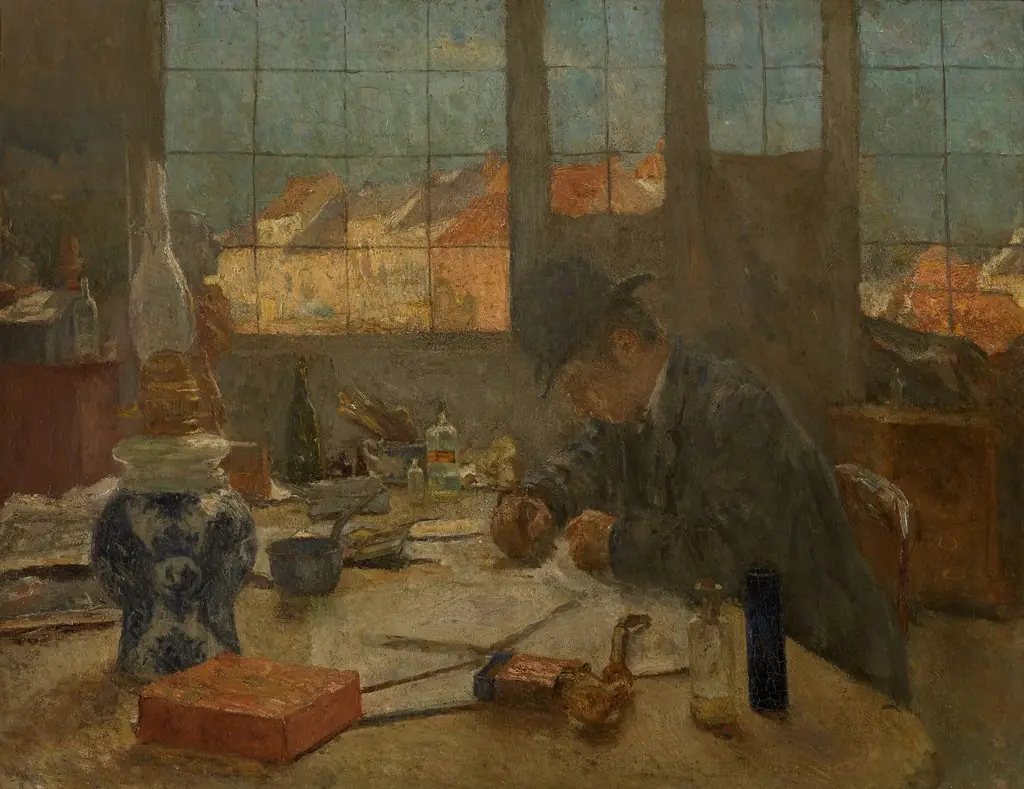
Felicien Rops in his Studio
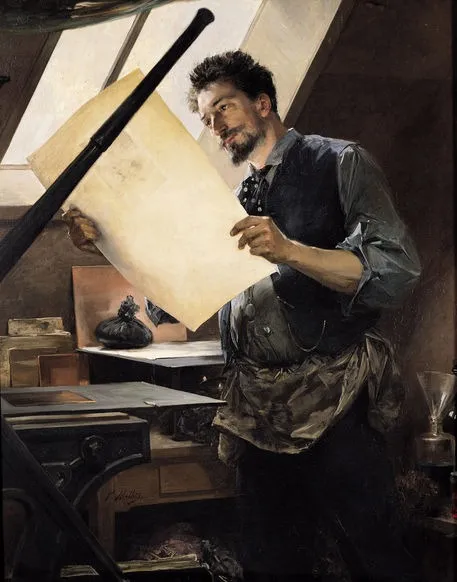
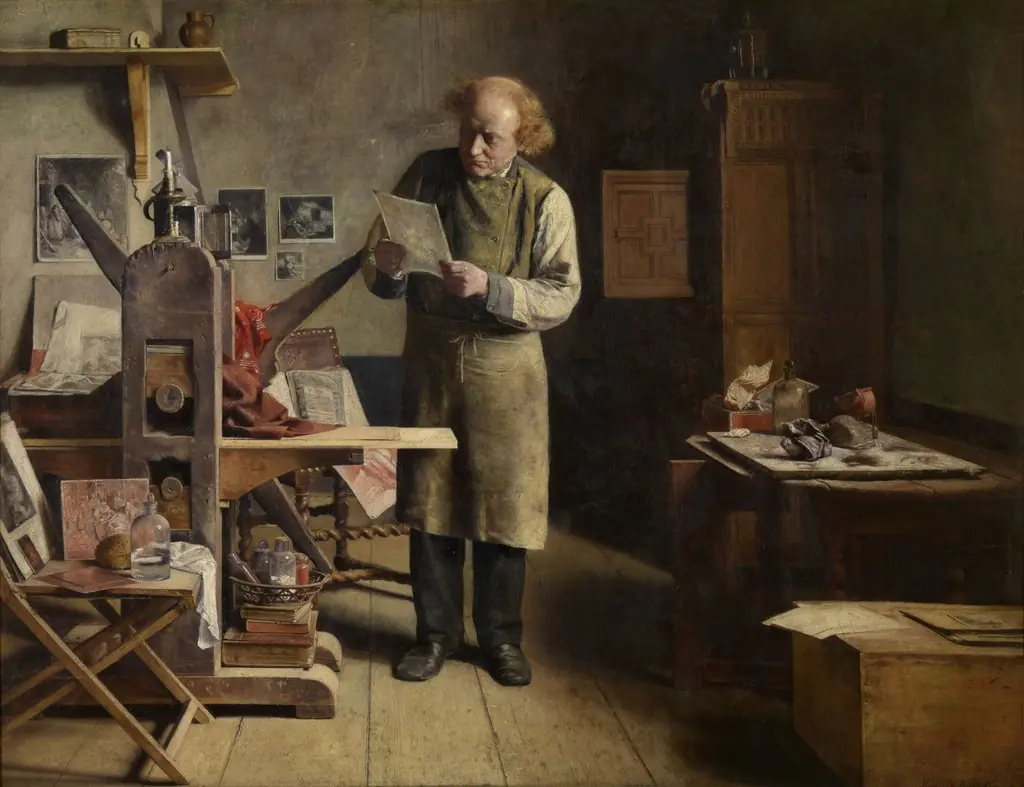
Felicien Rops in his Studio is an oil painting by the Post-Impressionist artist Paolo de Matteis. It is held in the collection of the Musée d'Orsay. Paul Mathey’s 1894 oil painting presents the Belgian artist Félicien Rops within his own workspace.
About this work
Overview
The composition balances natural illumination from a wide window with deeper, muted tones in the surrounding space, creating a measured sense of depth.
Paul Mathey’s 1894 oil painting presents the Belgian artist Félicien Rops within his own workspace. The work, titled *Félicien Rops in his Studio*, captures a moment of quiet concentration as Rops holds a large sheet of paper amid a cluttered studio environment. The composition balances natural illumination from a wide window with deeper, muted tones in the surrounding space, creating a measured sense of depth.
Subject & Meaning
The portrait focuses on Rops, a noted printmaker, depicted in a dark vest and gray shirt, his waist cinched with a cloth apron. By showing him surrounded by boxes, papers, and tools of his trade, Mathey emphasizes the artist’s dedication to his craft and offers a candid glimpse into the daily reality of a 19th‑century creative studio.
Technique & Style
Mathey employs a restrained palette, using warm light from the window to highlight Rops’s face while the background recedes in cooler, subdued hues. The brushwork varies from fine detail on the figure’s features to broader, textural strokes that convey the varied surfaces of paper, wood, and fabric, enhancing the tactile quality of the scene.
History & Provenance
Completed in 1894, the painting entered the collection of the Palace of Versailles, where it remains on display. Its acquisition reflects the French interest in documenting contemporary artists of the period and situates Mathey’s work within the broader narrative of 19th‑century French academic painting.
Context
Mathey, a French painter known for his portraits and genre scenes, chose to depict Rops—a Belgian contemporary whose reputation rested on provocative etchings and illustrations. The work thus bridges French and Belgian artistic circles of the era, illustrating the cross‑national exchange of ideas and the mutual respect among artists active during the late 1800s.
Artist & collection

 Thinking It Over
 The printer
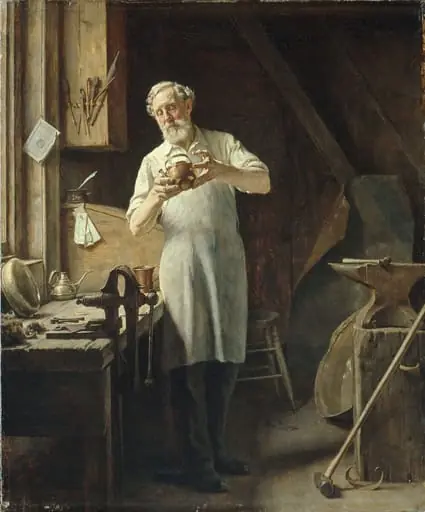 The Coppersmith
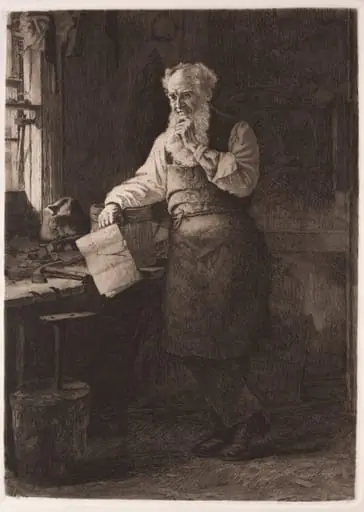 Thinking It Over
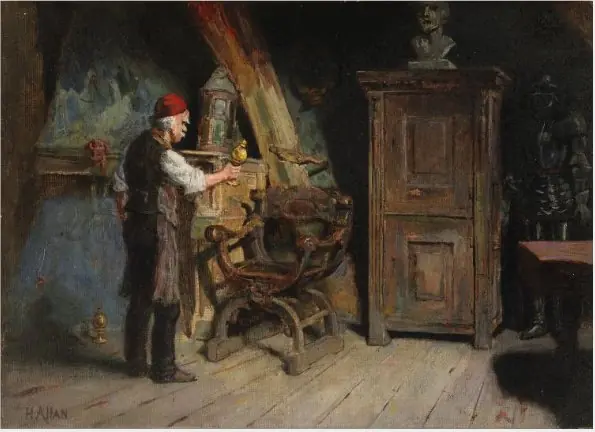 A Dutch Interior
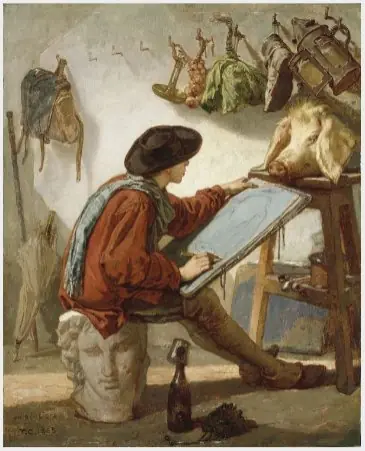 La Peinture Réaliste
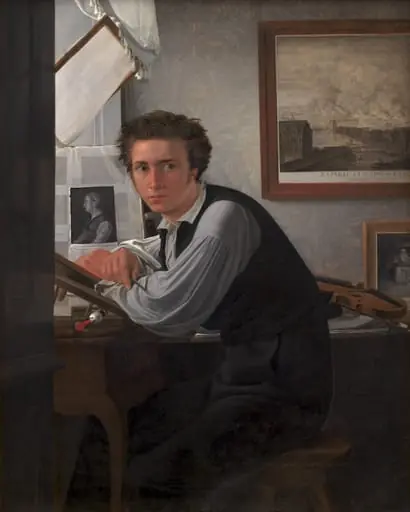 Portrait of the Copperplate Engraver Carl Edvard Sonne
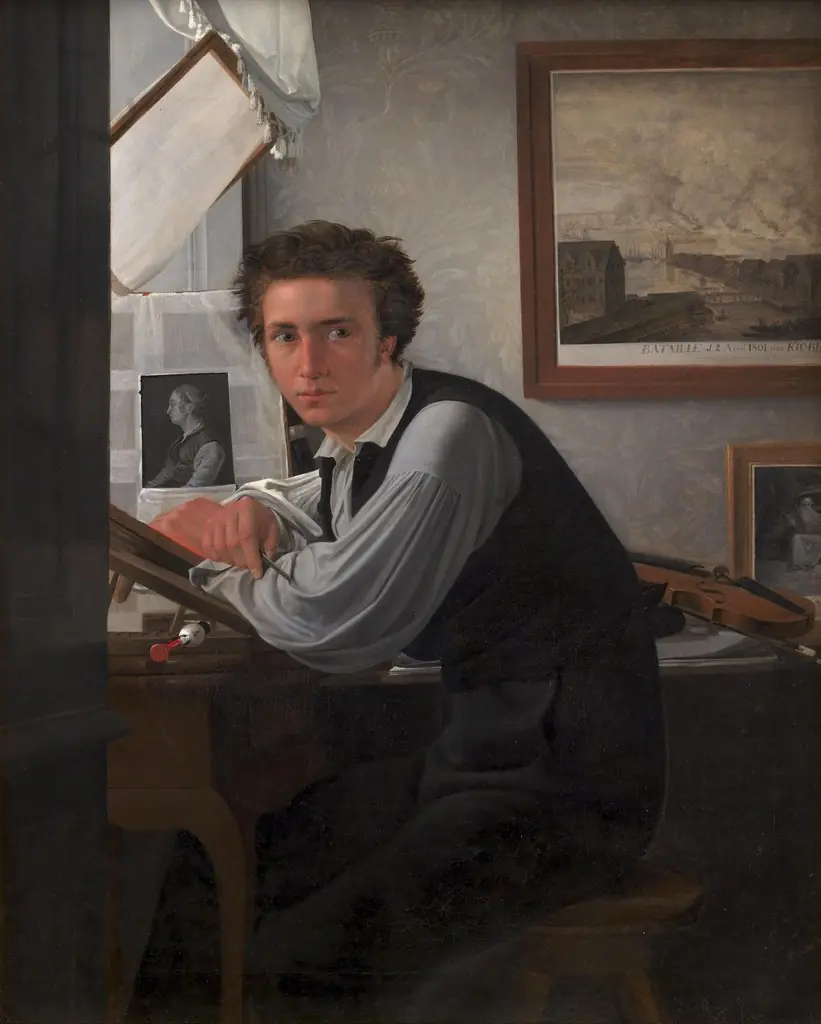 Portrait of the Copperplate Engraver Carl Edvard Sonne
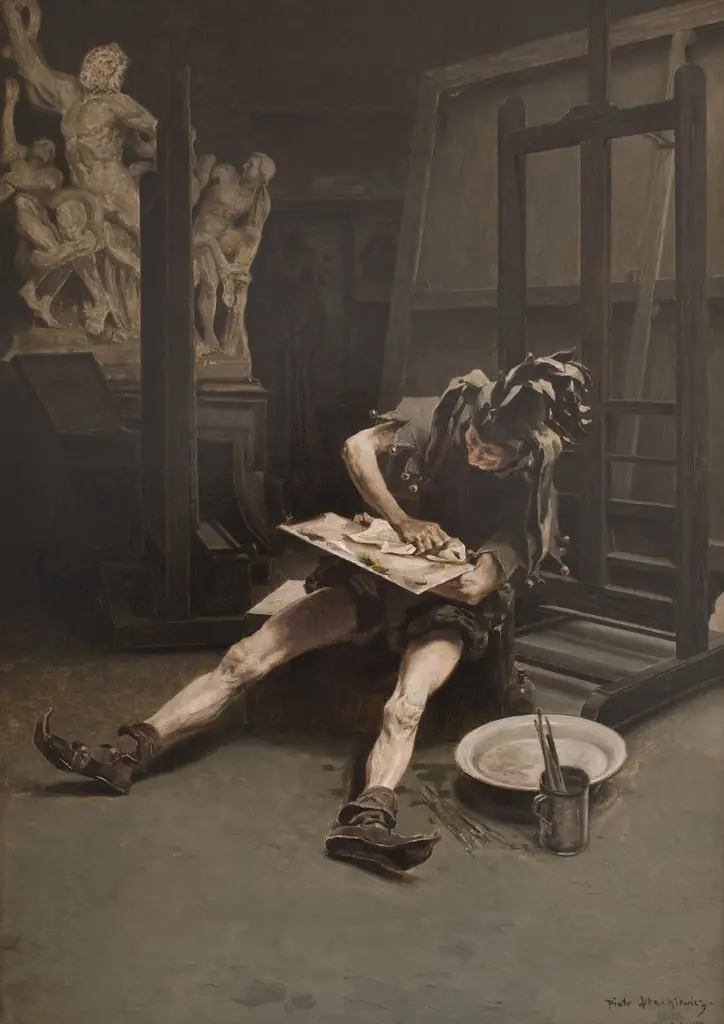 Phantoms in the Studio – Irony
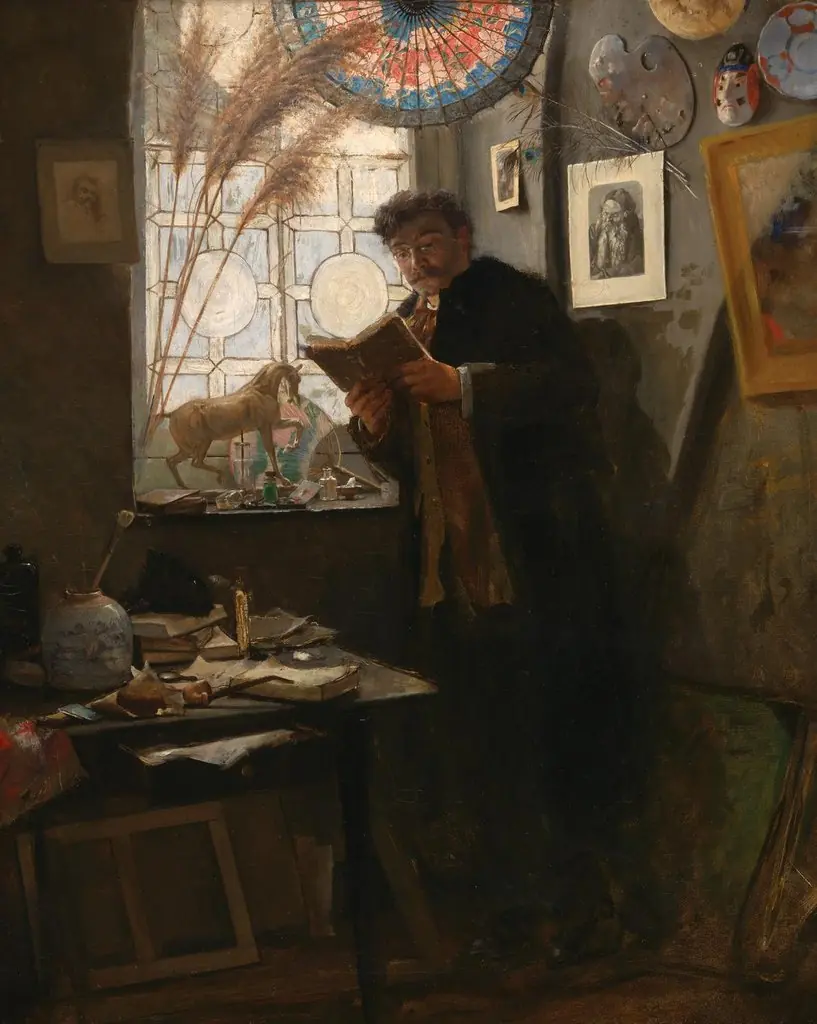 Camille Lemonnier in the studio of the artist
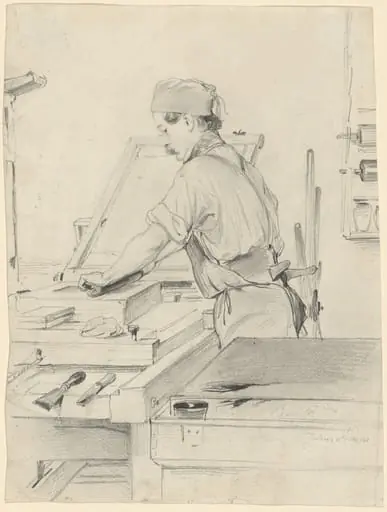 Self-Portrait Working at a Lithographic Press
 The Studio