Artwork
Diana and Actaeon
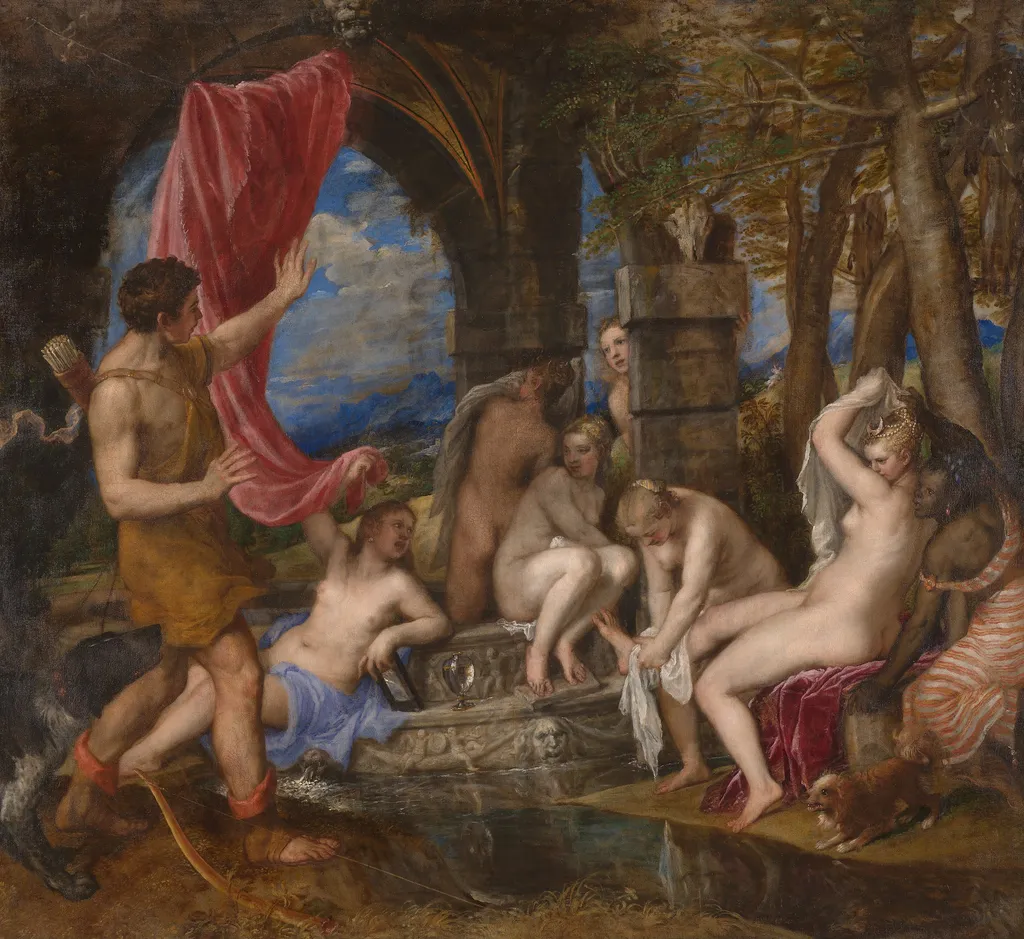
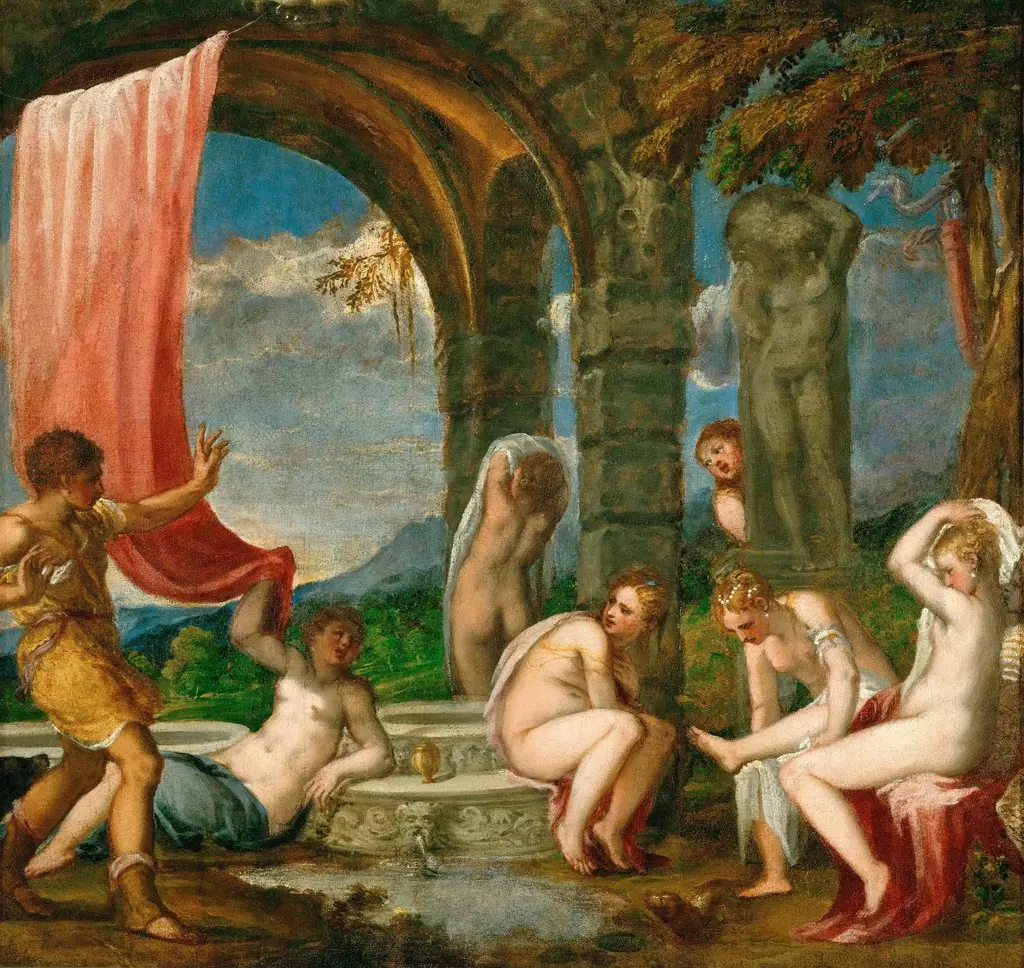
Diana and Actaeon is an oil painting by the Mannerist artist Titian. It dates from 1557 and is held in the collection of the National Gallery.
About this work
Overview
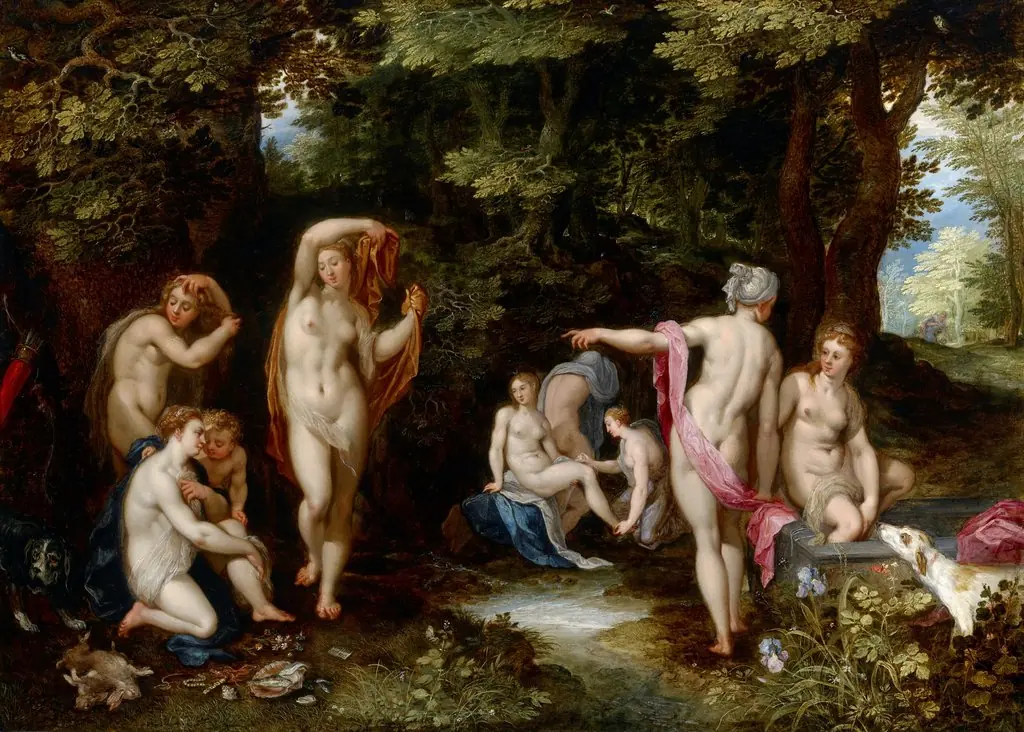
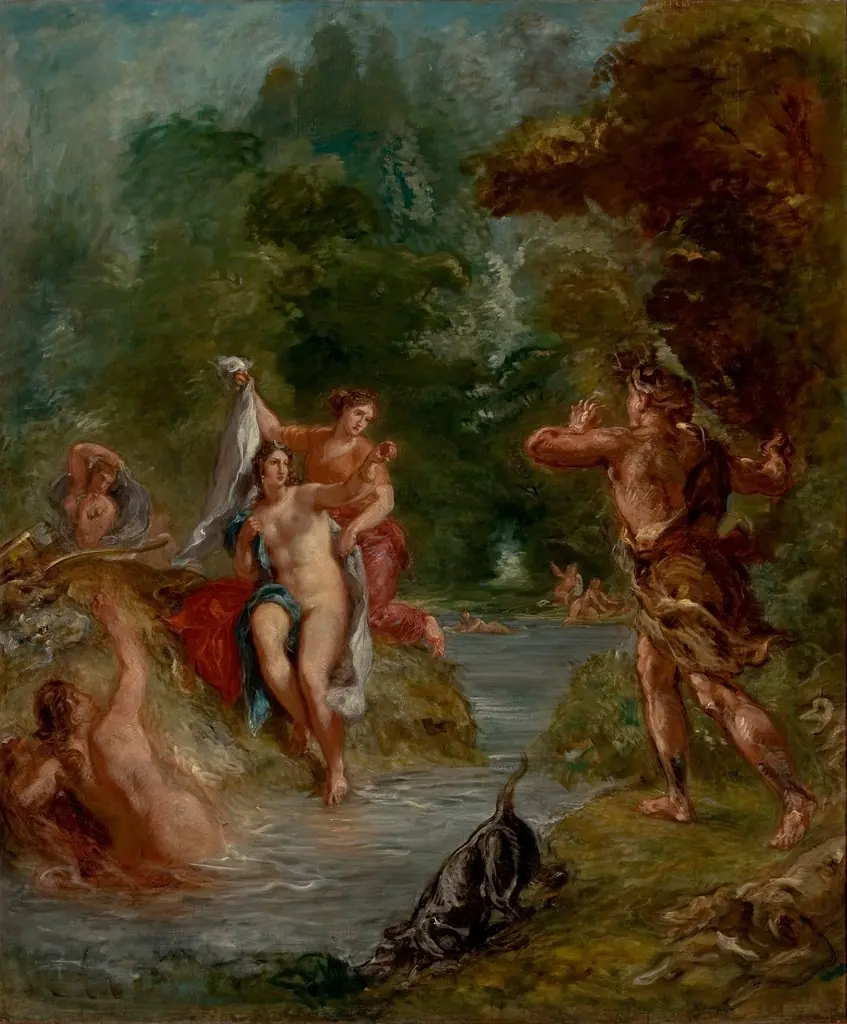
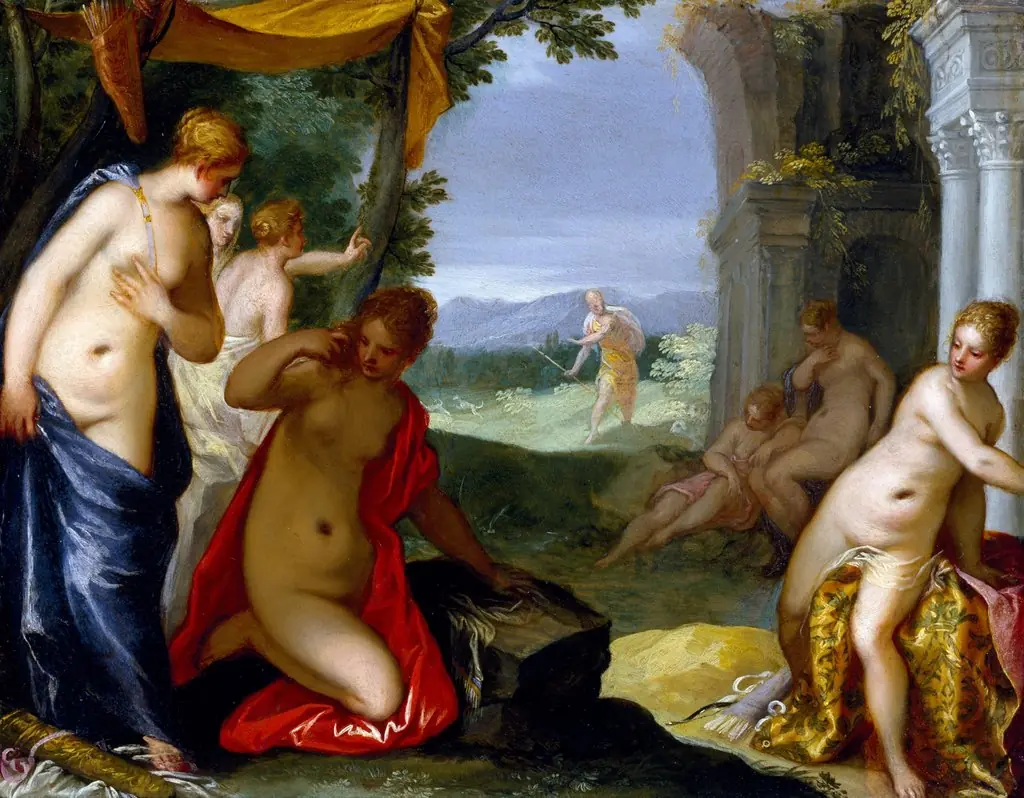
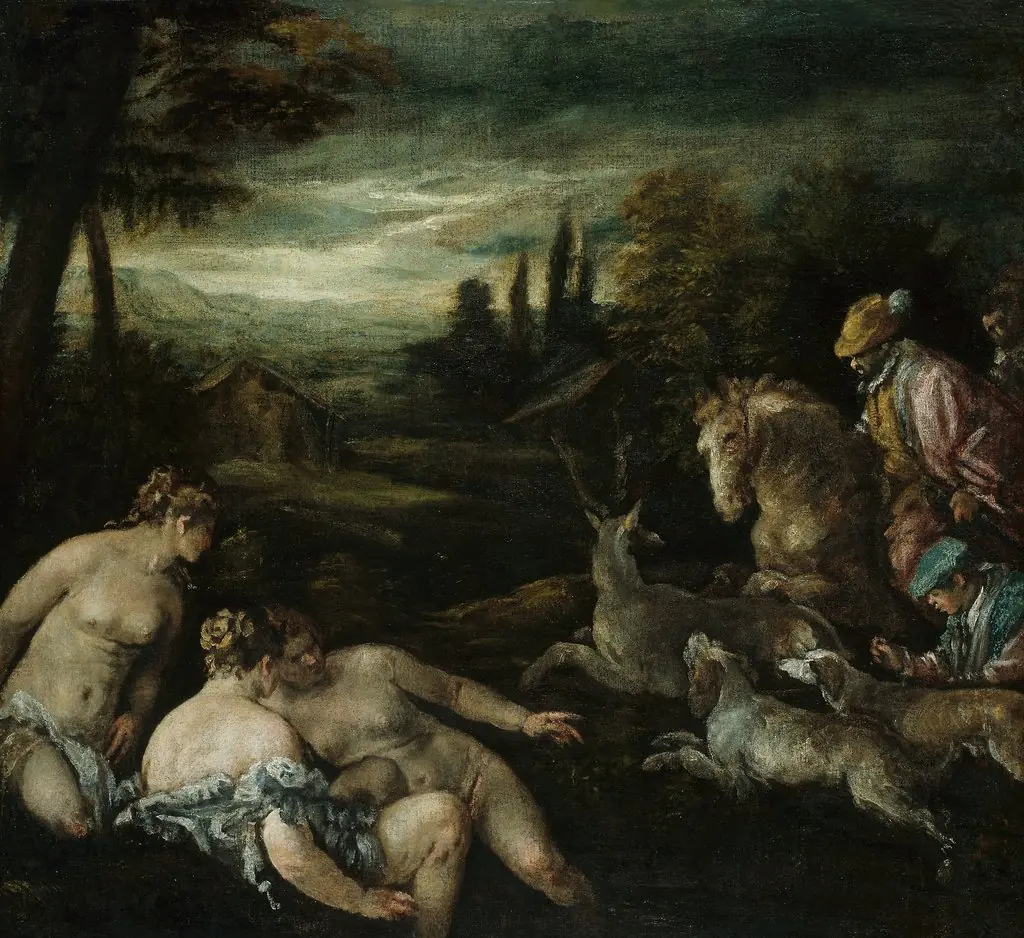
Titian’s oil painting Diana and Actaeon, executed between 1556 and 1559, is a sizable work that captures a pivotal episode from Ovid’s Metamorphoses. The canvas presents the moment the mortal hunter stumbles upon the goddess Diana and her attendants while they are bathing, setting in motion his tragic fate.
Subject & Meaning
The scene illustrates Actaeon’s accidental intrusion into a sacred space, provoking Diana’s wrath. In the narrative, the goddess punishes the intruder by transforming him into a stag, after which his own hounds pursue and kill him. Titian’s treatment emphasizes the sudden shift from curiosity to divine retribution.
Technique & Style
Rendered in oil, the composition showcases Titian’s mature handling of colour and light, with luminous flesh tones contrasting against the deep greens of the forest. The figures are modeled with soft chiaroscuro, and the dynamic arrangement of bodies creates a sense of movement and tension characteristic of his late Renaissance style.
History & Provenance
Completed in the late 1550s, the painting formed part of a series of mythological works commissioned for the Gonzaga collection in Mantua. It later entered the collection of the National Gallery in London, where it remains on display as a key example of Titian’s late mythological output.
Context
The work belongs to Titian’s series of “poesie” – mythological canvases intended for private patrons that blend poetic narrative with visual splendor. Its subject, drawn from Ovid, reflects the Renaissance fascination with classical literature and the moral implications of hubris before the divine.
Legacy
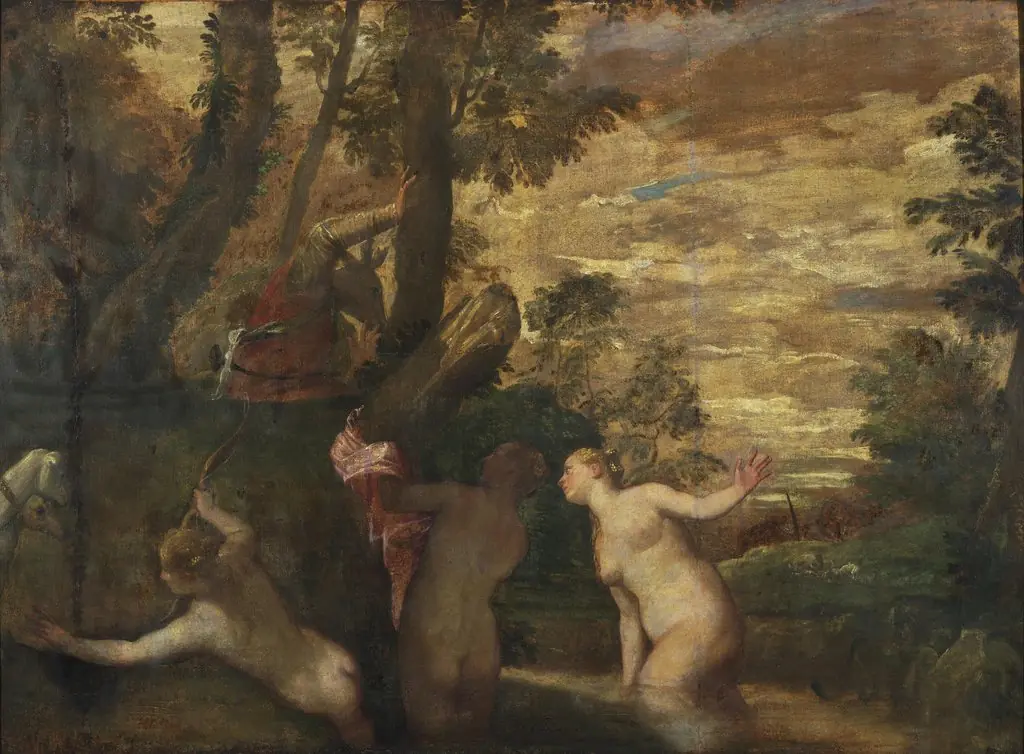
Titian revisited the same narrative in a separate canvas, The Death of Actaeon, completing the story’s arc. The pair has informed subsequent treatments of the myth in European art, illustrating the painter’s influence on the visual language of transformation and divine vengeance.
Own this work as a print
Artist & collection
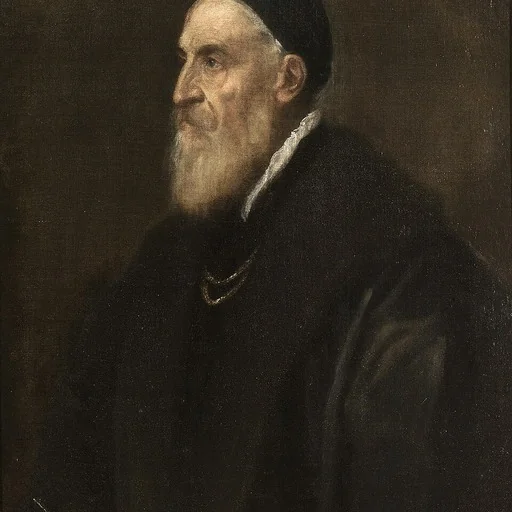
Artist
Tiziano Vecellio (Italian: ; c. 1488/1490 – 27 August 1576), Latinized as Titianus, hence known in English as Titian ( TISH-ən), was an Italian Renaissance painter. The most important artist of Renaissance Venetian…