Artwork
Pod peste Sena
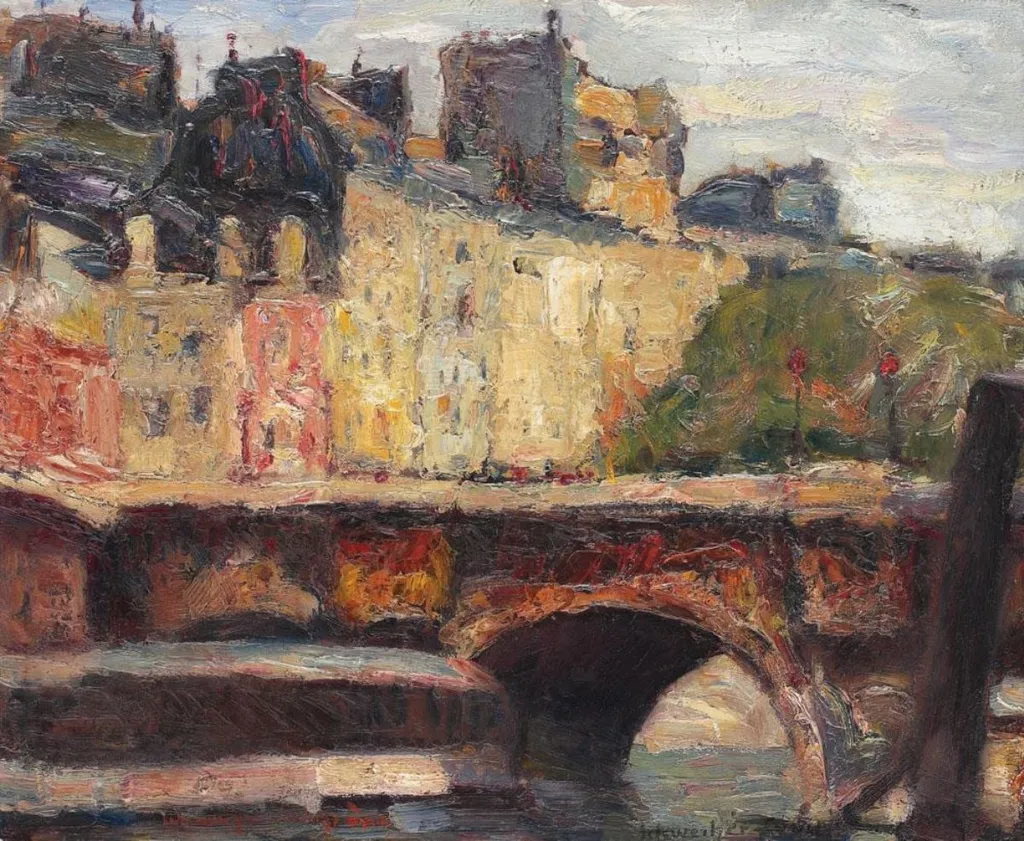
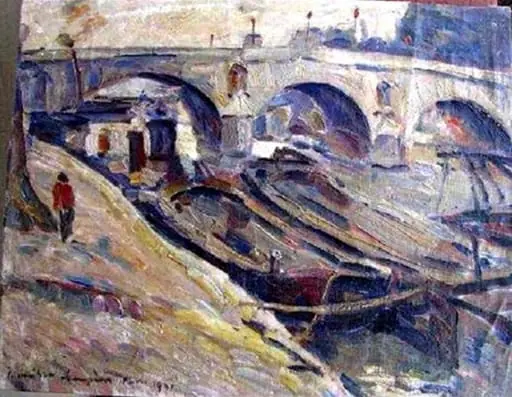
Pod peste Sena is a print by Rudolf Schweitzer-Cumpăna. It dates from 1936 and is held in the collection of the Lucian Pop Art Collection.
About this work
Overview
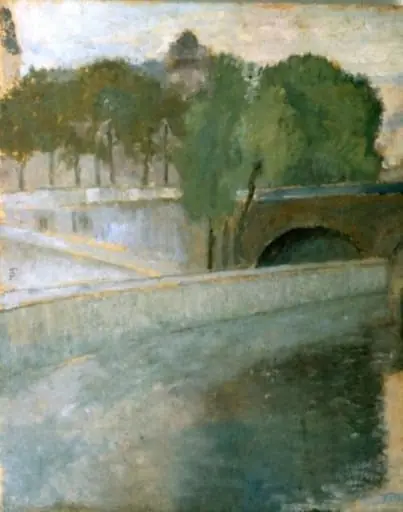
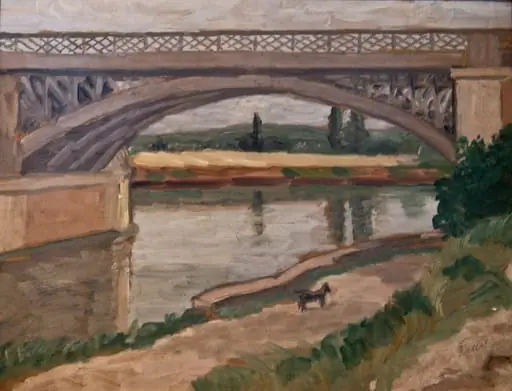
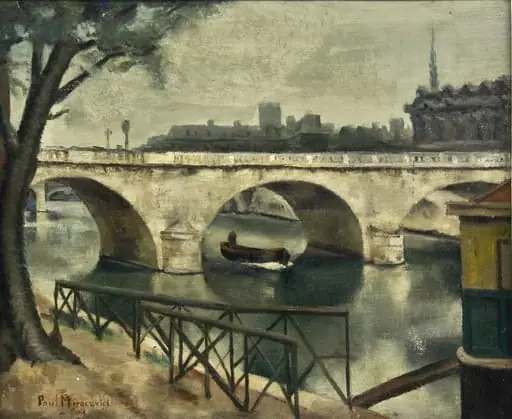
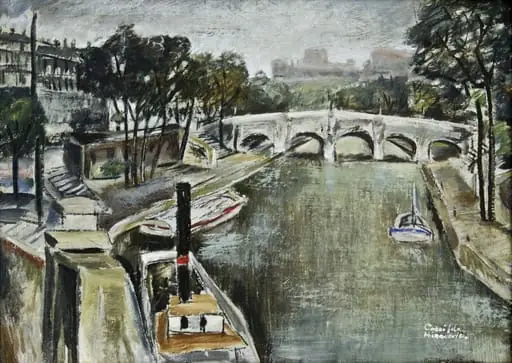
Pod peste Sena, created circa 1936 by Rudolf Schweitzer-Cumpăna, is a cityscape painting characterized by its textured, expressive brushwork. Currently, it is part of the collection at the Museum of Ethnography.
Subject & Meaning
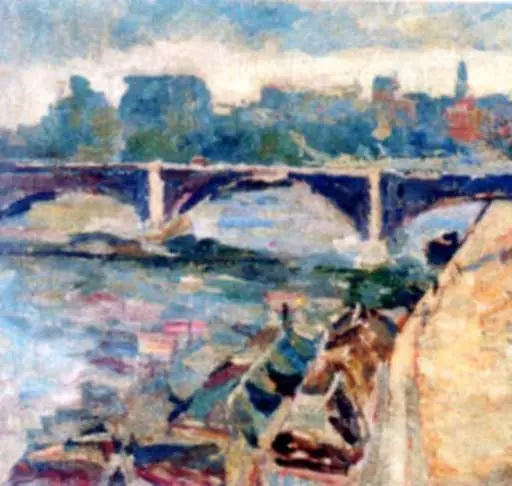
The painting depicts a bridge in the foreground with a dark arch and reddish-brown stonework, set against a backdrop of buildings. The color palette contrasts warm yellows and pinks with muted browns, while a green patch adds a natural note on the right.
Technique & Style
Schweitzer-Cumpăna employed a prominent impasto technique, applying paint in thick, uneven strokes that protrude from the surface. This method, combined with loose, expressive brushstrokes, gives the work a dynamic, almost three-dimensional quality.
History & Provenance
Created in the mid-1930s, the painting's history prior to its acquisition by the Museum of Ethnography is not detailed here. It has been part of the museum's collection, suggesting its recognition within Romanian cultural institutions.
Context
While specific contextual influences are not provided, the piece reflects early 20th-century European artistic tendencies towards expressive, textured representations of urban life. The emphasis on capturing the emotional essence of a scene aligns with various avant-garde movements of the time.
Legacy
The legacy of 'Pod peste Sena' is tied to its presence in the Museum of Ethnography, contributing to the visibility of Schweitzer-Cumpăna's work within Romanian cultural heritage. Its impact on broader artistic movements or subsequent generations of artists is not explicitly documented in the provided information.
Artist & collection
Artist
Rudolf Schweitzer-Cumpăna was a Romanian painter. Born in Pitești into an ethnic German family, he finished high school in his native town before attending the Royal Academy of Arts at Berlin from 1904 to 1909, studying…