Artwork
The Striking of the King of the Huns and the Collapse of the Rule of Mart
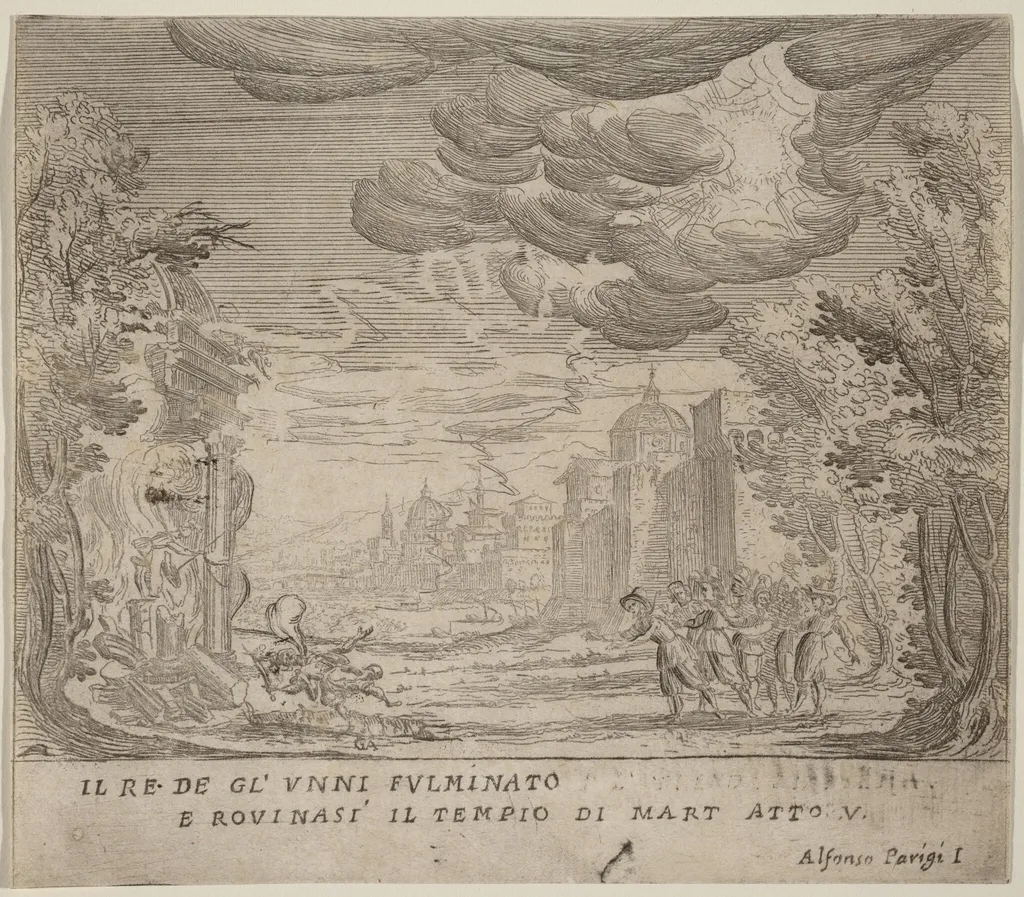
The Striking of the King of the Huns and the Collapse of the Rule of Mart is an ink print by the Baroque artist Alfonso Parigi II. It dates from 1631 and is held in the collection of the National Gallery of Art.
About this work
Overview
Created in 1631 by Alfonso Parigi II, this etching captures a moment of violent transition, likely referencing a legendary defeat of a Hunnic ruler. Executed in fine line work typical of Baroque printmaking, the composition conveys chaos through dense figuration and layered spatial depth. The medium allows for intricate detail, emphasizing the drama of collapse and upheaval.
Subject & Meaning
The scene portrays the fall of a monarch, possibly a symbolic representation of the King of the Huns, struck down by a spear-wielding figure. Surrounding figures suggest turmoil and the dissolution of authority. The title implies a broader narrative of political or divine retribution, aligning with early 17th-century themes of impermanence and the fragility of power.
Technique & Style
Parigi employed fine, controlled etching lines to render texture in clothing, architecture, and foliage. Shading is achieved through cross-hatching and varying line density, creating volume and atmospheric depth. The composition is tightly packed, with figures arranged diagonally to enhance motion, characteristic of Baroque dynamism and narrative intensity.
History & Provenance
The work originates from Parigi’s series of historical and allegorical prints produced in Florence during the 1630s. Likely commissioned for private collectors or used as preparatory designs, it reflects the Medici court’s interest in classical and mythic narratives. Its survival in institutional collections suggests early recognition of its technical merit.
Context
Produced during the height of the Baroque era, the etching resonates with contemporary European preoccupations with power, divine justice, and historical myth. Similar themes appear in the works of Caravaggio and Rubens, though Parigi’s focus on printmaking offered broader dissemination. The scene may allude to contemporary political anxieties masked as ancient history.
Legacy
Though less widely known than his contemporaries, Parigi’s etching exemplifies the sophistication of Florentine print culture in the early Baroque period. Its detailed narrative structure influenced later illustrators of historical subjects. The work remains a reference for studies on the intersection of print, politics, and visual storytelling in 17th-century Italy.
Artist & collection


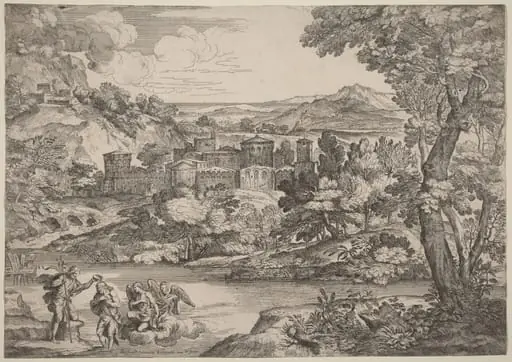 The Baptism of Christ, Set in a Mountainous Landscape
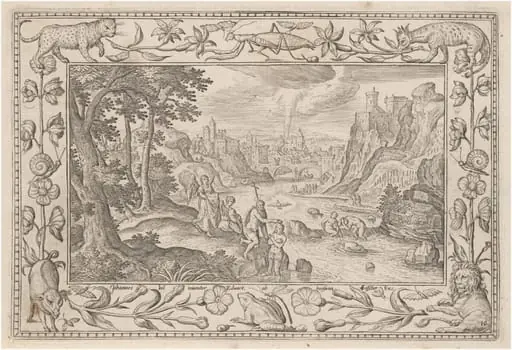 The Baptism of Christ
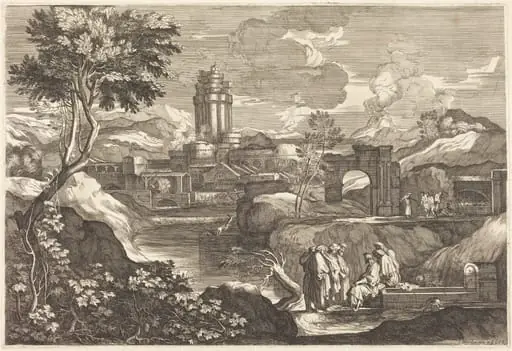 Jesus Telling the Parable of the Father who Sends his Workers to his Vineyard
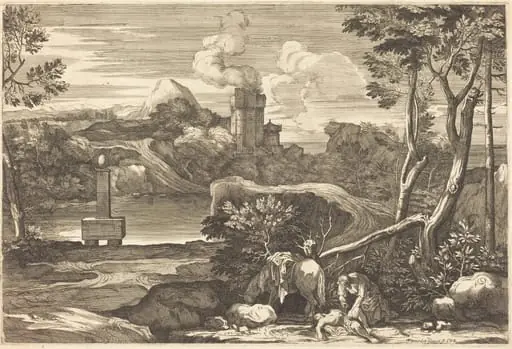 The Samaritan Pours Oil and Wine in the Wounds of a Man Left for Dead
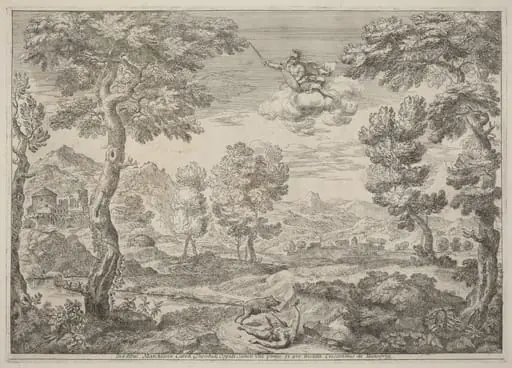 Mars's Revenge on Adonis
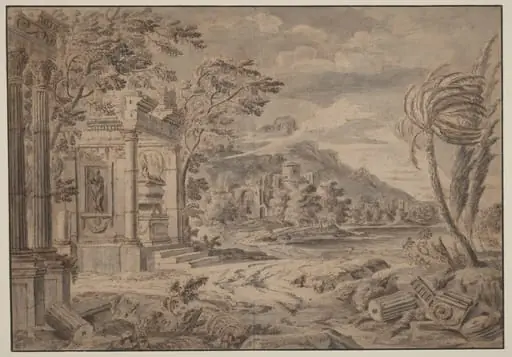 Antique Ruins along a Mountain Coast
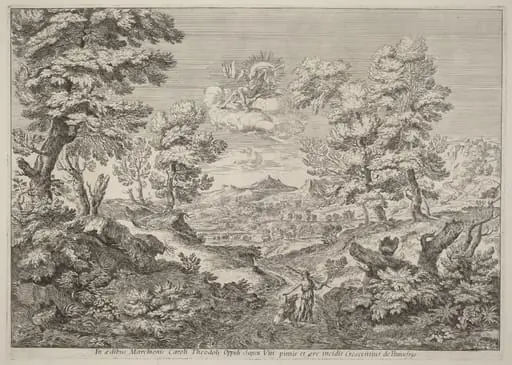 Apollo and a Nymph Leading a Lion
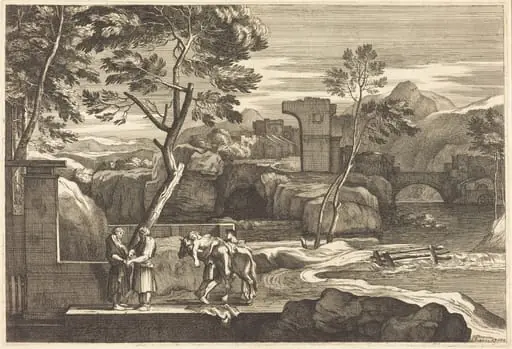 The Samaritan Takes the Man to an Inn
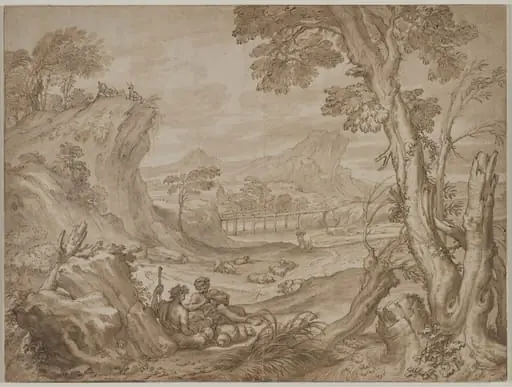 Landscape with Shepherds
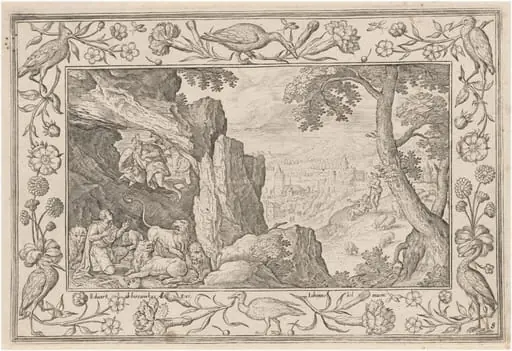 Daniel in the Lion’s Den
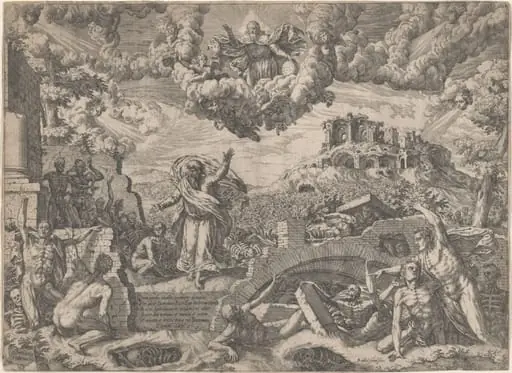 The Vision of Ezekiel