Artwork
The Samaritan Takes the Man to an Inn
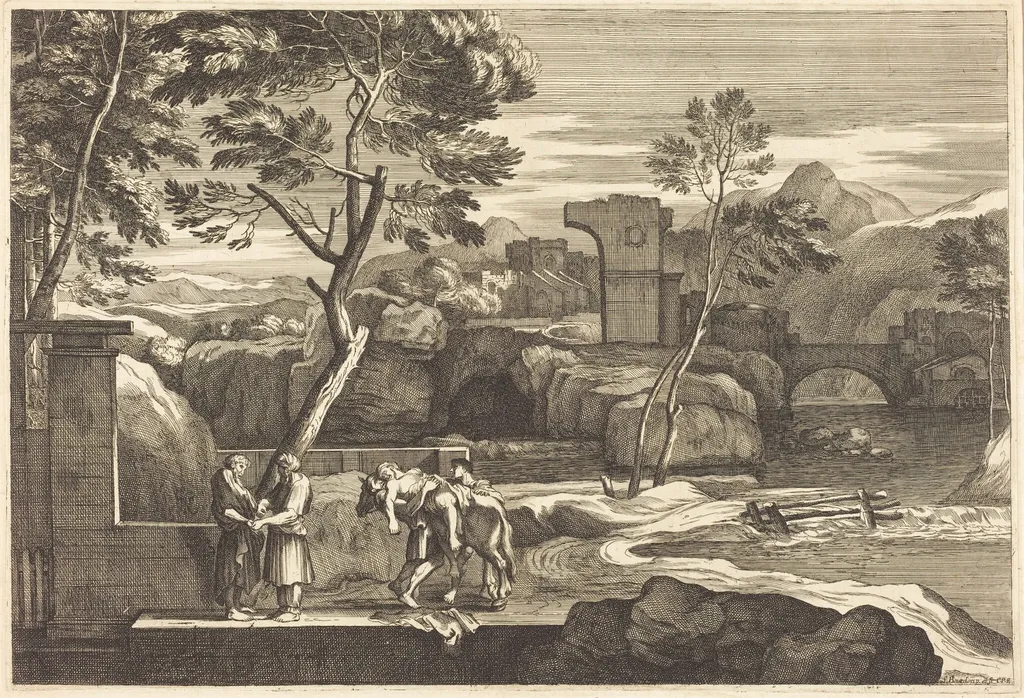
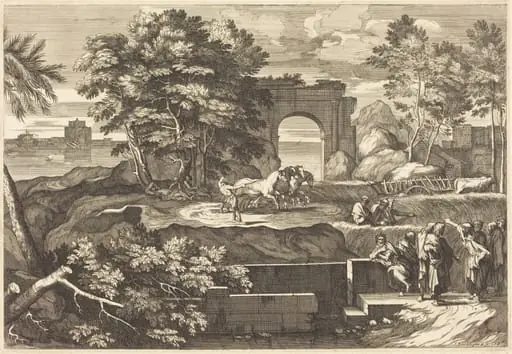
The Samaritan Takes the Man to an Inn is an ink print by the Baroque artist Sébastien Bourdon. It dates from 1644 and is held in the collection of the National Gallery of Art.
About this work
Overview
Sébastien Bourdon, a French artist active in the mid-17th century, produced this engraving in 1644 as part of his engagement with religious themes.
Sébastien Bourdon, a French artist active in the mid-17th century, produced this engraving in 1644 as part of his engagement with religious themes. Though primarily known as a painter, Bourdon also worked extensively in printmaking, using the engraving technique to translate narrative scenes into detailed monochrome images. This work captures a moment from the Gospel of Luke, rendered with precision and quiet gravity.
Subject & Meaning
The scene illustrates the parable of the Good Samaritan, in which a traveler, robbed and wounded, is aided by a stranger. Bourdon depicts the moment the Samaritan, accompanied by two others, carries the injured man toward an inn. The composition emphasizes compassion across social boundaries, with the Samaritan’s gesture and the group’s focused movement conveying duty over judgment, a theme resonant in post-Reformation Europe.
Technique & Style
Bourdon employed fine, controlled lines to model form and texture, particularly in the rugged rocks, draped fabrics, and foliage. The engraving’s tonal range is achieved through cross-hatching and delicate stippling, creating depth without color. The figures are arranged in a shallow, stage-like space, with the rocky riverbank and distant hills anchoring the scene in a believable, if idealized, landscape.
History & Provenance
Created in 1644, the engraving emerged during Bourdon’s time in Rome, where he absorbed Italian compositional traditions. It was likely produced for a private or scholarly audience interested in biblical illustration. While specific early ownership records are sparse, the work aligns with the broader circulation of religious prints in 17th-century Europe, used for devotion and education.
Context
In mid-17th-century Europe, religious narratives remained central to visual culture, even as secular themes gained ground. Bourdon’s engraving reflects the continued relevance of biblical stories in art, particularly those emphasizing moral action. His approach—calm, detailed, and narrative-driven—echoes contemporaries like Rembrandt, though with a more restrained emotional tone.
Legacy
Though not among Bourdon’s most widely reproduced works, this engraving exemplifies his skill in translating painterly composition into print. It contributes to the broader tradition of biblical illustration in print media, influencing later artists who sought to convey moral stories with clarity and emotional restraint through line and tone.
Artist & collection
Artist
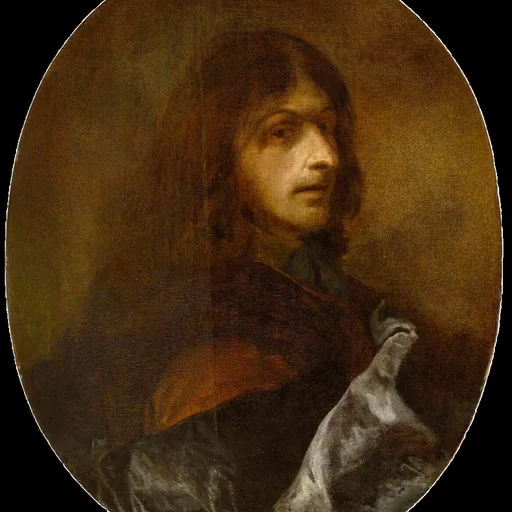
Sébastien Bourdon (French pronunciation: ; 2 February 1616 – 8 May 1671) was a French painter and engraver. His chef d'œuvre is The Crucifixion of St. Peter made for the cathedral of Notre Dame.

 The Pharisees Complain to Our Lord
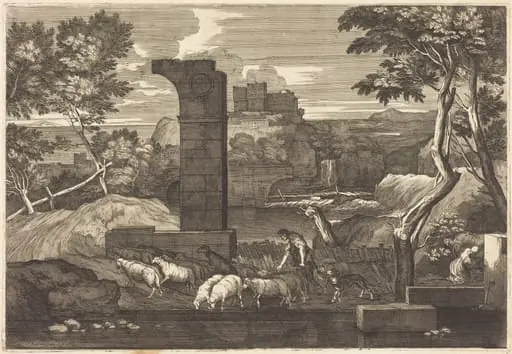 Landscape with Peasant and his Herd
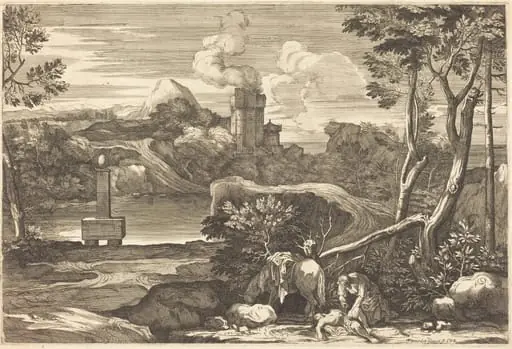 The Samaritan Pours Oil and Wine in the Wounds of a Man Left for Dead
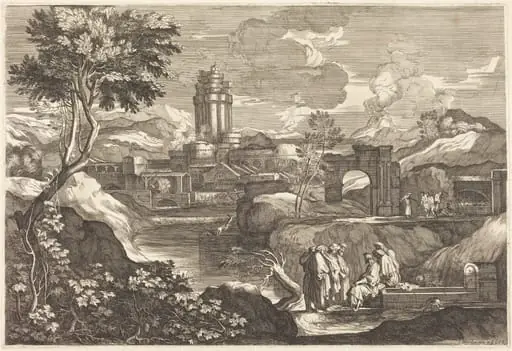 Jesus Telling the Parable of the Father who Sends his Workers to his Vineyard
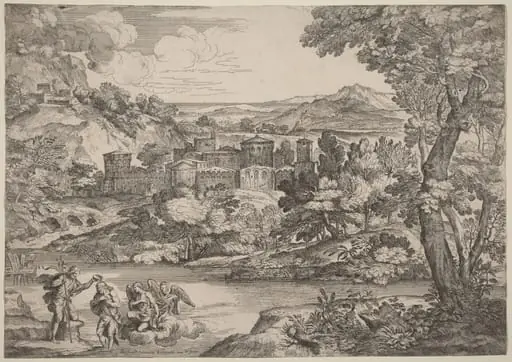 The Baptism of Christ, Set in a Mountainous Landscape
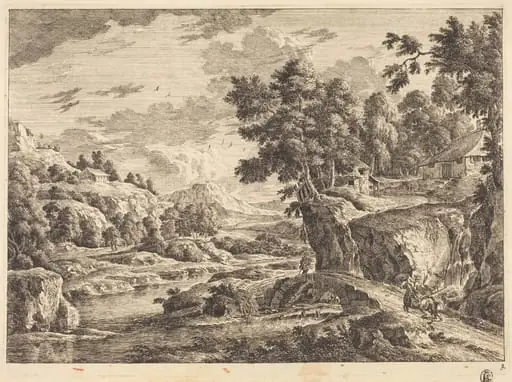 Landscape with a Bridge and Three Farm Buildings
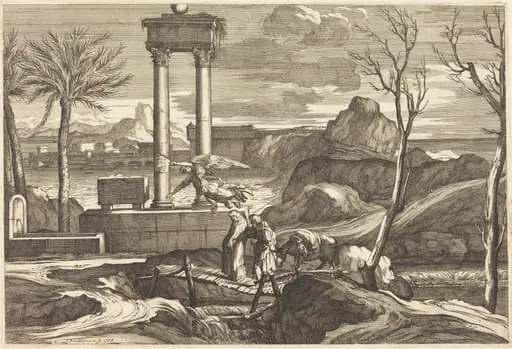 The Flight into Egypt
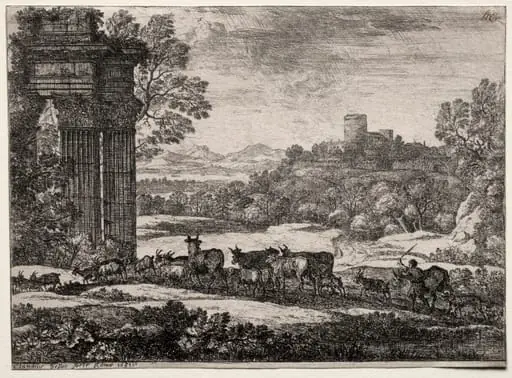 The Herd Returning in Stormy Weather
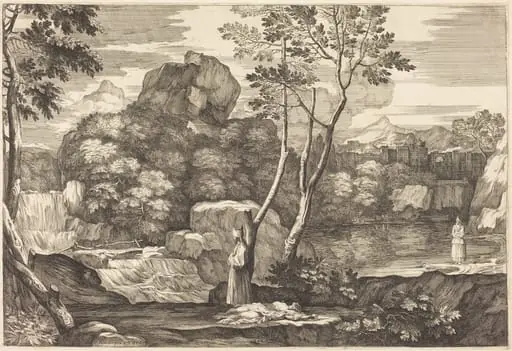 The Levite and the Priest Pass the Man Without Helping Him
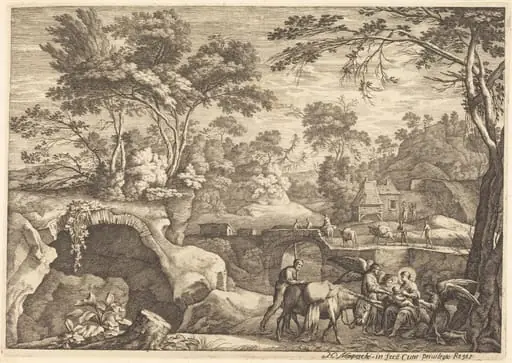 The Flight into Egypt
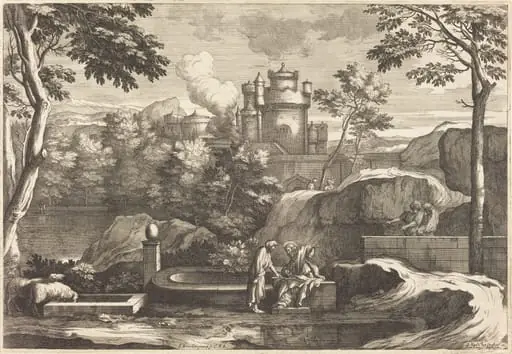 Jesus and the Samaritan
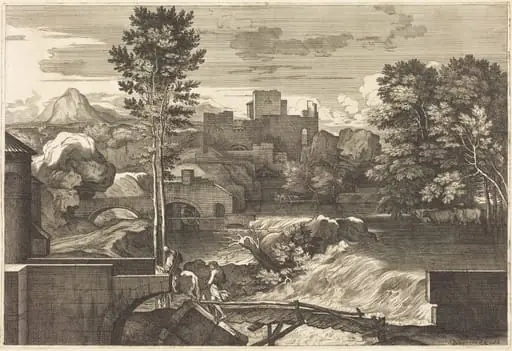 Landscape with Two Figures on a Bridge