Artwork
The Vision of Ezekiel
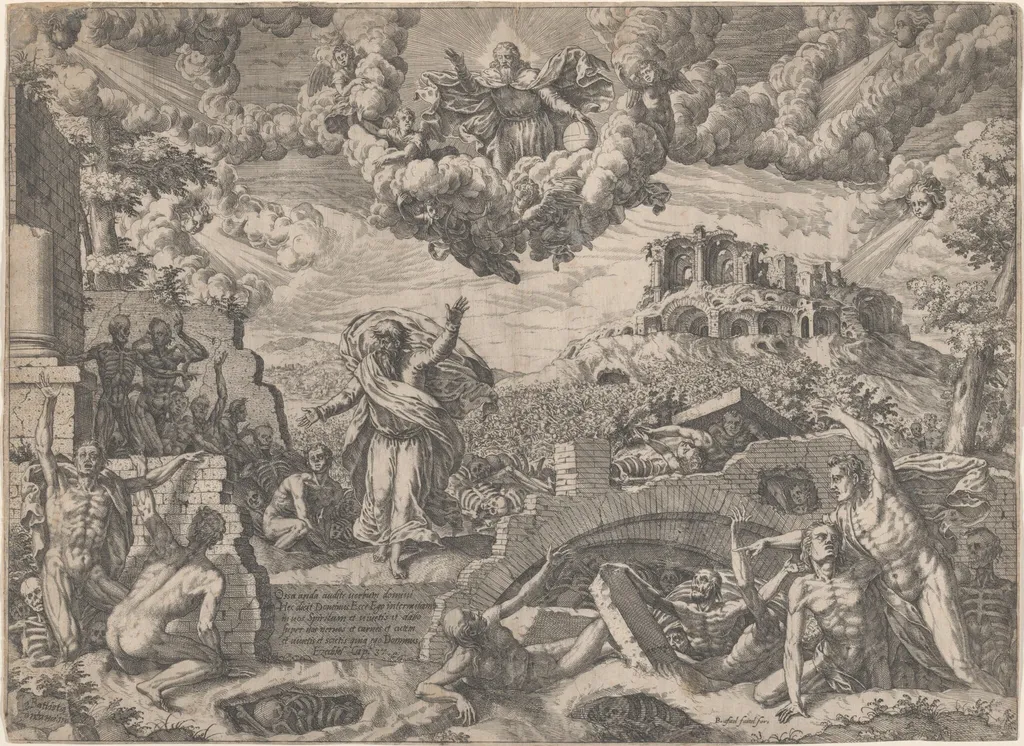
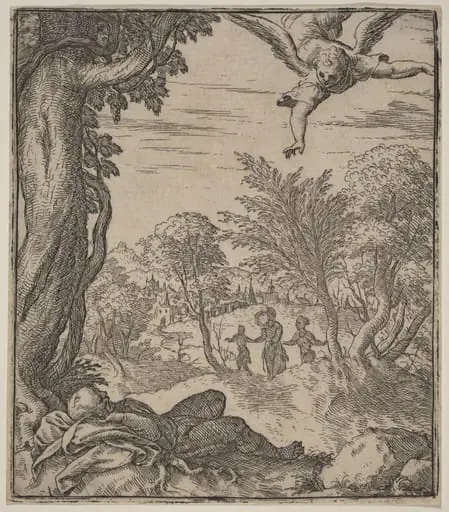
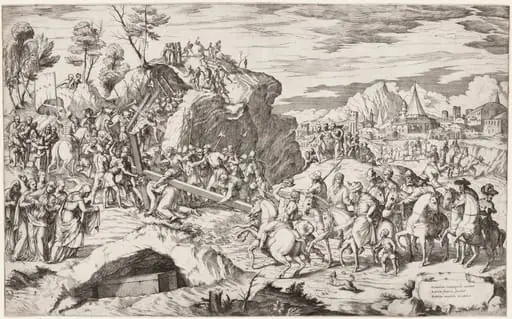
The Vision of Ezekiel is an ink print by the Renaissance artist Giovanni Battista Fontana. It dates from 1579 and is held in the collection of the National Gallery of Art.
About this work
Overview
The Vision of Ezekiel is a print created by Giovanni Battista Fontana in 1579, combining etching and engraving techniques on laid paper. It is a representative work of Fontana, an Italian artist trained in the Venetian tradition.
Subject & Meaning
The print depicts the biblical prophet Ezekiel's vision, showing a dramatic scene with Ezekiel standing on a rocky hill, surrounded by figures on the ground and winged beings in the sky. The composition is rich in detail, conveying a sense of movement and narrative.
Technique & Style
Fontana's use of etching and engraving creates a highly detailed image with deep textures and dynamic lines, giving the scene a sense of depth and energy. The artist's skillful handling of line work brings the visionary scene to life.
History & Provenance
Fontana, born near Verona, worked in Austria from 1562, producing various artworks, including altarpieces and frescoes. He was appointed court artist in Innsbruck in 1575, where he likely created The Vision of Ezekiel in 1579.
Context
The print reflects Fontana's experience working on decorative projects, such as the chapel of Schloß Kaiser-Ebersdorf in Vienna, and his role as a court artist in Innsbruck, where he was influenced by the Venetian tradition.
Artist & collection

Artist
Giovanni Battista Fontana (1524 – 25 September 1587) was an Italian painter and engraver.

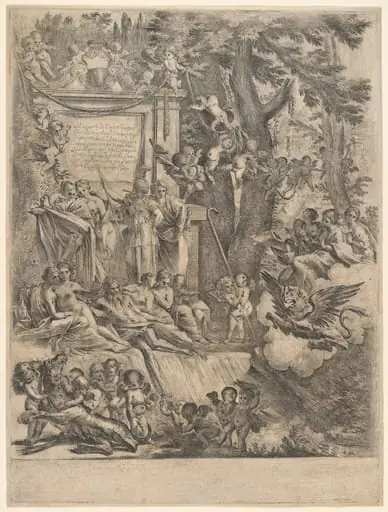 Allegory in Honor of the Arrival of Cardinal Franciotti as Bishop of Lucca
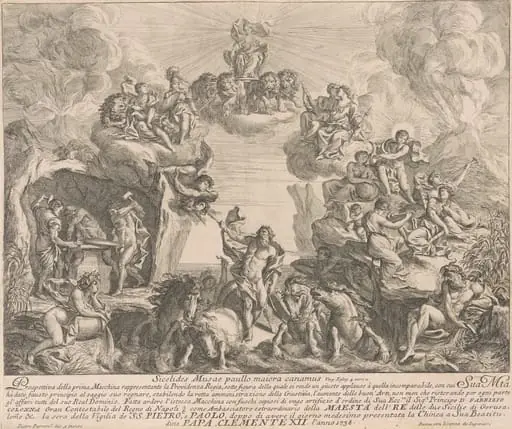 The Prima Macchina for the Chinea of 1738: Allegory of Regal Providence
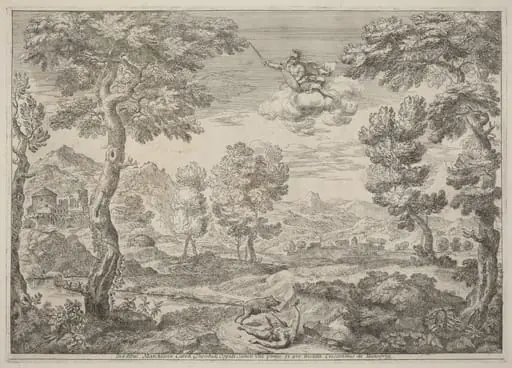 Mars's Revenge on Adonis
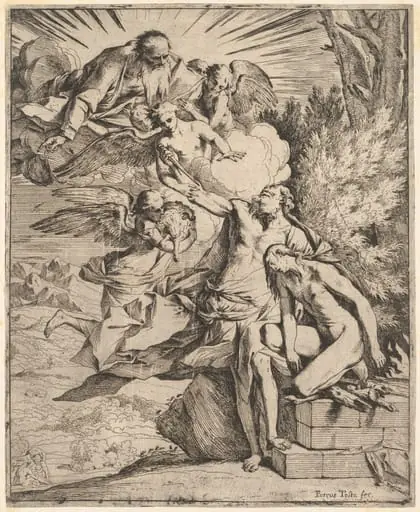 The Sacrifice of Abraham
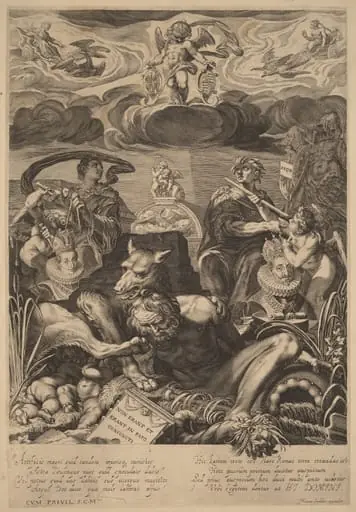 Allegory of the Marriage of Emperor Ferdinand II and Eleanor Gonzaga
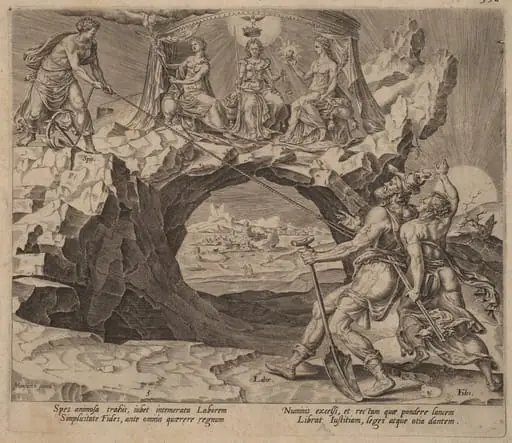 The Diligent Worker Aspiring to the Rightousness of the Lord
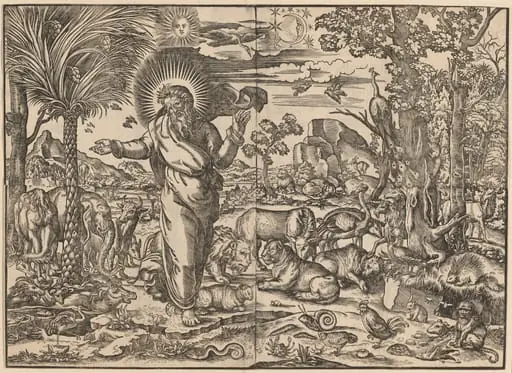 The Creation of the Animals
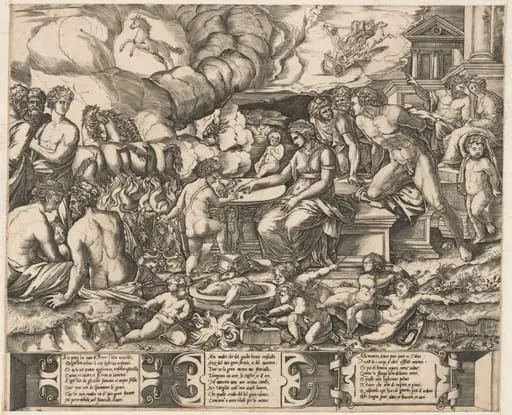 Allegory of Love
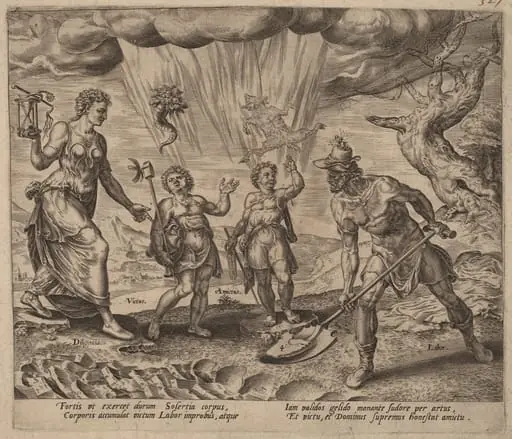 The Lord Endowing the Diligent Worker with Food and Clothing
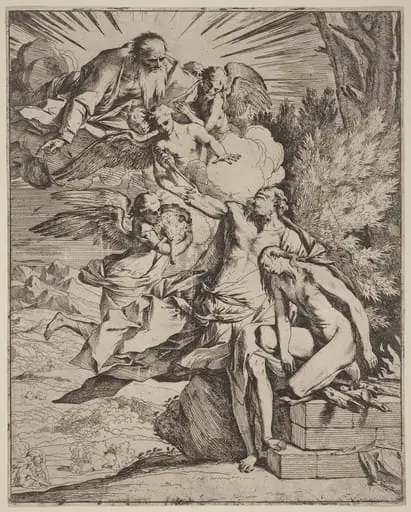 The Sacrifice of Abraham
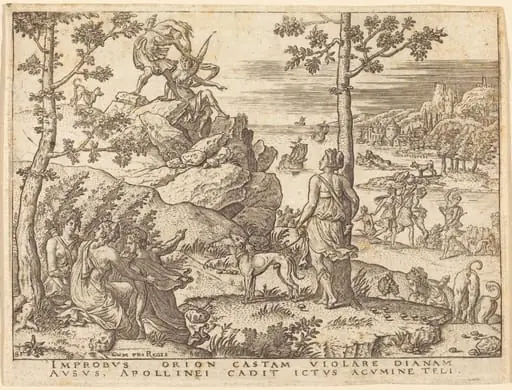 Orion Killed by Apollo
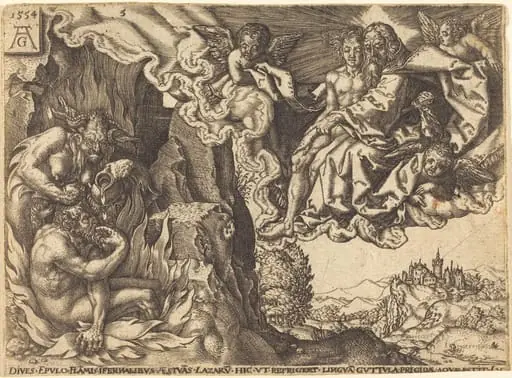 The Rich Man in Hell