Artwork
Cottages and Road
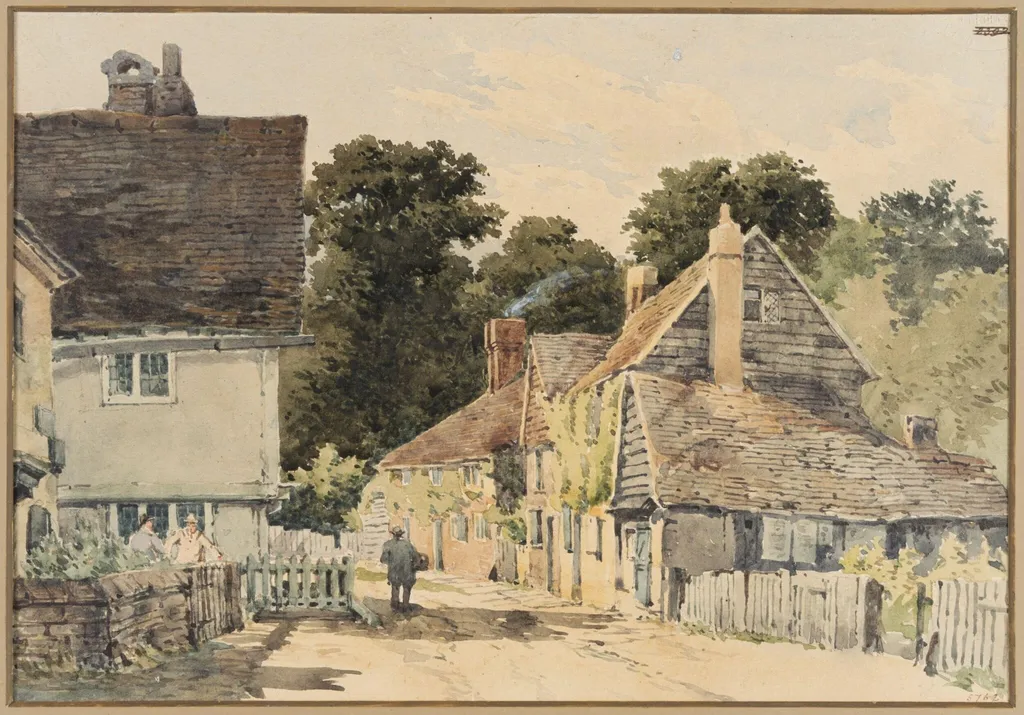
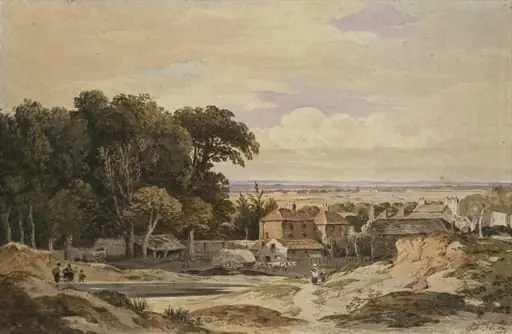
Cottages and Road is a watercolor work on paper by Charles Claude Pyne. It dates from 1850 and is held in the collection of the Victoria and Albert Museum.
About this work
Overview
The composition centers on a narrow path winding between modest dwellings, with subtle human presence and domestic activity suggesting daily life.
Charles Claude Pyne's watercolour captures a rural English lane in quiet detail. The composition centers on a narrow path winding between modest dwellings, with subtle human presence and domestic activity suggesting daily life. Soft washes of pigment create a tranquil atmosphere, avoiding sharp lines or dramatic contrasts. The scene is rendered with restraint, emphasizing stillness over narrative.
Subject & Meaning
The painting portrays ordinary village life: a lone walker, two figures near a gate, and laundry drying outside a home. These elements convey routine rather than spectacle. The absence of grand architecture or bustling activity underscores a focus on quiet, unremarkable moments. The scene invites contemplation of rural solitude and the rhythm of everyday existence.
Technique & Style
Pyne employed delicate watercolour washes to model form through tone rather than outline. Muted earth tones—ochres, olive greens, and pale whites—blend seamlessly, suggesting natural light filtering through trees. The texture of thatched and shingled roofs is implied through layered washes, not detailed brushwork. Shadows fall softly across walls, enhancing the sense of calm and atmospheric depth.
History & Provenance
The work is attributed to Charles Claude Pyne, an 18th-century British watercolourist known for topographical scenes. It likely dates from the late 1700s, a period when watercolour was gaining recognition as a medium for landscape study. The piece entered the Victoria and Albert Museum’s collection as part of a broader acquisition of British watercolours from the period.
Context
During Pyne’s time, watercolour was increasingly used by amateur and professional artists to document the English countryside. This work aligns with a growing interest in vernacular architecture and rural life, distinct from grander pastoral traditions. Such scenes reflected both aesthetic preference and a cultural fascination with simplicity and authenticity in the face of industrial change.
Legacy
Pyne’s watercolours contribute to a body of work that helped establish watercolour as a legitimate medium for observational art. His restrained palette and focus on everyday settings influenced later topographical artists. Though not widely known today, his pieces remain valuable for their quiet documentation of pre-industrial rural England.
Own this work as a print
Artist & collection

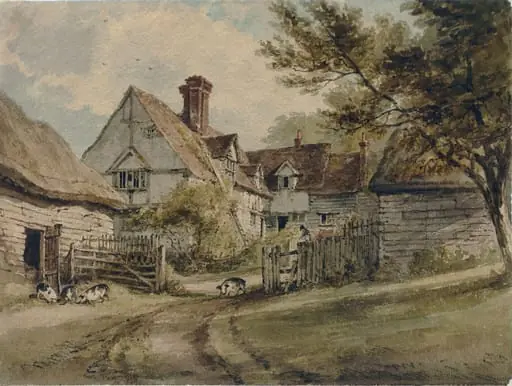 Farmhouse with Pigs
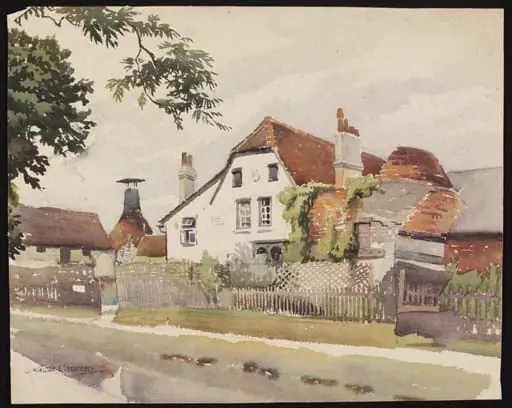 Kilns and Maltings on the Canal Bank, Bishop's Stortford
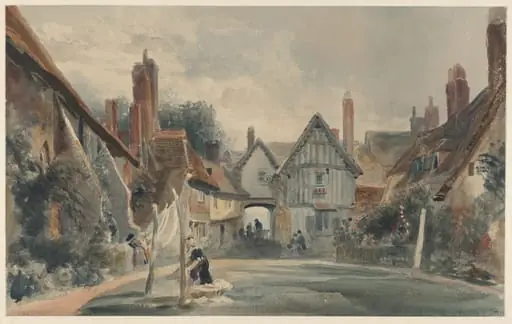 Saint John's Hospital, Canterbury
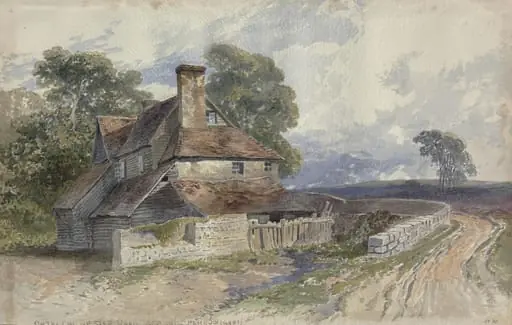 View on the Chichester Road
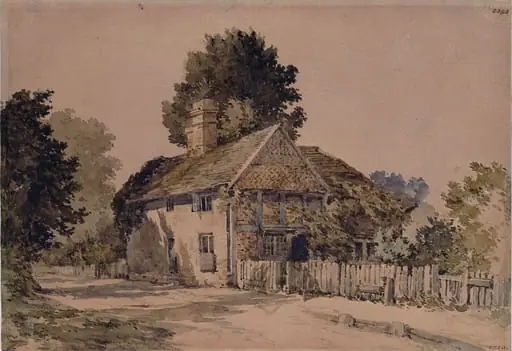 Cottage near Shere, Surrey
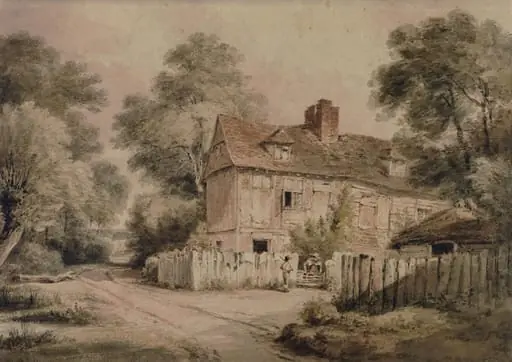 Farmhouse, Buckinghamshire
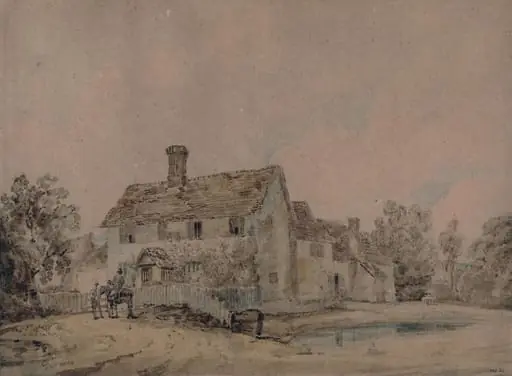 Pinckney's Farm, Radwinter, Essex
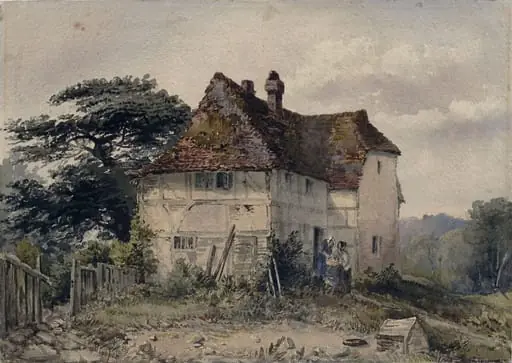 Landscape with cottage
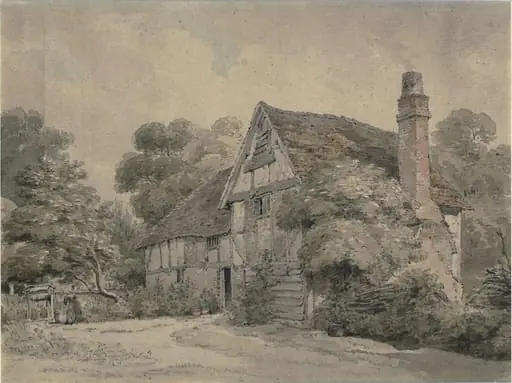 Cottage at Bookham
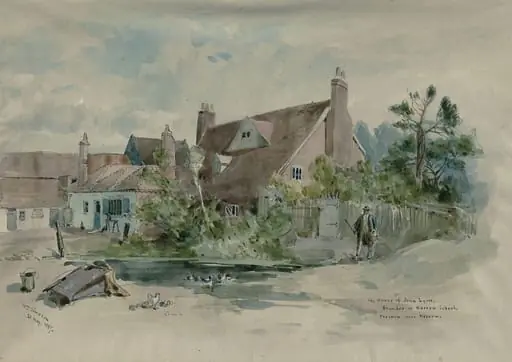 House of John Lyon, Founder of Harrow School, at Preston, near Harrow
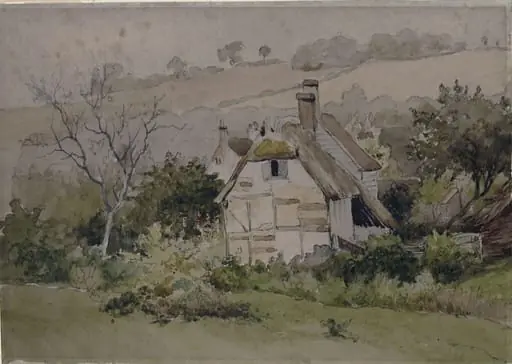 Landscape with cottages and trees
 Frognal, Hampstead