Artwork
Out of Rome - House of the Blessed Virgin at Loreto. Sculpture of the figures of Prophets, A.D. 1520
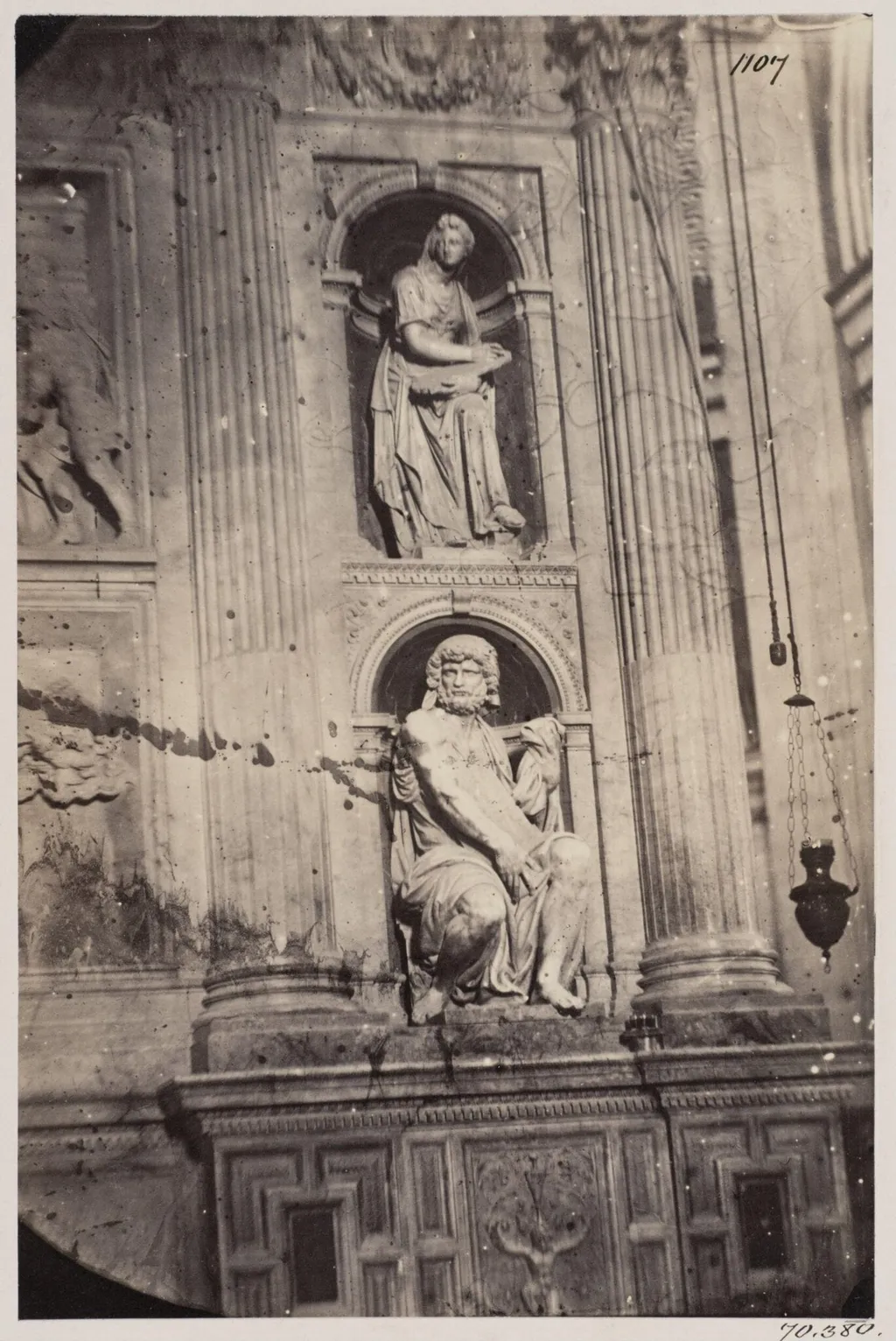
Out of Rome - House of the Blessed Virgin at Loreto. Sculpture of the figures of Prophets, A.D. 1520 is a photographic photography by the Impressionist artist John Henry Parker. It dates from 1867 and is held in the collection of the Victoria and Albert Museum. A black-and-white photograph from the 1860s captures two stone prophet statues embedded in the wall of the Santa Casa in Loreto, Italy.
About this work
Overview
The photograph was likely made by local artisans such as Adriano De Bonis or Filippo Spina, and later entered the Victoria and Albert Museum’s collection.
A black-and-white photograph from the 1860s captures two stone prophet statues embedded in the wall of the Santa Casa in Loreto, Italy. Taken between 1864 and 1879 as part of John Henry Parker’s documentary project on Roman antiquities, the image preserves details of sculptural elements from the early 16th century. The photograph was likely made by local artisans such as Adriano De Bonis or Filippo Spina, and later entered the Victoria and Albert Museum’s collection.
Subject & Meaning
The two figures represent biblical prophets, positioned to flank a sacred space within the Santa Casa. Their solemn expressions and draped robes reflect traditional iconography meant to convey divine authority and anticipation of Christ’s coming. The statues were not merely decorative but served as spiritual sentinels, reinforcing the sanctity of the site believed to house the Virgin Mary’s childhood home.
Technique & Style
Carved in stone around 1520, the figures exhibit a restrained, archaicizing style that mimics ancient sculpture, aligning with Renaissance ideals of classical revival. Their forms are simplified yet dignified, with deep folds in the robes and weathered surfaces that harmonize with the aged architecture. The photograph’s grainy texture and tonal contrast emphasize the sculptures’ materiality and the patina of time.
History & Provenance
The photograph belongs to a larger collection commissioned by John Henry Parker to document Rome’s artistic heritage up to the 17th century. Taken by local photographers under his supervision, the images were intended for scholarly use in the publication Archaeology of Rome. Many of these photographs, including this one, were acquired by the Victoria and Albert Museum before 1870, preserving a record of the Santa Casa’s condition in the mid-19th century.
Context
The Santa Casa in Loreto was a major pilgrimage site by the 16th century, and its interior was enriched with devotional art to reflect its sacred status. The prophet statues were part of a broader program of embellishment that included frescoes and architectural embellishments, all designed to elevate the spiritual experience of visitors. The photographic record captures these elements before later restorations altered their appearance.
Legacy
This photograph remains a key visual archive of Renaissance sculpture in a devotional setting, offering insight into how sacred art was documented during the rise of archaeological photography. Its preservation in a major museum collection underscores the value placed on recording cultural heritage before industrialization and modernization transformed historic sites.
Artist & collection
Artist
John Henry Parker liked to explore old churches in Rome. He'd photograph the sculptures and carvings he found. One thing that stands out is his attention to detail - he'd capture tiny parts of bigger pieces, like the…

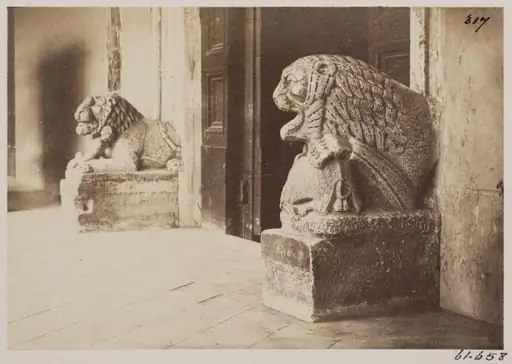 Sculptures - Lions at the Door of the Church of S. Lorenzo
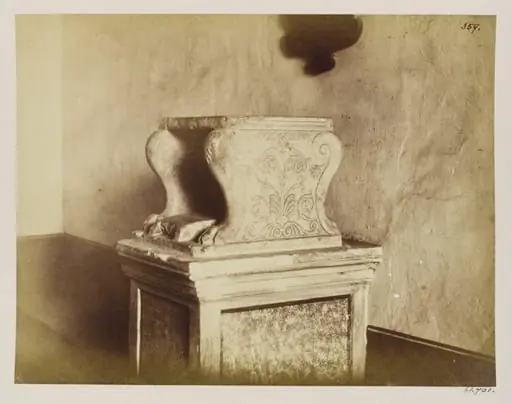 Sculptures - Marble Seat of S. Gregory in the Church of S. Stefano Rotondo, with Shallow Carving, c. A.D. 590.
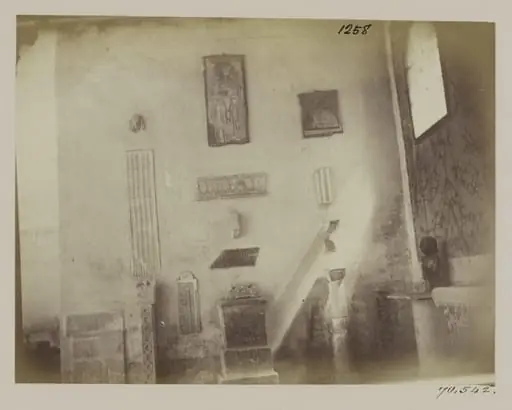 Church of S. Giorgio in Velabro - Fragments of marble sculpture, Tombs, &c., from the old Church, built into the wall.
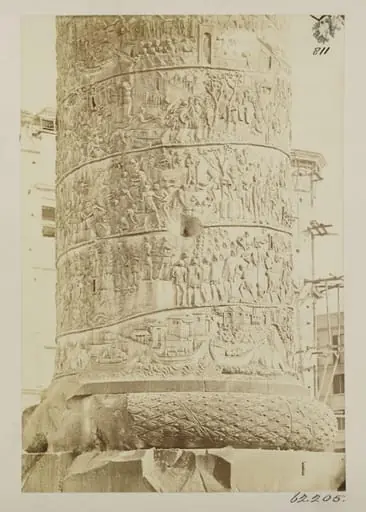 Sculptures - Details of Sculpture from Trajan's Column.
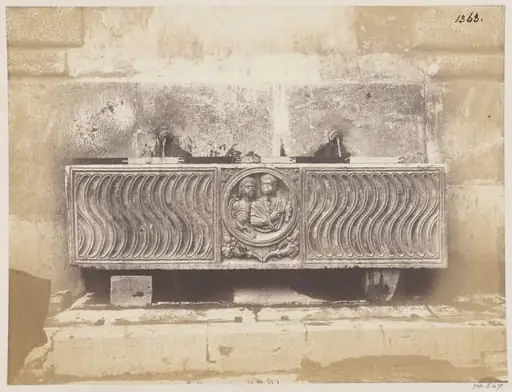 Sculpture - Sarcophagus of the fourth century made into a fountain, near the Church of S. Maria, in the Piazza del Popolo
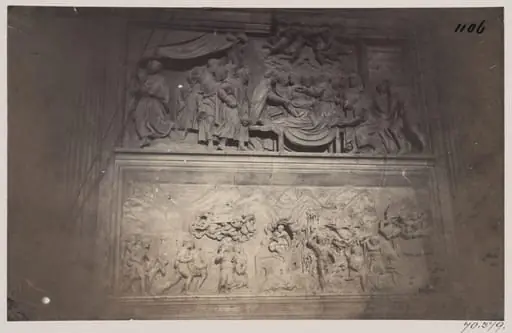 Out of Rome - House of the Blessed Virgin at Loreto. Sculpture of the Santissima Casa carried by Angels, A.D. 1520
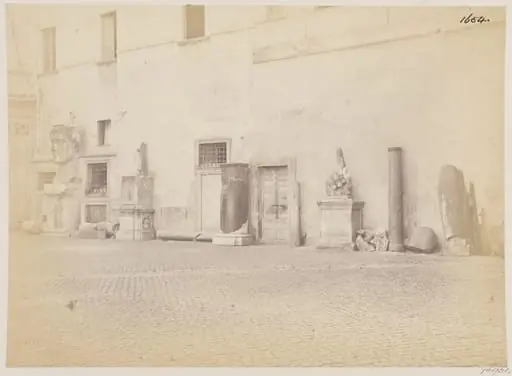 Sculpture - View on the left side of the Court-yard of the Palazzo de' Conservatori on the Capitol, shewing fragments of colossal Statues
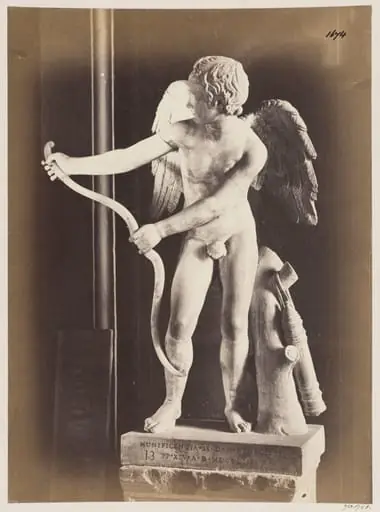 Sculpture - Statue of Cupid with his bow, in the Capitoline Museum.
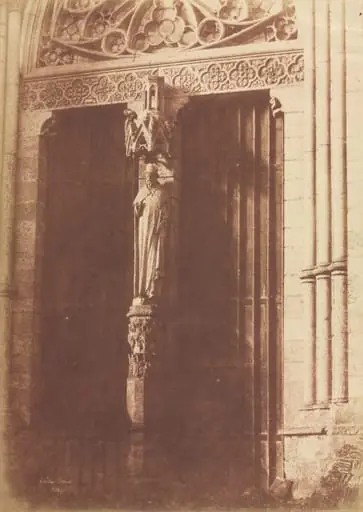 Amiens, Northern Façade of the Transept
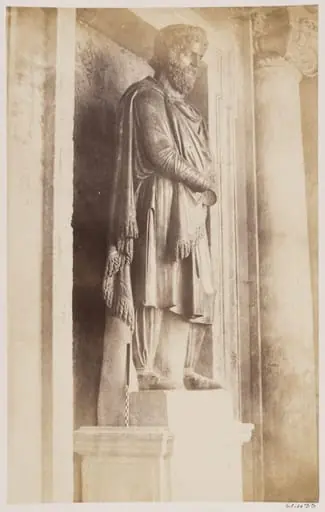 Sculpture - Statue of a barbarian King a prisoner, now in the Palazzo de' Conservatori on the Capitol
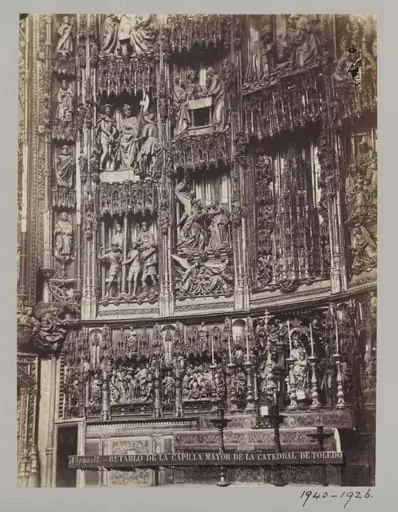 Altarpiece in Toledo Cathedral, Spain
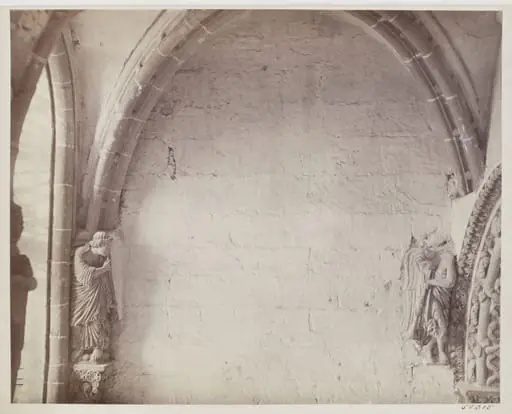 Cathedral, Santiago, Spain, Portico de la Gloria, Sculpture on North wall
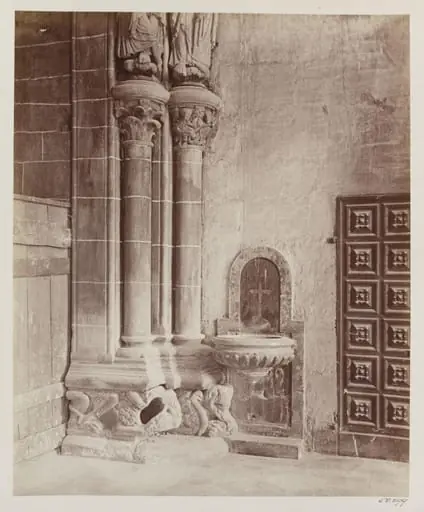 Cathedral, Santiago, Spain, Portico de la Gloria, detail of column at South wall
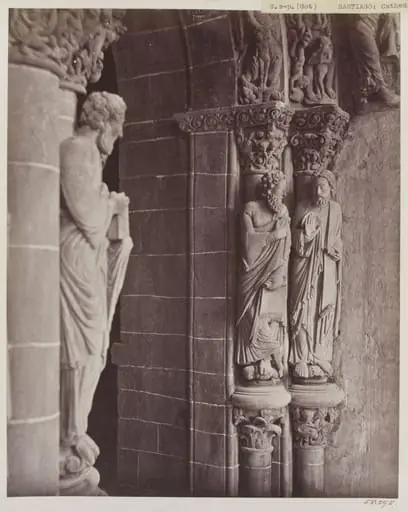 Cathedral, Santiago, Spain, Portico de la Gloria, Sculpture on South wall
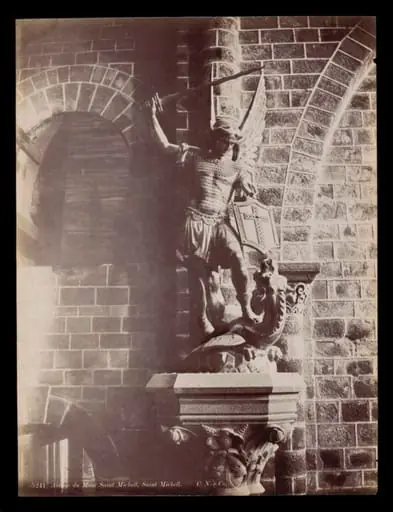 Mont Saint-Michel, St. Michel