Artwork
Sculpture - Sarcophagus of Porphyry of S. Helena, A.D. 330
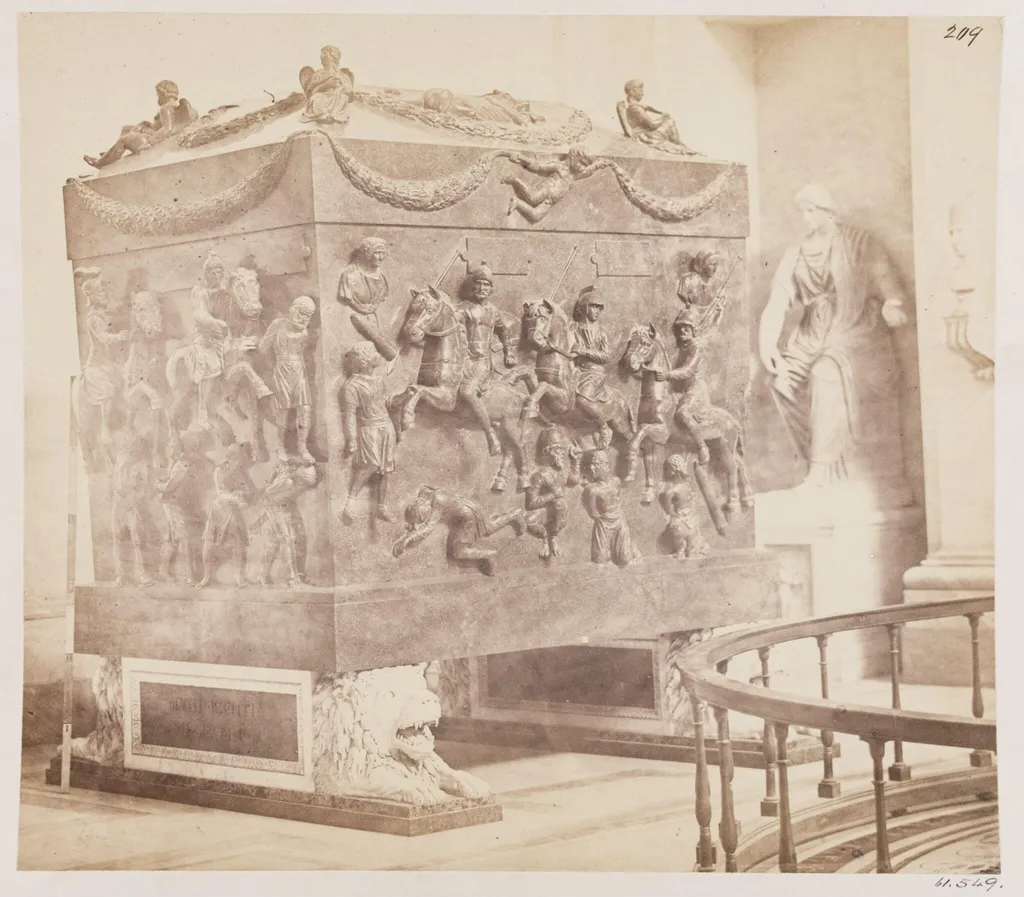
Sculpture - Sarcophagus of Porphyry of S. Helena, A.D. 330 is a photographic photography by the Impressionist artist John Henry Parker. It dates from 1866 and is held in the collection of the Victoria and Albert Museum. This photograph documents the porphyry sarcophagus attributed to Saint Helena, created around A.
About this work
Overview
This photograph documents the porphyry sarcophagus attributed to Saint Helena, created around A.D. 330. The image is part of a large archaeological survey of Rome, capturing the sarcophagus's intricate carvings and form.
Subject & Meaning
The sarcophagus is a burial container made of porphyry, a hard purple-red stone, adorned with detailed carvings depicting scenes of action involving people and horses, as well as figures in repose.
Technique & Style
The carvings on the sarcophagus combine dynamic movement with precise detail, conveying a sense of drama and stillness. The contrast between the active scenes on the sides and the more subdued figures on top adds to the visual interest.
History & Provenance
The photograph was taken between 1864 and 1879 by local photographers under John Henry Parker's direction. Many of the photographs from before 1870 are now held by the Victoria and Albert Museum.
Artist & collection
Artist
John Henry Parker liked to explore old churches in Rome. He'd photograph the sculptures and carvings he found. One thing that stands out is his attention to detail - he'd capture tiny parts of bigger pieces, like the…

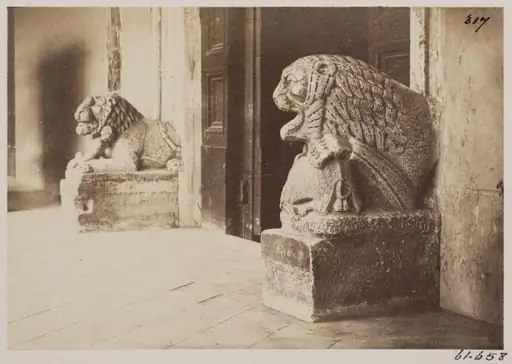 Sculptures - Lions at the Door of the Church of S. Lorenzo
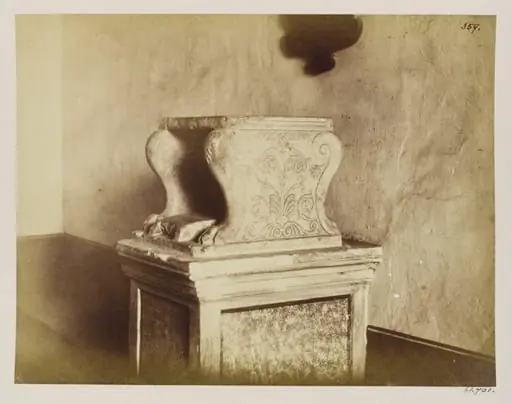 Sculptures - Marble Seat of S. Gregory in the Church of S. Stefano Rotondo, with Shallow Carving, c. A.D. 590.
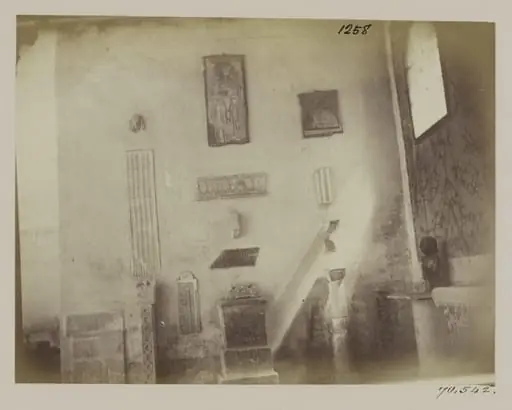 Church of S. Giorgio in Velabro - Fragments of marble sculpture, Tombs, &c., from the old Church, built into the wall.
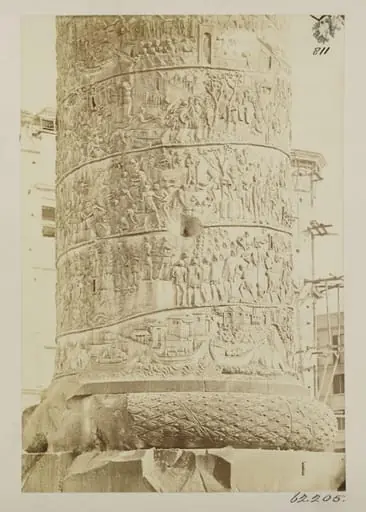 Sculptures - Details of Sculpture from Trajan's Column.
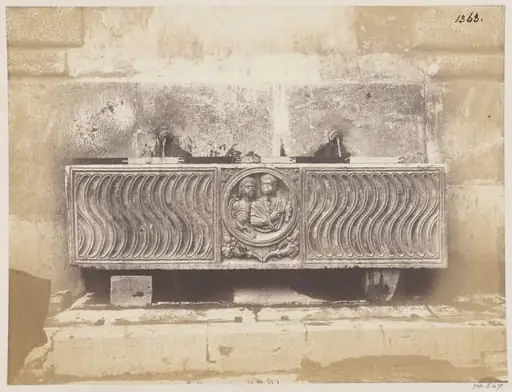 Sculpture - Sarcophagus of the fourth century made into a fountain, near the Church of S. Maria, in the Piazza del Popolo
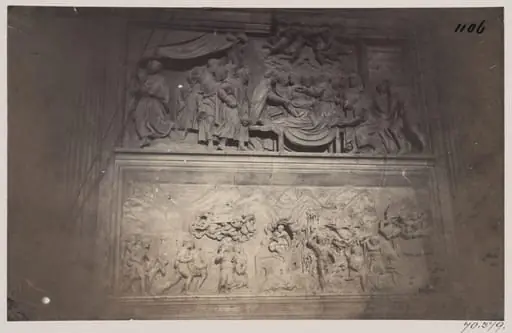 Out of Rome - House of the Blessed Virgin at Loreto. Sculpture of the Santissima Casa carried by Angels, A.D. 1520
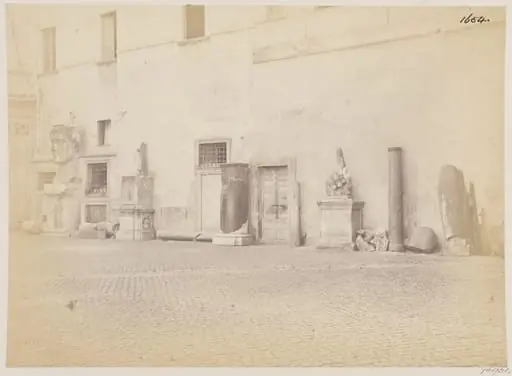 Sculpture - View on the left side of the Court-yard of the Palazzo de' Conservatori on the Capitol, shewing fragments of colossal Statues
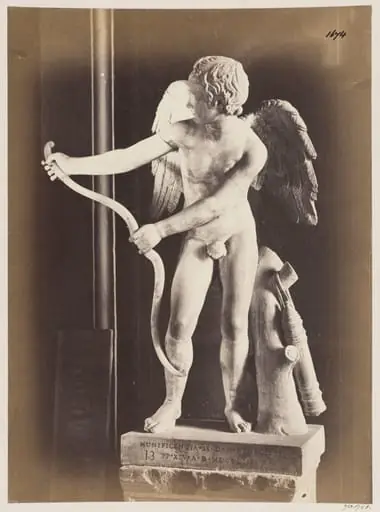 Sculpture - Statue of Cupid with his bow, in the Capitoline Museum.
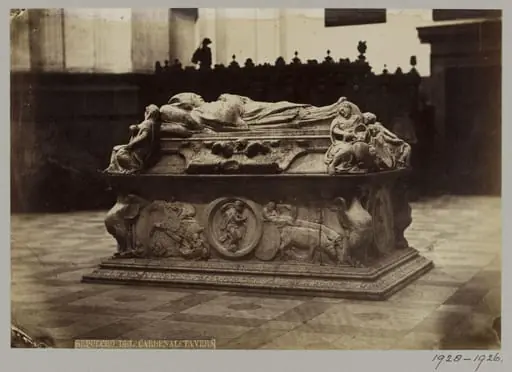 Tomb of Cardinal Tavera in the Hospital de Tavera in Toledo
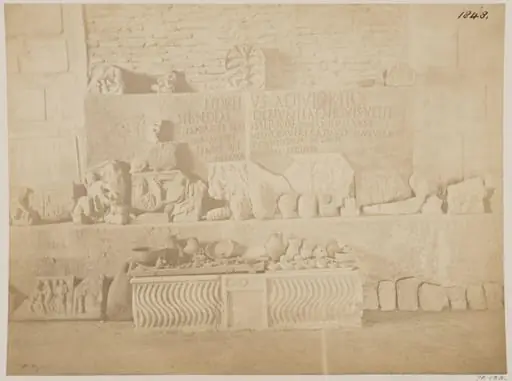 Ostia - View in the Museum
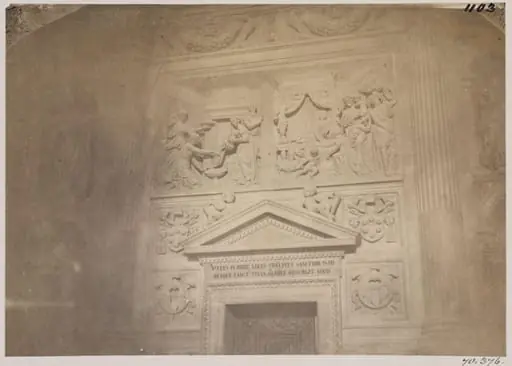 Out of Rome - House of the Blessed Virgin at Loreto. Sculpture of the Nativity over a Doorway, with the Arms of the Medici, Leo X., A.D. 1520
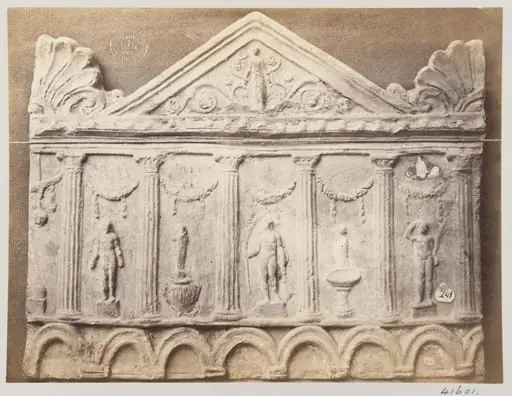 Bas-relief of the Temple of Hercules in terra cotta
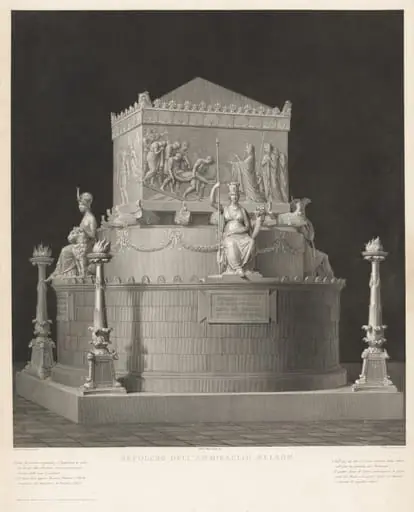 Funerary Monument to Horatio Nelson
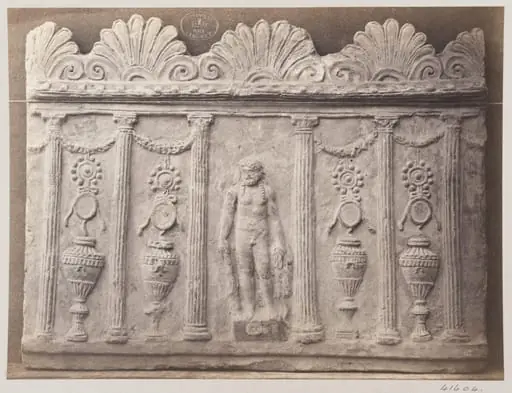 Bas-relief of Temple of Hercules in terra cotta
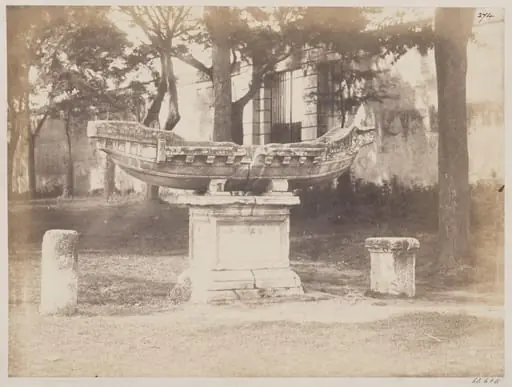 Sculptures, the Navicella on the Caelian - The Marble Model of a Boat found in the time of Leo X