Artwork
Out of Rome - House of the Blessed Virgin at Loreto. Sculpture of the Nativity over a Doorway, with the Arms of the Medici, Leo X., A.D. 1520
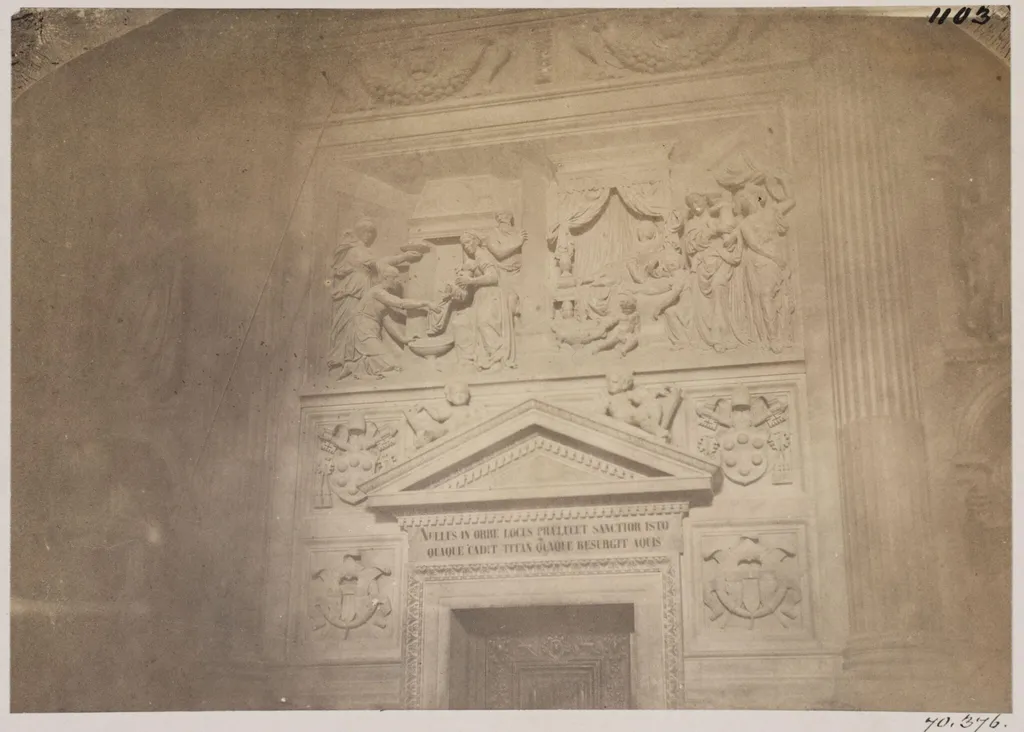
Out of Rome - House of the Blessed Virgin at Loreto. Sculpture of the Nativity over a Doorway, with the Arms of the Medici, Leo X., A.D. 1520 is a photographic photography by the Impressionist artist John Henry Parker. It dates from 1867 and is held in the collection of the Victoria and Albert Museum.
About this work
Overview
A 19th-century photograph captures a 16th-century sculpted Nativity scene above a doorway in the House of the Blessed Virgin at Loreto, Ancona. The image is part of a comprehensive photographic survey of Rome's monuments and artworks, spanning antiquity to the 1600s.
Subject & Meaning
The sculpted relief depicts the Nativity, with key figures and elements: a woman (likely Mary) handing a baby (Jesus) to another kneeling figure (possibly an angel or midwife) near a bed, and a group under a canopy, suggesting celebration or adoration. The scene conveys the narrative of Jesus' birth.
Technique & Style
The stone reliefs exhibit a narrative style, with multiple elements telling a story. The composition and use of light and shadow (reminiscent of chiaroscuro) suggest a Renaissance influence, though the photograph's medium and later creation date (1864-1879) differ from the sculpture's original context (A.D. 1520).
History & Provenance
The sculpture dates to A.D. 1520, during the papacy of Leo X (a Medici), indicated by the Medici family crest (shields with crossed keys) below the scene. The photograph, however, was taken between 1864 and 1879 as part of John Henry Parker's survey, with copies held by the Victoria and Albert Museum.
Context
The sculpture's location above a doorway in a religious site (House of the Blessed Virgin at Loreto) suggests its original purpose as devotional or decorative artwork for the faithful. The Medici crest indicates patronage or dedication ties to the powerful Medici family during the Renaissance.
Artist & collection
Artist
John Henry Parker liked to explore old churches in Rome. He'd photograph the sculptures and carvings he found. One thing that stands out is his attention to detail - he'd capture tiny parts of bigger pieces, like the…

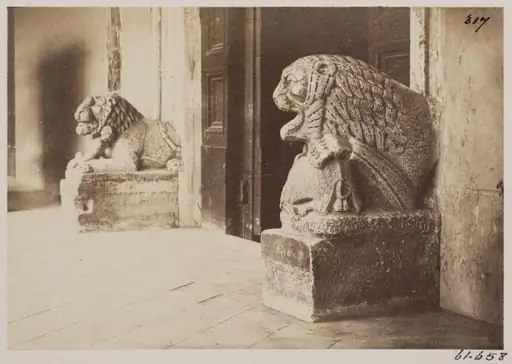 Sculptures - Lions at the Door of the Church of S. Lorenzo
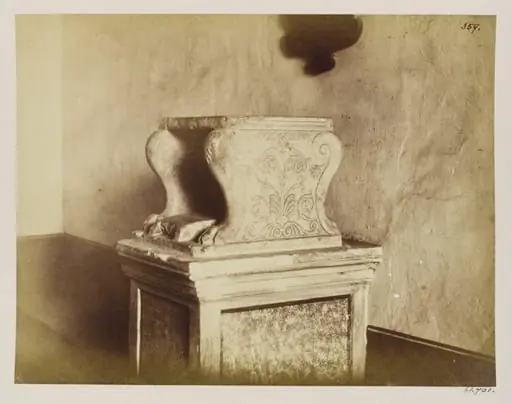 Sculptures - Marble Seat of S. Gregory in the Church of S. Stefano Rotondo, with Shallow Carving, c. A.D. 590.
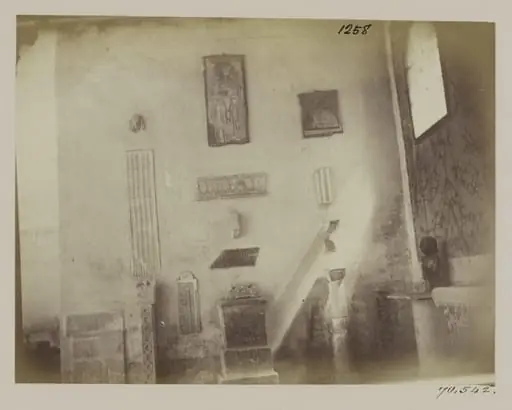 Church of S. Giorgio in Velabro - Fragments of marble sculpture, Tombs, &c., from the old Church, built into the wall.
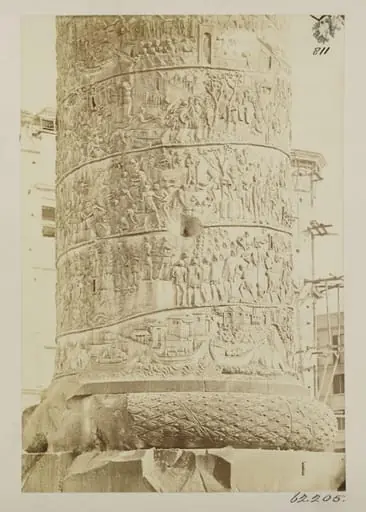 Sculptures - Details of Sculpture from Trajan's Column.
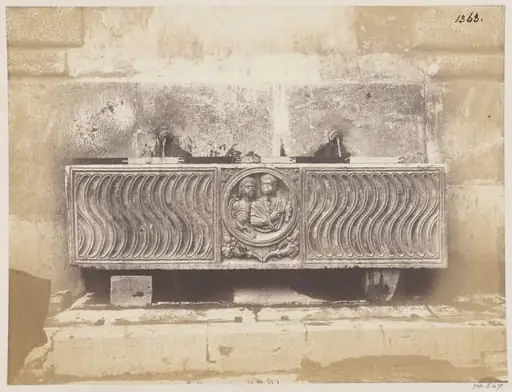 Sculpture - Sarcophagus of the fourth century made into a fountain, near the Church of S. Maria, in the Piazza del Popolo
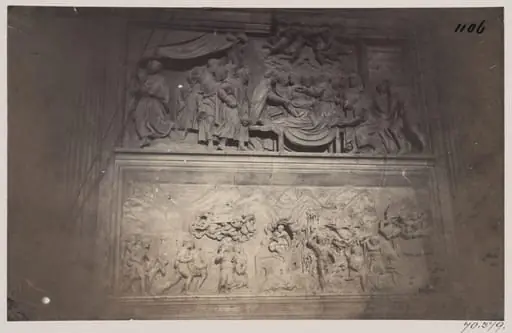 Out of Rome - House of the Blessed Virgin at Loreto. Sculpture of the Santissima Casa carried by Angels, A.D. 1520
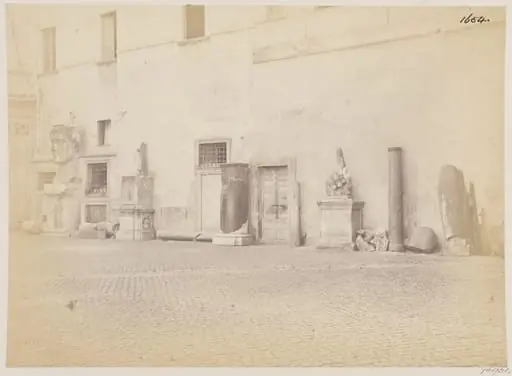 Sculpture - View on the left side of the Court-yard of the Palazzo de' Conservatori on the Capitol, shewing fragments of colossal Statues
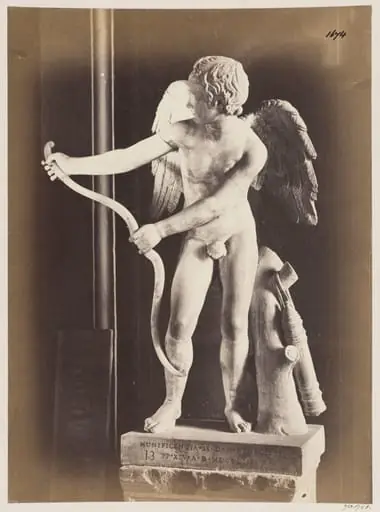 Sculpture - Statue of Cupid with his bow, in the Capitoline Museum.
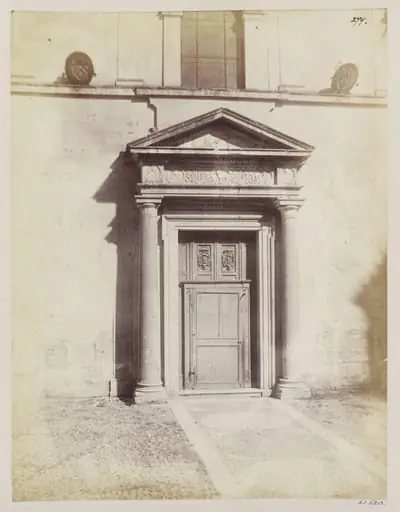 Church of S. Pudentina. Doorway, with shallow Sculpture of the eighth century (?), over it the Doorway rebuilt in the seventeenth century.
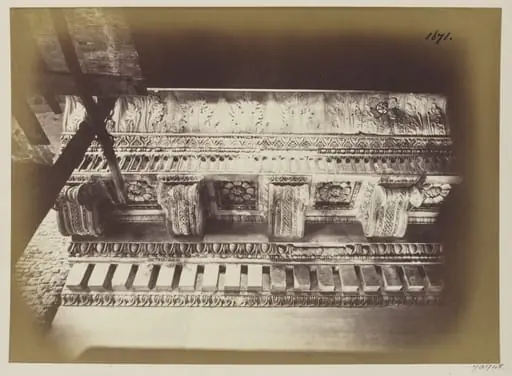 Sculpture - Architectural Details - Cornice of the Temple of Concord on the Clivus Capitolinus, now in the Tabularium.
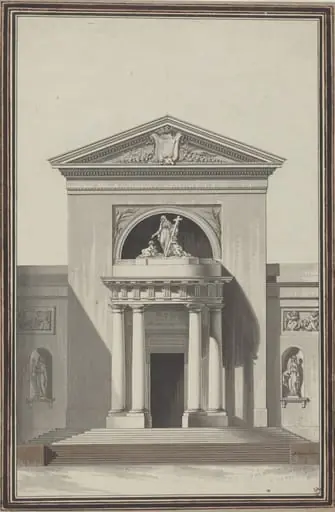 Facade for a Church with a Sculpture Representing Faith
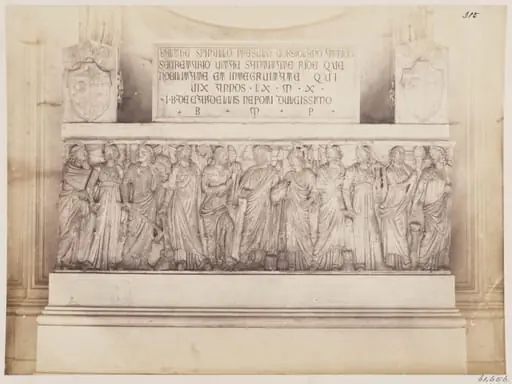 Sculptures - Sarcophagus, with a Sculpture of the third century, representing the Portrait of the deceased surrounded by Minerva and the Muses, now the Tomb of Monsignor Spinelli in the Church of the Priorato on the Aventine
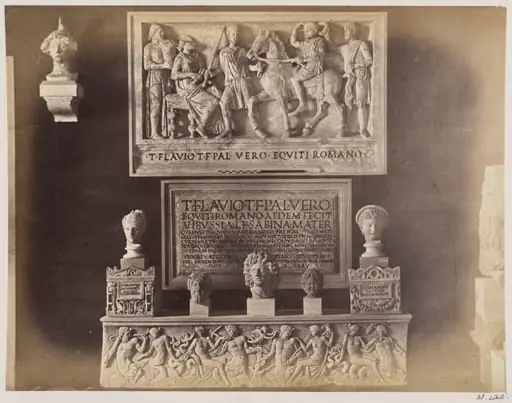 Sculpture - Tomb of Titus Flavius Verus, now in the Lateran Museum, with the Inscription of the Aedes Veri
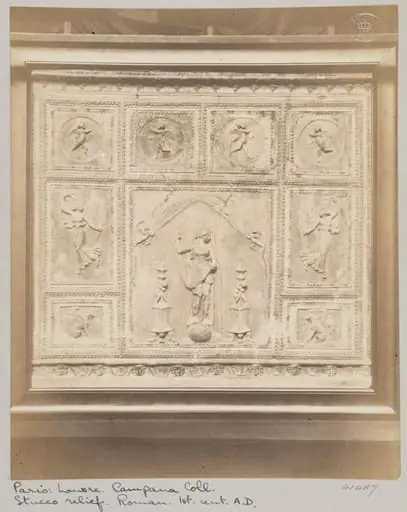 Venus standing on a ball surrounded by Ambrini, two figures of Victory and two griffins, bas-relief in coloured stucco
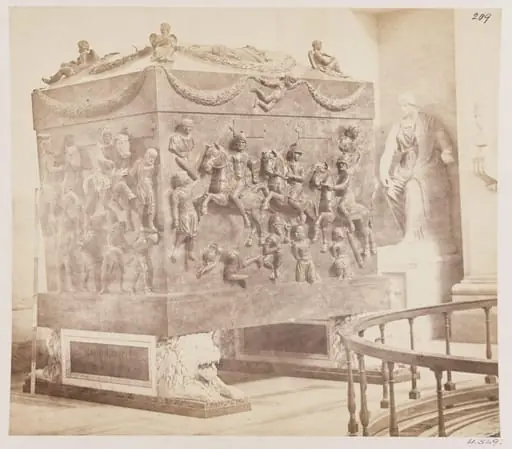 Sculpture - Sarcophagus of Porphyry of S. Helena, A.D. 330
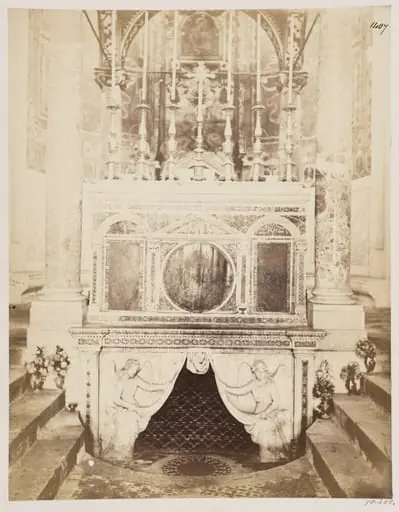 Church and Altar Decoration, S. Cesareo - Altar with Confessio under it, shewing Cosmati Mosaic-work and Sculpture