Artwork
Lucretia
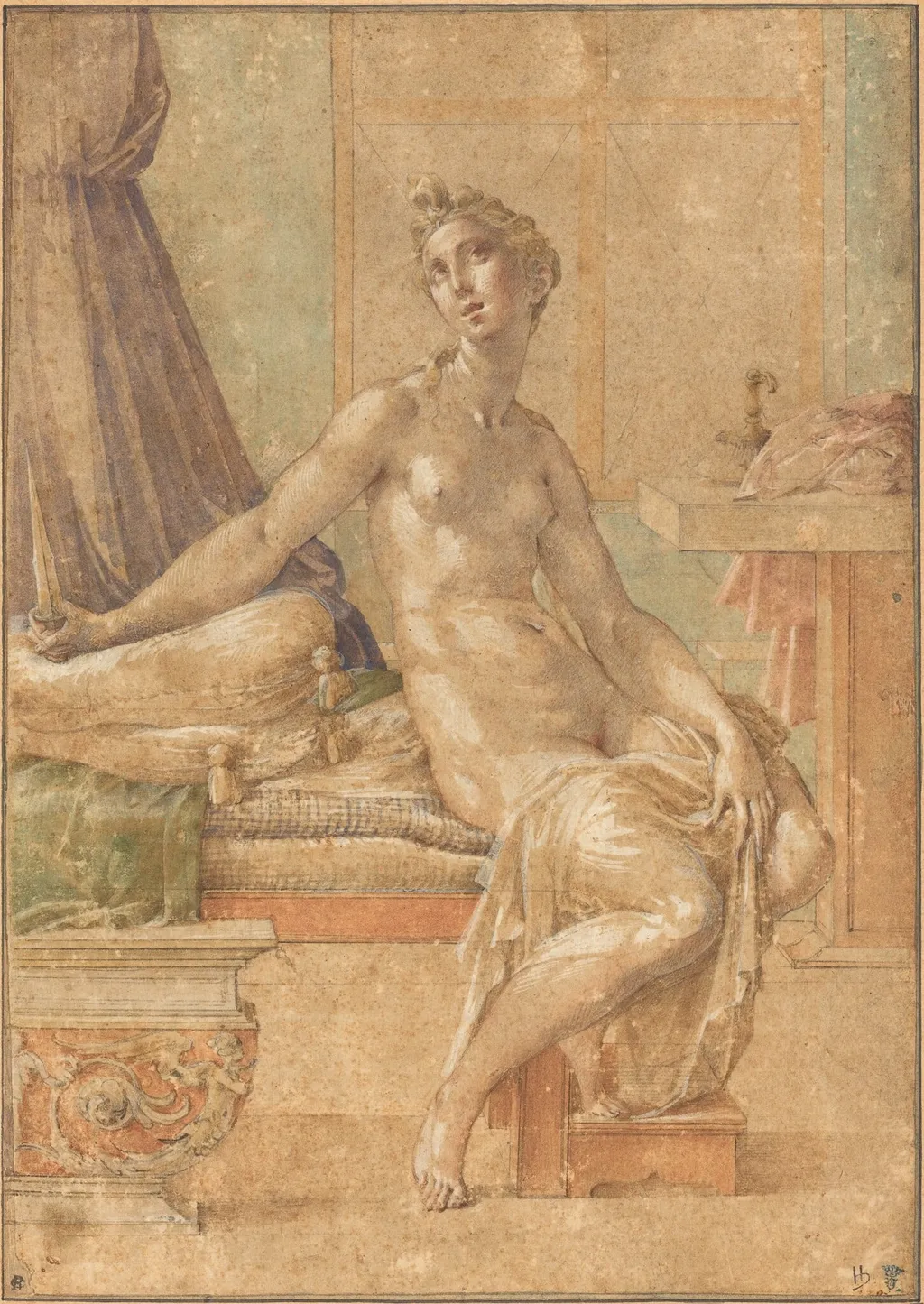
Lucretia is a chalk drawing by the Renaissance artist Parmigianino. It dates from 1539 and is held in the collection of the National Gallery of Art.
About this work
Overview
Created circa 1539, this drawing titled Lucretia is executed in watercolor with white highlights applied over a black chalk base. It exemplifies the work of Girolamo Francesco Maria Mazzola, better known as Parmigianso, an Italian artist active in the early sixteenth century.
Subject & Meaning
The composition depicts Lucretia, a figure from Roman legend whose story has long served as a moral exemplar of chastity and civic virtue. In this study, the artist presents her in a poised, contemplative stance, emphasizing the narrative’s themes of honor and personal sacrifice.
Technique & Style
The piece combines the fluidity of watercolor with the stark contrast of white over a dark chalk groundwork, a method that accentuates delicate modeling and atmospheric depth. Its elongated proportions and graceful poses reflect the Mannerist aesthetic that Parmigianino cultivated, marked by refined sensuality and stylized elegance.
Context
During the period of its creation, Parmigianino was moving among artistic centers such as Florence, Rome, and his native Parma, absorbing and contributing to the evolving Mannerist language. This drawing illustrates his engagement with classical subjects and his experimentation with mixed media to achieve a luminous, almost ethereal effect.
Artist & collection

Artist
Girolamo Francesco Maria Mazzola (11 January 1503 – 24 August 1540), also known as Francesco Mazzola or, more commonly, as Parmigianino (UK: , US: , Italian: ; "the little one from Parma"), was an Italian Mannerist…

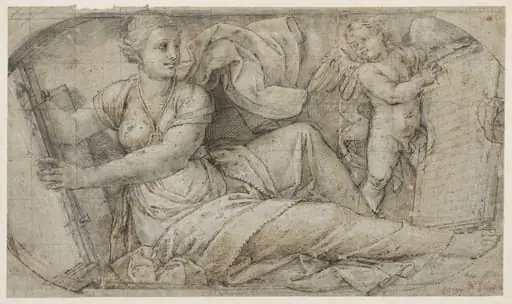 Reclining sibyl holding a book, with a winged putto supporting an inscribed tablet
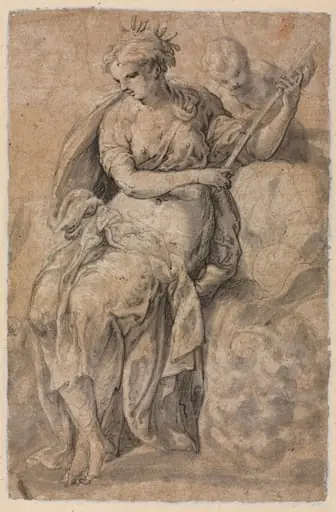 Allegorical Figure (verso)
![Nude Female Figure [verso], by Italian 17th Century](https://artifactworldgallery.com/img/italian-17th-century--nude-female-figure-verso--6445c1e7fff03965-w320.webp) Nude Female Figure [verso]
Nude Female Figure [verso]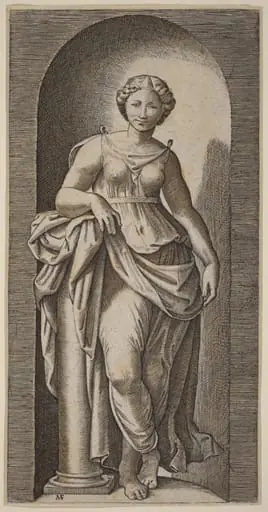 Fortitude
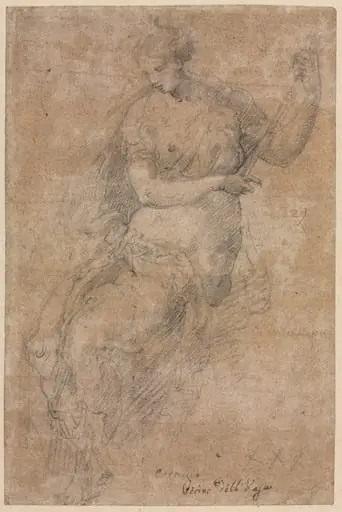 Allegorical Figure (recto)
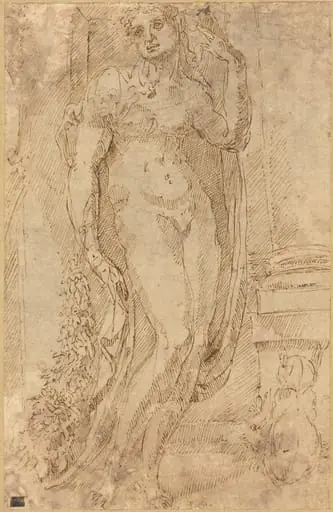 Allegorical Figure with a Cat and a Pig
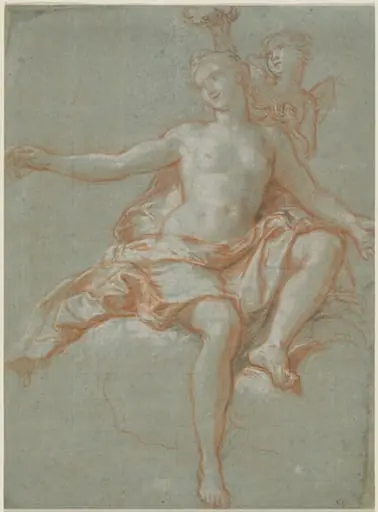 Cupid Stealing Venus's Floral Crown
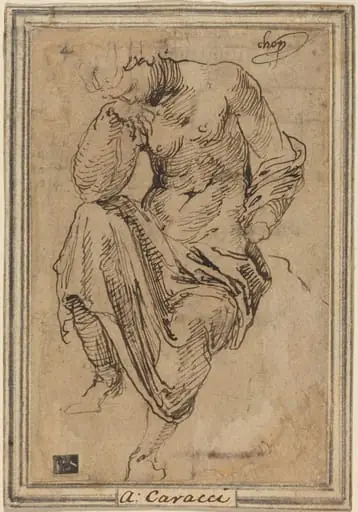 Seated Female Figure after the Antique
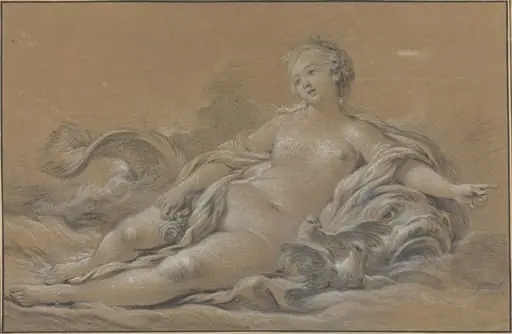 Venus Reclining on a Dolphin
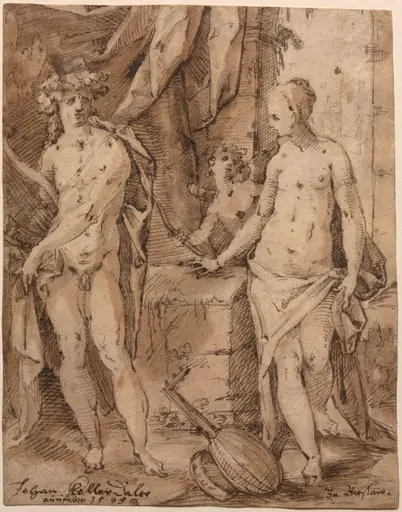 Apollo with Erato and Cupid