Artwork
Saint Barbara
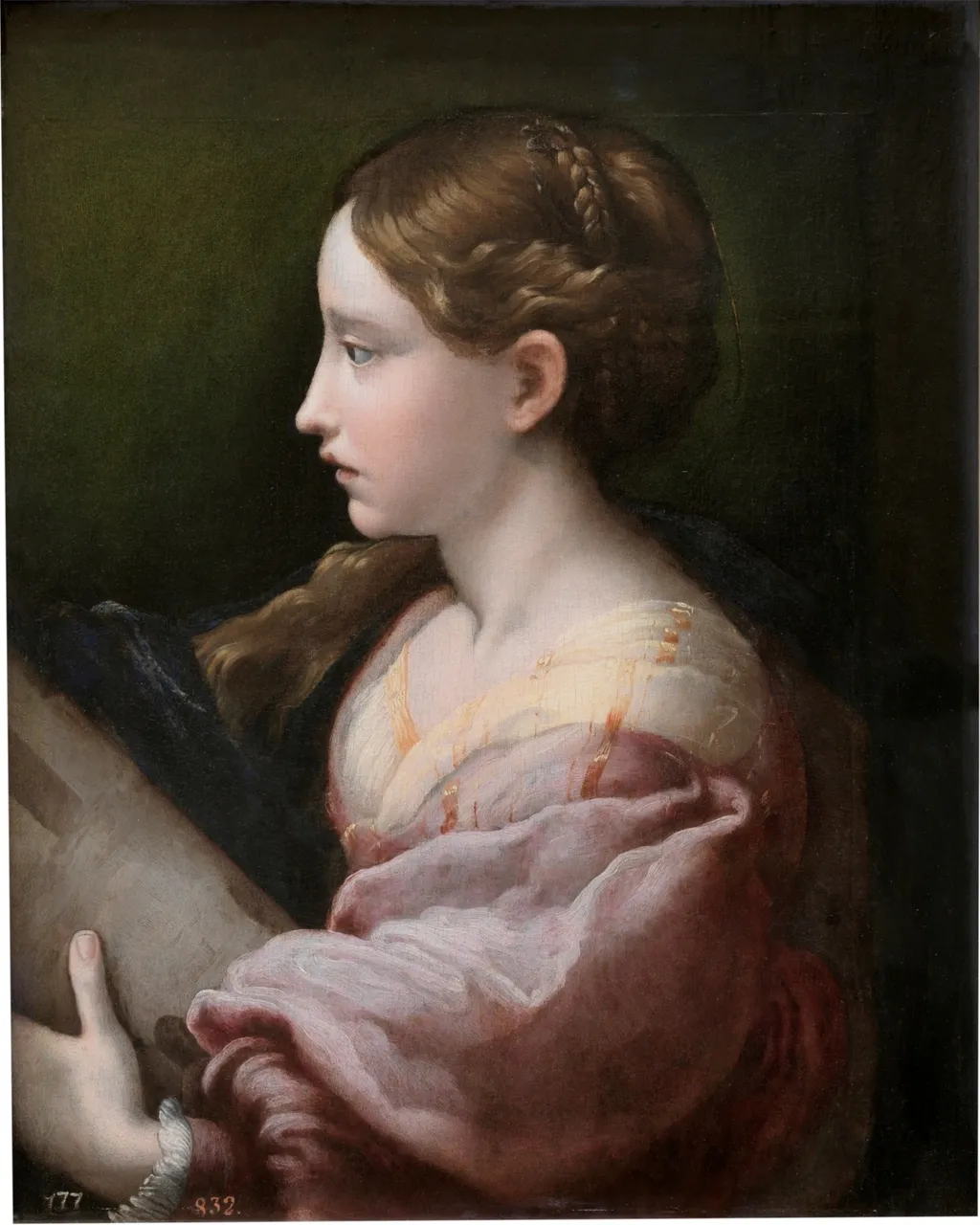
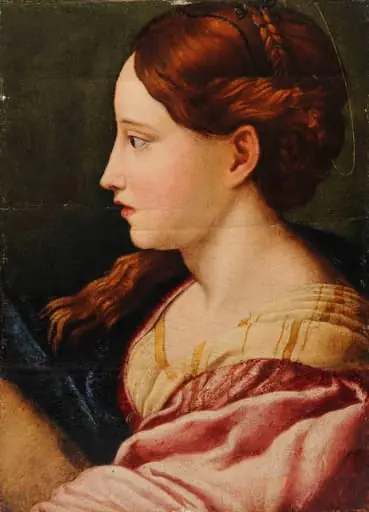
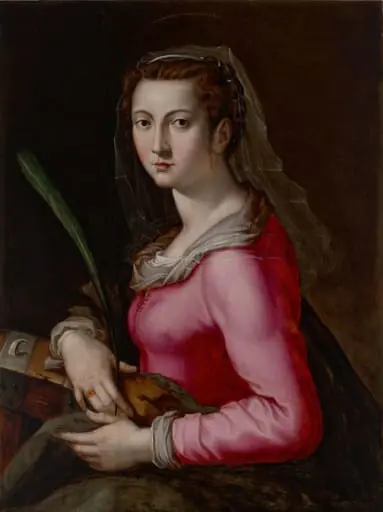
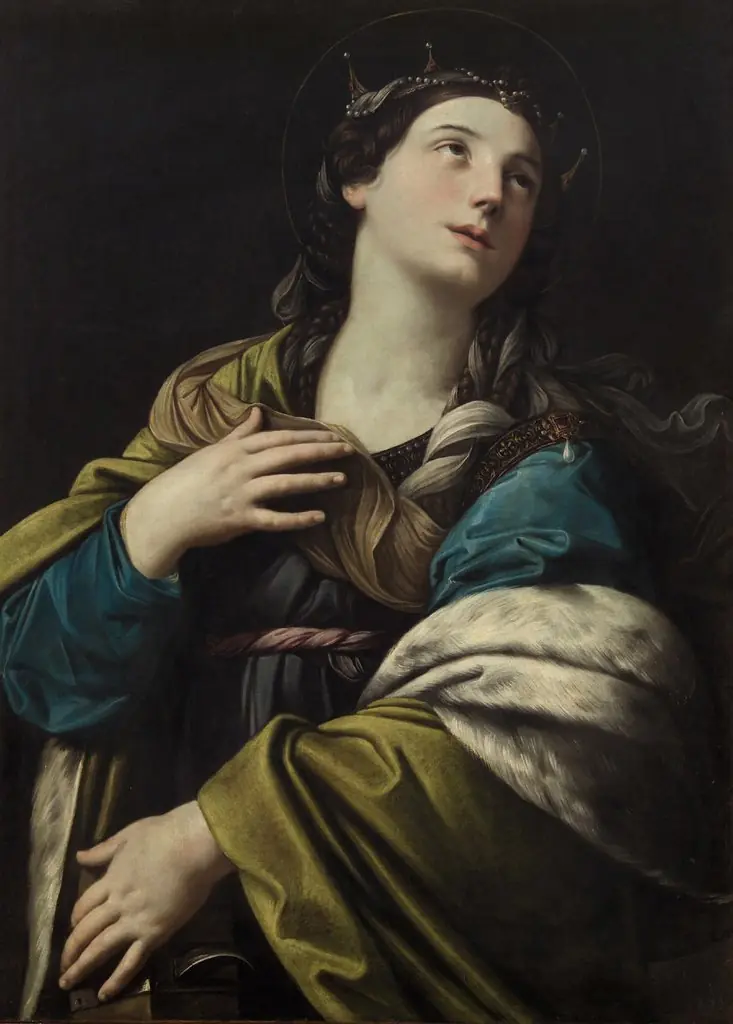
Saint Barbara is an oil painting by the High Renaissance artist Parmigianino. It dates from 1522 and is held in the collection of the Museo del Prado.
About this work
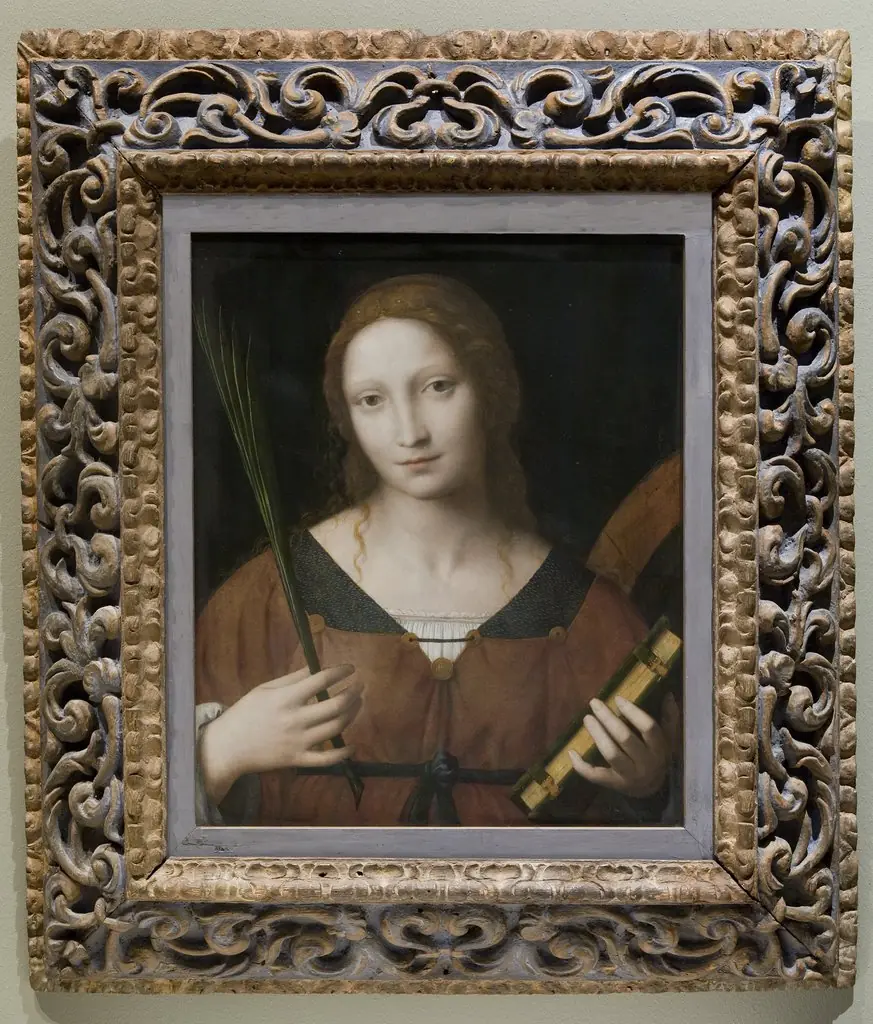
Parmigianino painted Saint Barbara with oil paints around 1523. The work shows a woman with a tower and a palm branch. Her calm face stands out against the dark background.
Parmigianino was only about 19 when he made this. The style is loose but full of energy. It’s one of his early works still in good shape.
Look up Parmigianino next.
Overview
Created around 1523, this oil on panel depicts Saint Barbara and is attributed to the young Parmigianino, who was roughly nineteen at the time.
Created around 1523, this oil on panel depicts Saint Barbara and is attributed to the young Parmigianino, who was roughly nineteen at the time. The work now belongs to the Museo del Prado in Madrid, where it has been on display for centuries. Its composition centers on a serene female figure, set against a somber backdrop, holding a palm branch and accompanied by a tower, traditional symbols of the saint’s legend.
Subject & Meaning
The painting presents Saint Barbara, a Christian martyr traditionally associated with a tower—her place of confinement—and a palm branch, a sign of martyrdom. Her composed expression and upright posture convey both piety and resilience, reflecting the saint’s steadfast faith despite persecution. The inclusion of these attributes serves to identify the figure unmistakably for viewers familiar with hagiographic iconography.
Technique & Style
Executed in oil on a wooden panel, the work exhibits Parmigianino’s early Mannerist tendencies: elongated forms, a delicate handling of light, and a fluid brushwork that infuses the scene with subtle dynamism. The contrast between the luminous skin tones and the dark, undefined background heightens the figure’s presence, while the soft modeling of drapery reveals the artist’s developing skill in rendering texture and volume.
History & Provenance
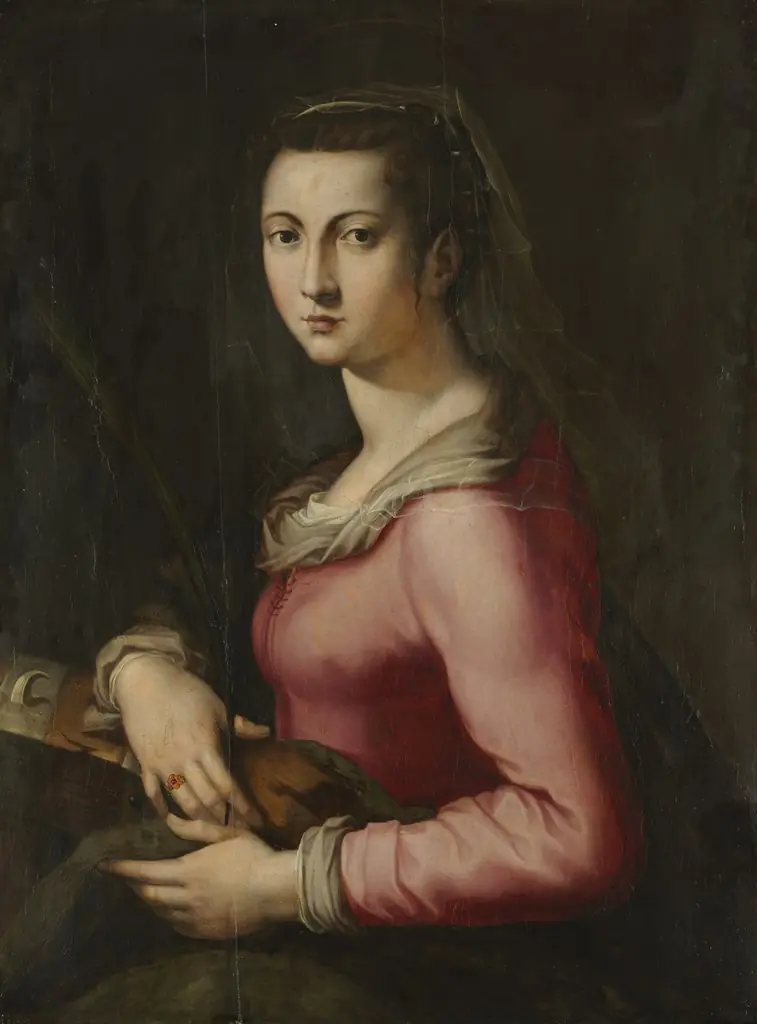
The painting entered the Spanish royal collections in 1686, first documented in the Real Alcázar of Madrid. By 1746 it had been transferred to the Royal Palace of La Granja de San Ildefonso, where it remained in the royal inventory. Copies of the composition are recorded in the Mauritshuis, Pomona College, and Chatsworth House, indicating its popularity among collectors and its influence on later reproductions.
Context
As one of Parmigianino’s earliest surviving works, the Saint Barbara demonstrates the artist’s rapid maturation shortly after his apprenticeship in Parma. Its preservation in good condition allows scholars to trace the evolution of his distinctive elongated style that would later culminate in works such as the Madonna with the Long Neck. The painting’s continued presence in major collections underscores its role in the dissemination of early Mannerist aesthetics across Europe.
Own this work as a print
Artist & collection

Artist
Girolamo Francesco Maria Mazzola (11 January 1503 – 24 August 1540), also known as Francesco Mazzola or, more commonly, as Parmigianino (UK: , US: , Italian: ; "the little one from Parma"), was an Italian Mannerist…