Artwork
Untitled
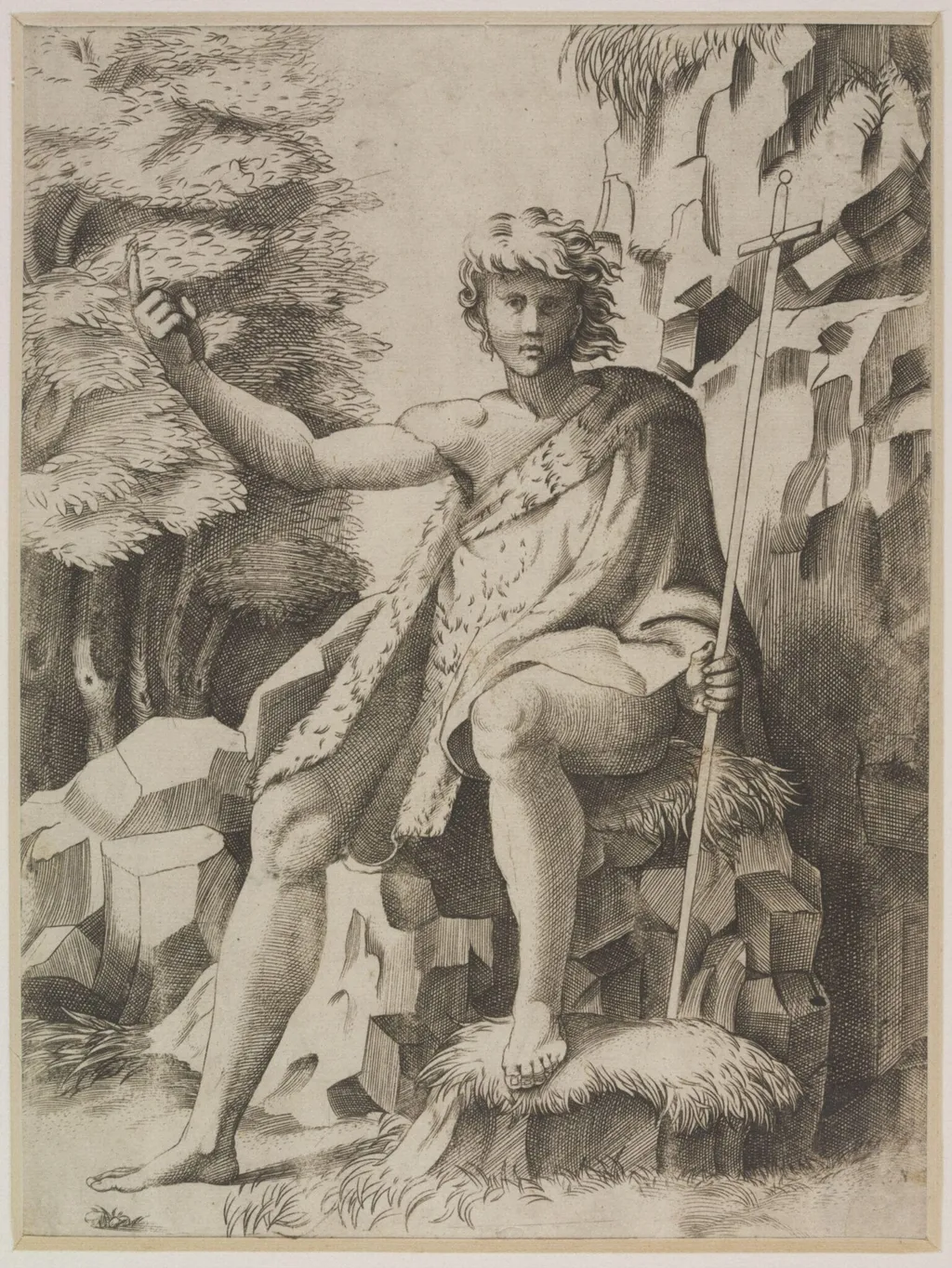
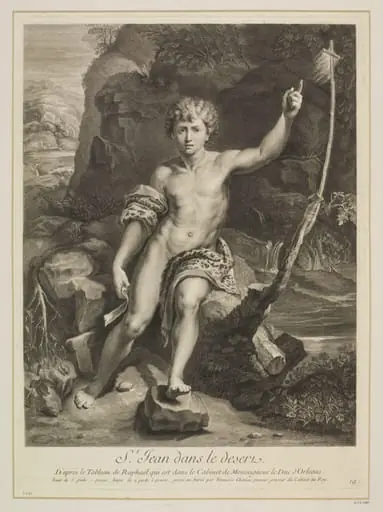
Untitled is a print by the Renaissance artist Parmigianino. It dates from 1500 and is held in the collection of the Victoria and Albert Museum.
About this work
Overview
The composition includes an inscription on a rock, dated prior to 1532, indicating its creation during the artist’s formative years in Parma.
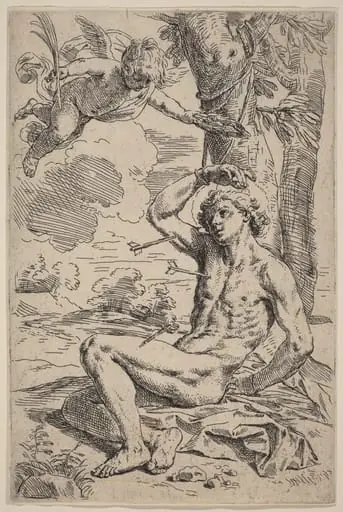
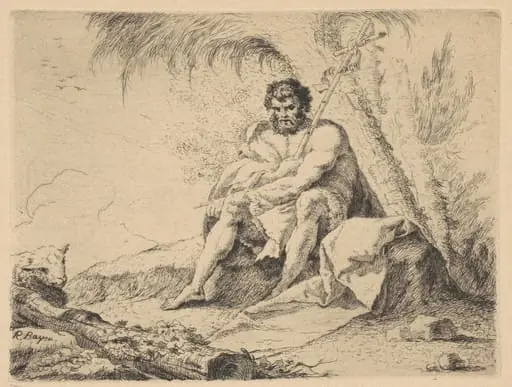
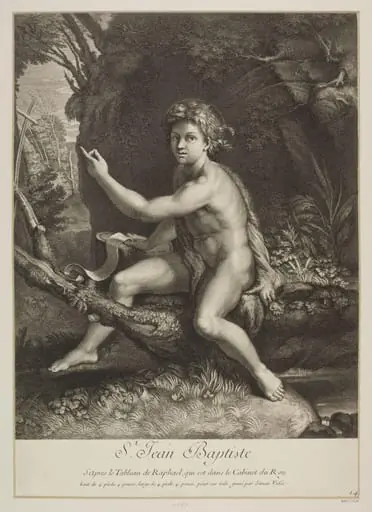
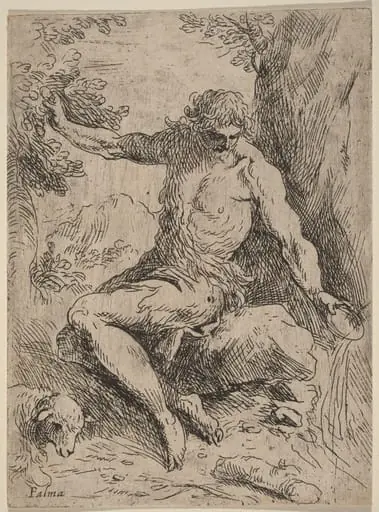
This print on paper is attributed to Parmigianino and belongs to the early phase of his graphic work. It portrays Saint John the Baptist in a rugged desert setting, rendered with precise engraving lines. The composition includes an inscription on a rock, dated prior to 1532, indicating its creation during the artist’s formative years in Parma. The image reflects a quiet intensity, characteristic of Mannerist tendencies emerging in early 16th-century Italy.
Subject & Meaning
The figure represents Saint John the Baptist, identified by his fur-trimmed garment and the sword he holds, symbolizing his role as a prophet and forerunner of Christ. His bare feet and wild hair evoke asceticism, while his direct gaze and upright posture convey spiritual authority. The barren landscape reinforces his isolation and devotion, aligning with traditional iconography of the saint as a voice in the wilderness.
Technique & Style
The work is executed in engraving, with fine, controlled lines defining the figure and terrain. Parmigianino employs elongated proportions and angular contours, typical of his Mannerist approach, to heighten emotional tension. The texture of the rock, foliage, and fabric is rendered with meticulous detail, demonstrating his skill in translating drawing into print. The composition’s asymmetry and dramatic lighting enhance its psychological depth.
History & Provenance
The print exists in an early state, with the dated inscription on the rock serving as a key chronological marker. It was likely produced in Parma before Parmigianino’s move to Bologna and Rome. The work circulated among collectors and artists in northern Italy, influencing later engravers. Its survival in multiple impressions suggests it was valued during the artist’s lifetime, though few early states remain intact.
Context
Created during a period of artistic experimentation in central Italy, the print reflects Parmigianino’s engagement with classical ideals filtered through a personal, expressive lens. While rooted in Renaissance humanism, its stylized form anticipates Mannerism’s departure from naturalism. The subject’s prominence in religious art of the time underscores the continued relevance of biblical figures amid Reformation-era spiritual debates.
Legacy
This engraving contributed to Parmigianino’s reputation as a master of graphic art, influencing later printmakers in Italy and beyond. Its combination of technical precision and emotional restraint became a model for devotional imagery in print form. Though less widely known than his paintings, the work remains a significant example of early 16th-century Northern Italian engraving practice.
Artist & collection

Artist
Girolamo Francesco Maria Mazzola (11 January 1503 – 24 August 1540), also known as Francesco Mazzola or, more commonly, as Parmigianino (UK: , US: , Italian: ; "the little one from Parma"), was an Italian Mannerist…

![Statue of Jupiter, Seated [recto], by Hubert Robert](https://artifactworldgallery.com/img/hubert-robert--statue-of-jupiter-seated-recto--c8c32a4d67e7a964-w320.webp)