Artwork
Neptune
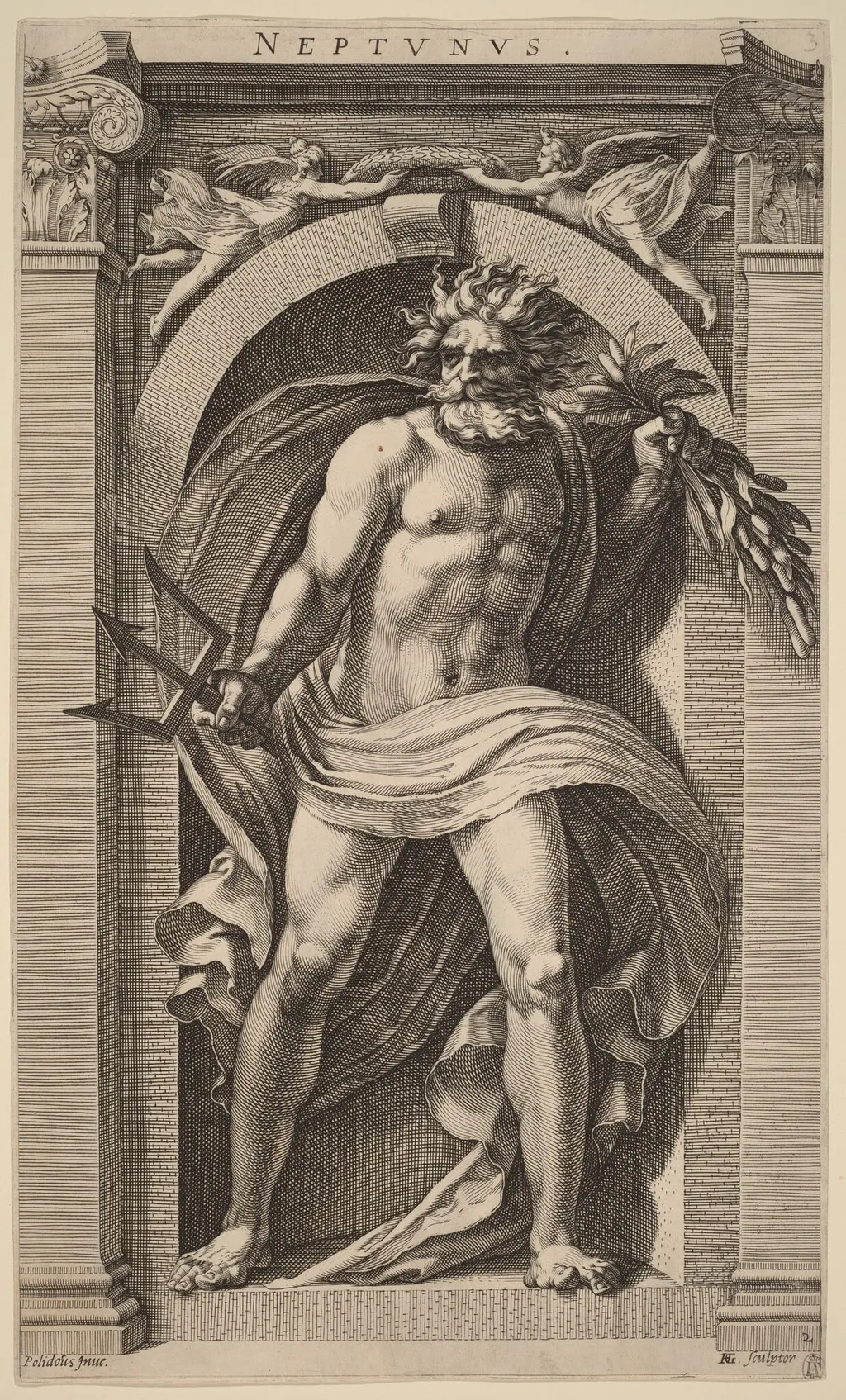
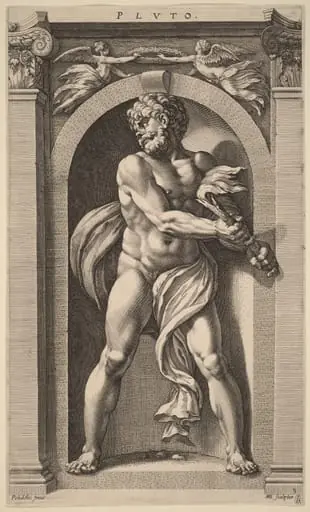
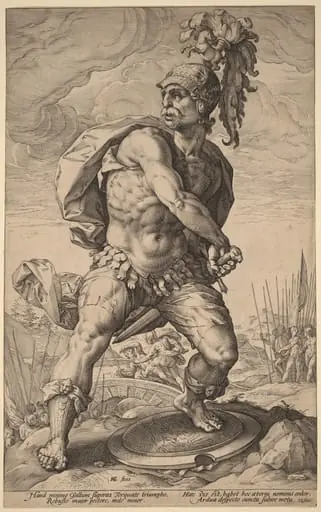
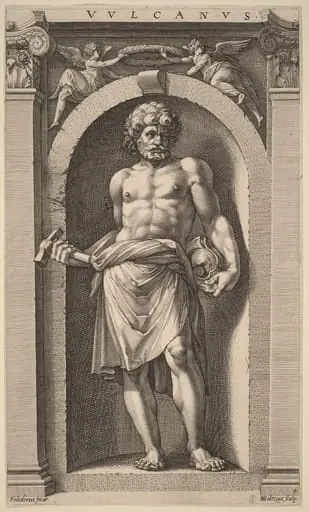
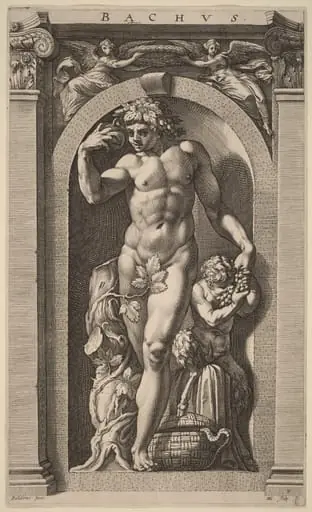
Neptune is an ink print by the Renaissance artist Hendrik Goltzius. It dates from 1592 and is held in the collection of the National Gallery of Art.
About this work
Overview
Executed in black ink on paper, it exemplifies the technical precision and compositional complexity for which Goltzius was renowned.
Created around 1592, this engraving by Hendrick Goltzius depicts the Roman god Neptune in a formal, sculptural pose. Executed in black ink on paper, it exemplifies the technical precision and compositional complexity for which Goltzius was renowned. As a leading printmaker of the late 16th century, he elevated engraving beyond mere reproduction, transforming it into a vehicle for artistic expression and intellectual reference.
Subject & Meaning
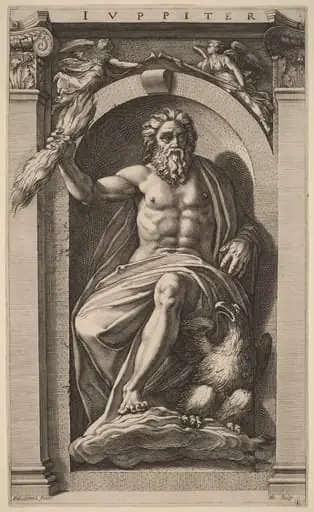
The figure represents Neptune, god of the sea, seated with solemn authority on a rocky outcrop. His beard and curly hair evoke classical ideals of divine masculinity. Two winged figures hover above, offering a wreath—symbolizing honor or triumph. The inscription 'NEPTVNVS' anchors the image in mythological tradition, while the restrained setting emphasizes the god’s enduring power rather than his aquatic domain.
Technique & Style
Goltzius employed fine, controlled lines to model form with remarkable subtlety, rendering the drapery’s folds and the musculature beneath with near-sculptural depth. The background’s swirling clouds and ornamental border frame the figure without distraction. His mastery of line weight and cross-hatching created tonal variation, allowing flat ink to suggest volume and texture—a hallmark of Northern Mannerist engraving.
History & Provenance
The print emerged during Goltzius’s most productive period in Haarlem, where he operated a workshop that produced designs for widespread distribution. While the original plate’s early ownership is undocumented, the work circulated among collectors and artists across Europe, contributing to his international reputation. Its survival in multiple impressions reflects its status as a widely disseminated example of his graphic output.
Context
In the late 1500s, engraving flourished as a medium for disseminating classical themes among educated audiences. Goltzius’s work responded to humanist interests in antiquity and the growing market for prints as autonomous art. His reinterpretations of mythological subjects, often derived from sculpture or literary sources, positioned him at the intersection of artistic innovation and scholarly tradition.
Legacy
Goltzius’s *Neptune* influenced later engravers through its technical ambition and formal rigor. His ability to translate three-dimensional sculpture into intricate line work set a standard for the medium. Though styles evolved, his prints remained reference points for artists studying anatomy, composition, and the expressive potential of black-and-white graphic art well into the 17th century.
Artist & collection
Artist
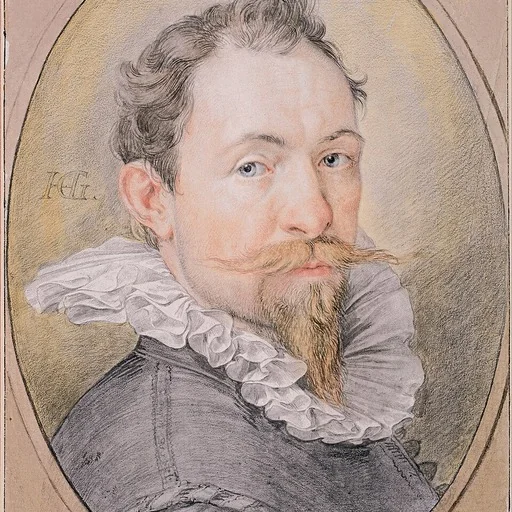
Hendrick Goltzius (German: , Dutch: ; né Goltz; January or February 1558 – 1 January 1617) was a German-born Dutch printmaker, draftsman, and painter.