Artwork
John the Baptist and the Lamb
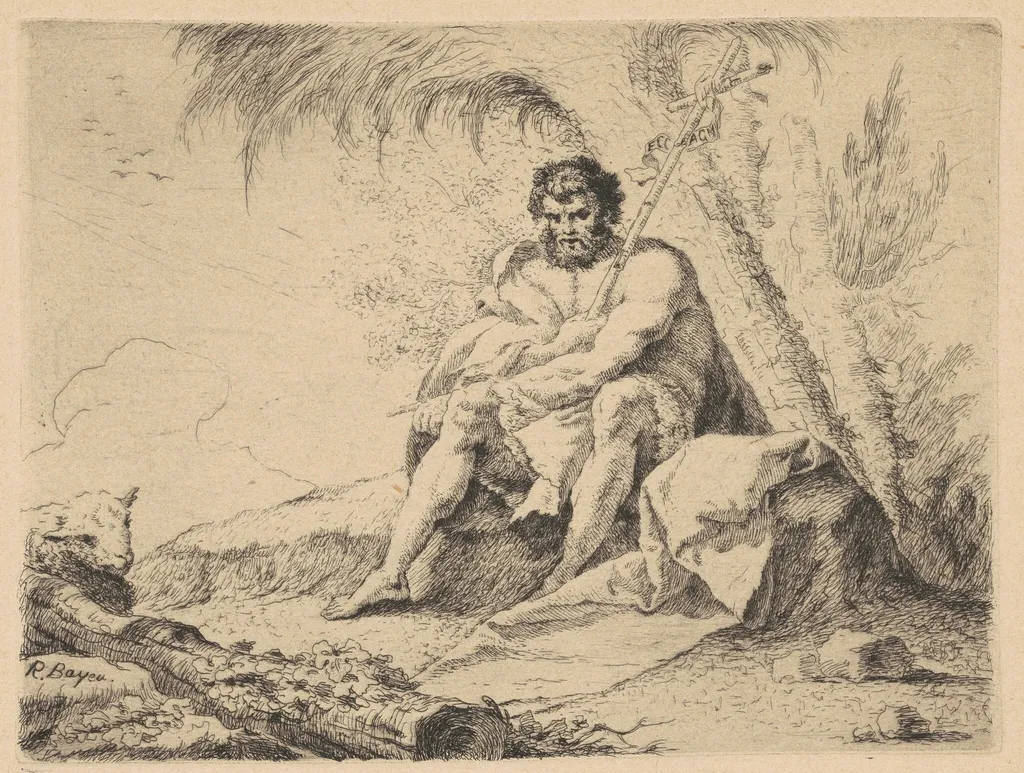
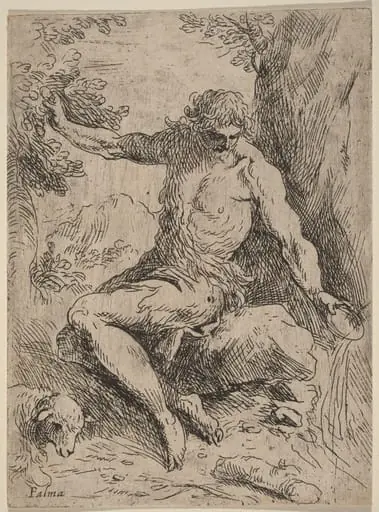
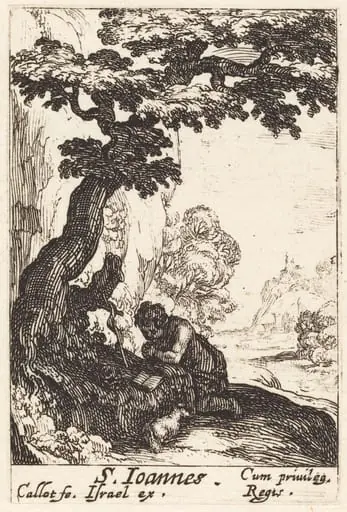
John the Baptist and the Lamb is an ink print by the Romanticist artist Ramón Bayeu. It dates from 1780 and is held in the collection of the National Gallery of Art.
About this work
Overview
The work exemplifies the precision possible in etching, a technique involving acid-treated metal plates to capture fine detail.
Created in 1780 by Ramón Bayeu, this etching depicts John the Baptist holding a lamb while gesturing upward. Rendered in black ink on wove paper, the composition relies on delicate line work and subtle tonal gradations to define form. The dark background isolates the figures, emphasizing their quiet solemnity. The work exemplifies the precision possible in etching, a technique involving acid-treated metal plates to capture fine detail.
Subject & Meaning
The scene references John the Baptist’s role as a prophetic figure preparing the way for Christ, symbolized by the lamb—a traditional emblem of sacrifice and divine innocence. His upward gesture suggests spiritual direction, while his serious expression conveys gravity rather than triumph. The lamb’s calm demeanor contrasts with John’s intensity, reinforcing the tension between human anticipation and sacred mystery.
Technique & Style
Bayeu employed etching to achieve fine, controlled lines and soft shading, allowing for nuanced modeling of form. The dark areas are built through closely spaced lines and cross-hatching, while the figures emerge through selective ink retention. Subtle drypoint marks—scratched directly into the plate—add texture to the lamb’s wool and John’s robe, enhancing tactile realism without overt dramatic effect.
History & Provenance
The print was made during Bayeu’s tenure at the Spanish Royal Tapestry Factory, where he collaborated closely with Francisco Goya. Though not widely exhibited in his lifetime, the work survives in institutional collections as part of a broader corpus of Spanish printmaking from the late 18th century. Its modest scale and intimate tone suggest it was intended for private or scholarly circulation.
Context
In late 18th-century Spain, religious imagery remained central to artistic production, even as Enlightenment ideals encouraged more restrained, contemplative expressions. Bayeu’s etching reflects this shift—moving away from Baroque theatricality toward quiet introspection. His technique aligns with contemporary Spanish printmakers who valued precision over spectacle, often drawing from religious and moral themes.
Legacy
Though less known than his brother-in-law Goya, Bayeu’s etchings contributed to the development of Spanish graphic art in the Enlightenment era. His restrained use of line and tone influenced a generation of printmakers who sought emotional depth through subtlety. This work stands as a quiet testament to the enduring power of understated religious symbolism in print.
Own this work as a print
Artist & collection