Artwork
Anne of England
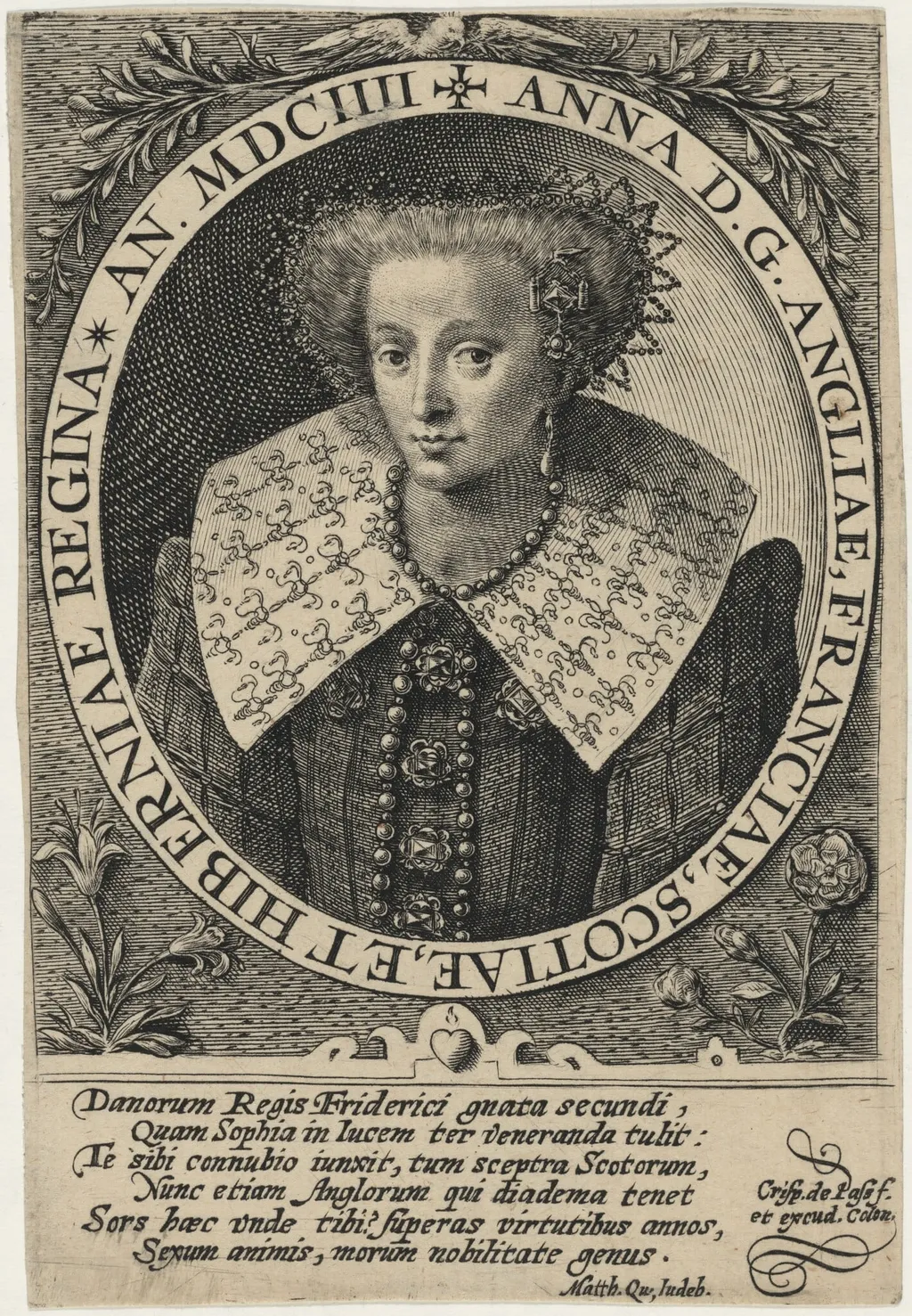
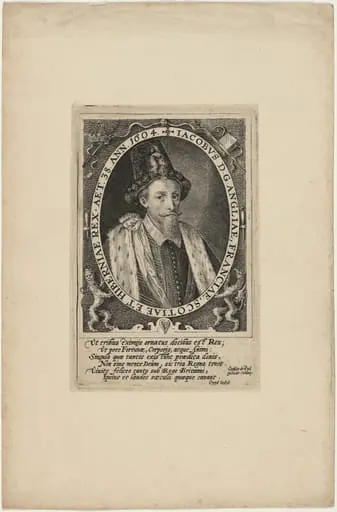
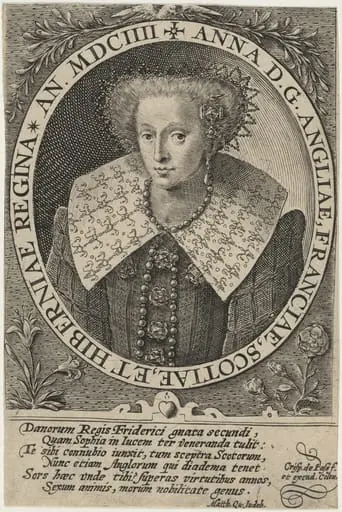
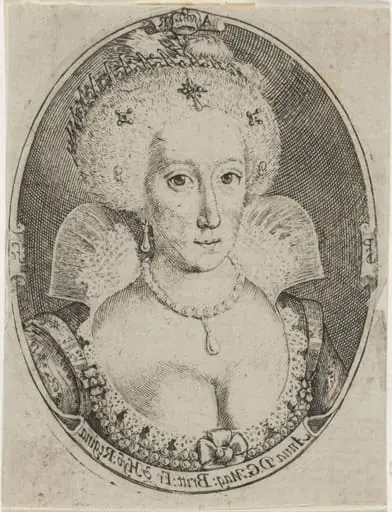
Anne of England is an ink print by the Baroque artist Crispijn van de Passe I. It dates from 1604 and is held in the collection of the National Gallery of Art.
About this work
Overview
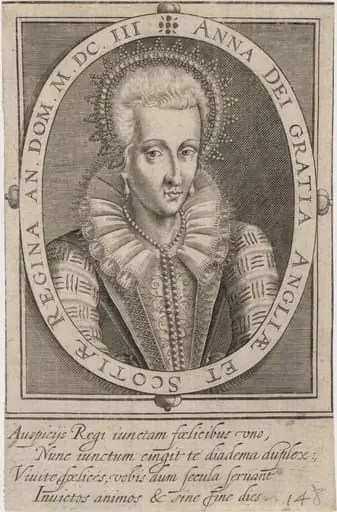
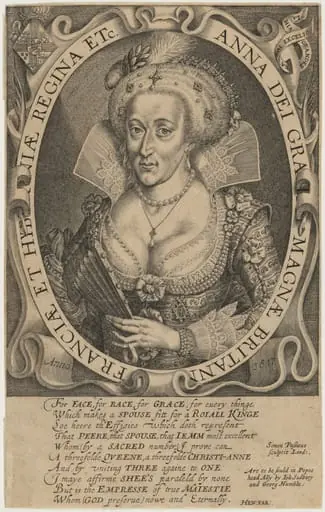
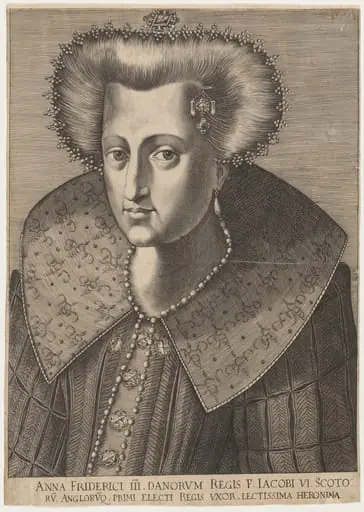
Created in 1604 by Crispijn van de Passe I, this black-and-white engraving depicts Anne of England, queen consort to James I.
Created in 1604 by Crispijn van de Passe I, this black-and-white engraving depicts Anne of England, queen consort to James I. The image is rendered with fine, controlled lines characteristic of early 17th-century printmaking. It presents a formal, frontal portrait framed by an ornamental border inscribed with Latin text identifying her royal status. The precision of the technique underscores its function as a standardized representation of royalty for dissemination.
Subject & Meaning
The portrait portrays Anne of Denmark, queen of England and Scotland, in a solemn, dignified manner. Her attire—high collar, intricate embroidery, and prominent pearl pendant—signals her status and wealth. The Latin inscription around her head, 'Anna Dug. Angliae Regina,' confirms her identity and role. The restrained expression and formal composition reflect the expectations of royal portraiture, emphasizing authority over individuality.
Technique & Style
Executed in engraving, the image was produced by incising fine lines into a copper plate, then inked and pressed onto paper. Van de Passe employed meticulous cross-hatching and delicate stippling to model form and texture, particularly in the lace, pearls, and fabric patterns. The style is precise and linear, typical of Northern European printmakers of the period, prioritizing clarity and detail over atmospheric effect.
History & Provenance
The print was made in Utrecht, where Crispijn van de Passe I operated a prominent engraving workshop. It was likely produced for distribution among European elites and collectors, serving both as a political statement and a collectible object. Copies of this engraving survive in several institutional collections, indicating its circulation and enduring use as a visual record of the queen’s image.
Context
Produced shortly after Anne’s arrival in England as James I’s consort, the engraving aligns with efforts to visually establish her legitimacy and presence in a new court. Engravings like this were key tools in early modern statecraft, allowing monarchs to project authority beyond court circles. The format echoes earlier royal portraits but adapts them for the growing market of printed images.
Legacy
This engraving remains one of the most widely reproduced images of Anne of Denmark. It influenced later depictions of royal women in print and contributed to the standardization of monarchic portraiture in early modern Europe. Though not an original painting, its precision and dissemination ensured its role as a primary visual reference for her appearance in historical records.
Artist & collection

Artist
Crispijn van de Passe I (1564–1637) was an artist, born in Arnemuiden.