Artwork
Anne of Denmark, Queen of James I
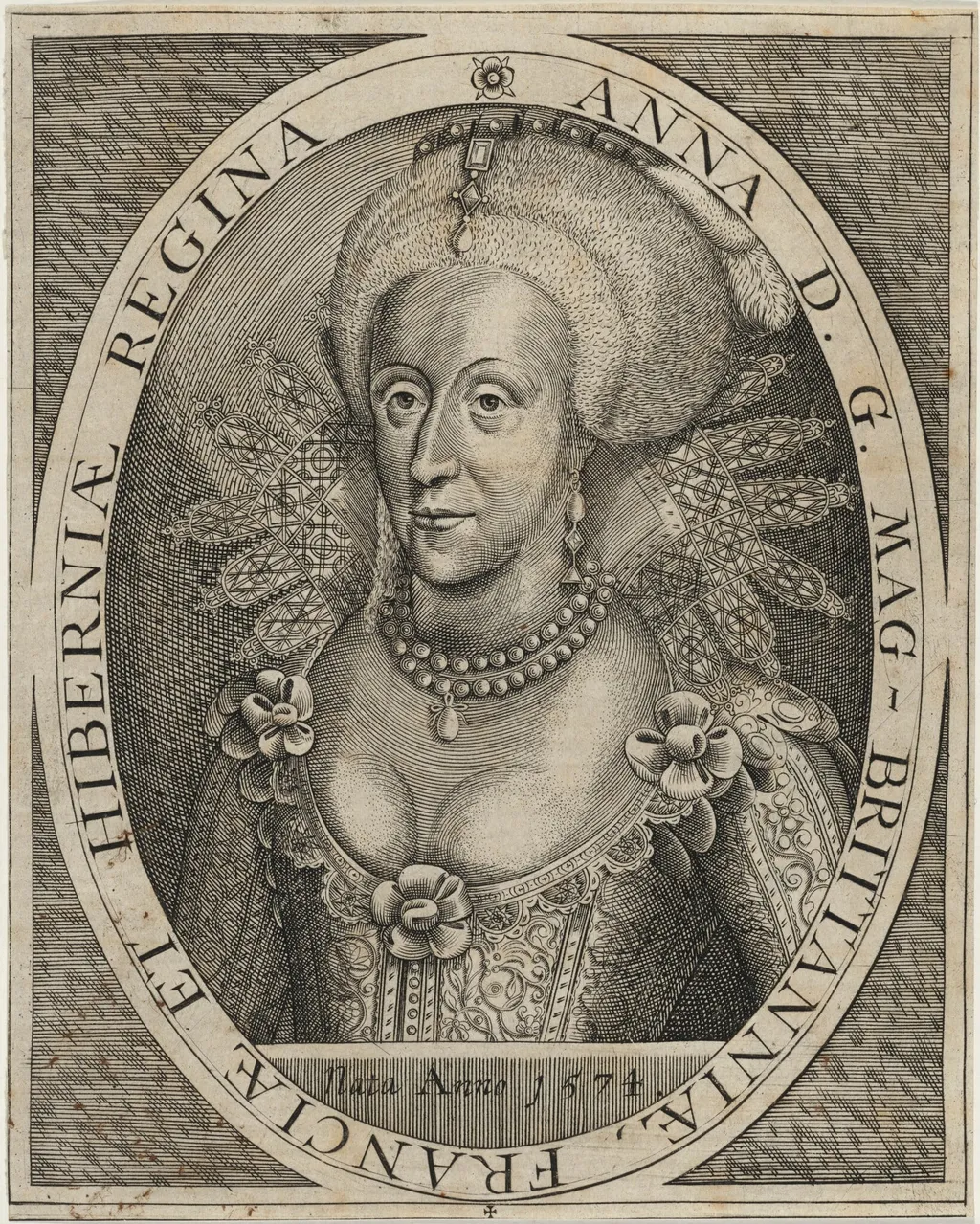
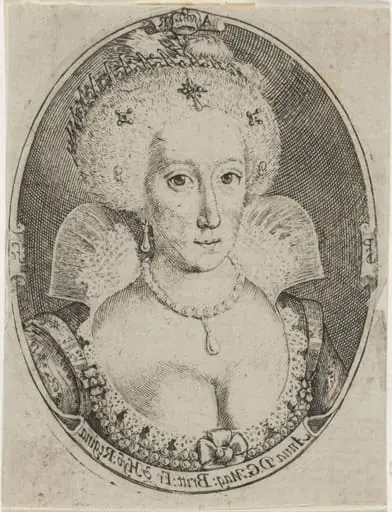
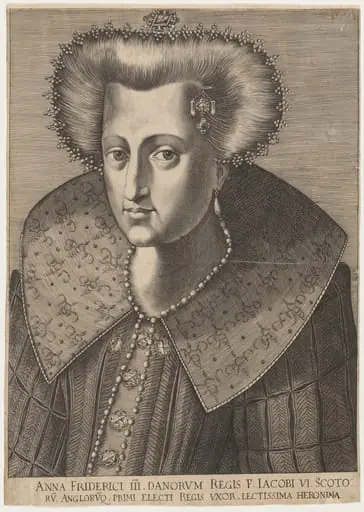
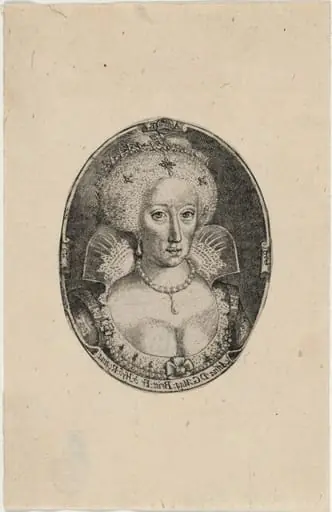
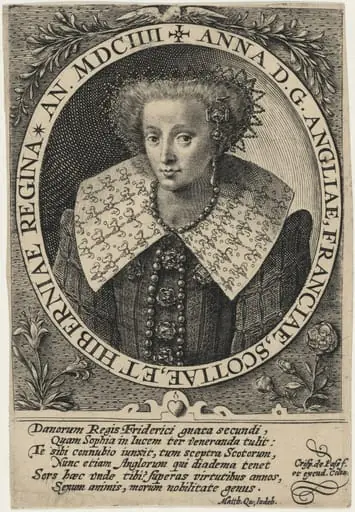
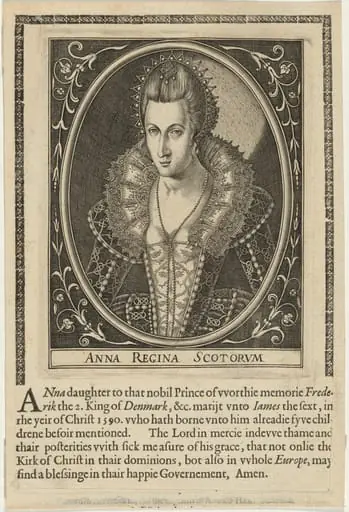
Anne of Denmark, Queen of James I is an ink print by the Romanticist artist Unknown 19th Century. It dates from 1850 and is held in the collection of the National Gallery of Art. This engraving depicts Anne of Denmark, queen consort to King James I of England, rendered in a circular format.
About this work
Overview
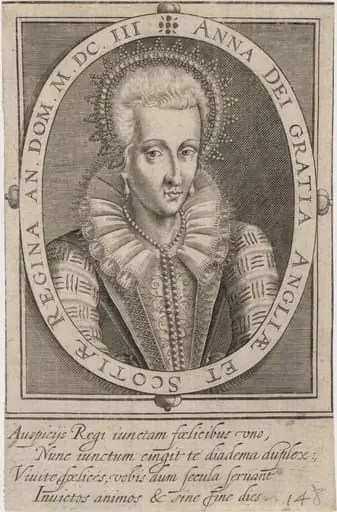
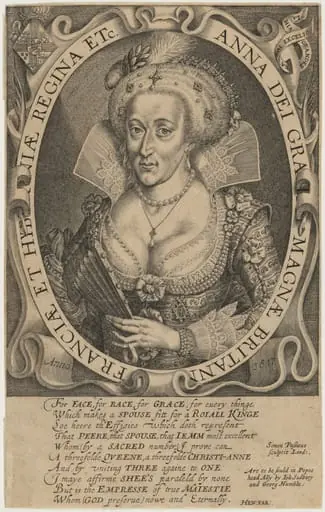
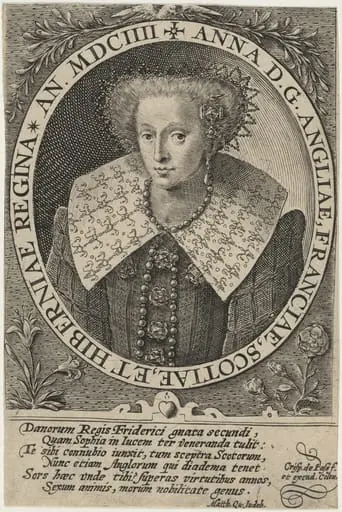
This engraving depicts Anne of Denmark, queen consort to King James I of England, rendered in a circular format. The portrait emphasizes her status through elaborate attire and refined details, executed with fine linear technique typical of early 17th-century printmaking. The National Gallery of Art in Washington holds this example of courtly portraiture in print form.
Subject & Meaning
Anne is portrayed with the regal bearing expected of a European queen, her attire signaling wealth and taste.
Anne is portrayed with the regal bearing expected of a European queen, her attire signaling wealth and taste. The large feathered hat and ornate necklace reflect contemporary fashion at the Stuart court, while the low neckline and floral embroidery suggest both elegance and the influence of continental styles. The image conveys dignity rather than individuality, aligning with the conventions of royal representation.
Technique & Style
The portrait employs cross-hatching to model form and create depth, a hallmark of engraving at the time. Fine lines define the texture of fabric, the sheen of jewelry, and the complexity of the background pattern. The composition is contained within a circular border, focusing attention on the queen’s face and upper torso, enhancing the intimate yet formal tone of the image.
History & Provenance
Created during Anne’s lifetime, the engraving likely served as a means to disseminate her image among courtiers and foreign dignitaries. It was produced by a skilled engraver working within the tradition of royal portraiture, possibly based on a painted prototype now lost. The National Gallery of Art acquired it as part of its collection of early modern prints.
Context
In early 17th-century England, engraved portraits of royalty were tools of political and cultural visibility. Anne’s image, circulated in print, reinforced her position as queen and helped shape public perception of the Stuart monarchy. Her fashion choices, including the feathered hat and jeweled pendant, mirrored trends favored at the Danish and English courts.
Legacy
This engraving survives as a record of how royal women were visually constructed in print culture. It reflects the technical skill of engravers and the importance of image-making in maintaining dynastic presence. Though not widely known today, it remains a valuable artifact of Stuart-era visual propaganda and portraiture practices.
Artist & collection

Artist