Artwork
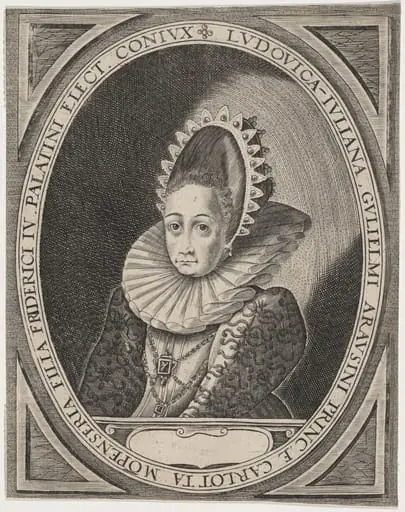
Elizabeth, Princess, Wife of the Elector Palatine Frederick V, King of Bohemia
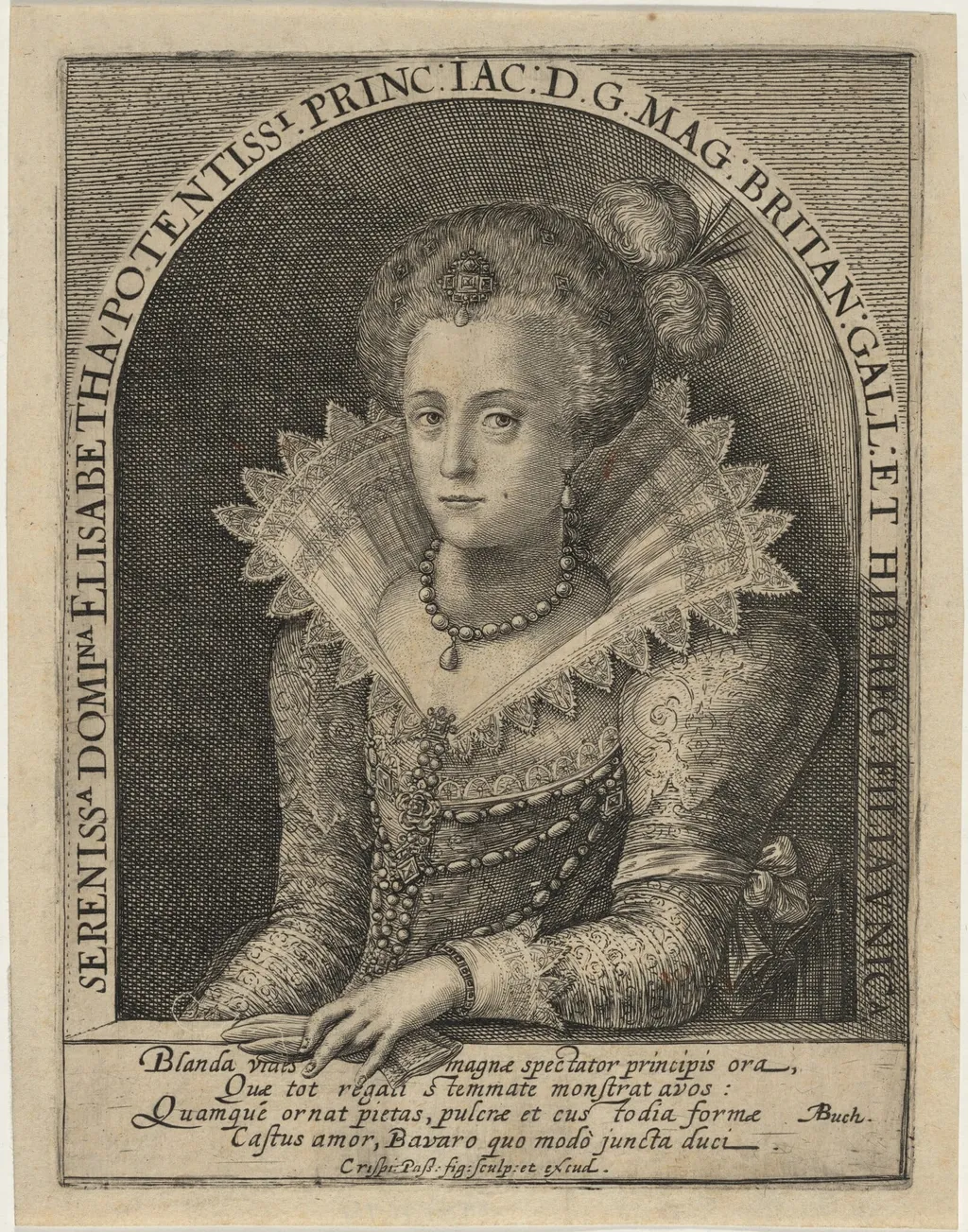
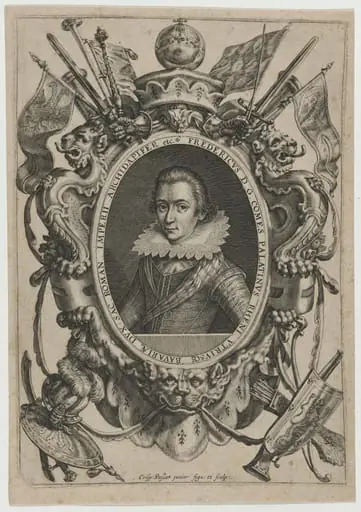
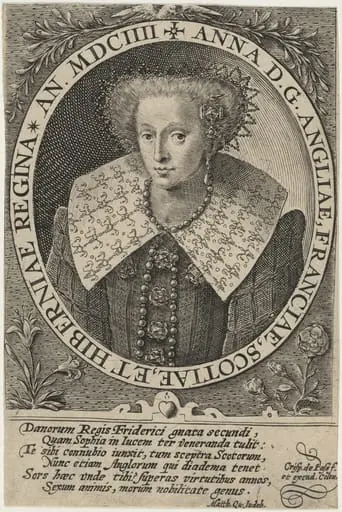
Elizabeth, Princess, Wife of the Elector Palatine Frederick V, King of Bohemia is an ink print by the Renaissance artist Crispijn van de Passe I. It dates from 1601 and is held in the collection of the Rosenwald Collection.
About this work
Overview
The composition is centered and formal, with minimal background distraction, focusing attention on her bearing and adornments.
This 1601 engraving by Crispijn van de Passe I depicts Elizabeth Stuart, daughter of King James I of England, as the wife of Frederick V, Elector Palatine and briefly King of Bohemia. Rendered in monochrome, the portrait emphasizes her noble status through elaborate attire and precise linework. The composition is centered and formal, with minimal background distraction, focusing attention on her bearing and adornments.
Subject & Meaning
Elizabeth is portrayed not merely as a royal woman but as a political figure, her identity tied to her marriage alliance between the English and Palatine courts. The fan and small object she holds may symbolize courtly refinement or diplomatic gesture. Inscriptions affirm her titles, reinforcing her role within the Protestant dynastic network of early 17th-century Europe, where marriage was both personal and strategic.
Technique & Style
Van de Passe employed fine, controlled engraving lines to model form and texture. The pearl necklace and ruffled collar are rendered with intricate cross-hatching to suggest light and depth, while the fabric patterns are meticulously detailed. The flat background contrasts with the three-dimensionality of her figure, a hallmark of Northern European portrait engraving that prioritized clarity and precision over atmospheric effect.
History & Provenance
Created shortly after Elizabeth’s marriage to Frederick V in 1613, the print likely served as a diplomatic gift or dynastic advertisement. As a skilled engraver in the Dutch Republic, van de Passe produced numerous portraits of European nobility. This work circulated among courts and collectors, helping to disseminate the image of the Palatine bride across Protestant Europe during a period of rising religious tension.
Context
The portrait emerges from a time when Protestant alliances were being forged against Catholic powers. Elizabeth’s image, carefully curated through print, projected legitimacy and piety. Engravings like this were vital tools for political messaging, allowing noble families to shape their public presence beyond the confines of court. Her later role as the 'Winter Queen' would lend this early image retrospective significance.
Legacy
Though Elizabeth’s reign in Bohemia was brief and ended in exile, this engraving preserved her early image as a symbol of Protestant nobility. Van de Passe’s work contributed to a broader tradition of print-based portraiture that democratized access to royal likenesses. The print remains a key document in understanding how visual culture supported dynastic identity in the early modern era.
Artist & collection

Artist
Crispijn van de Passe I (1564–1637) was an artist, born in Arnemuiden.