Artwork
Louise Juliana of Nassau, Electress Palatine
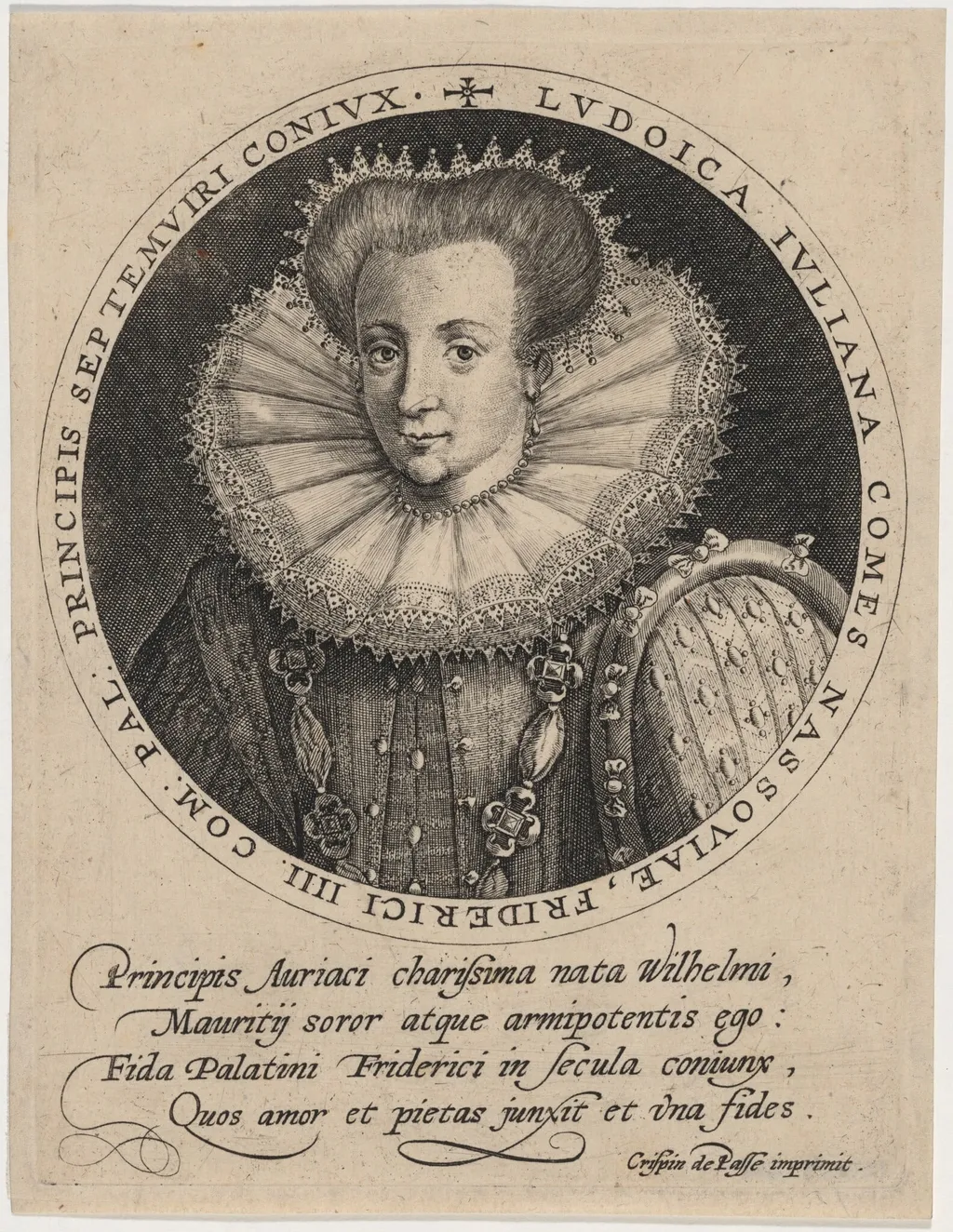
Louise Juliana of Nassau, Electress Palatine is an ink print by the Renaissance artist Crispijn van de Passe I. It dates from 1601 and is held in the collection of the National Gallery of Art.
About this work
Overview
An engraving from 1601 by Crispijn van de Passe I depicts Louise Juliana of Nassau, Electress Palatine, in formal portraiture. Rendered in monochrome, the image captures her in profile with precise, fine-lined etching. The composition emphasizes her status through elaborate attire and inscribed Latin text framing the portrait, typical of early 17th-century noble representation in print.
Subject & Meaning
Louise Juliana is portrayed as a noblewoman of high rank, her attire and accessories signaling her position as Electress Palatine. The crown-like headdress, pearl necklace, and ornate ruff reflect dynastic prestige. The fan, held with composure, suggests refinement, while the Latin inscriptions formally authenticate her lineage and titles, reinforcing her political and familial significance.
Technique & Style
The portrait is executed in intaglio engraving, with delicate lines scratched into a metal plate to create texture and detail. The surface shows a crisp, slightly granular quality, characteristic of hand-engraved prints. Shading is achieved through cross-hatching rather than tone, emphasizing contour and structure over realism, aligning with Northern European print traditions of the period.
History & Provenance
Created in 1601, the engraving likely served as a diplomatic or familial keepsake, circulated among European courts. Crispijn van de Passe I, a renowned Dutch engraver, produced numerous portraits of nobility, often commissioned to disseminate likenesses across borders. This piece may have been part of a series documenting Protestant aristocracy during the religious tensions of the era.
Context
In the early 1600s, engraved portraits were vital tools for projecting dynastic identity, especially among Protestant elites. Louise Juliana’s marriage to Frederick IV, Elector Palatine, linked the House of Orange with the Palatinate, a key alliance in the Reformation’s political landscape. Such images reinforced alliances and legitimacy through visual propaganda in an age before photography.
Legacy
The engraving remains a documented example of how noblewomen were visually codified in early modern Europe. It reflects the role of print culture in shaping public perception of aristocracy. Though not widely known today, it contributes to the historical record of female representation in print and the technical practices of Dutch engravers during the Renaissance.
Artist & collection

Artist
Crispijn van de Passe I (1564–1637) was an artist, born in Arnemuiden.

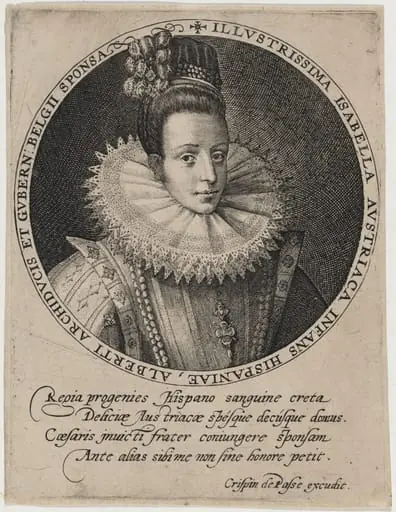 Isabella Clara Eugenia, Infanta
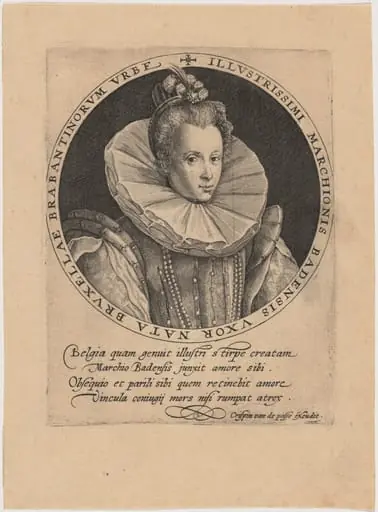 Elizabeth van Pallandt, Countess of Culemborg, Wife of Jacob, Margrave of Baden
![Maria of Austria, Infanta of Spain [top half], by Simon van de Passe](https://artifactworldgallery.com/img/simon-van-de-passe--maria-of-austria-infanta-of-spain-top-half--b728f947eb0b34d7-w320.webp) Maria of Austria, Infanta of Spain [top half]
Maria of Austria, Infanta of Spain [top half]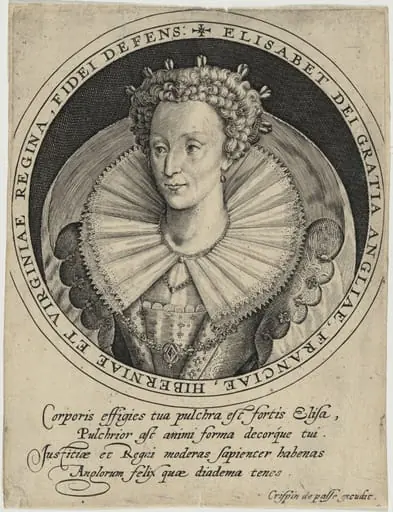 Elizabeth, Queen of England
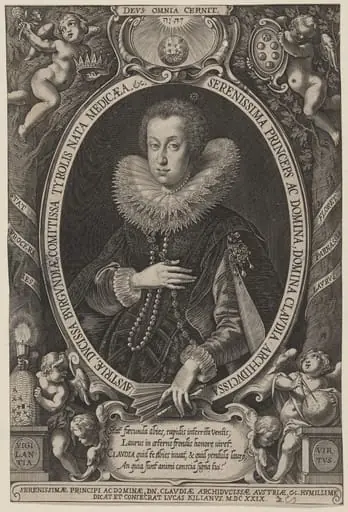 Claudia de Medici, Wife of Leopold of Austrian Tyrol
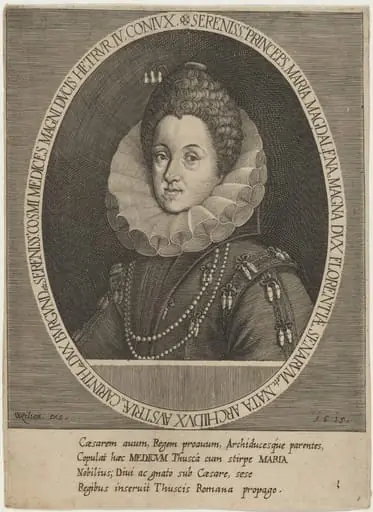 Princess Maria Magdalen
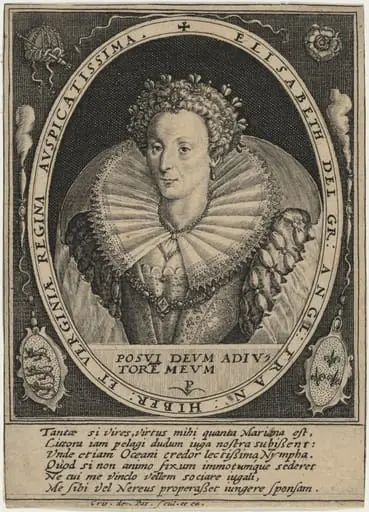 Elizabeth, Queen of England
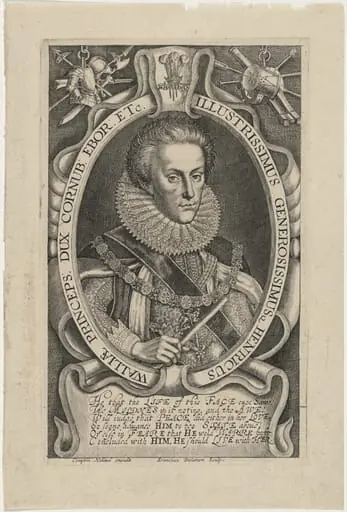 Henrici VIII Angliae, Franciae et Hiberniam Rex (King Henry VIII)