Artwork
Henry IV and Maria de Medici
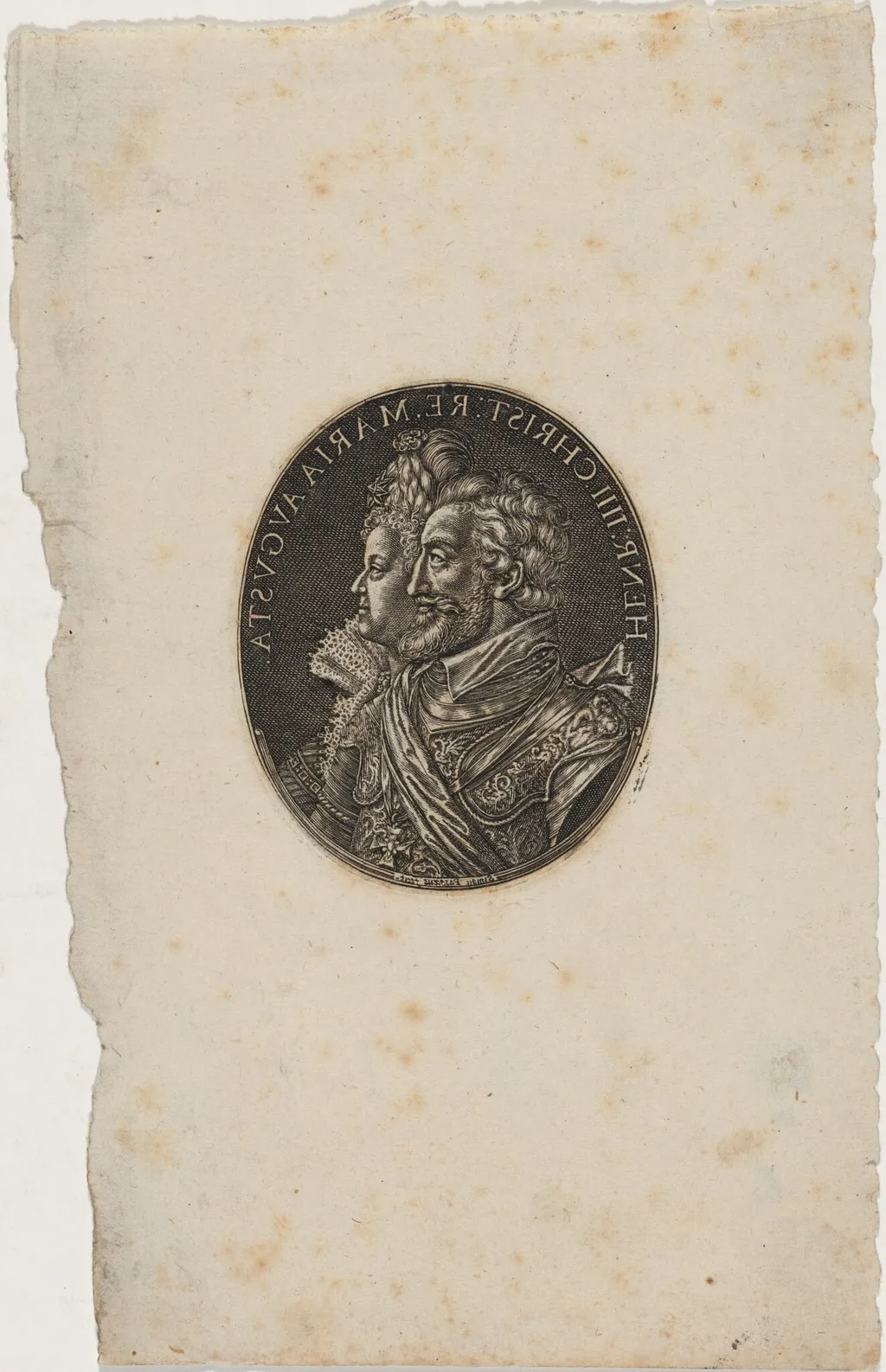
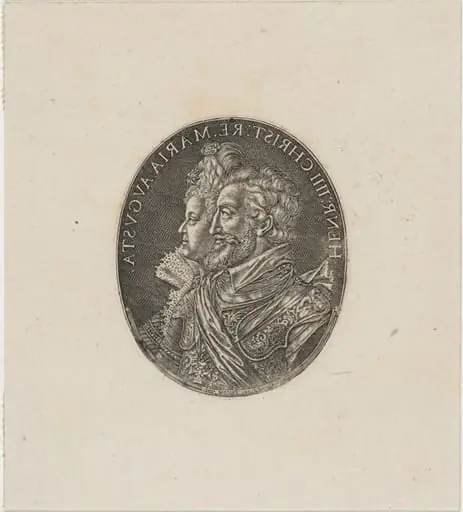
Henry IV and Maria de Medici is an ink print by the Renaissance artist Simon van de Passe. It dates from 1621 and is held in the collection of the National Gallery of Art.
About this work
Overview
This black-and-white engraving, produced in 1621 by Simon van de Passe, reproduces a design originally carved into a silver medal.
This black-and-white engraving, produced in 1621 by Simon van de Passe, reproduces a design originally carved into a silver medal. It depicts Henry IV of France and his wife, Maria de' Medici, facing one another in formal portraiture. The image was created through intaglio printing, a method involving incised lines on a metal plate to transfer ink onto paper. The worn condition of the surviving impression suggests it was circulated and handled over time.
Subject & Meaning
The portrait presents Henry IV and Maria de' Medici as sovereign partners, their composed expressions and regal attire emphasizing their status. Henry, bearded and crowned with curly hair, wears a high lace collar typical of French nobility. Maria, with smooth features and a pearl necklace, reflects the refined aesthetics of the Medici family. Latin inscriptions encircling the image reinforce their identities and the political alliance their marriage represented.
Technique & Style
Van de Passe employed fine-line engraving to render subtle textures in fabric, hair, and jewelry, using precise incisions on a silver plate. The monochrome palette enhances the formal tone, while the symmetrical composition directs attention to the couple’s mutual gaze. The technique, common in medallic portraiture, allowed for multiple impressions, making the image suitable for diplomatic distribution and private collection.
History & Provenance
Created in 1621, the engraving was likely produced to commemorate the royal couple’s union and their role in stabilizing France after religious conflict. As a print derived from a silver medal, it served both as a keepsake and a political statement. Surviving examples show signs of age and handling, indicating circulation among European elites and collectors who valued such royal imagery.
Context
In early 17th-century Europe, engraved portraits of monarchs were tools of legitimacy and diplomacy. Van de Passe, part of a family of Netherlandish engravers, specialized in such works for royal courts. This image emerged during Maria de' Medici’s regency, a period when her authority was contested. The portrait subtly asserts the enduring prestige of the Bourbon-Medici alliance amid political uncertainty.
Legacy
The engraving remains a documented example of how print culture extended the reach of royal imagery beyond coinage and painting. Van de Passe’s precision and the image’s survival offer insight into the dissemination of dynastic identity in early modern Europe. Though not widely exhibited today, it persists in institutional collections as a material witness to the intersection of art, politics, and print.
Artist & collection


![Henry IV and Maria de Medici [right half], by Simon van de Passe](https://artifactworldgallery.com/img/simon-van-de-passe--henry-iv-and-maria-de-medici-right-half--be7eb365c4b93e40-w320.webp)
![Henri IV and Maria de Medici [top half], by Simon van de Passe](https://artifactworldgallery.com/img/simon-van-de-passe--henri-iv-and-maria-de-medici-top-half--a29b3f7ac2e1d6f2-w320.webp)
![Henry IV and Maria de Medici [left half], by Simon van de Passe](https://artifactworldgallery.com/img/simon-van-de-passe--henry-iv-and-maria-de-medici-left-half--4735bcfe9297099e-w320.webp)
![Henri IV and Maria de Medici [top half], by Simon van de Passe](https://artifactworldgallery.com/img/simon-van-de-passe--henri-iv-and-maria-de-medici-top-half--98962418b82aafde-w320.webp)