Artwork
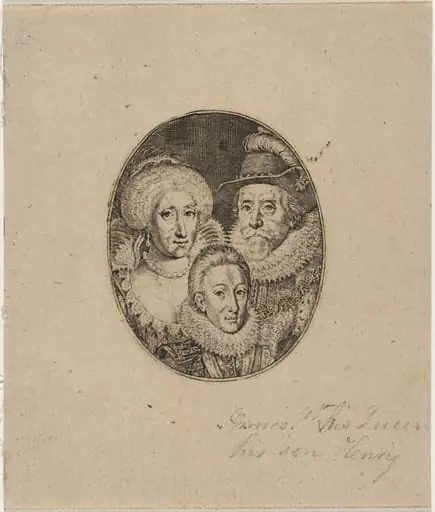
James I, Anne of Denmark, and Prince Charles
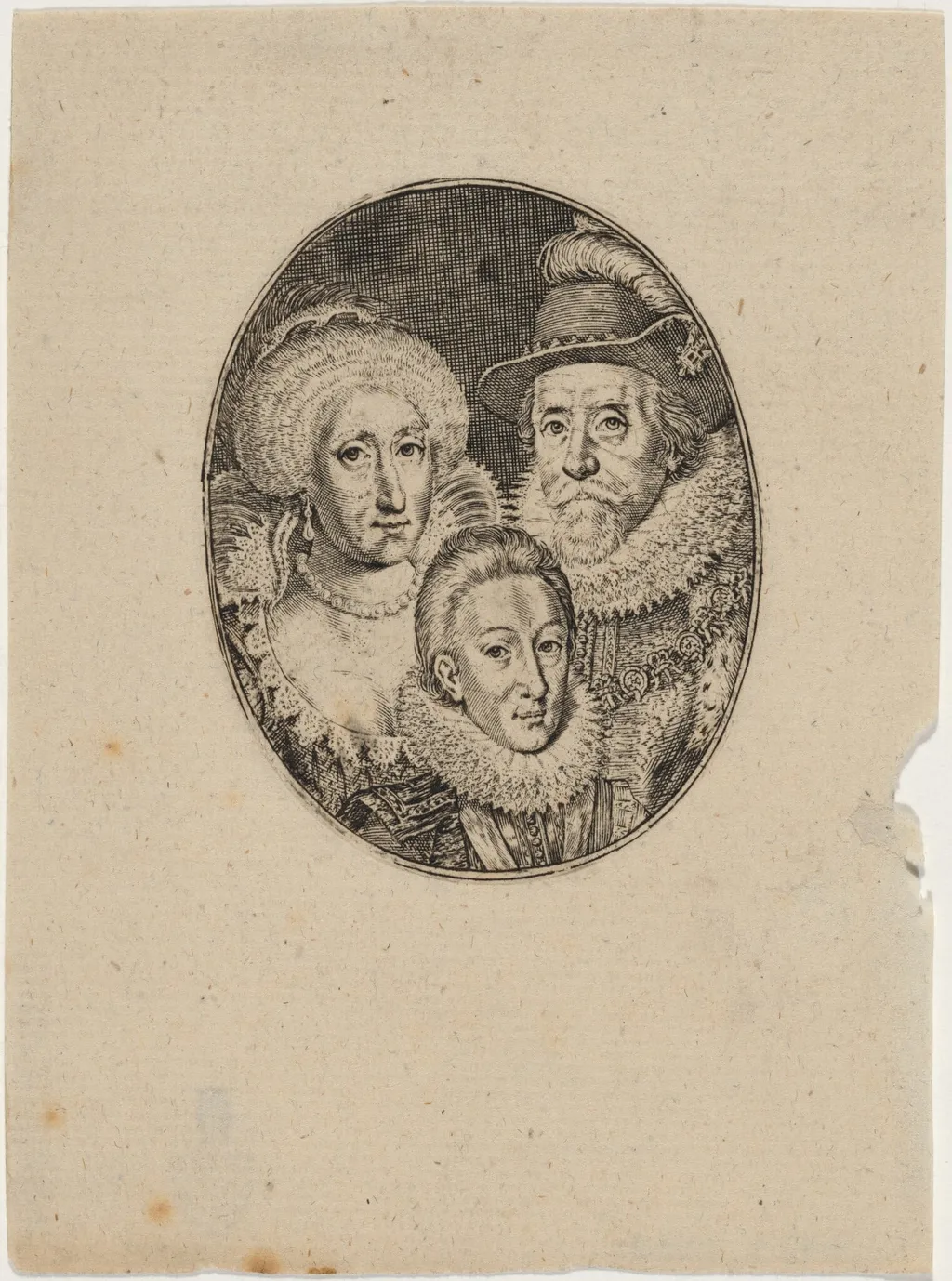
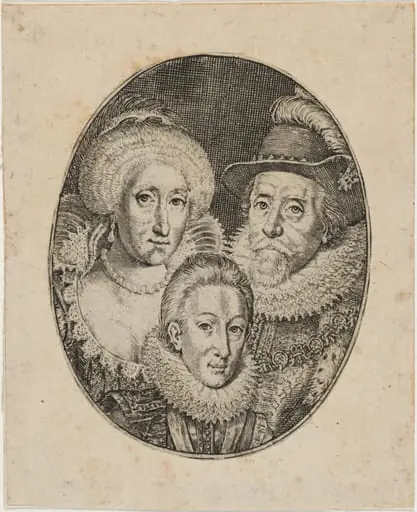
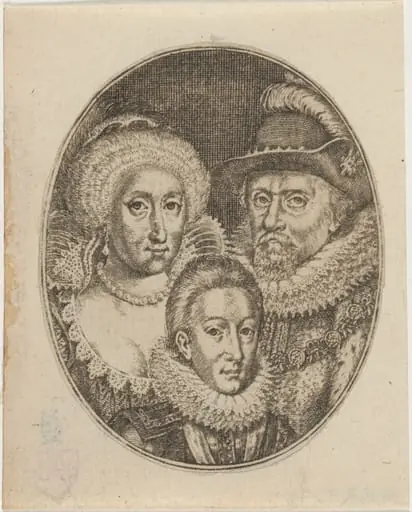
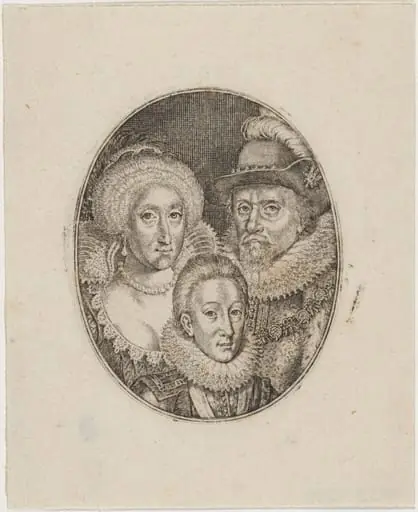
James I, Anne of Denmark, and Prince Charles is an ink print by the Renaissance artist Simon van de Passe. It dates from 1621 and is held in the collection of the National Gallery of Art.
About this work
Overview
Executed in fine linear detail, it depicts three members of the Stuart dynasty in profile: King James I, Queen Anne of Denmark, and their son Prince Charles.
This 1621 engraving by Simon van de Passe reproduces a silver medal commissioned to honor the British royal family. Executed in fine linear detail, it depicts three members of the Stuart dynasty in profile: King James I, Queen Anne of Denmark, and their son Prince Charles. The composition is contained within an oval border, typical of commemorative medal portraiture of the period, and rendered in monochrome to emphasize precision over color.
Subject & Meaning
The trio represents the continuity of the Stuart line, with James I and Anne positioned symmetrically as sovereigns, and Prince Charles, the heir, placed slightly forward to signify succession. Their attire and hairstyles reflect contemporary court fashion, reinforcing their status. The arrangement suggests familial unity and dynastic stability, a message particularly important amid political tensions of the early 17th century.
Technique & Style
Van de Passe employed meticulous cross-hatching to model form and texture, using layered parallel lines to suggest the sheen of silk, the curl of hair, and the weight of fabric. The engraving’s clarity and delicacy reflect the precision required in medal-making, where fine lines translate into durable impressions. The absence of tone or shading relies entirely on line density to create depth and volume.
History & Provenance
The original silver medal was struck in 1621, likely to mark a royal occasion such as the Prince of Wales’s investiture or a diplomatic event. Van de Passe, a Dutch engraver working in England, produced multiple prints from the medal’s matrix to distribute among courtiers and foreign dignitaries. These engravings served as both propaganda and keepsakes, circulating the royal image beyond the court.
Context
In early 17th-century England, portraiture in print was a tool of political messaging. Van de Passe’s work aligns with a broader European tradition of using engraved medals to immortalize rulers. The emphasis on familial representation reflects the monarchy’s need to project legitimacy and continuity, especially as religious and parliamentary conflicts loomed in the years before the English Civil War.
Legacy
Van de Passe’s engraving exemplifies the role of print in shaping royal imagery during a time when direct access to the monarchy was limited. Its technical refinement influenced later British portrait engravers, and surviving impressions remain valuable as historical documents of Stuart court culture. The work endures not as art for art’s sake, but as a record of power, representation, and craft.
Artist & collection


 James I, Anne of Denmark, and Prince Charles
 James I, Anne of Denmark, and Prince Charles
 James I, Anne of Denmark, and Prince Charles
 James I, Anne of Denmark, and Prince Charles
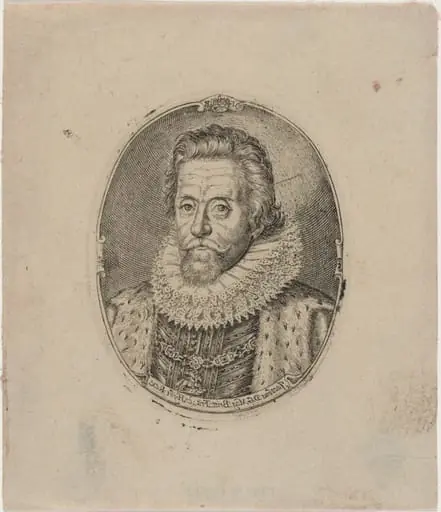 James I, King of England
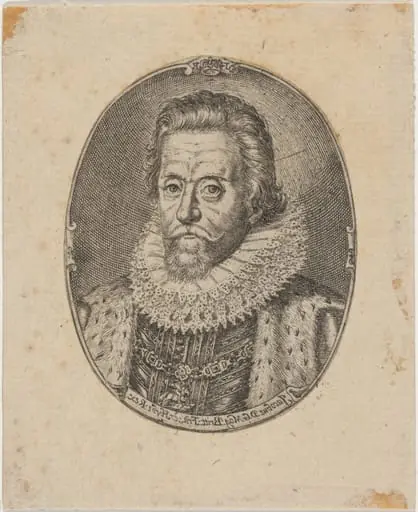 James I, King of England
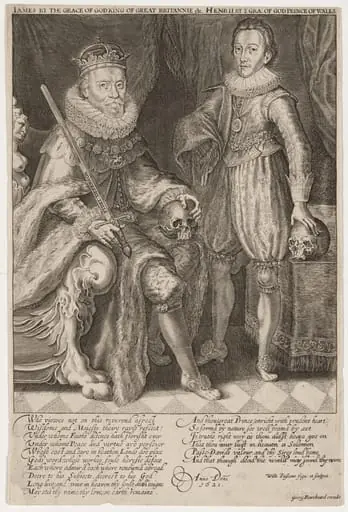 James I, King of England and Charles, Prince of Wales
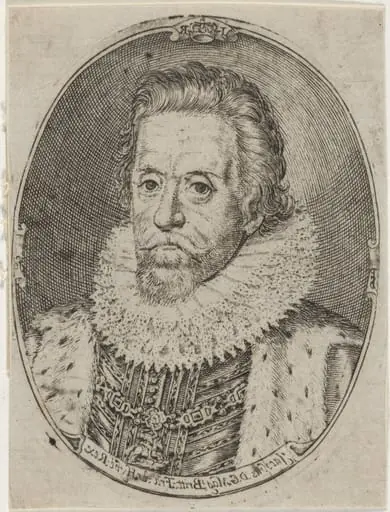 James I, King of England
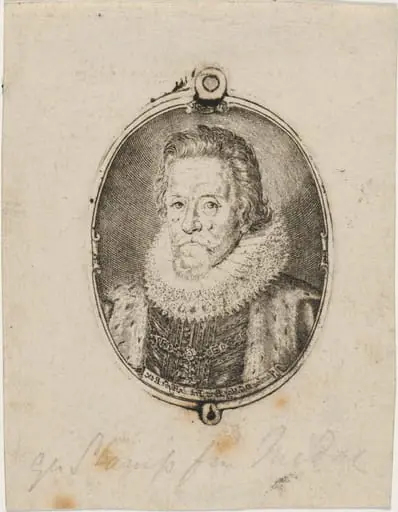 James I, King of England
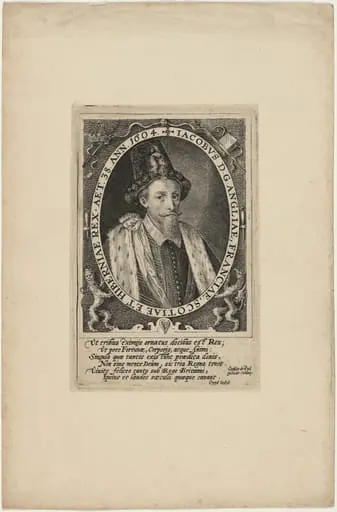 James I, King of England