Artwork
James Montagu, Bishop of Winchester
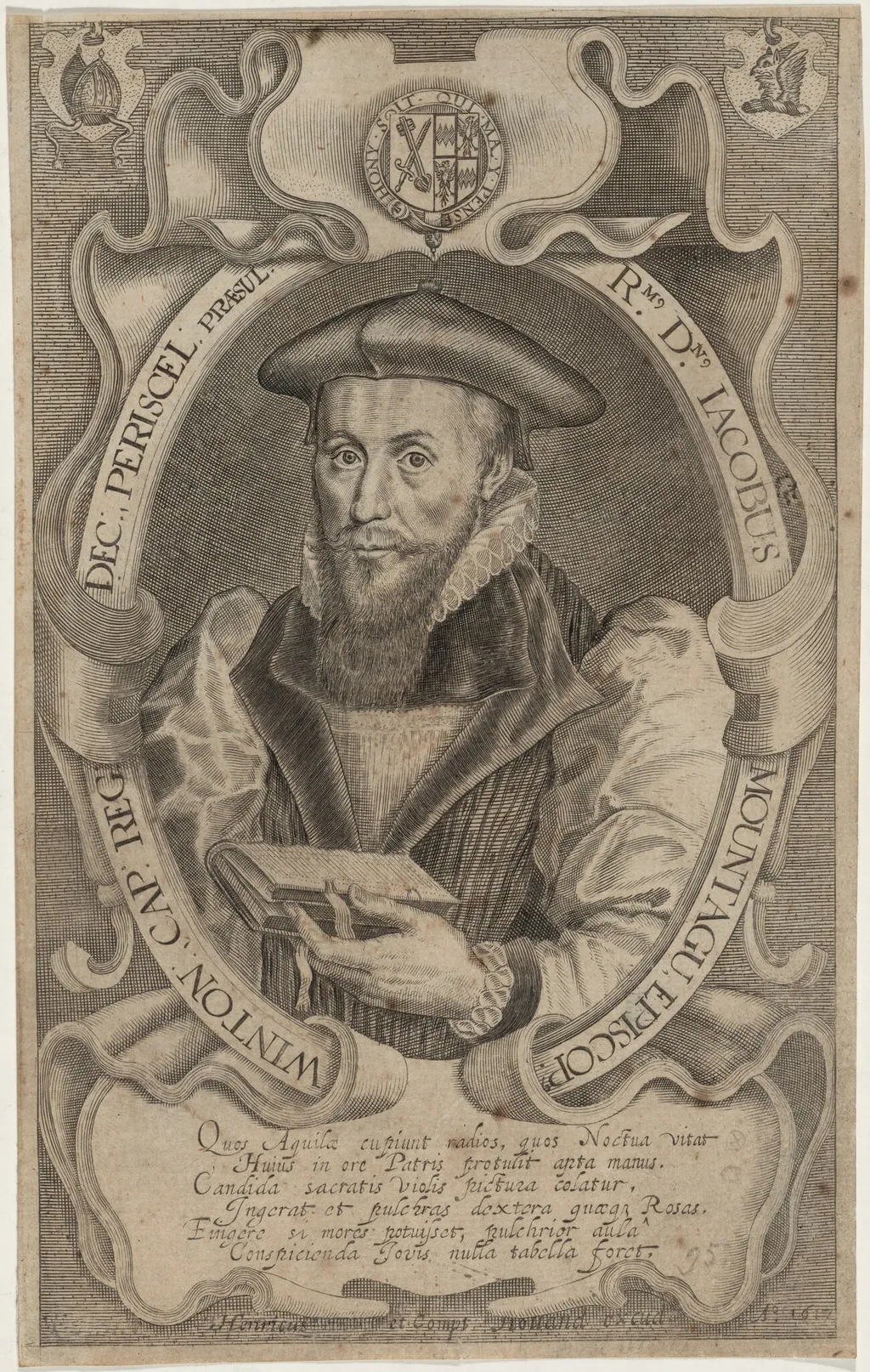
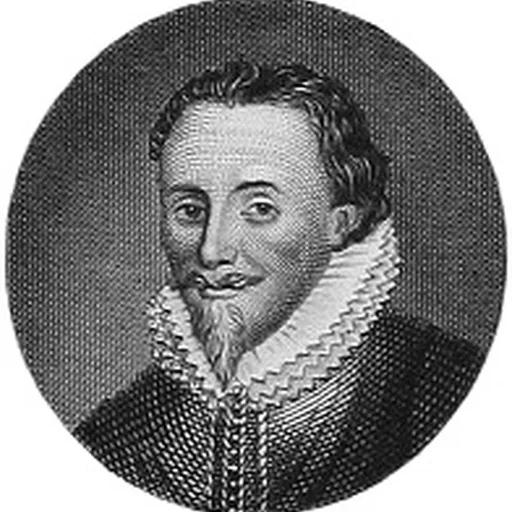
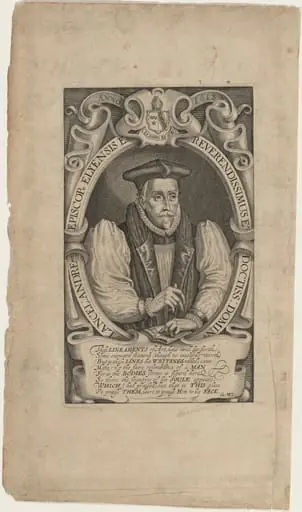
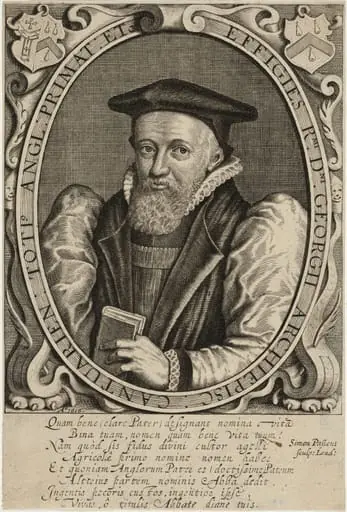
James Montagu, Bishop of Winchester is an ink print by the Renaissance artist Simon van de Passe. It dates from 1621 and is held in the collection of the National Gallery of Art.
About this work
Overview
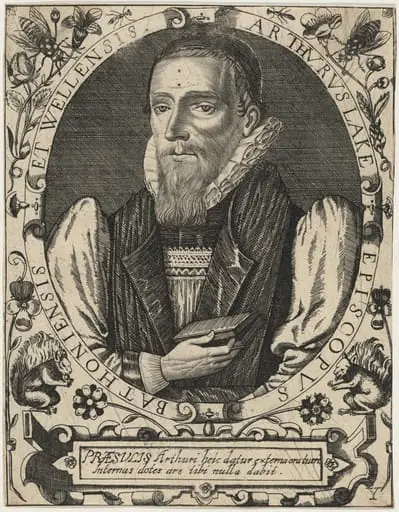
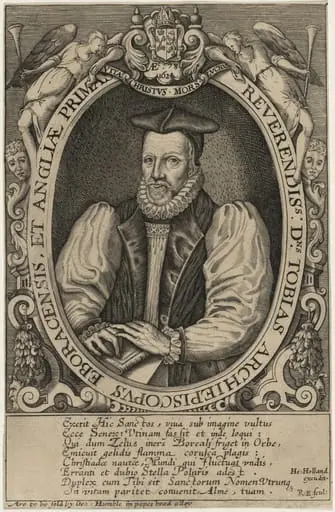
Rendered in black ink on paper, the image shows the cleric with a trimmed beard, solemn gaze, and ecclesiastical robes, his hands clasping a book or document.
Simon van de Passe’s 1621 engraving presents James Montagu, the Bishop of Winchester, in a formal half‑length portrait. Rendered in black ink on paper, the image shows the cleric with a trimmed beard, solemn gaze, and ecclesiastical robes, his hands clasping a book or document. Ornamental Latin scrolls frame his head, topped by a heraldic crest, emphasizing his status within the Church of England.
Subject & Meaning
The sitter, James Montagu (d. 1621), served as Bishop of Winchester from 1617 until his death. The inclusion of a book underscores his scholarly and theological duties, while the Latin inscription and crest signal his learned background and noble connections. The portrait’s restrained expression conveys the gravitas expected of a high‑ranking prelate in early‑seventeenth‑century England.
Technique & Style
Van de Passe employed the traditional copper‑plate engraving method, incising fine lines to model light and shadow across the face and fabric. Cross‑hatching creates subtle tonal gradations, giving the portrait a three‑dimensional quality despite its monochrome medium. The precise line work and decorative cartouches are characteristic of the van de Passe workshop, known for its meticulous portraiture.
History & Provenance
Created the year of Montagu’s death, the print likely served as a commemorative image for distribution among ecclesiastical and aristocratic circles. Copies of the engraving appear in several European print collections, indicating its circulation beyond England. The original plate remains in the possession of the British Museum, where it is catalogued among van de Passe’s English portrait series.
Context
The early 1620s saw a flourishing market for engraved portraits of political and religious leaders, driven by the growing demand for visual documentation among the literate elite. Van de Passe, a Dutch immigrant active in England, supplied such images to patrons seeking both personal remembrance and public affirmation of authority.
Legacy
While not as widely reproduced as later portrait prints, this engraving exemplifies the transition from Renaissance portraiture to the more restrained, documentary style of the early Stuart period. It provides scholars with a visual reference for Montagu’s appearance and contributes to the broader understanding of print culture in early modern England.
Artist & collection