Artwork
Shield of Anne of Denmark
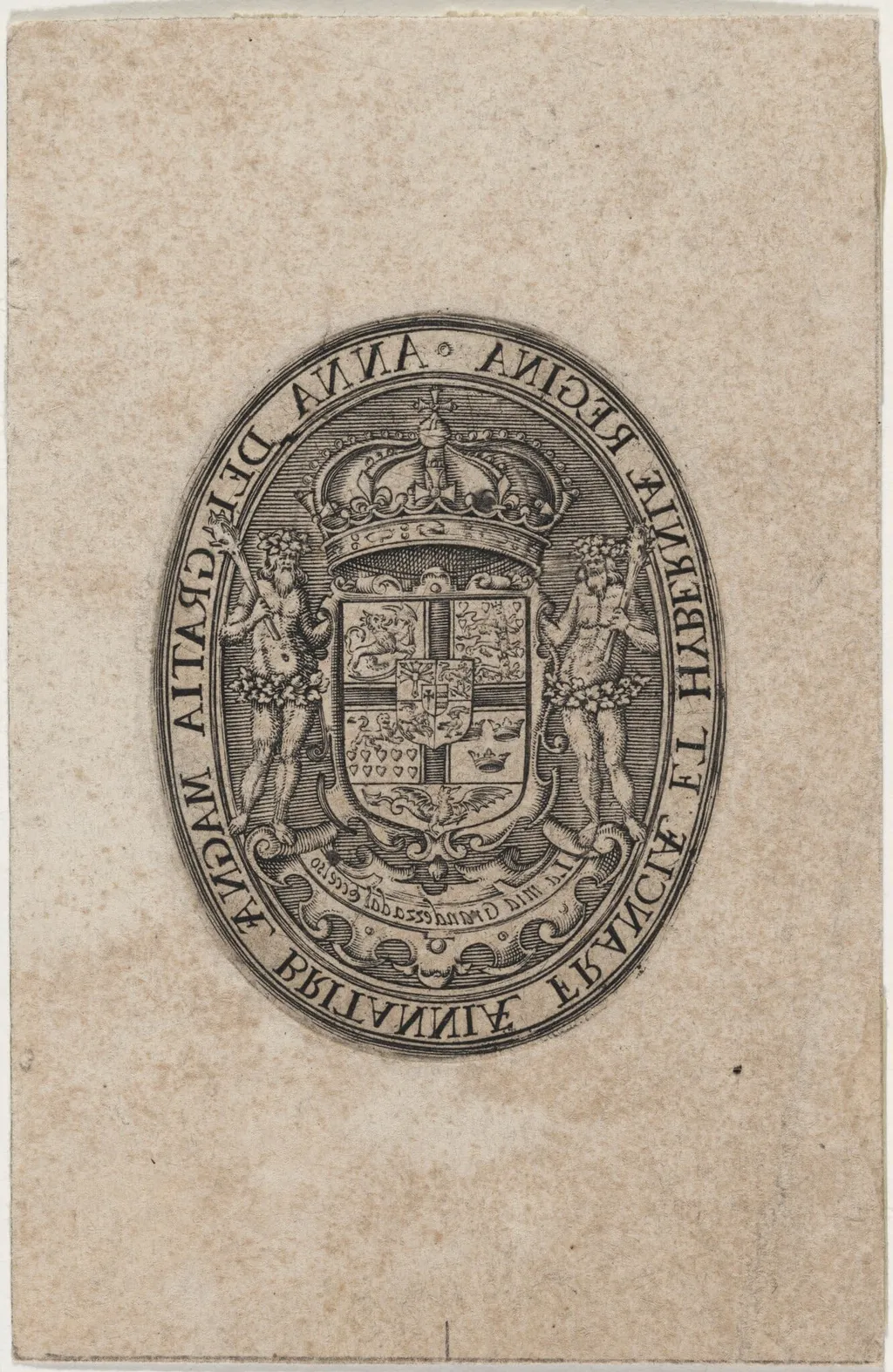
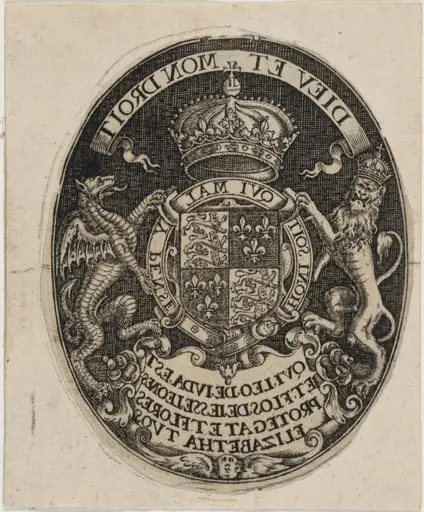
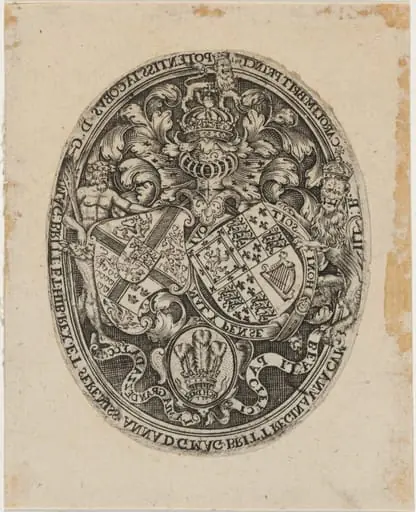
Shield of Anne of Denmark is an ink print by the Renaissance artist Simon van de Passe. It dates from 1621 and is held in the collection of the National Gallery of Art.
About this work
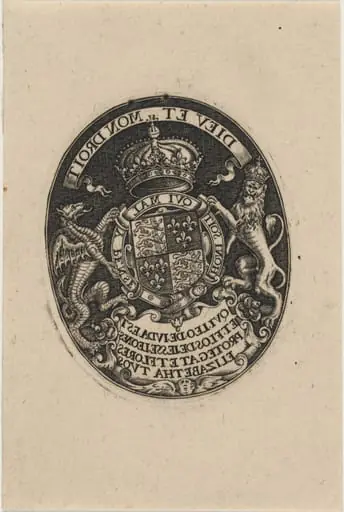
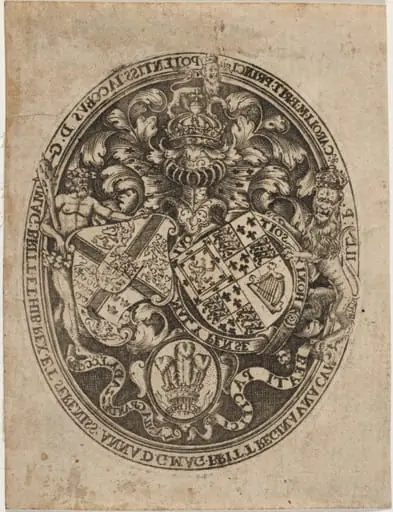
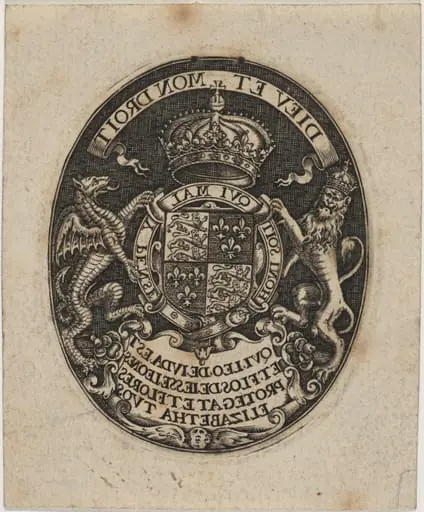
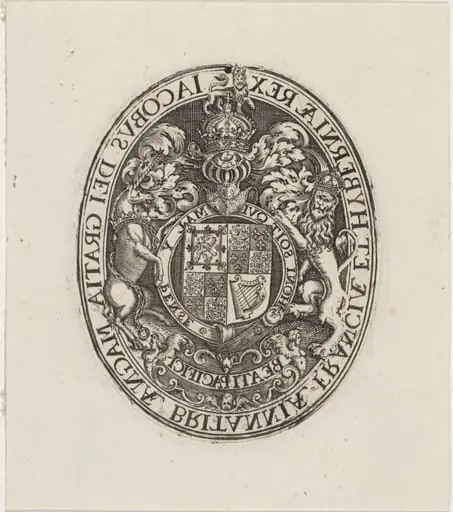
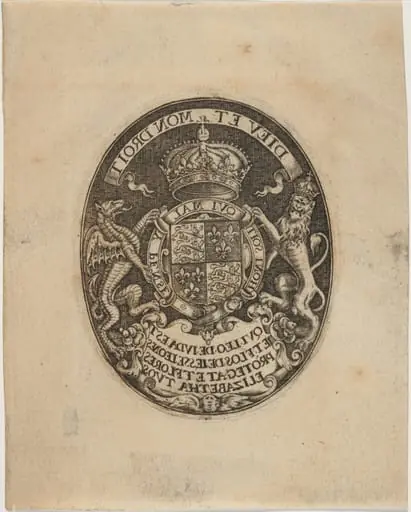
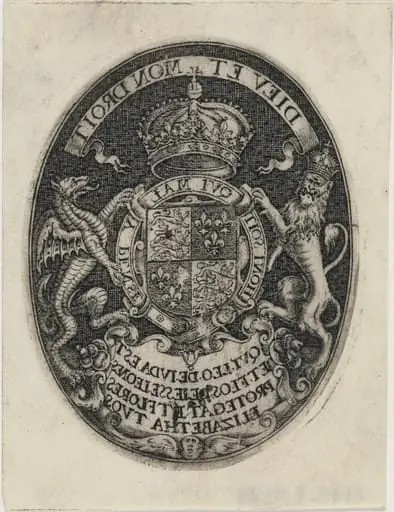
There are two figures on either side of the shield, and text around the edge of the oval.
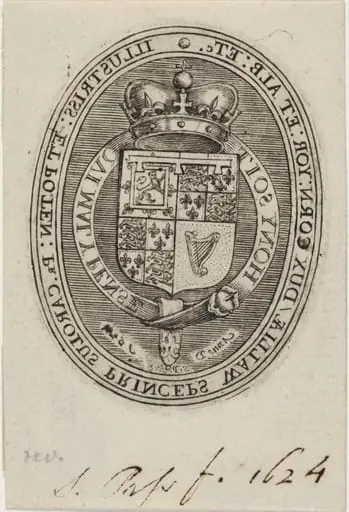
This image shows an oval engraving of a shield with a crown on top. The shield has a coat of arms with various symbols, including a lion and a unicorn. There are two figures on either side of the shield, and text around the edge of the oval.
The engraving is very detailed, with intricate lines and patterns. The text around the edge is in Latin and appears to be a motto or phrase. The overall design is symmetrical and balanced, with the shield and crown at the center.
This engraving is an example of Renaissance art, specifically from the 17th century. To learn more about this style and technique, look up the artist Passe, Simon van de.
Overview
Created in 1621, this oval engraving by the Dutch engraver Simon van de Passe reproduces a silver medal that commemorates Anne of Denmark. The central motif is a shield surmounted by a crown, flanked by two attendant figures, and encircled by a Latin inscription. The composition balances intricate line work with heraldic symbolism, presenting a formal portrait of royal authority.
Subject & Meaning
The shield displays a composite coat of arms featuring a lion and a unicorn, traditional emblems of the British monarchy. The surrounding figures likely represent allegorical supporters, reinforcing the queen’s dynastic legitimacy. The Latin motto encircling the design serves as a textual affirmation of Anne’s status and virtues, linking visual and verbal elements in a unified heraldic statement.
Technique & Style
Van de Passe employed fine, cross‑hatching and stippling to render the delicate details of the medal’s relief on paper. The engraving reflects the late Renaissance emphasis on precise line and balanced composition, translating the three‑dimensional qualities of metalwork into a two‑dimensional print while preserving the original’s ornamental richness.
History & Provenance
The print originates from a silver medal likely commissioned during Anne of Denmark’s tenure as queen consort of England, Scotland, and Ireland. As a reproduction, the engraving facilitated wider dissemination of her image and heraldic insignia beyond the limited circulation of the original medal, serving both commemorative and propagandistic purposes.
Context
Produced in the early 17th century, the work aligns with a broader European practice of memorializing royal figures through medallic art. Simon van de Passe, active in England after relocating from the Netherlands, contributed to the visual culture of the Stuart court, where such prints reinforced monarchical identity amid political and religious tensions of the period.
Artist & collection