Artwork
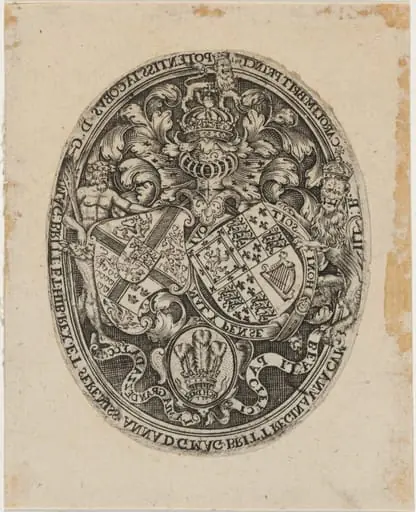
Shield of James I, Anne of Denmark, and Prince Charles
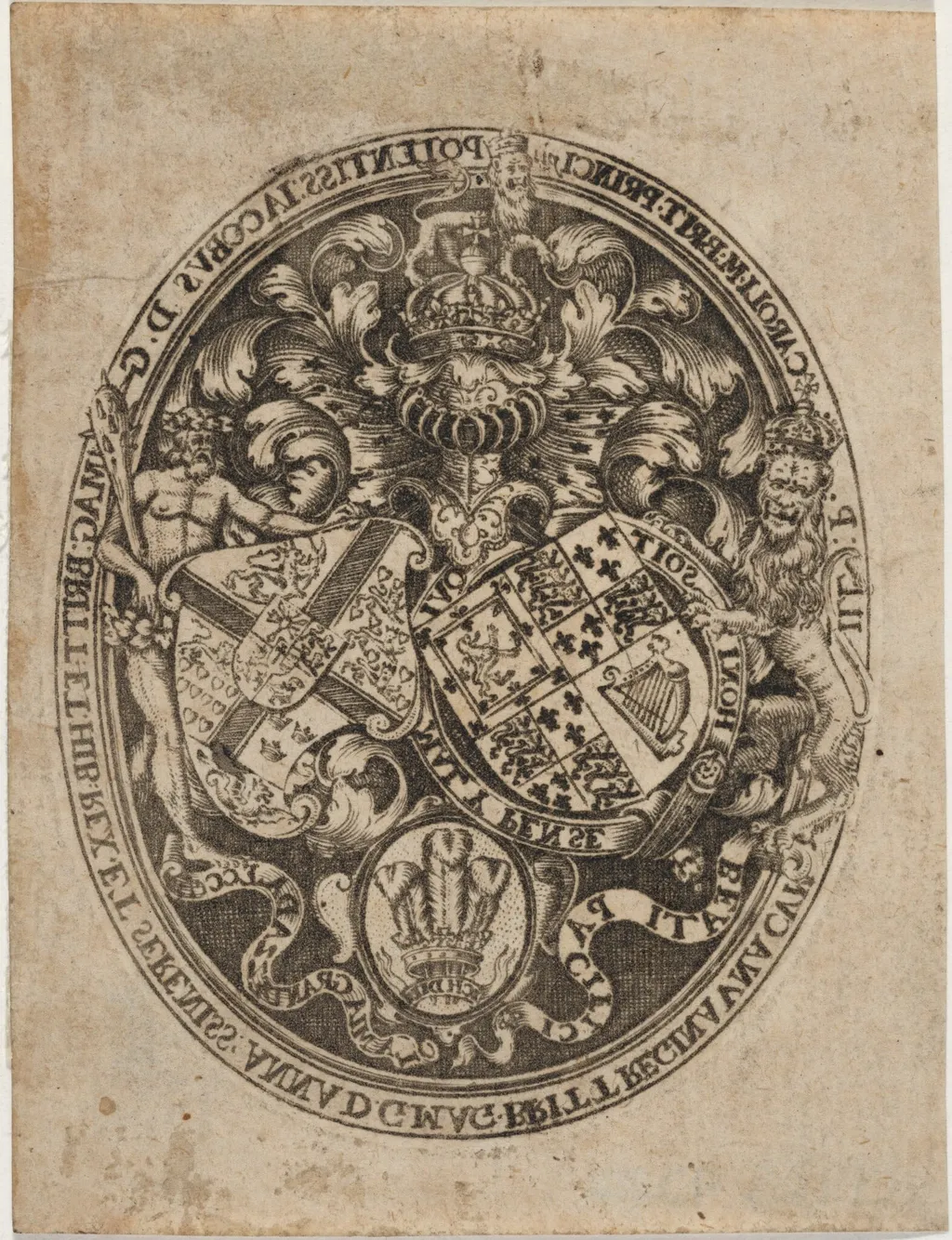
Shield of James I, Anne of Denmark, and Prince Charles is an ink print by the Renaissance artist Simon van de Passe. It dates from 1621 and is held in the collection of the National Gallery of Art.
About this work
Overview
This 1621 engraving by Simon van de Passe reproduces a silver medal commissioned to honor James I, his queen Anne of Denmark, and their son Prince Charles.
This 1621 engraving by Simon van de Passe reproduces a silver medal commissioned to honor James I, his queen Anne of Denmark, and their son Prince Charles. The design centers on a heraldic shield, encircled by an inscribed band. Rendered in fine linear detail, the print captures the medal’s original craftsmanship, translating metalwork into paper through meticulous engraving techniques typical of early 17th-century Northern European printmaking.
Subject & Meaning
The shield is quarterly divided, displaying symbols representing the realms under Stuart rule: the crown signifies England, the harp stands for Ireland, and the other quarters likely denote Scotland and France, reflecting James’s dynastic claims. The surrounding inscription, though illegible in the print, would have proclaimed royal authority and lineage. The composition emphasizes unity and legitimacy, reinforcing the monarchy’s divine right and territorial sovereignty.
Technique & Style
Van de Passe employed fine cross-hatching and precise line work to model form and texture, mimicking the relief of a struck medal. The engraving’s symmetry and clarity reflect Renaissance ideals of order and balance. Despite being a reproductive print, the work retains the precision of original medal engraving, with delicate tonal gradations achieved through controlled ink density and line density rather than shading.
History & Provenance
Commissioned in 1621, the original silver medal was likely distributed to dignitaries or used as a diplomatic gift. Van de Passe, a Dutch engraver working in England, produced this print to disseminate the royal image more widely. The engraving survives in several institutional collections, suggesting its use in courtly circles and among collectors interested in royal iconography during the Jacobean era.
Context
This print emerged during a period of intense royal self-representation under James I, who sought to consolidate his rule over multiple kingdoms. Engraved medals and their reproductions were key tools in projecting monarchical authority beyond the court. Van de Passe’s workshop was central to this visual propaganda, producing similar works for European royalty, blending heraldic tradition with emerging print culture.
Legacy
The engraving stands as a documented example of how royal imagery was mechanically reproduced and circulated in the early modern period. While not widely known today, it contributed to the standardization of Stuart iconography and influenced later heraldic prints. Van de Passe’s technical precision set a benchmark for reproductive engraving, preserving the visual language of monarchy for future generations.
Artist & collection


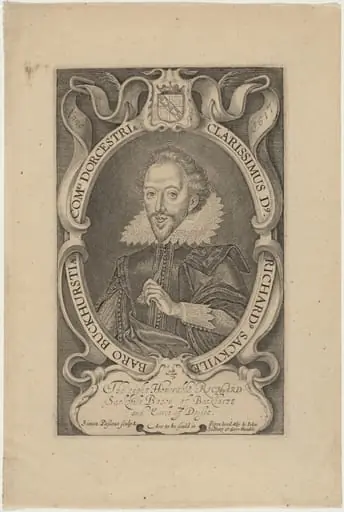
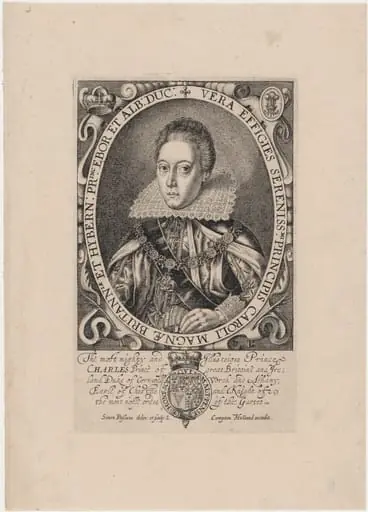
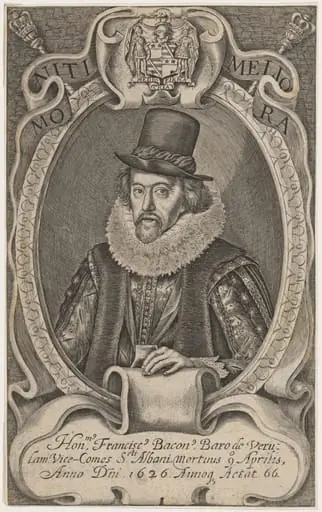
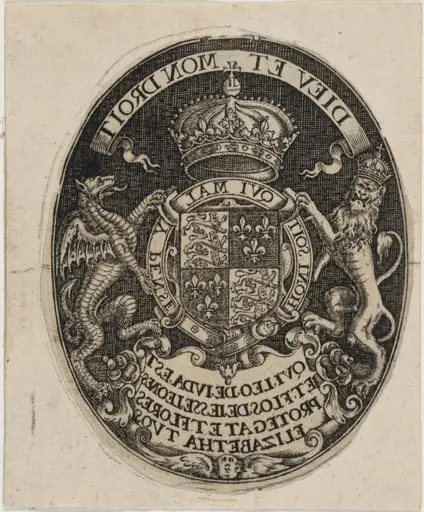
 Shield of James I, Anne of Denmark, and Prince Charles
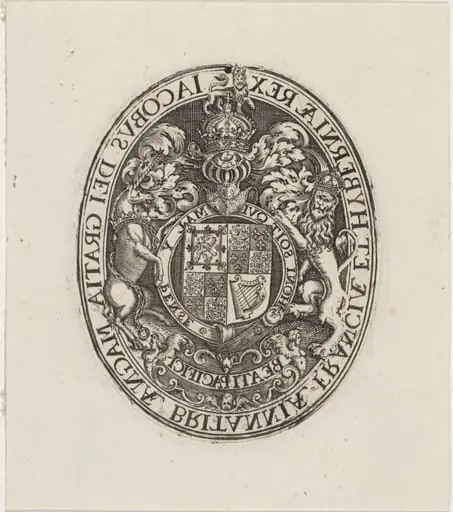 Shield of James I
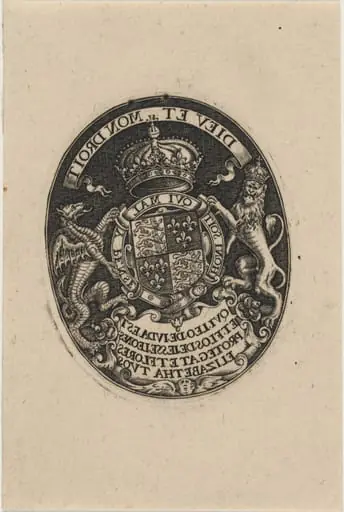 Shield of Queen of England
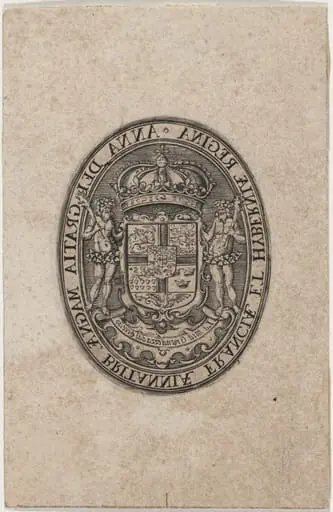 Shield of Anne of Denmark
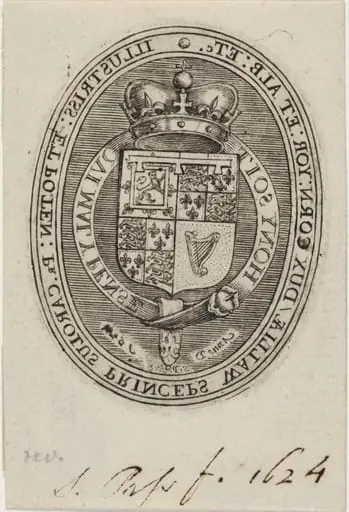 Shield of Charles I
![Shield of James I [bottom half], by Simon van de Passe](https://artifactworldgallery.com/img/simon-van-de-passe--shield-of-james-i-bottom-half--ba628f9c8498bd19-w320.webp) Shield of James I [bottom half]
Shield of James I [bottom half]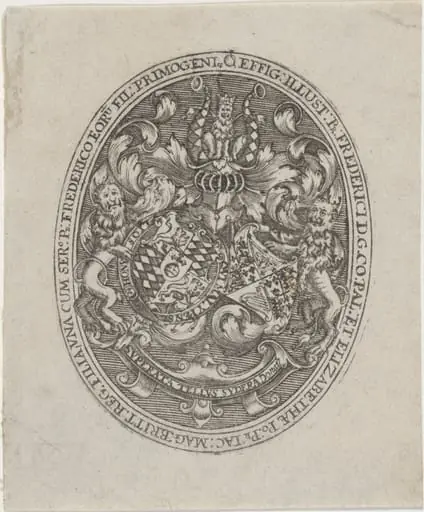 Shields of Frederick V, Elizabeth, and Prince Frederick Henry
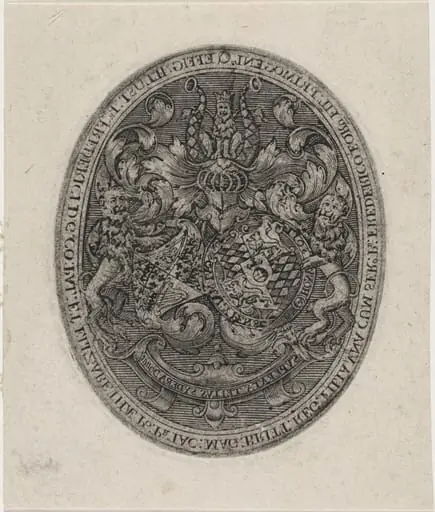 Shields of Frederick V, Elizabeth, and Prince Frederick Henry
![Shield of James I [bottom half], by Simon van de Passe](https://artifactworldgallery.com/img/simon-van-de-passe--shield-of-james-i-bottom-half--1018ac0722c9b8d5-w320.webp) Shield of James I [bottom half]
Shield of James I [bottom half]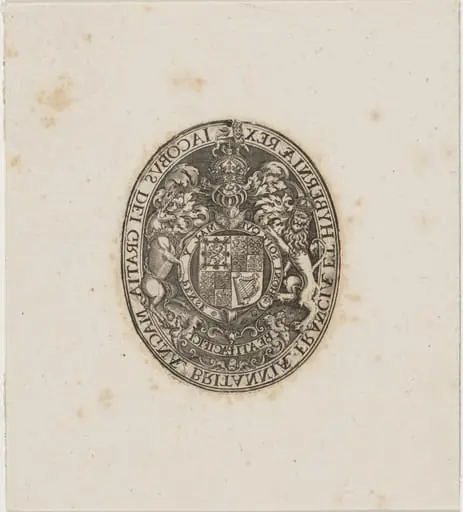 Shield of James I
![Shield of James I [bottom half], by Simon van de Passe](https://artifactworldgallery.com/img/simon-van-de-passe--shield-of-james-i-bottom-half--5f78c9059311c27d-w320.webp) Shield of James I [bottom half]
Shield of James I [bottom half]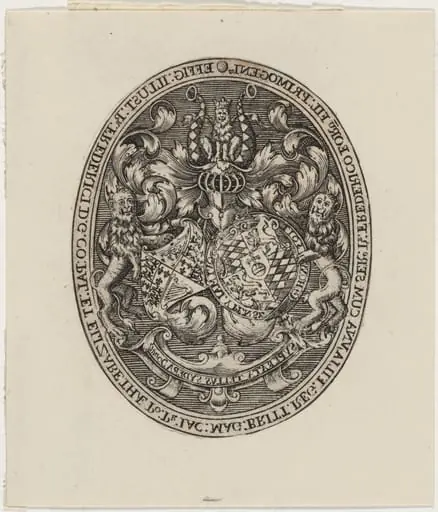 Shields of Frederick V, Elizabeth, and Prince Frederick Henry