Artwork
Shields of the Emperor Matthias
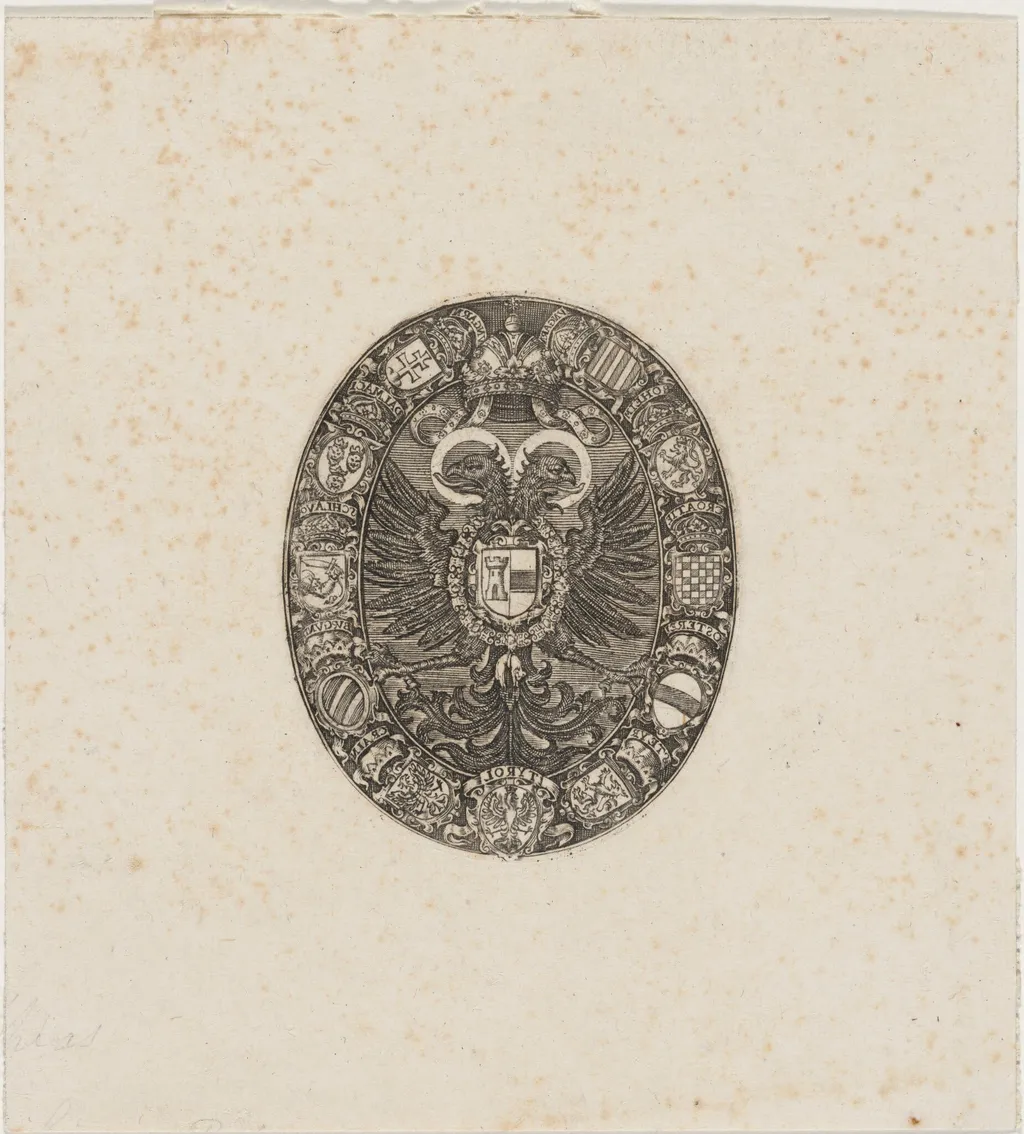
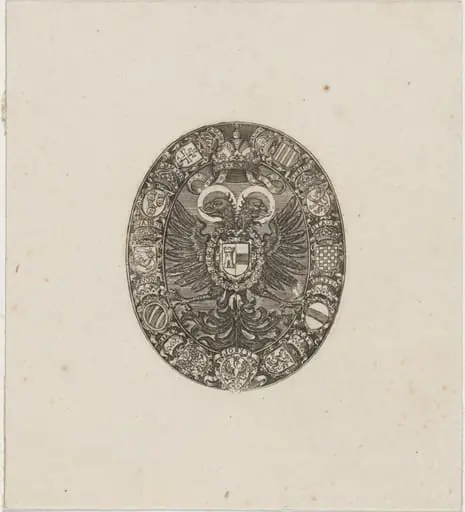
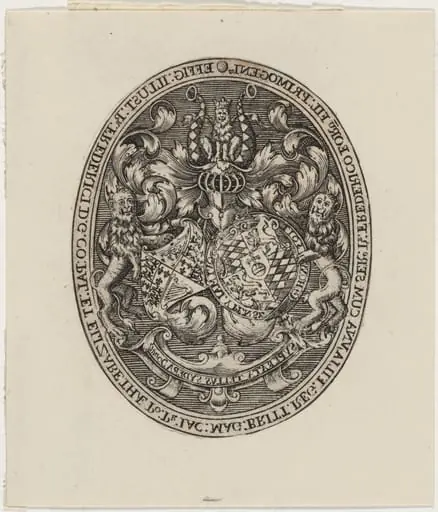
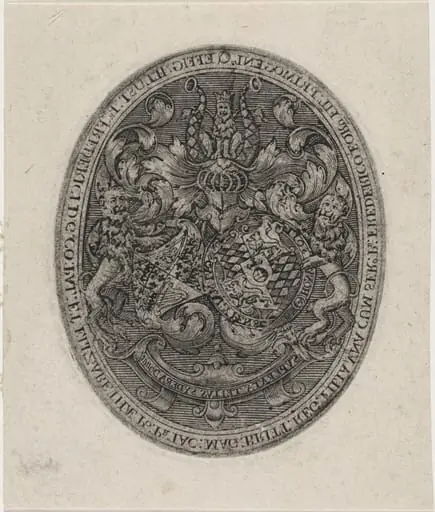
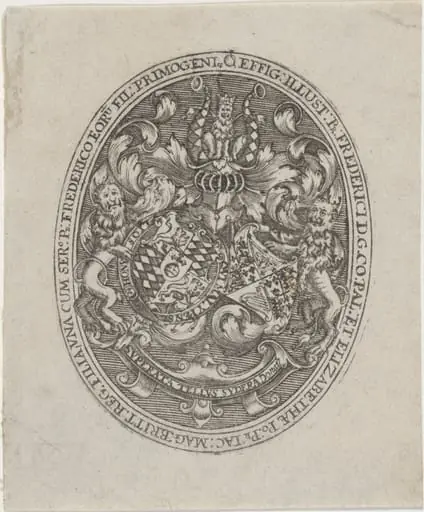
Shields of the Emperor Matthias is an ink print by the Renaissance artist Simon van de Passe. It dates from 1621 and is held in the collection of the National Gallery of Art.
About this work
Overview
Simon van de Passe’s 1621 engraving, titled Shields of the Emperor Matthias, reproduces the design of a silver medal. Executed as a round print, the image is densely populated with heraldic devices, crowns, and ornamental motifs that radiate from a central shield.
Subject & Meaning
The composition centers on a large shield crowned with an imperial diadem, surrounded by a series of smaller shields bearing various family crests. The surrounding border is filled with figures, animals and intricate patterns, emphasizing the authority and lineage associated with Emperor Matthias.
Technique & Style
Van de Passe transferred the relief design of the original medal onto a copper plate, employing line engraving to render the metallic texture in black and white. The technique allows fine detailing of the heraldic symbols and the crowded decorative border, creating a sense of depth through line work.
History & Provenance
The print was produced shortly after the reign of Matthias (1612‑1619) and served as a visual record of his imperial insignia. As a reproduction of a medal, it circulated among collectors and court officials, preserving the iconography of the Habsburg ruler beyond the limited number of metal medals.
Context
During the early 17th century, engravers like van de Passe played a key role in disseminating political and dynastic imagery across Europe. The work reflects the broader Baroque interest in elaborate ornamentation and the use of prints to reinforce monarchical propaganda.
Artist & collection