Artwork
Ohio River at Empire, Ohio
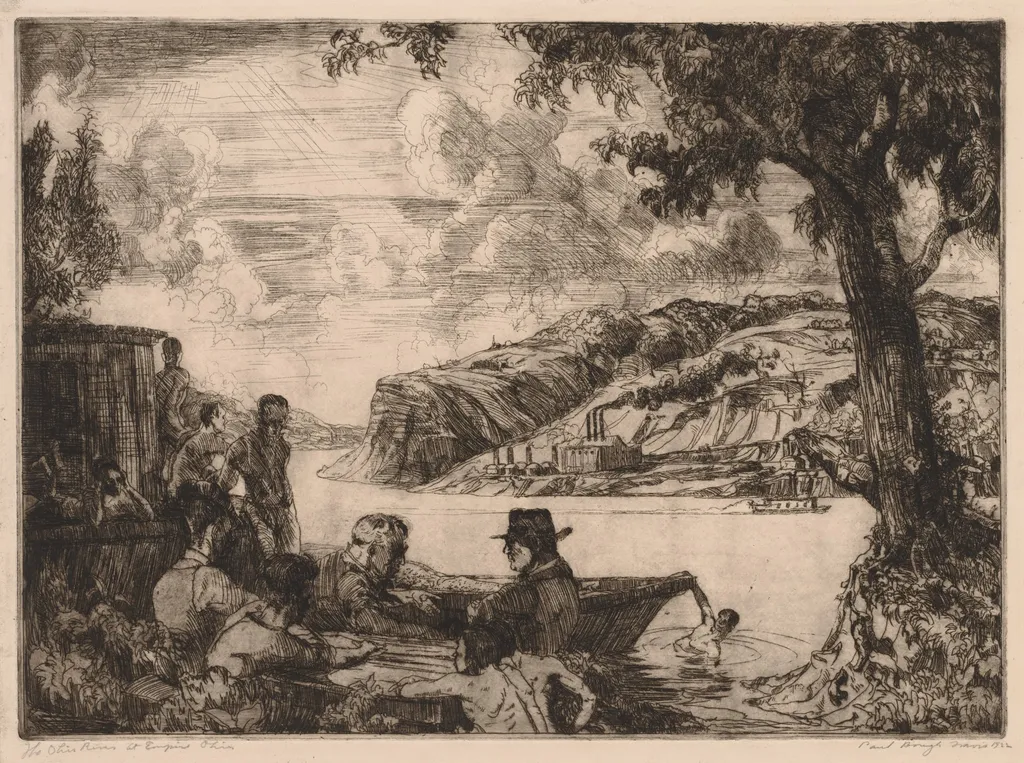
Ohio River at Empire, Ohio is a print by Paul B. Travis. It dates from 1922 and is held in the collection of the Cleveland Museum of Art. Paul B.
About this work
The artist used a mix of dark and light tones to create depth, making the figures stand out against the landscape.
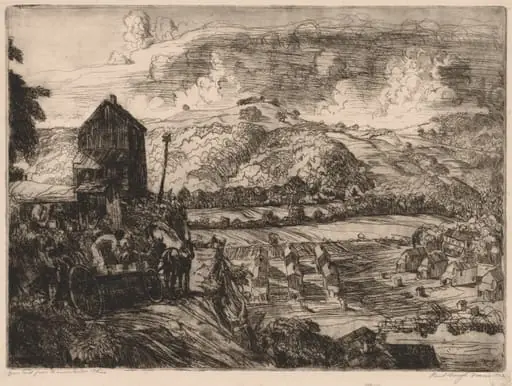
This print shows a quiet riverside scene with a few people scattered around. In the foreground, two men sit on a rock by the water, one reading while the other rests his head on his hand. Behind them, a woman stands near a tree, and another person leans against a fence. The river curves gently, with a small boat floating near the shore. The background has rolling hills and a distant town, all drawn with soft, sketchy lines.
The artist used a mix of dark and light tones to create depth, making the figures stand out against the landscape. The loose, almost sketchy style gives the scene a relaxed, everyday feel.
Look up Paul B. Travis (American, 1891–1975) next to see more of his work.
Overview
Paul B. Travis created this print in 1922, capturing a tranquil moment along the Ohio River near Empire, Ohio. Executed in a quiet, observational style, the work belongs to The Cleveland Museum of Art’s collection. It reflects Travis’s interest in everyday American landscapes and his preference for intimate, unidealized scenes over grand narratives.
Subject & Meaning
The scene depicts four individuals in a moment of stillness by the riverbank: two men seated on a rock, one reading, the other lost in thought; a woman near a tree; and another figure resting against a fence. The composition suggests quietude and solitude, emphasizing ordinary life rather than drama. The river’s gentle curve and distant town imply continuity between human presence and the natural environment.
Technique & Style
Travis employed a loose, tonal approach using ink or wash to build subtle contrasts between light and shadow. The lines are fluid and suggestive, avoiding sharp definition, which lends the scene an informal, sketch-like quality. Figures are rendered with minimal detail, allowing the atmosphere to dominate. This technique enhances the sense of spontaneity and calm observation.
History & Provenance
The print was made during Travis’s early career, a period when he focused on regional American subjects. It entered The Cleveland Museum of Art’s collection in the decades following its creation, likely through acquisition or donation. While not widely exhibited, it remains part of the museum’s holdings of early 20th-century American prints.
Context
Created in the early 1920s, the work aligns with a broader American artistic shift toward realism and regionalism, away from European academic traditions. Travis, influenced by the Ashcan School and printmakers like James McNeill Whistler, sought to elevate mundane moments through careful composition and restrained technique, reflecting a growing interest in local identity.
Legacy
Though not among Travis’s most reproduced works, this print exemplifies his consistent focus on quiet, unadorned American landscapes. It contributes to a body of work that documented everyday life in the Midwest during a time of rapid urbanization. Its preservation in a major museum underscores its value as a record of regional visual culture.
Artist & collection

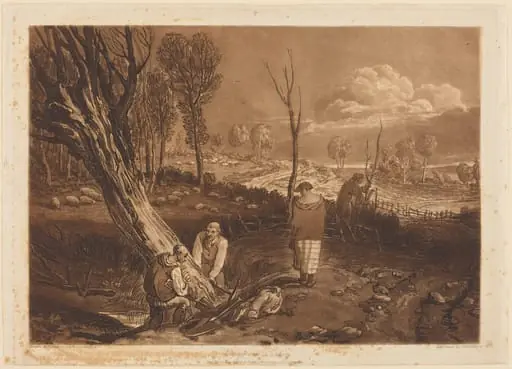 Hedging and Ditching
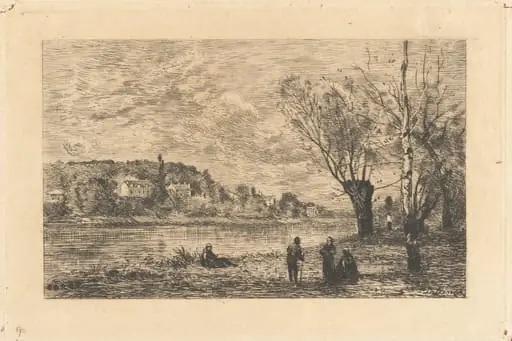 Ville d’Avray
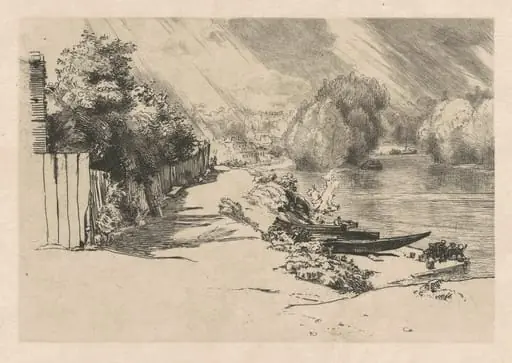 The Seine at Bas-Meudon
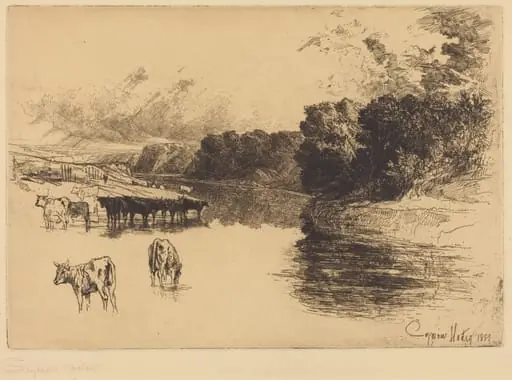 A Lancashire River
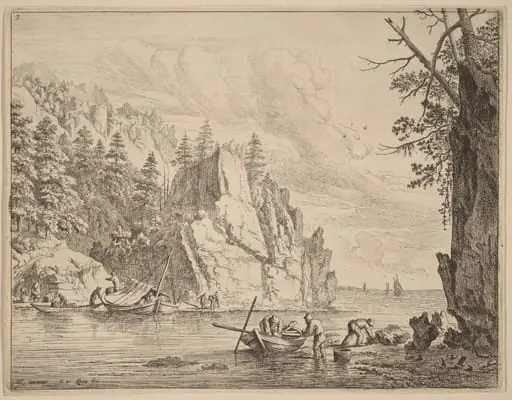 View of the River Rhine
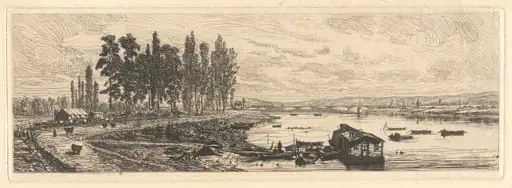 The Banks of the Seine at Bezons
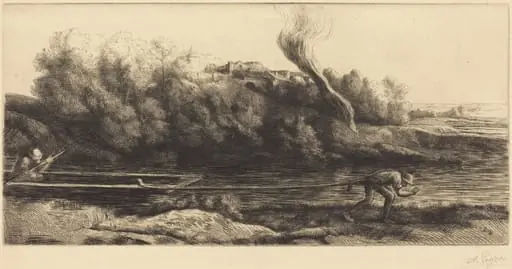 Landscape with Boat, 2nd plate (Paysage au bateau)
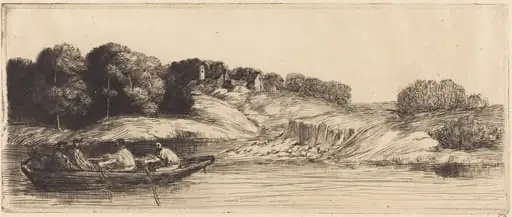 Landscape with Boat, 1st plate (Le paysage au bateau)
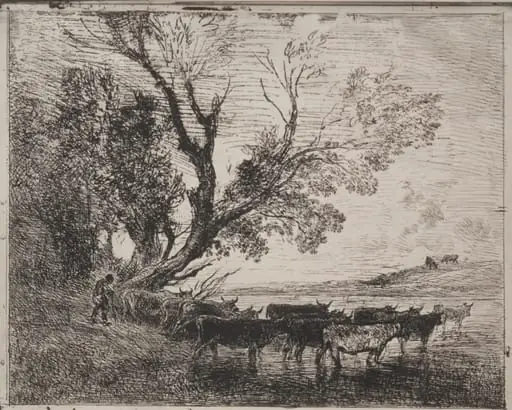 The Ford
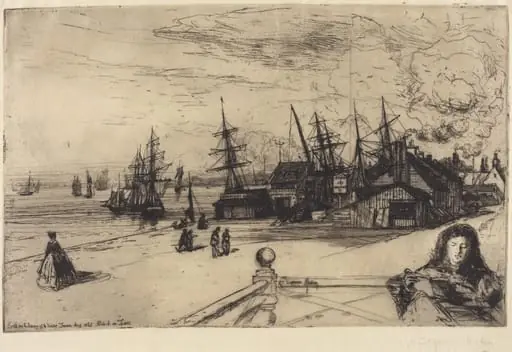 Yacht Tavern, Erith
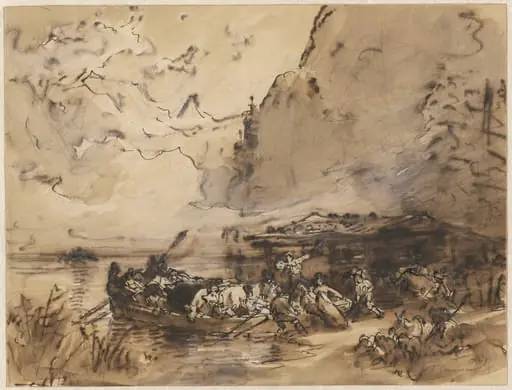 A Ferry on the Königsee
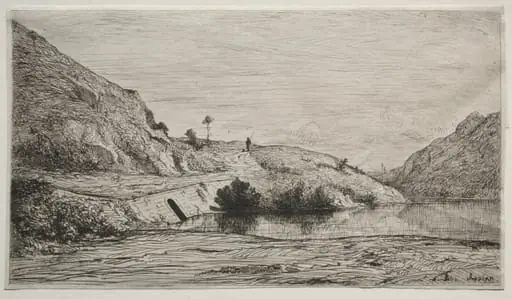 Banks of the Rhone