Artwork
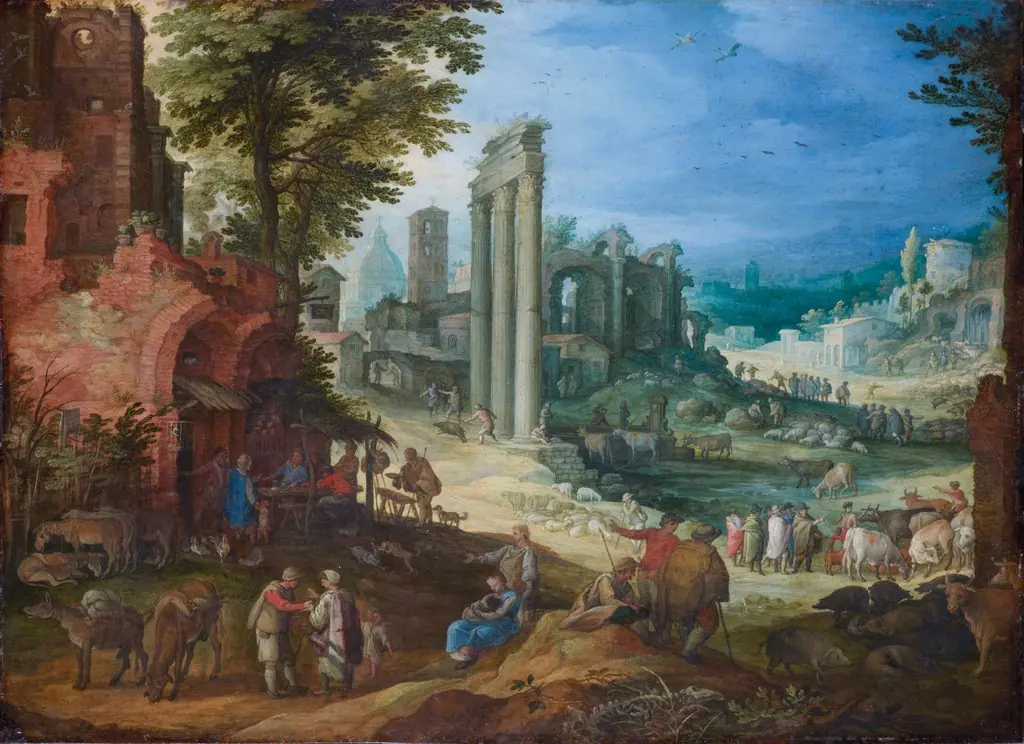
Landscape with Roman ruins
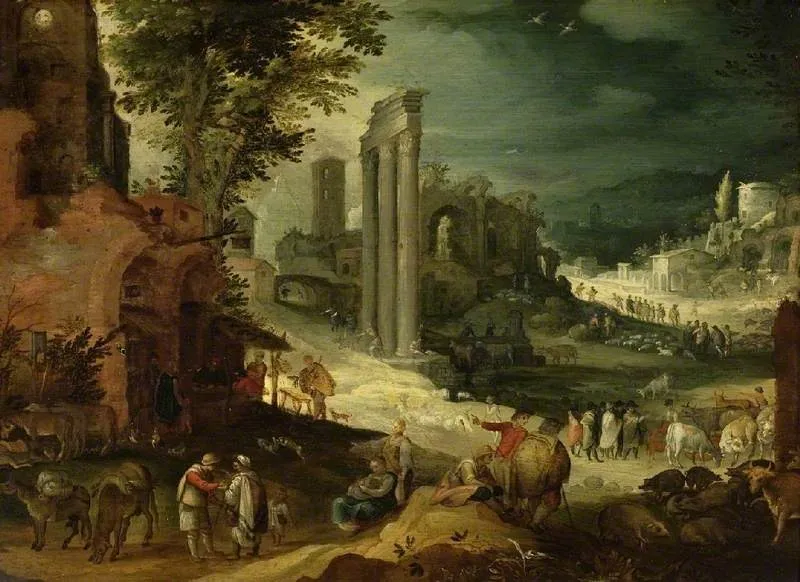
Landscape with Roman ruins is an oil painting by Paul Bril. It dates from 1600 and is held in the collection of the Fitzwilliam Museum.
About this work
Overview
Painted around 1600 on copper, this landscape by Paul Bril depicts a tranquil scene of ancient Roman architecture nestled within a natural setting. The small-scale support enhances the detail and luminosity of the work. It resides today in the Fitzwilliam Museum, Cambridge, as part of its collection of Northern European landscape paintings from the early 17th century.
Subject & Meaning
The composition centers on a weathered stone structure in the foreground, surrounded by figures and animals engaged in quiet, everyday activities.
The composition centers on a weathered stone structure in the foreground, surrounded by figures and animals engaged in quiet, everyday activities. Distant ruins and buildings recede into the haze, suggesting the passage of time and the quiet persistence of nature over human endeavor. The scene evokes contemplation rather than narrative, aligning with the period’s interest in classical antiquity as a source of serene reflection.
Technique & Style
Bril employed copper as a support for its smooth surface and ability to hold fine detail. He used a restrained palette of earth tones—ochres, olives, and browns—to unify the scene, while subtle chiaroscuro models forms and deepens spatial recession. The brushwork is precise yet fluid, with soft transitions between light and shadow that lend atmospheric cohesion to the landscape.
History & Provenance
The painting entered the Fitzwilliam Museum’s collection in the 19th century, likely through a private acquisition or bequest. Its attribution to Paul Bril has been consistently supported by stylistic analysis and archival records. The work’s small size and copper support suggest it was intended for private contemplation rather than public display, typical of Bril’s output for collectors in Rome and beyond.
Context
During the early 1600s, Roman ruins were popular subjects among Northern European artists working in Italy, who blended topographical observation with idealized composition. Bril, a Flemish painter active in Rome, helped shape this genre by integrating classical remnants into harmonious, lyrical landscapes. His works appealed to patrons interested in antiquity, naturalism, and the moral resonance of decay.
Legacy
Bril’s landscapes influenced later generations of Northern painters, including his brother Matthijs and artists like Claude Lorrain. His treatment of ruins as elements within a broader natural order helped transition landscape painting from mere backdrop to a subject worthy of independent study. This work exemplifies the quiet, enduring appeal of his approach to the genre.
Artist & collection

Artist
Paul Bril was a Flemish painter and printmaker principally known for his landscapes. He spent most of his active career in Rome. His Italianate landscapes had a major influence on landscape painting in Italy and Northern Europe.

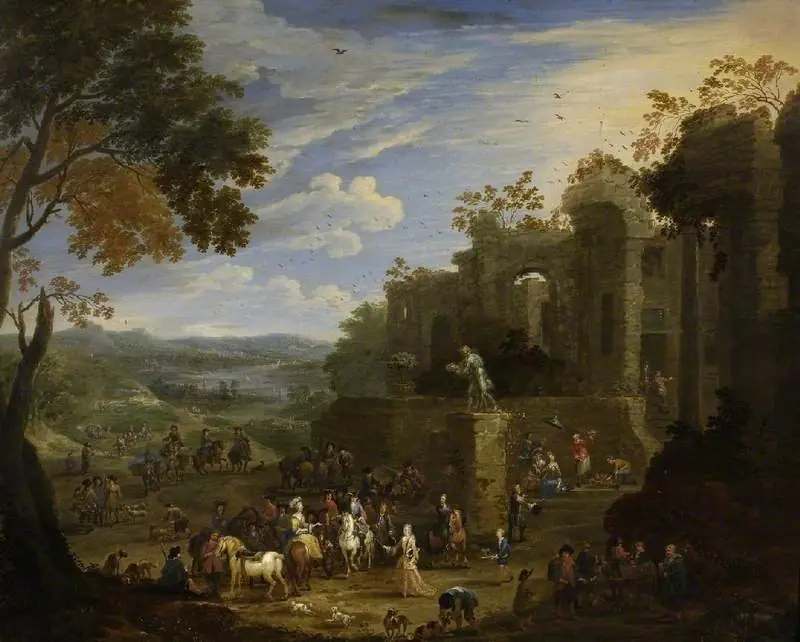 Landscape with a hunting party
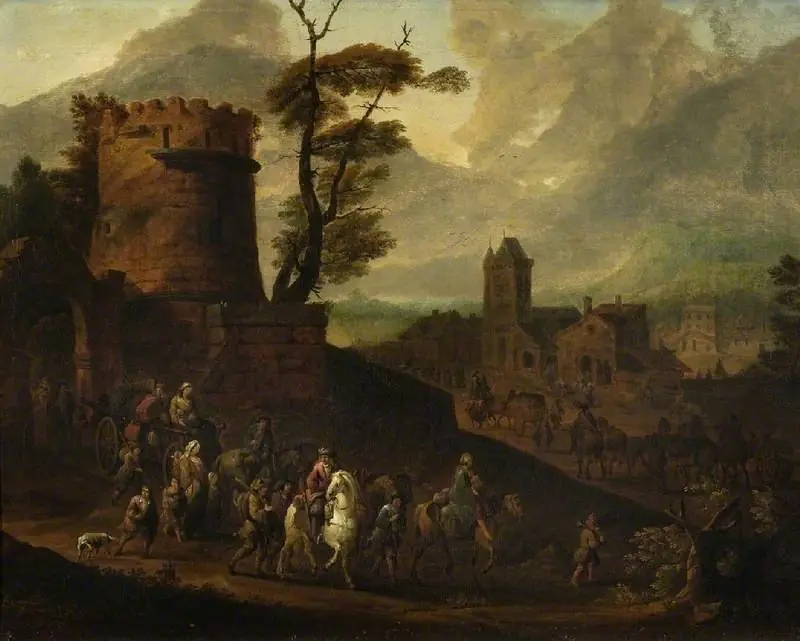 View of a town
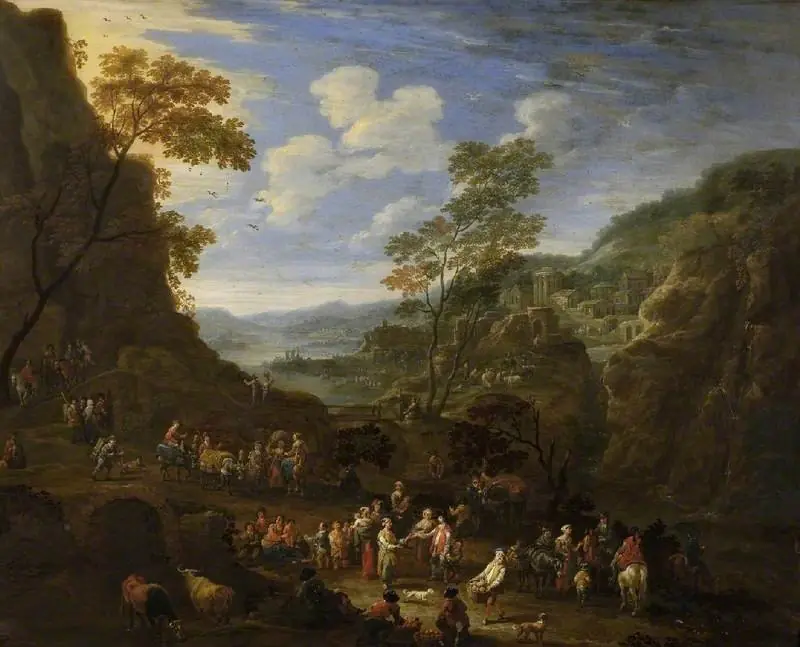 Landscape with pleasure party
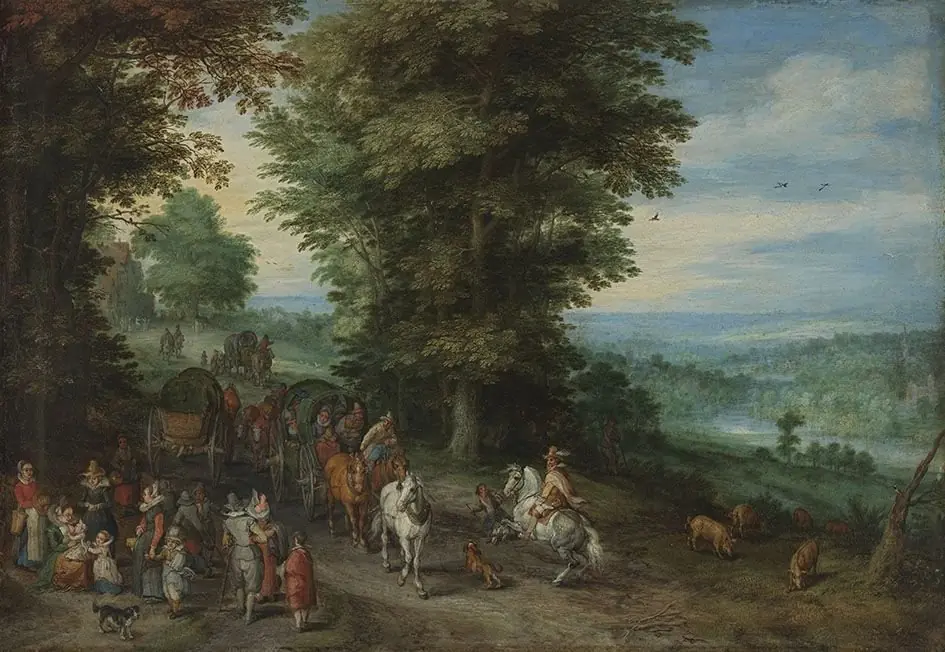 Country Road with Elegant Travelers, Including Nursing Mother
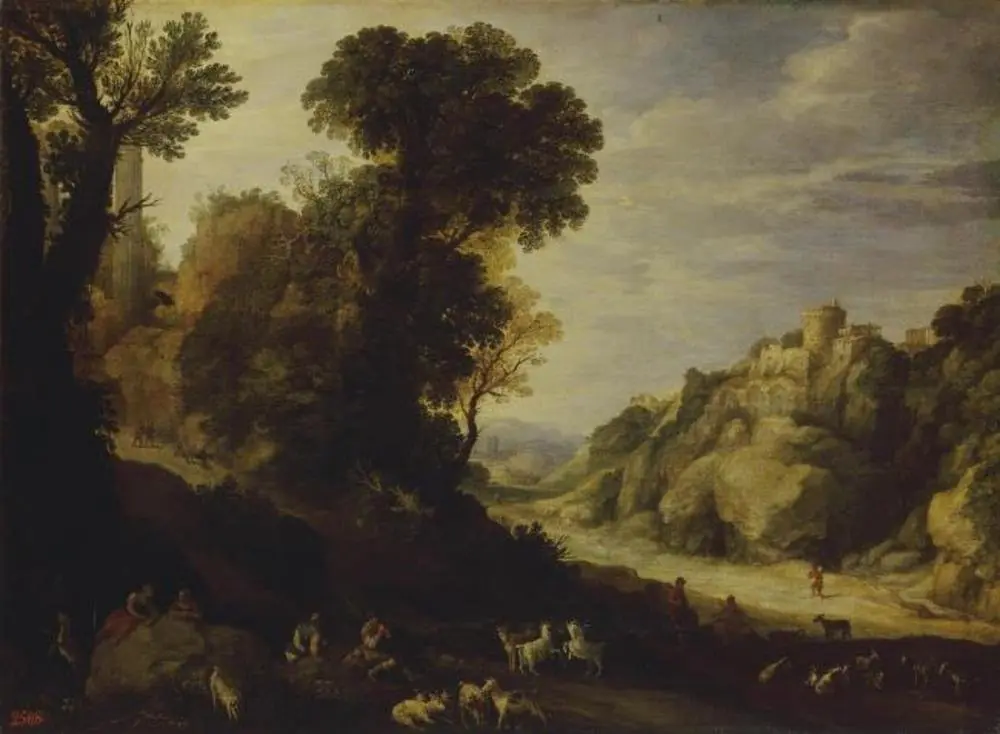 Mountainous Landscape
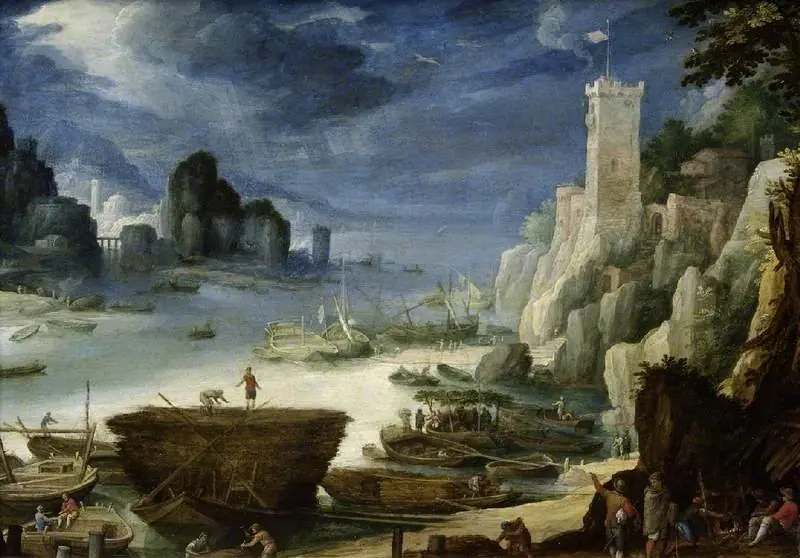 View on the Rhine
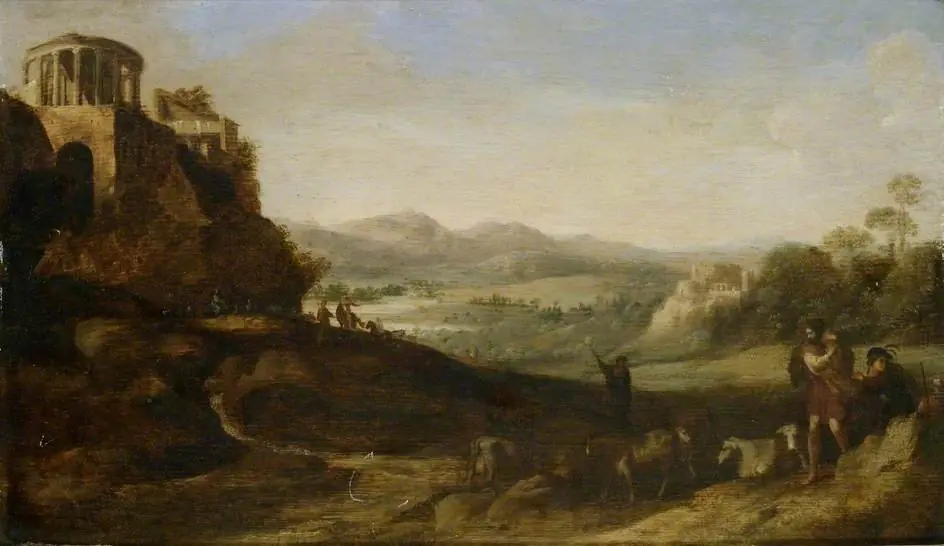 Shepherds in the Campagna
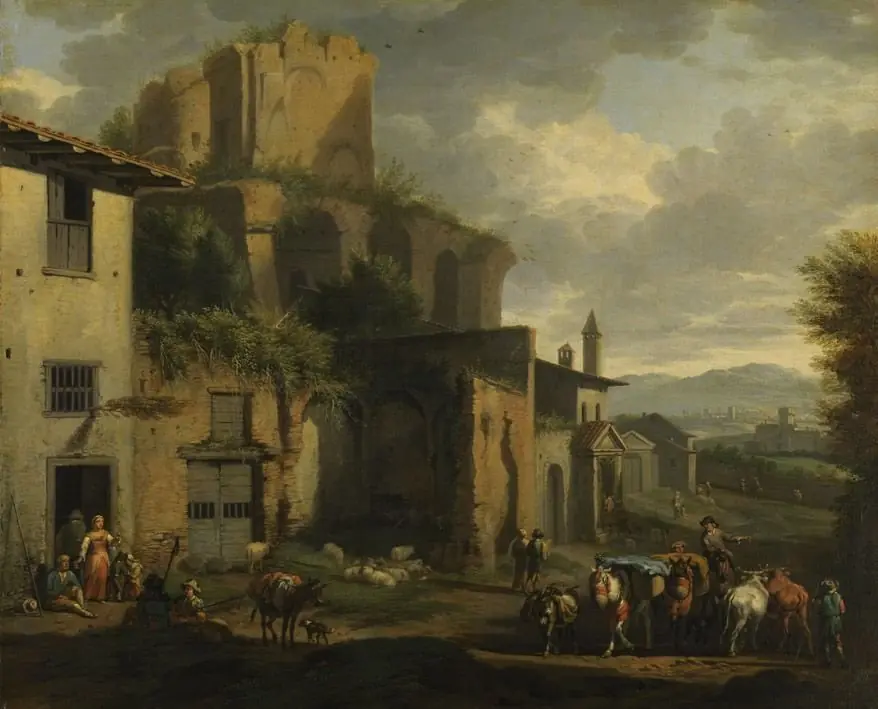 Szene vor einer römischen Ruine
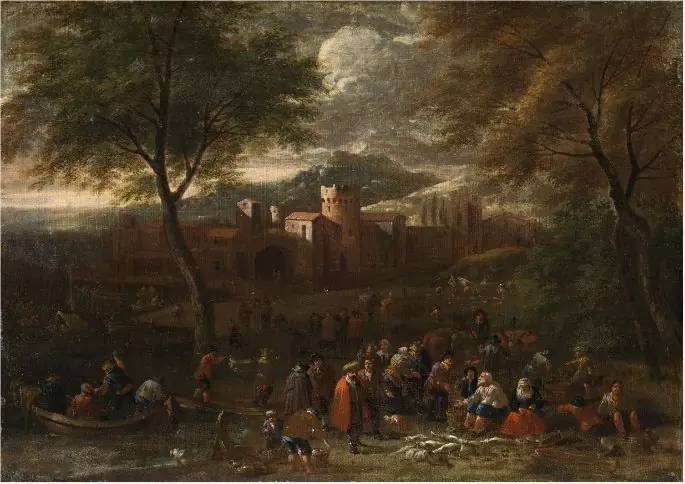 Fish Market
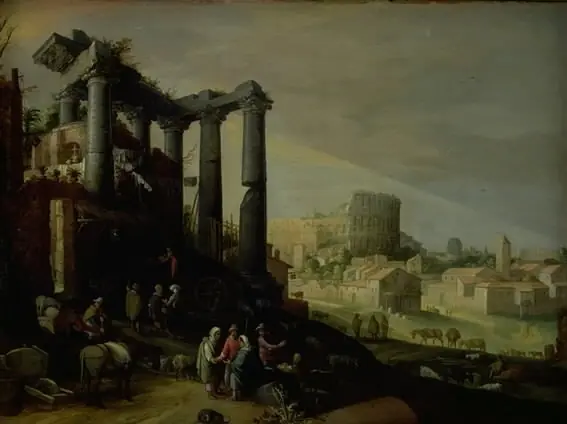 Landscape with a View of Campo Vaccino in Rome
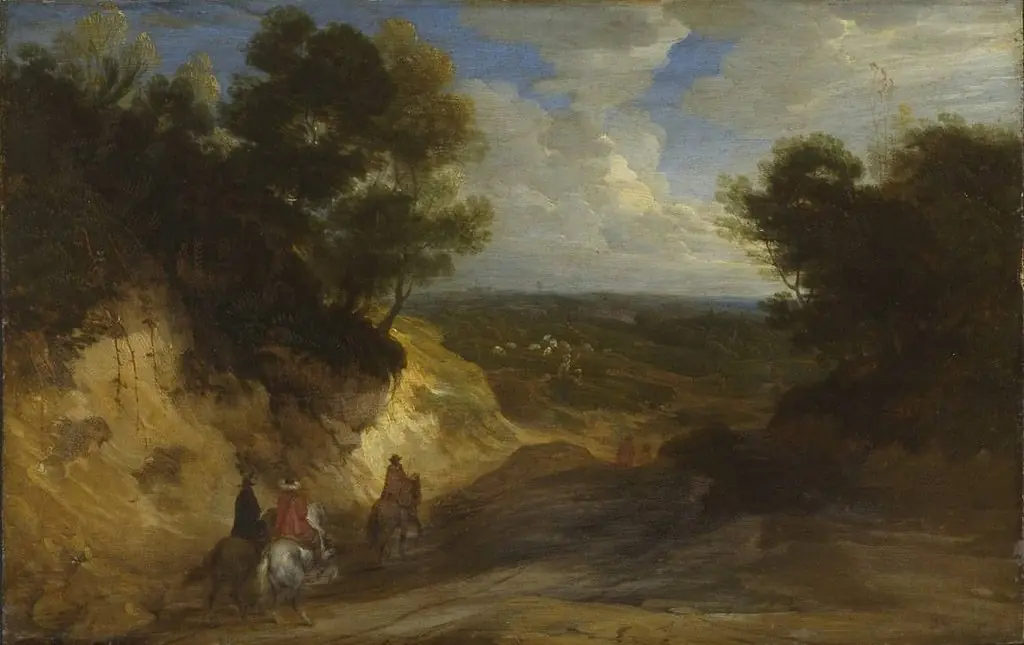 Landscape with hollow path
 Roman Ruins Landscape