Artwork
Sheet of Studies
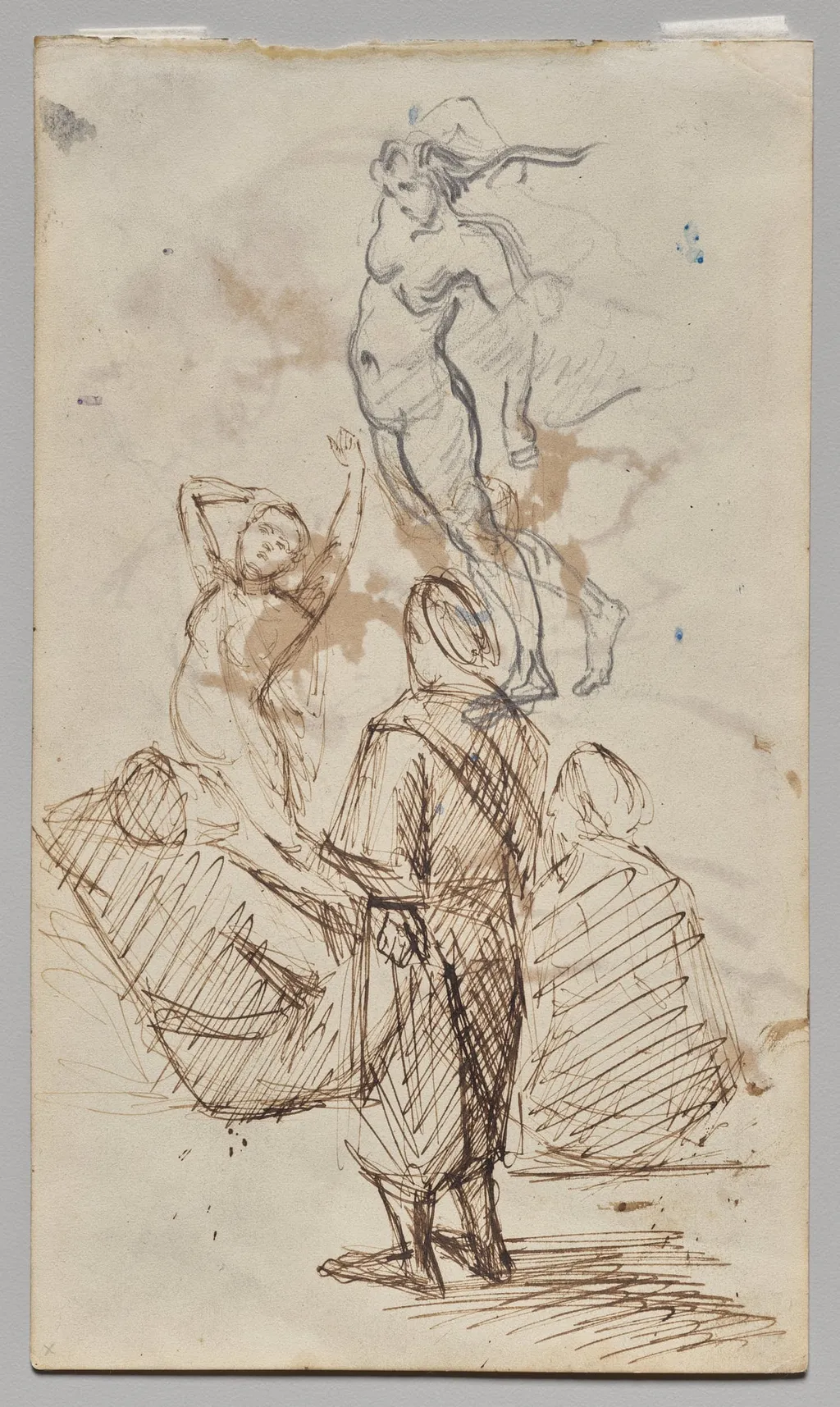
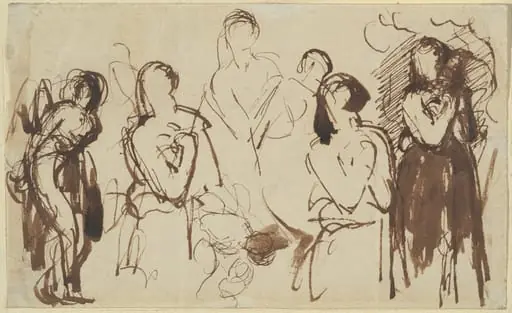
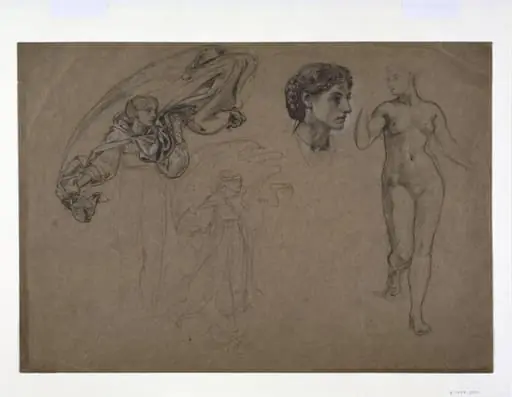
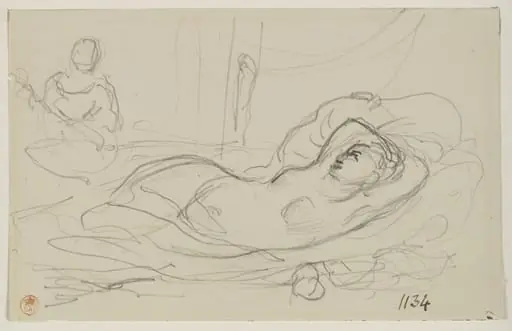
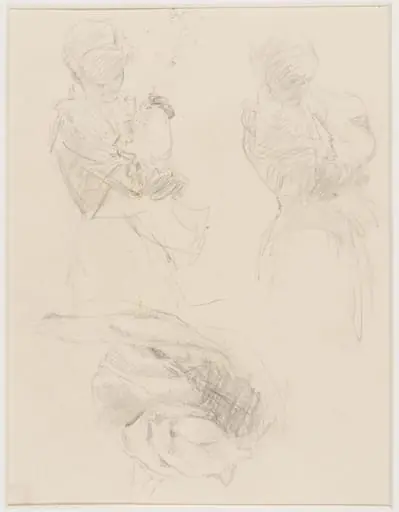
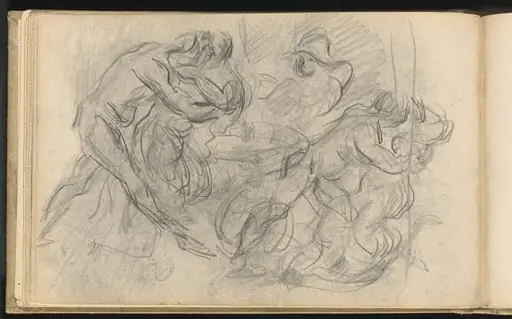
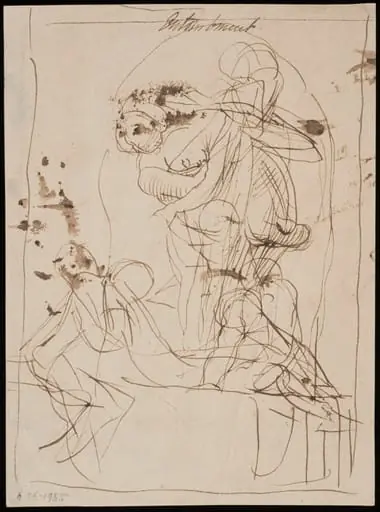
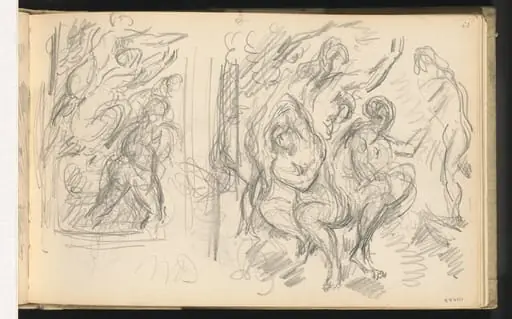
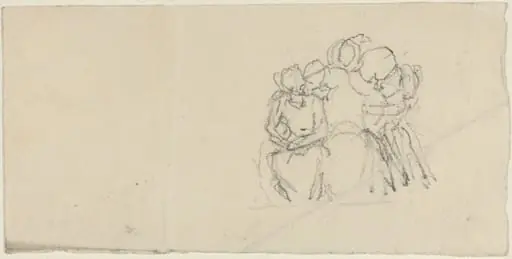
Sheet of Studies is a drawing by the Impressionist artist Paul Cezanne. It dates from 1874 and is held in the collection of the Cleveland Museum of Art. This sheet of drawings, dated around 1874, is attributed to Paul Cézanne and resides in The Cleveland Museum of Art.
About this work
Overview
The physical condition of the paper indicates prolonged handling and time, reinforcing its function as a private study.
This sheet of drawings, dated around 1874, is attributed to Paul Cézanne and resides in The Cleveland Museum of Art. Executed in pencil and ink, it presents a series of loosely rendered human forms on aged, slightly stained paper. The marks are rapid and unrefined, suggesting a working sketch rather than a finished composition. The physical condition of the paper indicates prolonged handling and time, reinforcing its function as a private study.
Subject & Meaning
Three ambiguous figures occupy the page: one stands upright, gripping a vertical form resembling a staff; another sits low, arms raised in an uncertain gesture; a third hovers above, rendered with faint, ghostly strokes. Their positions suggest spatial experimentation rather than narrative. Cézanne appears to be probing the relationship between posture, weight, and volume, treating the human form as a structural element in space rather than a symbolic one.
Technique & Style
Cézanne employs swift, overlapping lines with varying pressure to suggest form without detail. Darker strokes define mass and shadow, while lighter, broken marks imply volume and air. The absence of contour clarity and the layering of gestures reflect a process-oriented approach. The drawing’s immediacy and lack of polish align with his practice of using sketching to investigate perception and spatial relationships before committing to larger works.
History & Provenance
The drawing entered The Cleveland Museum of Art’s collection through documented acquisition, though its earlier ownership remains unrecorded in public sources. Its survival in relatively intact condition, despite visible aging and staining, suggests careful preservation after leaving Cézanne’s studio. No exhibition history from the 19th century is known, indicating it was likely retained as a personal working document for decades.
Context
Created during Cézanne’s early period, this sheet coincides with his transition from Romantic expression toward structural analysis. Around this time, he was deeply engaged with depicting the human figure in relation to environment, influenced by Courbet and the Impressionists’ focus on observation. Unlike finished paintings, such sketches reveal his method of working through problems of form and balance through repetition and revision.
Legacy
This study exemplifies Cézanne’s foundational approach to modern art: treating drawing as a means of inquiry rather than representation. Its raw, exploratory quality influenced later artists who valued process over polish, particularly Cubists who sought to deconstruct form. Though not widely exhibited, such sheets remain vital to understanding his evolution from emotional expression to geometric structure.
Artist & collection
Artist
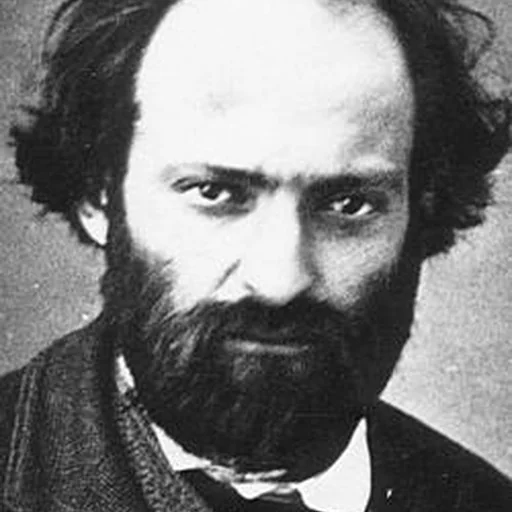
Paul Cézanne was born on January 19, 1839, in Aix-en-Provence, the son of a hatter turned wealthy banker.

 Harlequin
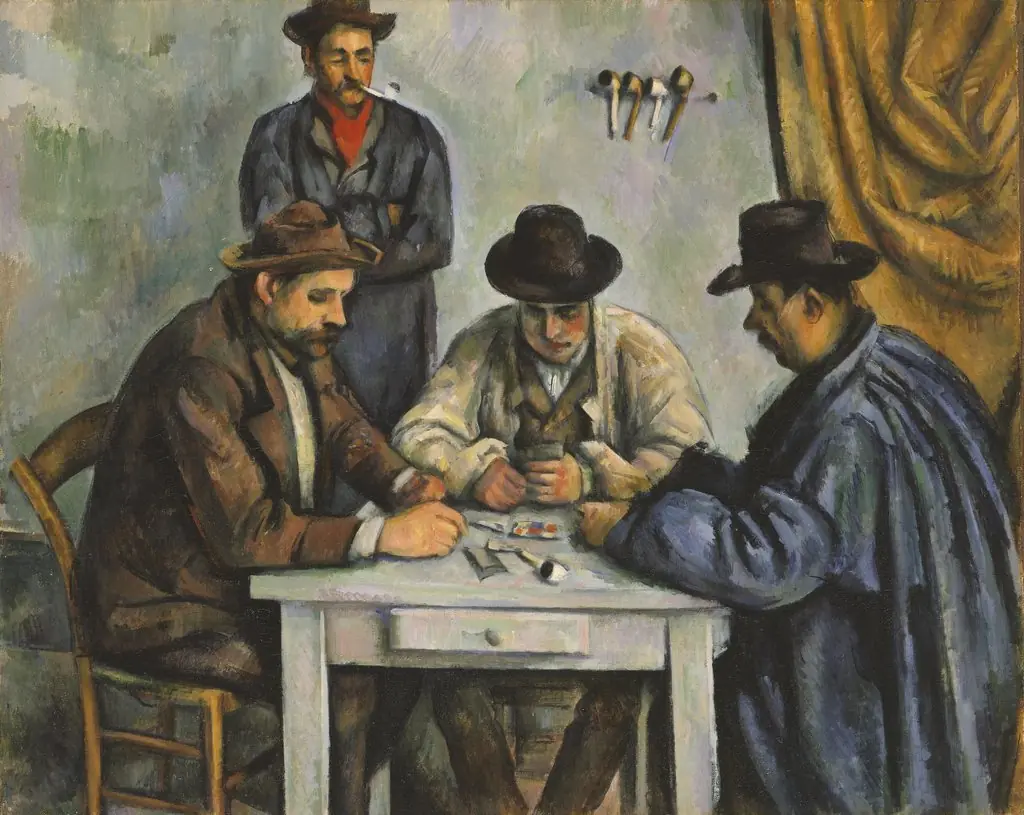 The Card Players
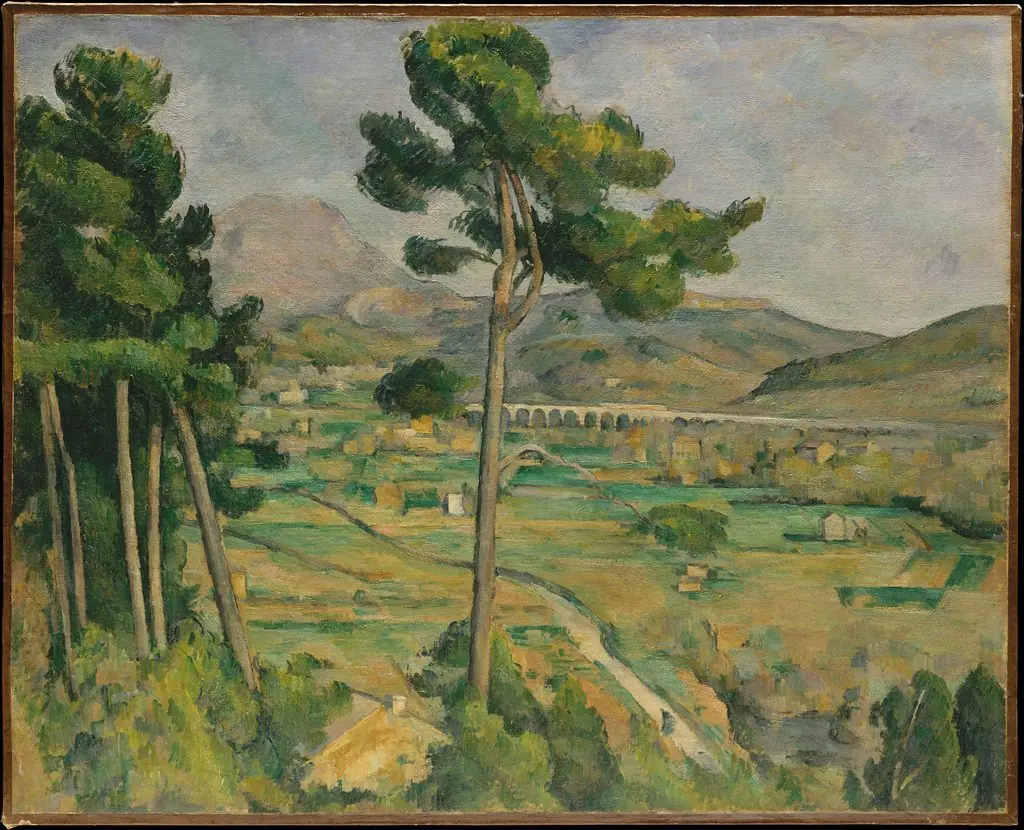 Mont Sainte-Victoire and the Viaduct of the Arc River Valley
 Still Life with Milk Jug and Fruit
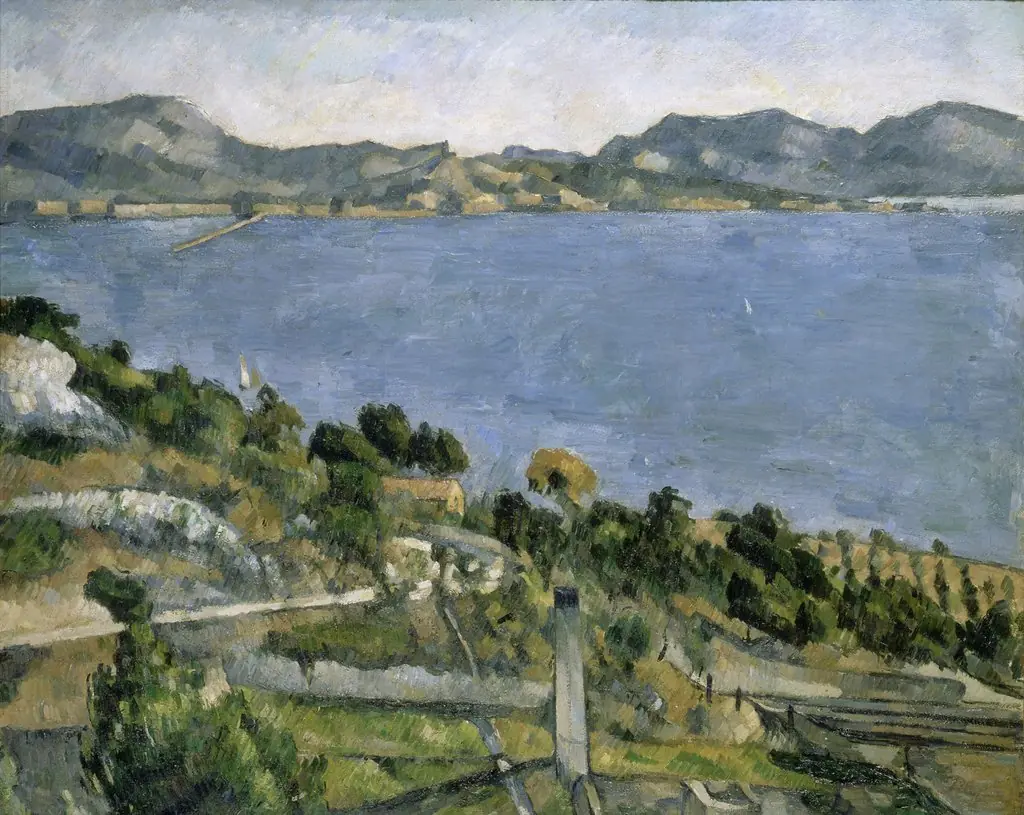 Le Golfe de Marseille vu de l'Estaque (The Gulf of Marseille Seen from L'Estaque)
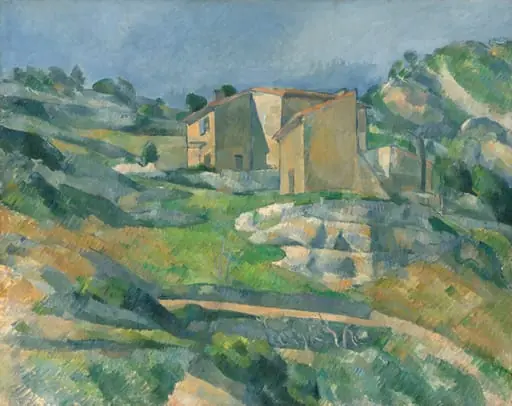 Houses in Provence: The Riaux Valley near L'Estaque
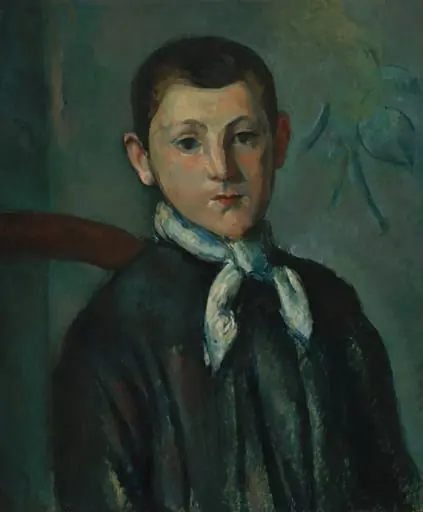 Louis Guillaume
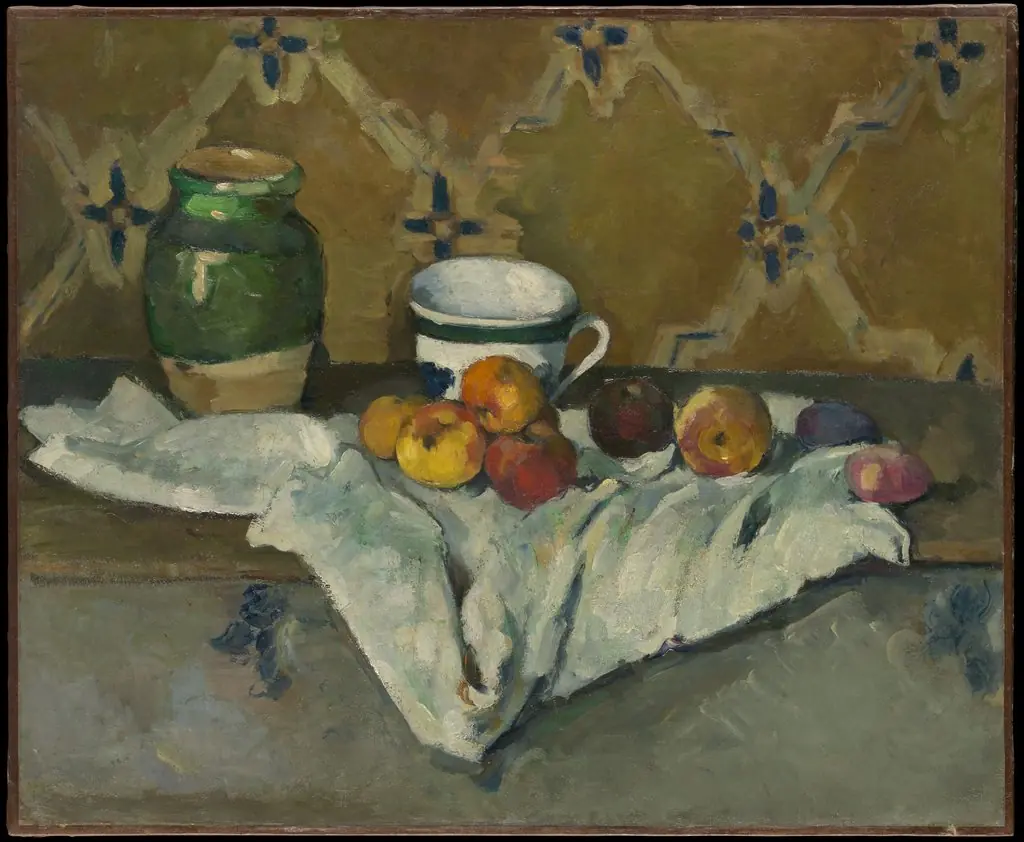 Still Life with Jar, Cup, and Apples