Artwork
Lily of the valley, camellia, pansy, and laburnum
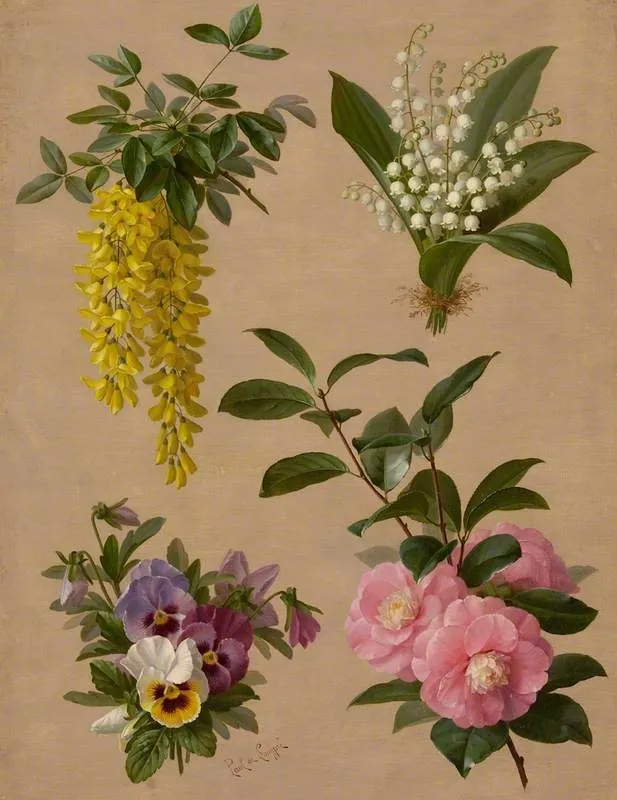
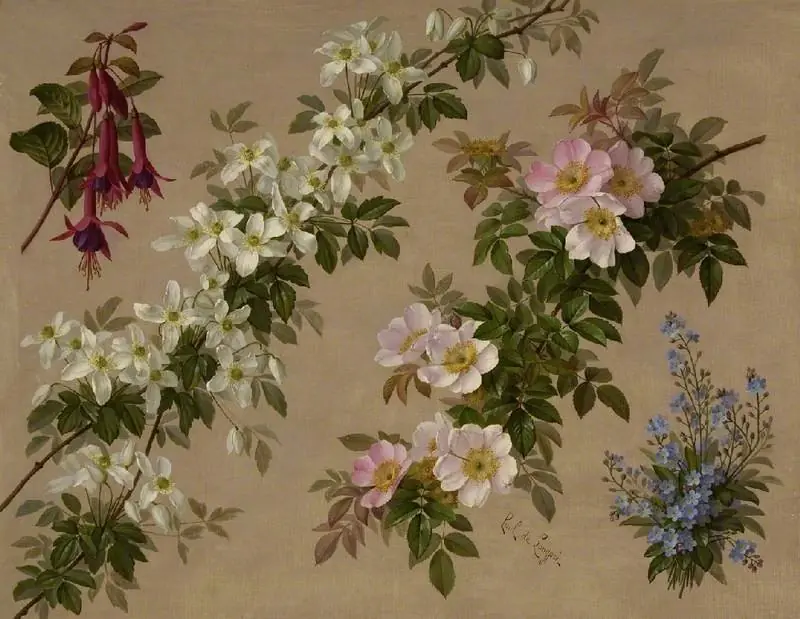
Lily of the valley, camellia, pansy, and laburnum is an oil painting by Paul de Longprè. It is held in the collection of the Fitzwilliam Museum.
About this work
Overview
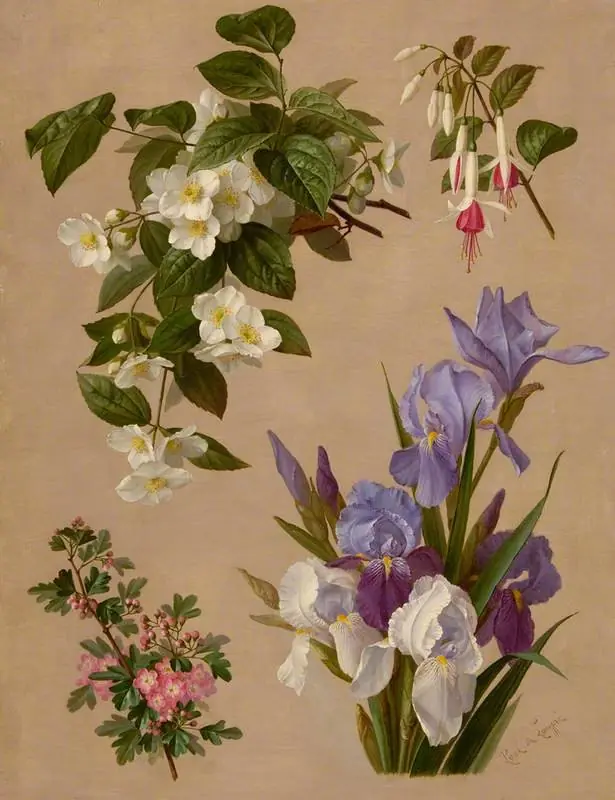
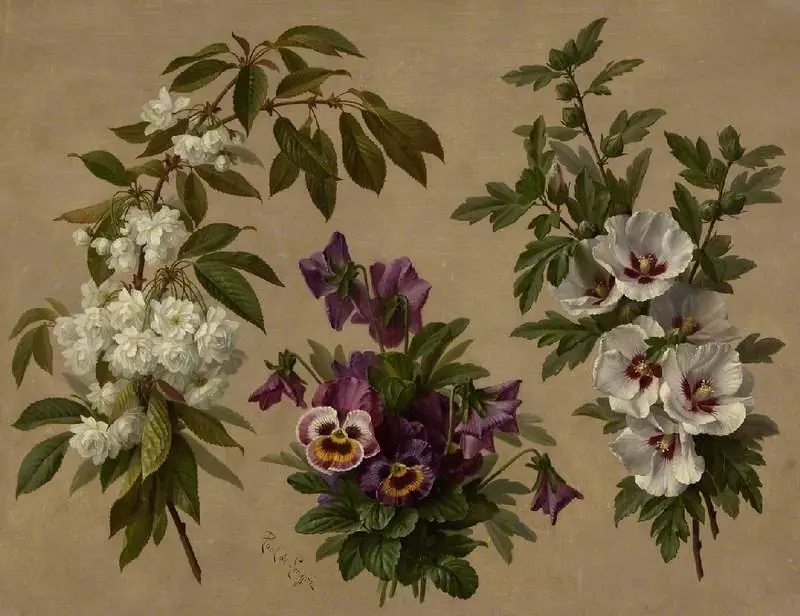
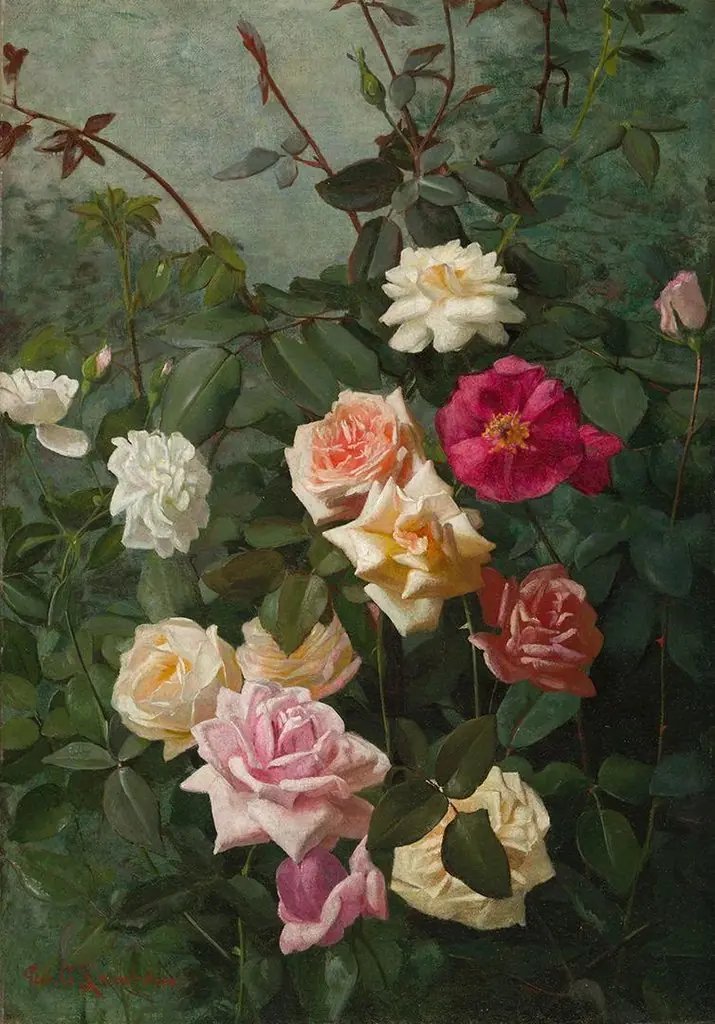
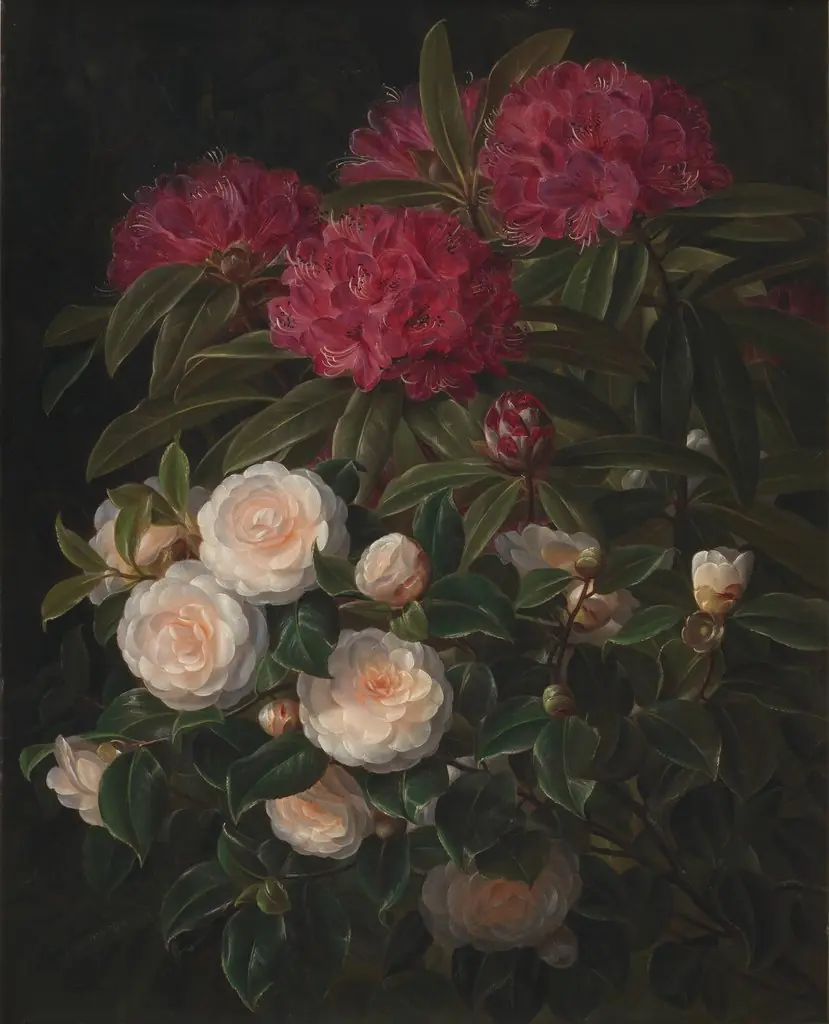
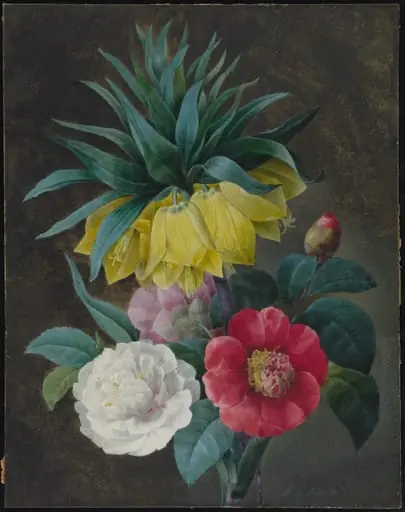
Paul de Longpré’s oil painting titled Lily of the valley, camellia, pansy, and laburnum presents a carefully arranged bouquet of four distinct flowers.
Paul de Longpré’s oil painting titled Lily of the valley, camellia, pansy, and laburnum presents a carefully arranged bouquet of four distinct flowers. Executed in oil on canvas, the work is part of the collection of the Fitzwilliam Museum in Cambridge. The composition showcases the artist’s precise rendering of botanical forms, emphasizing both the individual characteristics of each bloom and their collective visual harmony.
Subject & Meaning
The painting brings together lily of the valley, camellia, pansy, and laburnum, each flower traditionally associated with specific symbolic meanings—purity, admiration, love, and optimism, respectively. By juxtaposing these species, de Longpré creates a subtle narrative that reflects the Victorian fascination with the language of flowers, inviting viewers to contemplate the layered emotional resonances encoded in the arrangement.
Technique & Style
De Longpré employs a smooth, almost photographic technique, using fine brushwork to capture the delicate textures of petals and leaves. The oil medium allows for luminous color transitions and a refined handling of light that enhances the three‑dimensional quality of the blossoms. This meticulous approach aligns with the academic naturalism prevalent among late‑19th‑century botanical painters.
History & Provenance
Created by the French-born artist Paul de Longpré, who specialized in floral subjects, the work entered the Fitzwilliam Museum’s holdings through acquisition in the early 20th century. The museum’s catalogue lists the painting as part of its decorative arts and paintings collection, preserving it as an example of de Longpré’s contribution to the genre of flower painting.
Context
During the period when de Longpré was active, floral still lifes enjoyed considerable popularity, reflecting both scientific interest in botany and the decorative tastes of the era. The inclusion of both native and exotic species mirrors contemporary horticultural trends and the growing market for detailed, aesthetically pleasing representations of garden plants.
Artist & collection