Artwork
Four Peonies and a Crown Imperial
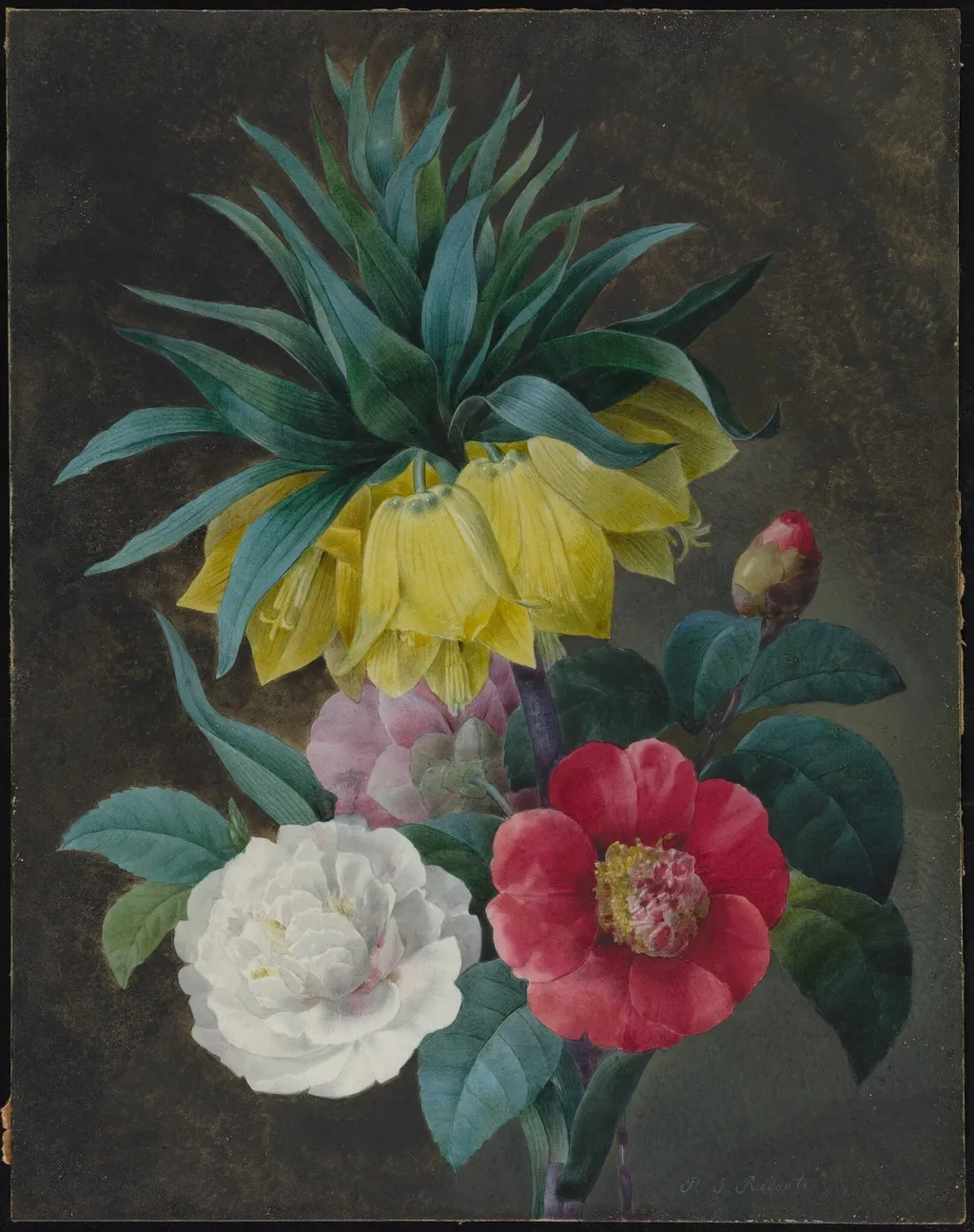
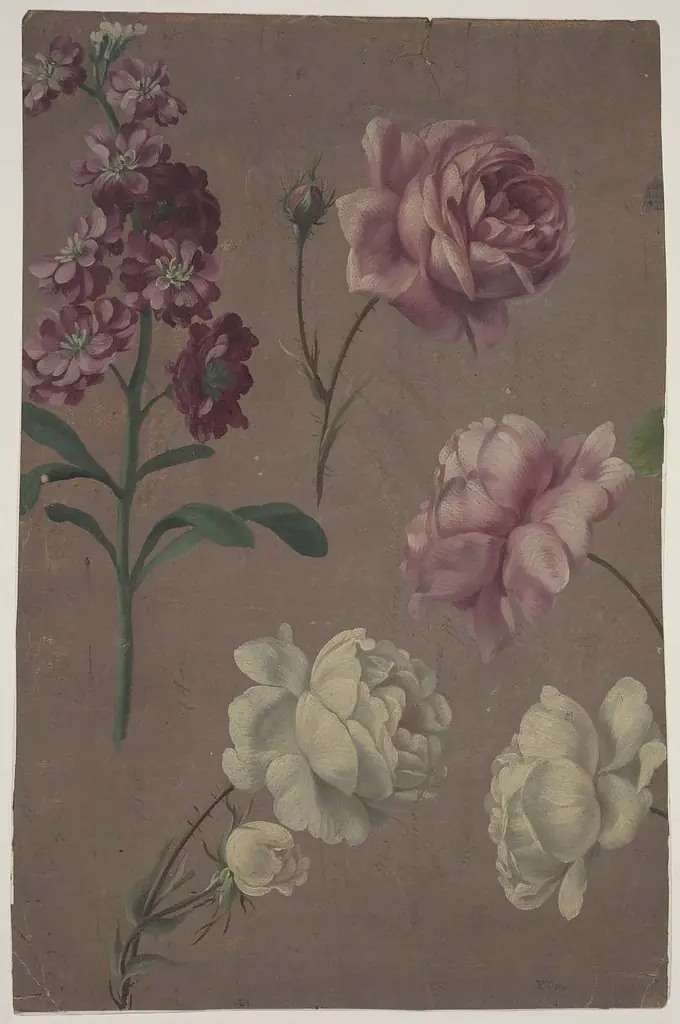
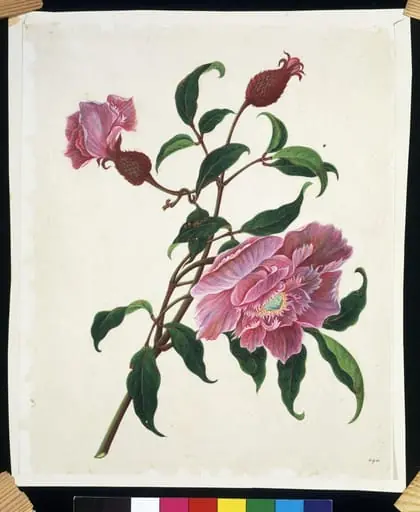
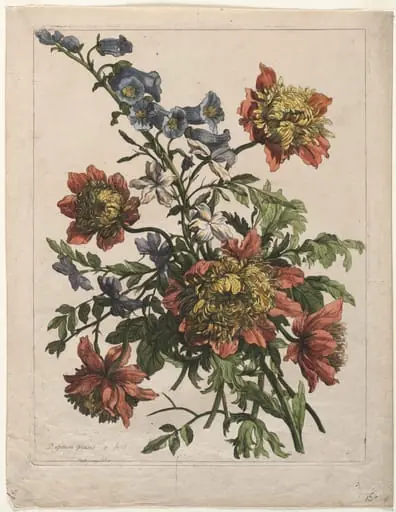
Four Peonies and a Crown Imperial is a gouache drawing by the Romanticist artist Pierre Joseph Redouté. It dates from 1800 and is held in the collection of the National Gallery of Art.
About this work
Overview
This 1800 drawing by Pierre-Joseph Redouté depicts four peonies and a crown imperial flower, rendered in watercolor and gouache over graphite on parchment.
This 1800 drawing by Pierre-Joseph Redouté depicts four peonies and a crown imperial flower, rendered in watercolor and gouache over graphite on parchment. The work exemplifies the artist’s meticulous approach to botanical illustration, combining scientific precision with refined artistic execution. Mounted on board, the composition reflects the era’s growing fascination with natural history and horticultural documentation.
Subject & Meaning
The drawing presents a carefully arranged grouping of peonies and a crown imperial, two species valued for their ornamental and symbolic qualities. Peonies, often associated with prosperity and beauty, contrast with the crown imperial’s regal connotations, evoking themes of abundance and nobility. Redouté’s focus on individual specimens underscores the Enlightenment-era emphasis on classification and the aesthetic appreciation of flora.
Technique & Style
Redouté employed translucent watercolor layered with opaque gouache to achieve luminous, lifelike effects, while graphite underdrawings ensured anatomical accuracy. His method—characterized by soft gradations of color and fine detailing—aligns with the botanical illustration traditions of the late 18th and early 19th centuries. The parchment support further enhanced the work’s delicacy and permanence.
History & Provenance
Created during a period of political instability in France, this drawing emerged from Redouté’s tenure as a court artist, first under Marie Antoinette and later at the Château de Malmaison. His botanical studies, commissioned by elite patrons, contributed to the scientific and artistic legacy of the Napoleonic era. The work remains part of his broader series of floral illustrations, produced for both private collections and published volumes.
Context
Redouté’s work coincided with the rise of botanical gardens and the systematic study of plants, reflecting the era’s intersection of art and science. His illustrations served dual purposes: as decorative objects for aristocratic patrons and as reference materials for botanists. The drawing’s creation amid France’s revolutionary upheavals highlights the enduring appeal of natural beauty as a subject of intellectual and aesthetic inquiry.
Legacy
Redouté’s botanical illustrations, including this drawing, established a standard for scientific accuracy in floral art. His influence extended beyond his lifetime, shaping subsequent generations of botanical illustrators and reinforcing the genre’s role in both art and natural history. Today, his works are valued for their technical mastery and contribution to the documentation of 19th-century horticulture.
Own this work as a print
Artist & collection
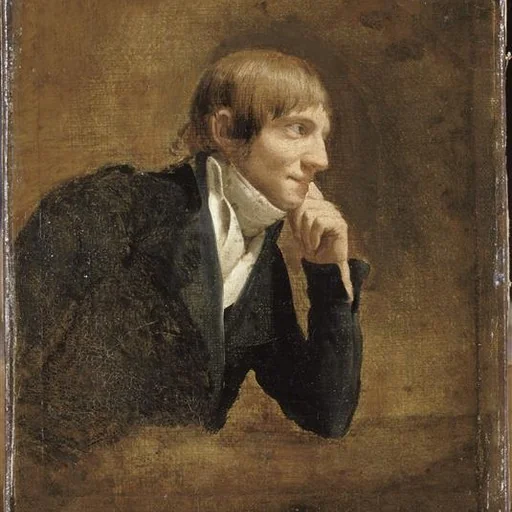
Artist
Pierre-Joseph Redouté (French pronunciation: , 10 July 1759 – 19 June 1840), was a painter and botanist from the Austrian Netherlands, known for his watercolours of roses, lilies and other flowers at the Château de…