Artwork
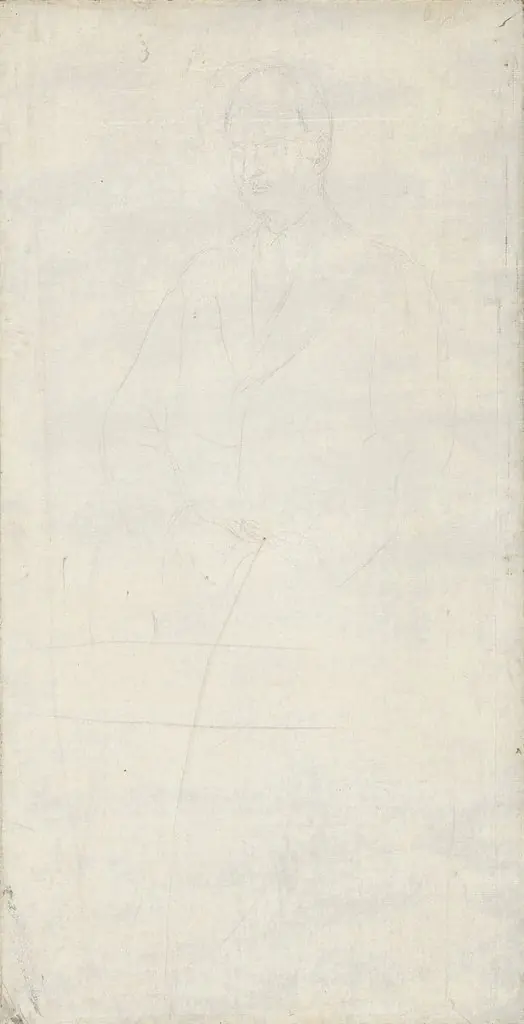
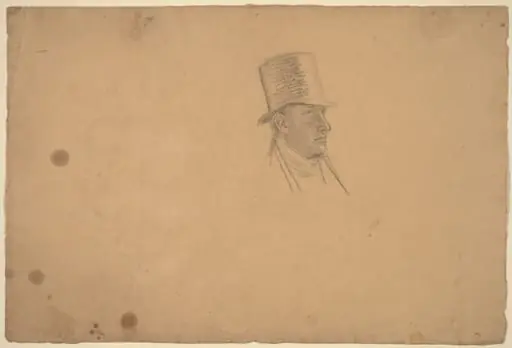
Profile Bust of a Man (verso)
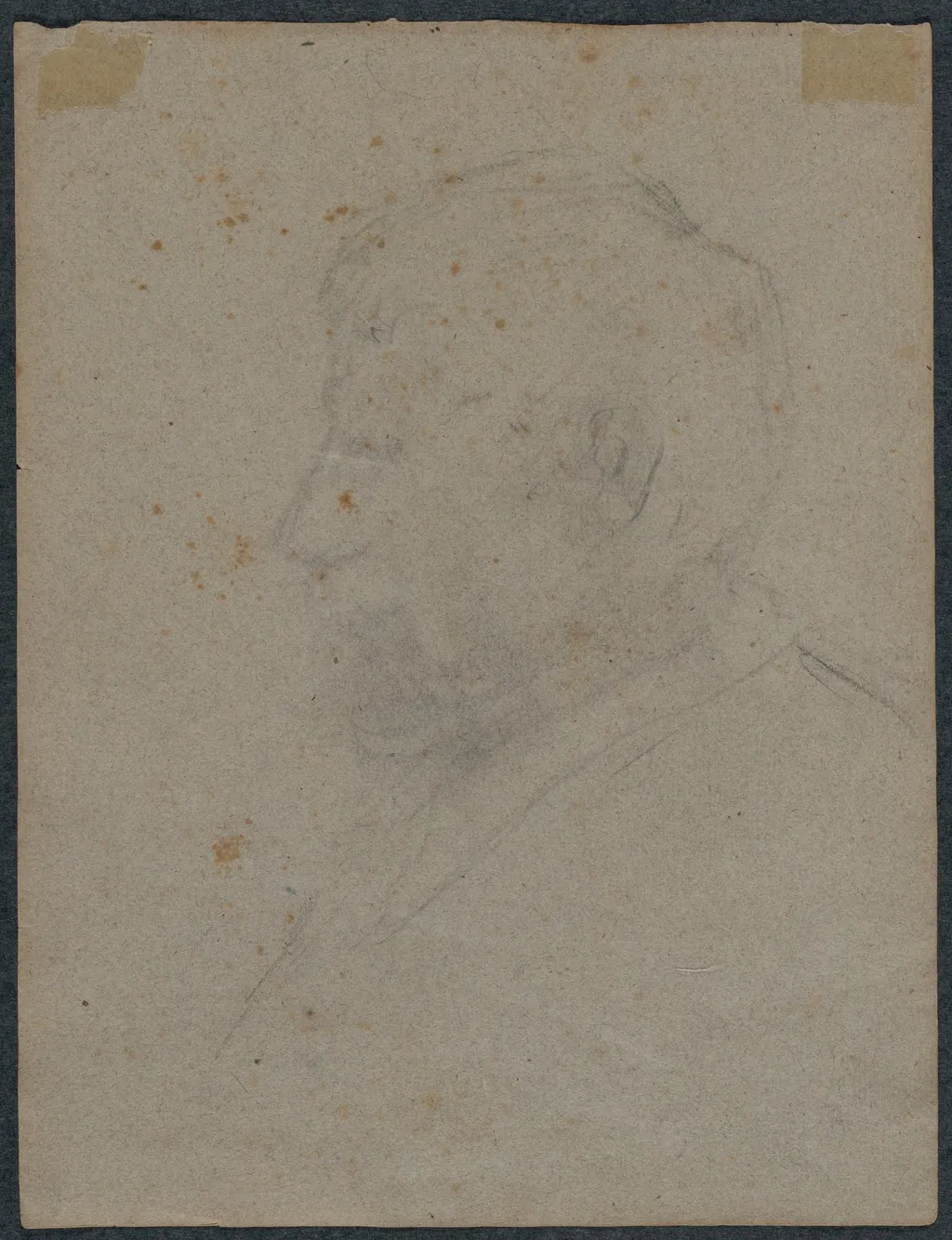
Profile Bust of a Man (verso) is a drawing by the Impressionist artist Paul Gauguin. It dates from 1874 and is held in the collection of the Cleveland Museum of Art.
About this work
Overview
Executed during his formative years as an artist, it predates his later stylistic innovations and reveals a tentative approach to portraiture.
Created circa 1874, this pencil drawing by Paul Gauguin is a modest, early study of a male profile. Executed during his formative years as an artist, it predates his later stylistic innovations and reveals a tentative approach to portraiture. The work is part of the Cleveland Museum of Art’s collection, preserved as a record of Gauguin’s artistic development before he embraced bold color and symbolic forms.
Subject & Meaning
The subject is an anonymous man, rendered in profile with minimal detail. No identity is given, suggesting the figure was likely a model or acquaintance observed casually. The drawing carries no overt narrative or symbolism; its significance lies in its function as a private exercise, capturing a fleeting moment of observation rather than conveying a deeper message.
Technique & Style
Gauguin used light, fragmented pencil strokes to suggest form, avoiding heavy shading or refinement. The lines are delicate and uneven, with areas appearing worn or partially erased. The paper’s age—yellowed, stained, and torn—further softens the image, reinforcing its status as an informal sketch rather than a finished composition.
History & Provenance
The drawing entered the Cleveland Museum of Art’s collection as part of a broader acquisition of Gauguin’s early works. Its condition reflects decades of handling and storage, with no documented ownership history prior to its museum acquisition. It remains one of the few surviving studies from Gauguin’s pre-Post-Impressionist period.
Context
In the 1870s, Gauguin was an amateur artist balancing painting with a career in finance. Like many of his contemporaries, he used quick sketches to study form and composition, often influenced by Impressionist practices. This drawing aligns with the period’s emphasis on direct observation and spontaneous mark-making, before he turned toward stylized, symbolic expression.
Legacy
Though unremarkable in isolation, this drawing offers insight into Gauguin’s artistic beginnings. It documents the transition from conventional draftsmanship to the radical innovations he later pursued. As such, it serves as a quiet but valuable artifact in understanding the evolution of one of modern art’s pivotal figures.
Artist & collection
Artist
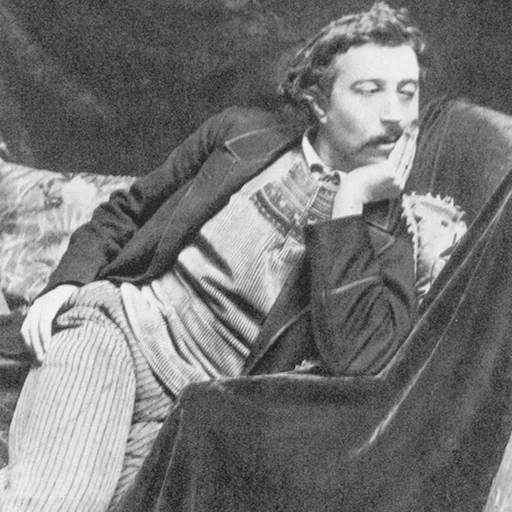
Eugène Henri Paul Gauguin (; French: ; 7 June 1848 – 8 May 1903) was a French painter, sculptor, printmaker, ceramist, and writer, whose work has been primarily associated with the Post-Impressionist and Symbolist movements.