Artwork
Tahitian and Noa Noa Series
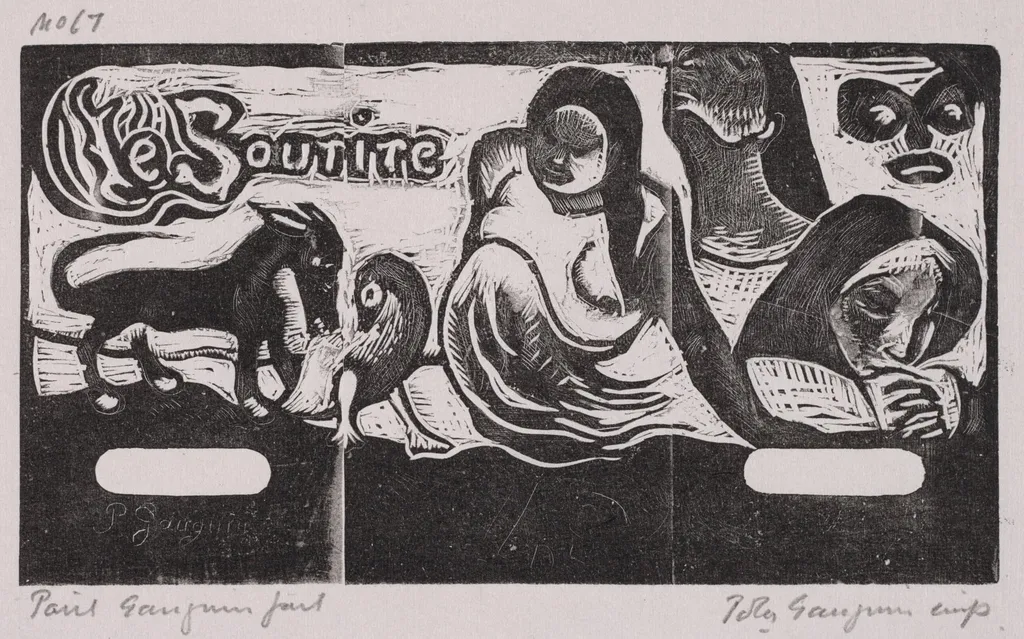
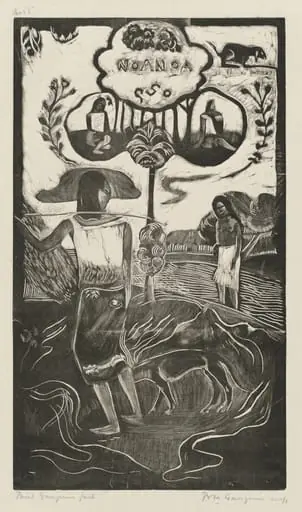
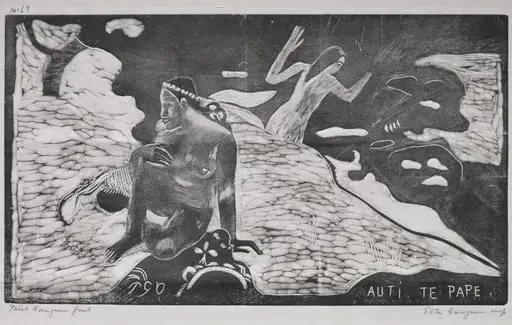
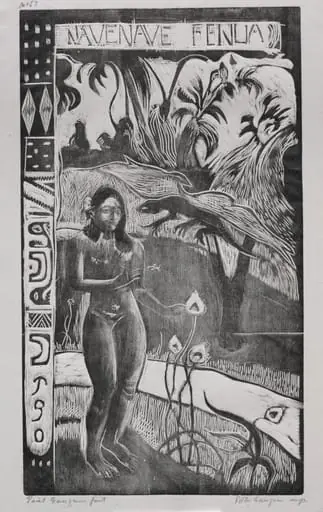
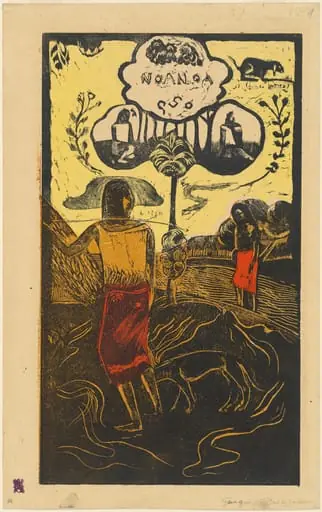
Tahitian and Noa Noa Series is a print by the Impressionist artist Paul Gauguin. It dates from 1894 and is held in the collection of the Cleveland Museum of Art.
About this work
Overview
Paul Gauguin produced the Tahitian and Noa Noa Series in 1894 during his second stay in Tahiti.
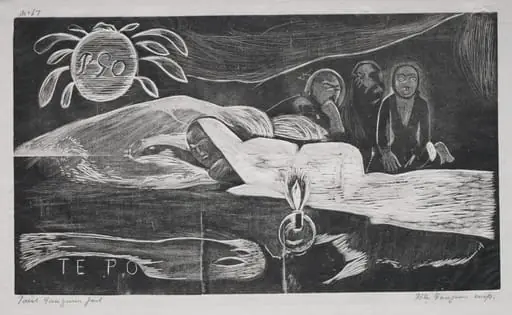
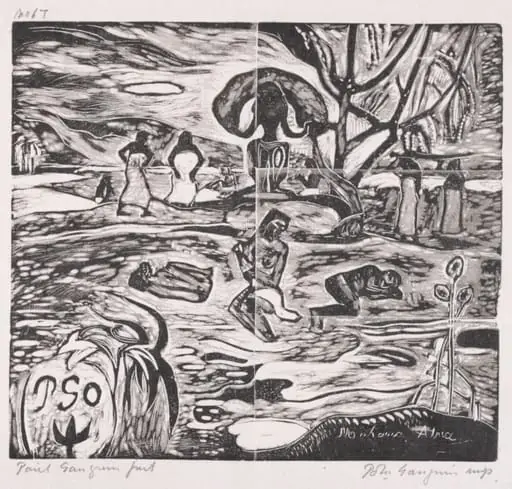
Paul Gauguin produced the Tahitian and Noa Noa Series in 1894 during his second stay in Tahiti. These woodcuts and engravings emerged from his broader effort to distance himself from European artistic norms and to develop a visual language rooted in Polynesian life. The works combine observation with personal symbolism, reflecting his evolving approach to printmaking as a medium for expressive simplification rather than literal representation.
Subject & Meaning
The composition divides into three distinct scenes: a horse and rider, a woman cradling a child, and another mother with her infant. These images evoke themes of domesticity, maternal care, and the natural world, filtered through Gauguin’s idealized vision of Tahitian society. The serene expressions and intimate postures suggest a spiritual or mythic quality, aligning with his Symbolist leanings and desire to convey emotional truth over documentary realism.
Technique & Style
Gauguin employed black-and-white woodcut techniques to reduce forms to essential lines and tonal contrasts. The background remains largely uninked, allowing the white paper to define space and focus attention on the stark, sculptural figures. His use of bold contours and minimal shading reflects Synthetism, prioritizing emotional resonance over naturalistic detail. The flatness and rhythmic arrangement of figures echo non-Western carving traditions he admired.
History & Provenance
Created during Gauguin’s time in Tahiti, these prints were part of his broader project to document and reimagine indigenous life, later published in his illustrated memoir Noa Noa. Few original impressions survive; most were printed in small, hand-pulled editions, often with variations. The works were not widely distributed during his lifetime, and their significance grew posthumously as scholars reevaluated his role in modern printmaking.
Context
Gauguin’s work in Tahiti coincided with European fascination with so-called 'primitive' cultures, though his approach was deeply personal rather than anthropological. He rejected academic training in favor of intuitive composition, drawing inspiration from Oceanic art, medieval woodcuts, and Japanese prints. His prints were not mere illustrations but standalone expressions of a philosophical quest for authenticity beyond Western modernity.
Legacy
The Tahitian and Noa Noa Series influenced later modernists interested in non-Western aesthetics and expressive printmaking, including members of the German Expressionist movement. Gauguin’s integration of narrative, symbolism, and simplified form expanded the possibilities of the woodcut as a fine art medium. Though controversial for his colonial perspective, his technical innovations in print remain a significant contribution to early 20th-century art.
Artist & collection
Artist
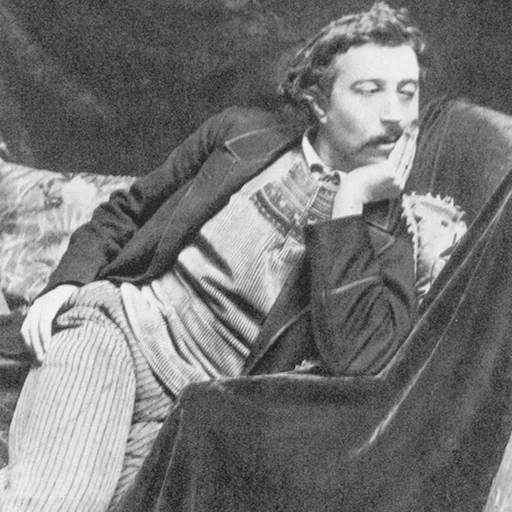
Eugène Henri Paul Gauguin (; French: ; 7 June 1848 – 8 May 1903) was a French painter, sculptor, printmaker, ceramist, and writer, whose work has been primarily associated with the Post-Impressionist and Symbolist movements.