Artwork
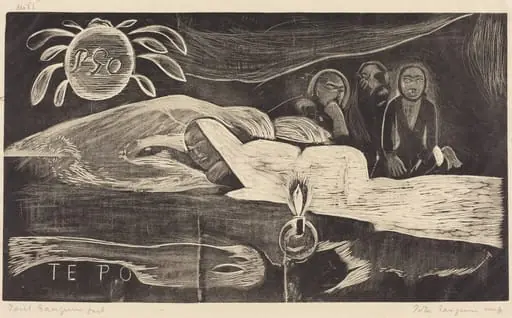
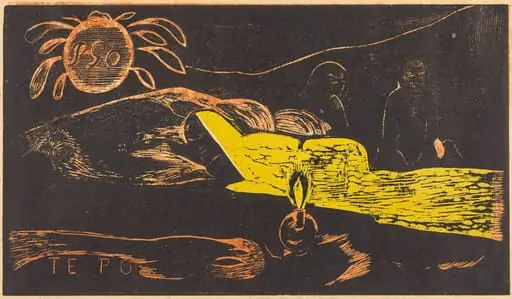
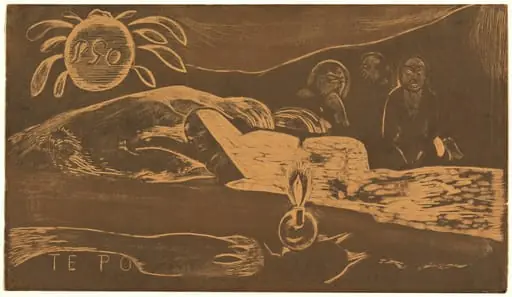
Noa Noa: Te Po (Eternal Night)
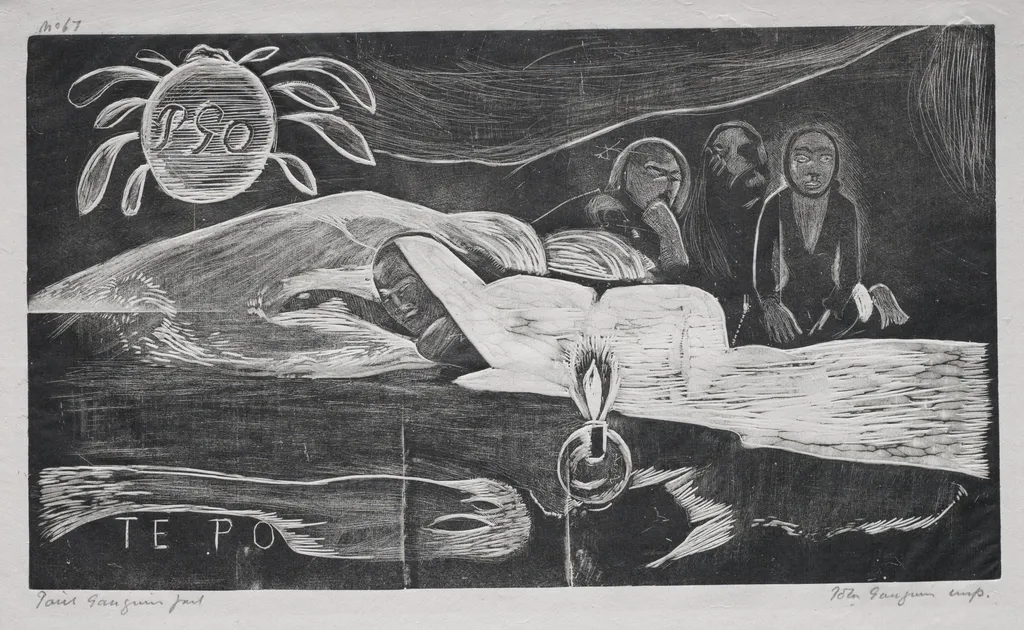
Noa Noa: Te Po (Eternal Night) is a print by the Impressionist artist Paul Gauguin. It dates from 1894 and is held in the collection of the Cleveland Museum of Art.
About this work
Overview
Noa Noa: Te Po (Eternal Night) is a 1894 woodcut print by Paul Gauguin, created during his time in French Polynesia. It reflects his Post-Impressionist and Symbolist inclinations, characterized by experimental color use and a Synthetist emphasis on bold, symbolic forms.
Subject & Meaning
The print depicts a serene, nocturnal scene with a reclining woman and two seated figures behind her, set against a dark, misty background. Incorporating Polynesian motifs, it embodies Gauguin’s fascination with indigenous myth and culture, conveying a sense of calm mystery.
Technique & Style
Executed in a predominantly dark and muted palette with accents of white, the work showcases Gauguin’s Synthetist approach. Bold, flat forms and the juxtaposition of light and dark create a dreamy, symbolic atmosphere, diverging from naturalistic representation.
History & Provenance
Created in 1894, during Gauguin’s Tahitian period, the exact provenance of Noa Noa: Te Po is not detailed here, though it is part of a broader thematic series inspired by his experiences in French Polynesia.
Context
This work is contextualized within Gauguin’s later output, which deeply explored the intersection of European Symbolism with the cultural and mythological elements of Tahiti, influencing a broader artistic shift towards expressive, non-naturalistic art forms.
Legacy
Noa Noa: Te Po contributes to Gauguin’s legacy as a pioneer of Post-Impressionism and Synthetism, inspiring subsequent artists with its innovative blend of symbolic content, bold forms, and experimental color, particularly in the exploration of cultural fusion in art.
Artist & collection
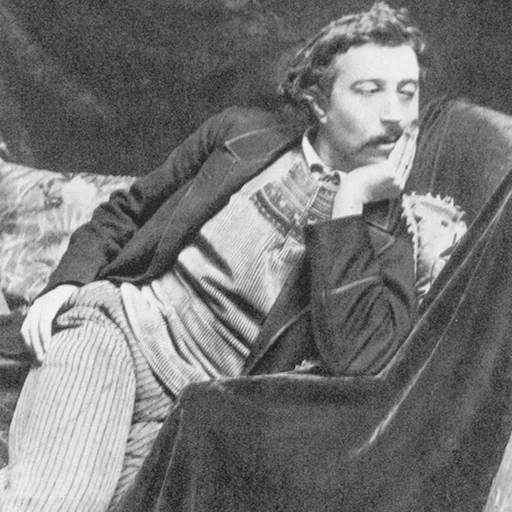
Artist
Eugène Henri Paul Gauguin (; French: ; 7 June 1848 – 8 May 1903) was a French painter, sculptor, printmaker, ceramist, and writer, whose work has been primarily associated with the Post-Impressionist and Symbolist movements.