Artwork
Noa Noa (Fragrant, Fragrant)
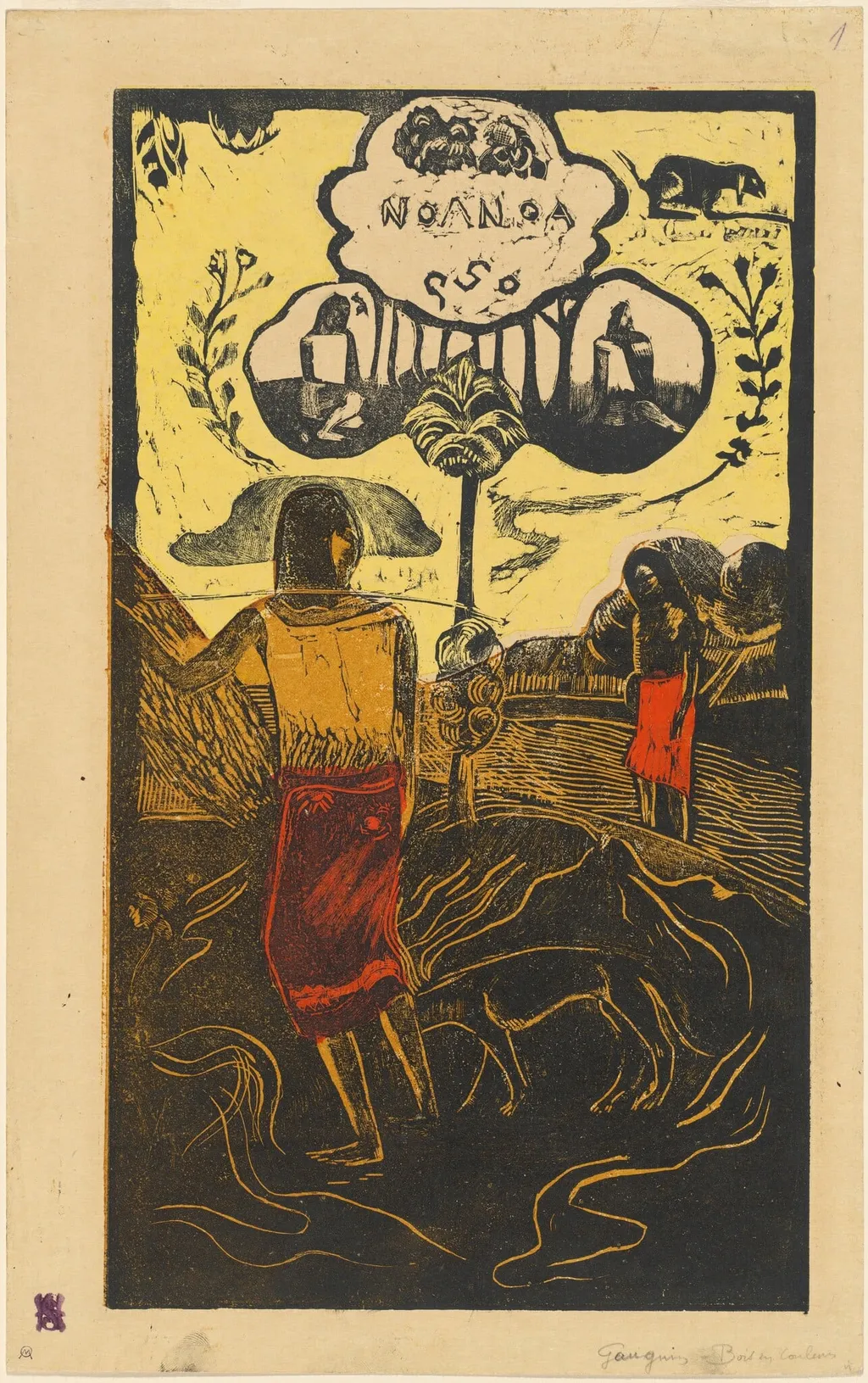
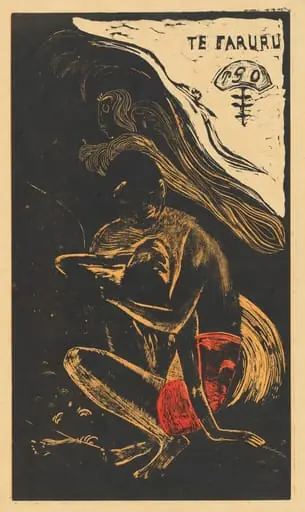
Noa Noa (Fragrant, Fragrant) is an ink print by the Impressionist artist Paul Gauguin. It dates from 1894 and is held in the collection of the National Gallery of Art.
About this work
Overview
The composition includes a wide‑brimmed hat, a red skirt, a bundle, and a smaller red figure, while a cloud bearing the inscription “Noa Noa” hovers above.
Created in 1894, this color woodcut by Paul Gauguin presents a simplified scene of two figures moving beneath a vivid yellow sky. The composition includes a wide‑brimmed hat, a red skirt, a bundle, and a smaller red figure, while a cloud bearing the inscription “Noa Noa” hovers above. The background is composed of stylized palm fronds, animal silhouettes and scattered leaves rendered in flat, bold tones.
Subject & Meaning
The title, drawn from the Tahitian word for “fragrance,” reflects Gauguin’s fascination with Polynesian culture and the Symbolist interest in evoking mood rather than narrative detail. The figures, their clothing and the scented cloud suggest a fleeting, sensory experience, inviting viewers to contemplate the atmosphere of an exotic locale rather than a specific story.
Technique & Style
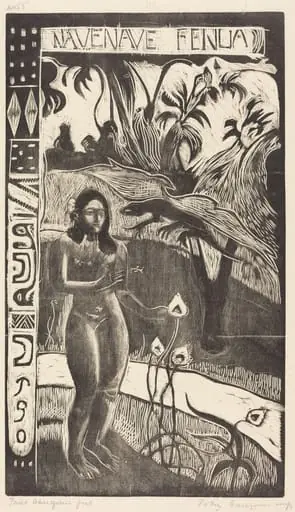
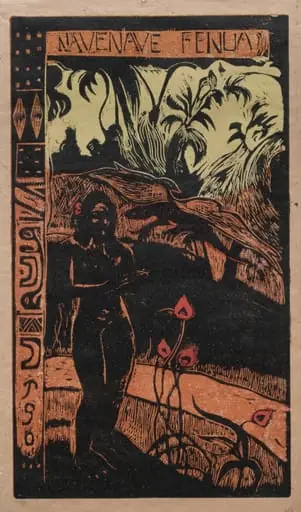
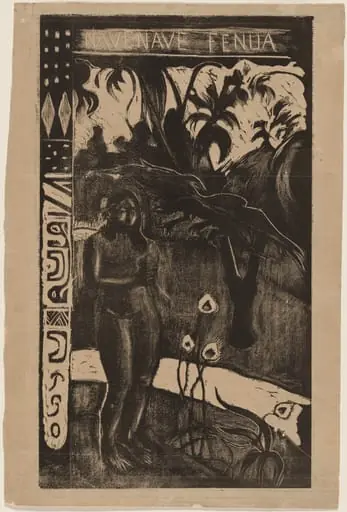
Executed as a color woodcut, the image was carved into wood blocks, inked, and printed in layers to achieve its striking palette. Gauguin’s use of flat areas of color, simplified forms and strong outlines aligns with his departure from Impressionist naturalism toward a more graphic, Symbolist visual language.
History & Provenance
Gauguin produced the print during his first Tahiti period, a time when he explored new media to complement his paintings. The work was part of a series of woodcuts that circulated among his contemporaries, helping to disseminate his experimental approach to printmaking beyond the confines of the French art market.
Context
The piece sits at the intersection of Post‑Impressionism and Symbolism, movements that encouraged artists to prioritize emotional resonance and personal symbolism over realistic representation. Gauguin’s adoption of non‑European motifs and his emphasis on color and form contributed to the broader shift toward modernist abstraction in the late nineteenth century.
Artist & collection
Artist
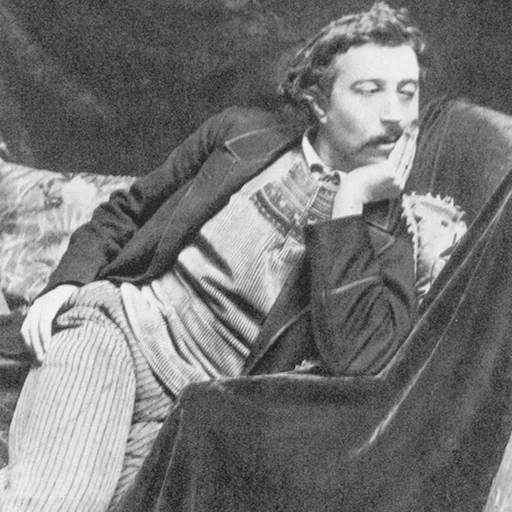
Eugène Henri Paul Gauguin (; French: ; 7 June 1848 – 8 May 1903) was a French painter, sculptor, printmaker, ceramist, and writer, whose work has been primarily associated with the Post-Impressionist and Symbolist movements.