Artwork
Nave Nave Fenua (Delightful Land)
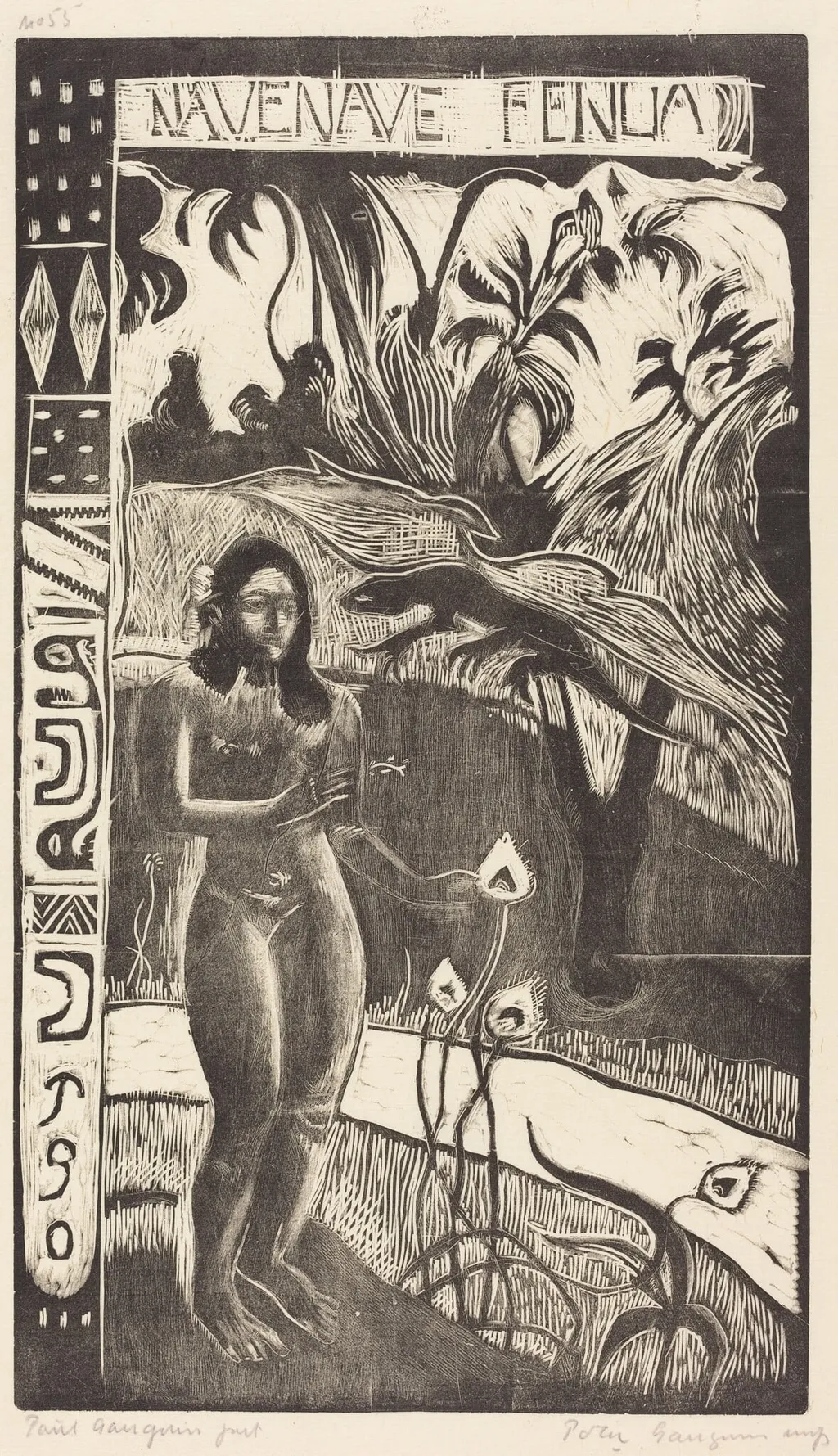
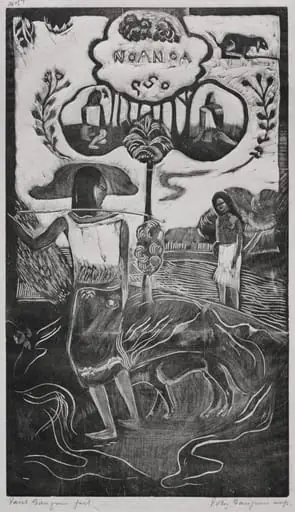
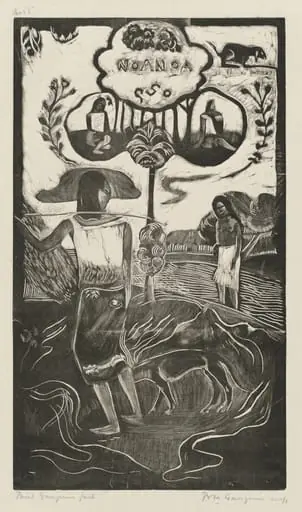
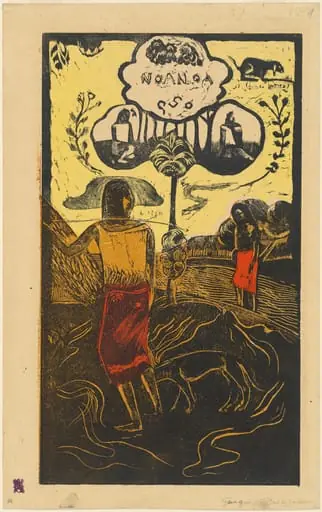
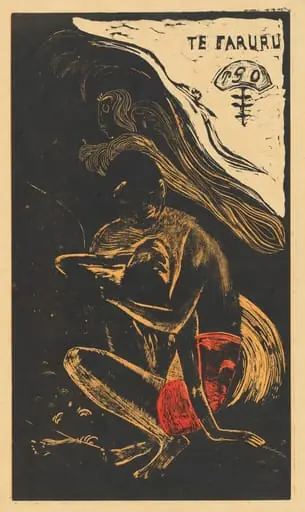
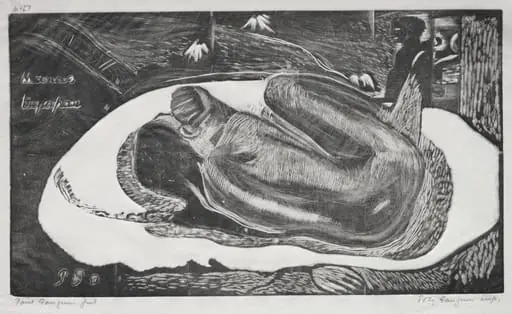
Nave Nave Fenua (Delightful Land) is an ink print by the Impressionist artist Paul Gauguin. It dates from 1894 and is held in the collection of the National Gallery of Art. Created in 1894, *Nave Nave Fenua* (translated as “Delightful Land”) is a woodcut print executed on delicate china paper.
About this work
Overview
Created in 1894, *Nave Nave Fenua* (translated as “Delightful Land”) is a woodcut print executed on delicate china paper. The work belongs to Paul Gauguin’s printmaking phase, during which he applied the same experimental vigor that characterized his paintings.
Subject & Meaning
The image presents a serene woman cradling an infant, positioned before a towering, stylized figure whose head resembles a bird. The juxtaposition of the maternal scene with the mythic creature, combined with the inscription of a Polynesian phrase, evokes a dreamlike, exotic landscape that reflects Gauguin’s fascination with Pacific cultures.
Technique & Style
Gauguin employed the traditional woodcut method, carving bold lines into a block to produce stark contrasts of light and dark. The print’s strong outlines, flat areas of color, and symbolic motifs are hallmarks of his Synthetist approach, emphasizing decorative pattern over naturalistic detail.
History & Provenance
The print emerged while Gauguin was actively exploring graphic media alongside his canvases, a period marked by frequent experimentation with new materials. It was produced in Europe during his intermittent returns from Tahiti, and later entered private collections before being acquired by a museum holding his graphic oeuvre.
Context
At the time of its creation, Gauguin was moving away from Impressionist concerns for fleeting light, turning instead toward symbolic representation and the primitivist aesthetic of the South Pacific. The inclusion of Polynesian text and stylized forms aligns the work with his broader project of reimagining non‑Western cultures for a European audience.
Legacy
*Nave Nave Fenua* illustrates how Gauguin extended his painterly innovations to printmaking, influencing subsequent artists who sought to merge graphic techniques with Symbolist content. The piece remains a reference point for studies of cross‑cultural appropriation and the development of modern print aesthetics.
Artist & collection
Artist
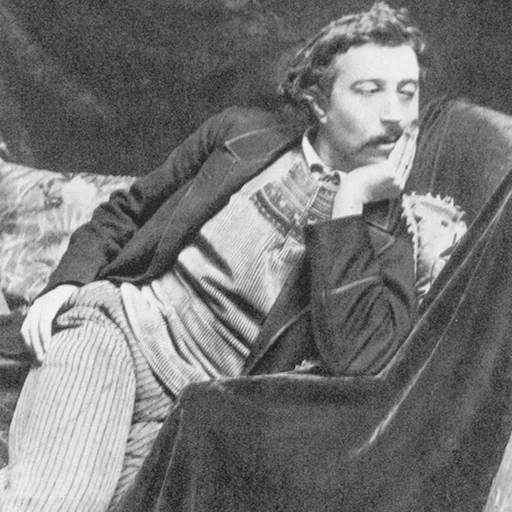
Eugène Henri Paul Gauguin (; French: ; 7 June 1848 – 8 May 1903) was a French painter, sculptor, printmaker, ceramist, and writer, whose work has been primarily associated with the Post-Impressionist and Symbolist movements.