Artwork
The Woman with Figs
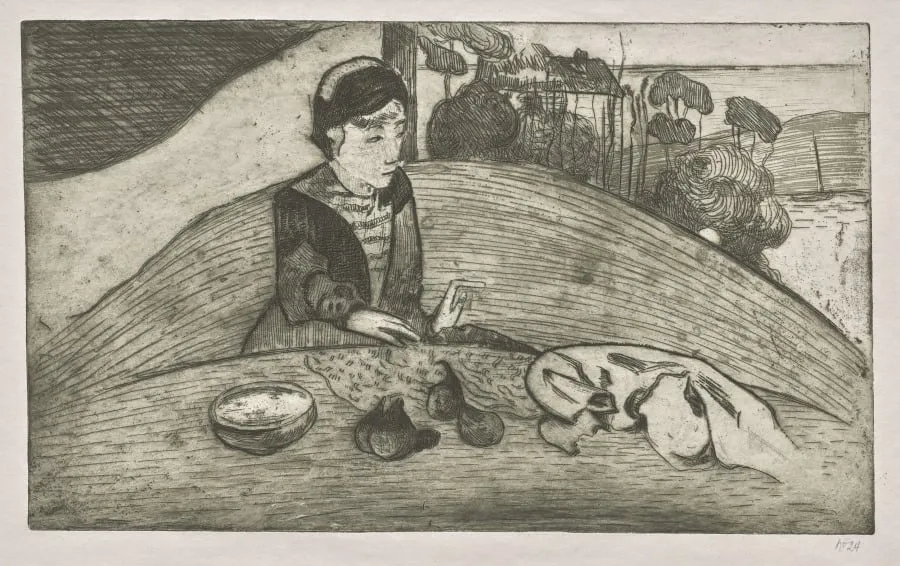
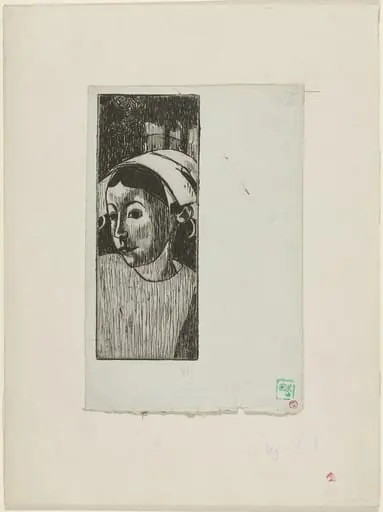
The Woman with Figs is a print by the Impressionist artist Paul Gauguin. It dates from 1894 and is held in the collection of the Cleveland Museum of Art.
About this work
Overview
The work stands as a rare example of Gauguin’s engagement with printmaking, distinct from his more familiar painted output.
The Woman with Figs is one of only two etchings produced by Paul Gauguin during his career. Created in collaboration with his friend Armand Séguin, the print reflects Gauguin’s limited experience with the medium. While he conceived the image, Séguin assisted with technical steps such as preparing the plate and acid biting. The work stands as a rare example of Gauguin’s engagement with printmaking, distinct from his more familiar painted output.
Subject & Meaning
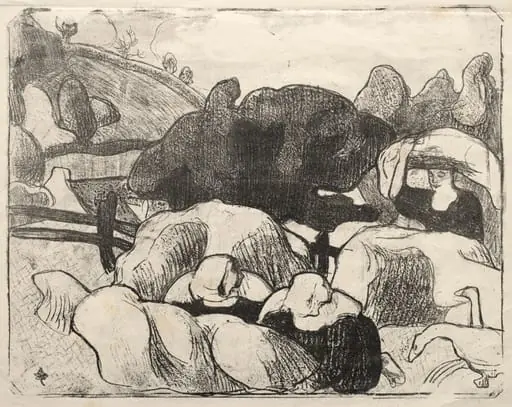
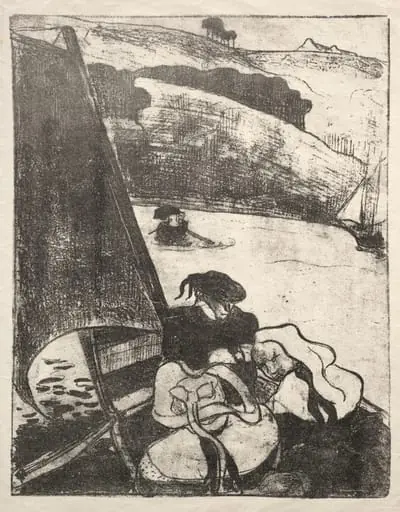
A woman sits quietly on the ground, cradling two figs in her lap. Dressed in a plain garment and headscarf, her expression is serene and introspective. The simplicity of the scene—its lack of narrative or symbolic embellishment—suggests a focus on quiet presence rather than allegory. The figs, often associated with abundance or earthly sustenance, may hint at themes of nature and nourishment, consistent with Gauguin’s broader interest in primal or rural life.
Technique & Style
The etching’s lines are loose and uneven, resembling a rapid sketch rather than a polished engraving. This rawness stems from Gauguin’s inexperience with the medium and his reliance on Séguin for technical execution. The resulting texture conveys immediacy and spontaneity, contrasting with the controlled precision typical of traditional etching. The absence of fine detail emphasizes form and mood over refinement, aligning with Gauguin’s preference for expressive simplicity.
History & Provenance
The print bears Séguin’s address inscribed in the upper left, confirming their collaboration during Gauguin’s time in Paris. It was made around 1889, a period when Gauguin was experimenting beyond painting, seeking new modes of expression. Only two etchings by him are known to survive, making this work exceptionally rare. Its survival and attribution rely on the inscription and stylistic analysis, as no other prints from this collaboration are documented.
Context
Created during Gauguin’s transition toward symbolic and non-Western themes, the print coincides with his growing disillusionment with urban European life. Though executed in Paris, the subject evokes a sense of rural stillness, anticipating his later move to Tahiti. The collaboration with Séguin reflects the informal artistic networks of the time, where peers often assisted one another in mastering unfamiliar techniques outside their primary discipline.
Legacy
As one of only two etchings Gauguin ever produced, the work offers insight into his experimental impulses and willingness to engage with unfamiliar media. Though not widely circulated or influential in the printmaking tradition, it remains a significant artifact of his broader artistic evolution. Its unpolished quality underscores his preference for authenticity over technical mastery, a principle that defined his later work in painting and sculpture.
Artist & collection
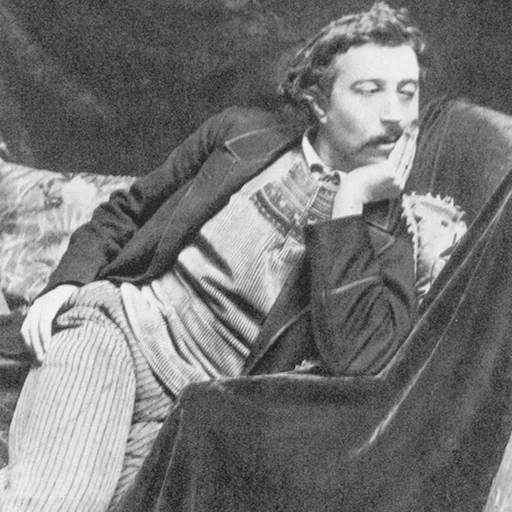
Artist
Eugène Henri Paul Gauguin (; French: ; 7 June 1848 – 8 May 1903) was a French painter, sculptor, printmaker, ceramist, and writer, whose work has been primarily associated with the Post-Impressionist and Symbolist movements.