Artwork
Idyll in Tahiti
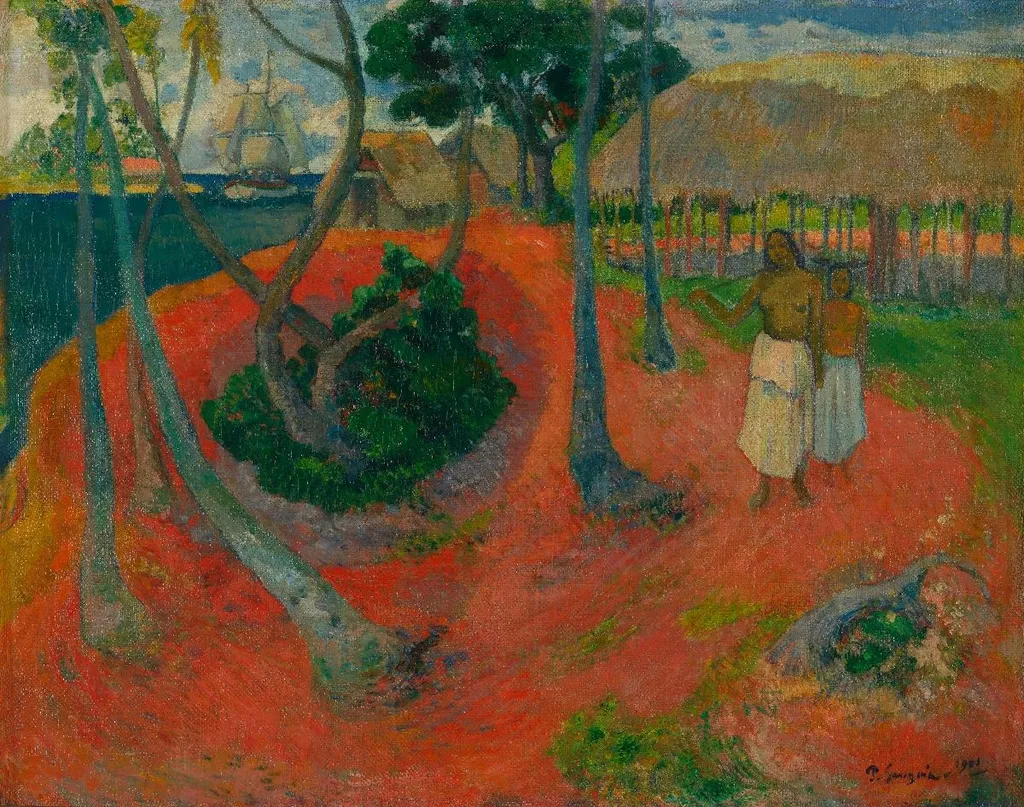
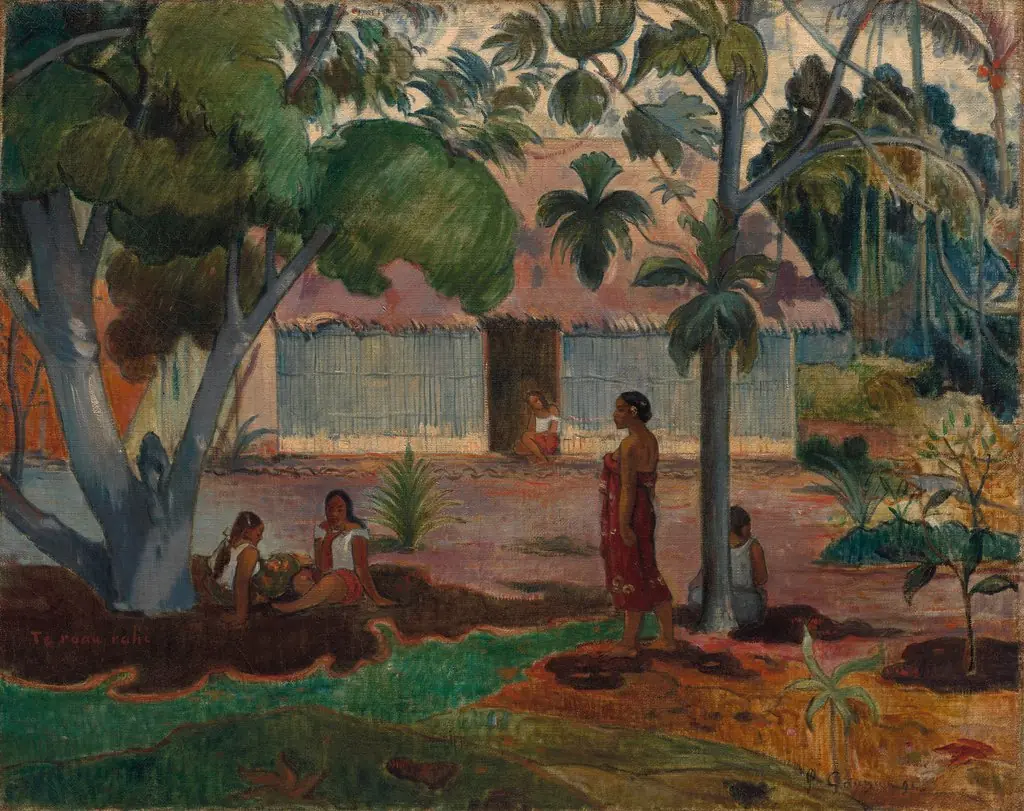
Idyll in Tahiti is an oil painting by the Post-Impressionist artist Paul Gauguin. It dates from 1901 and is held in the collection of the Foundation E.G. Bührle Collection.
About this work
Overview
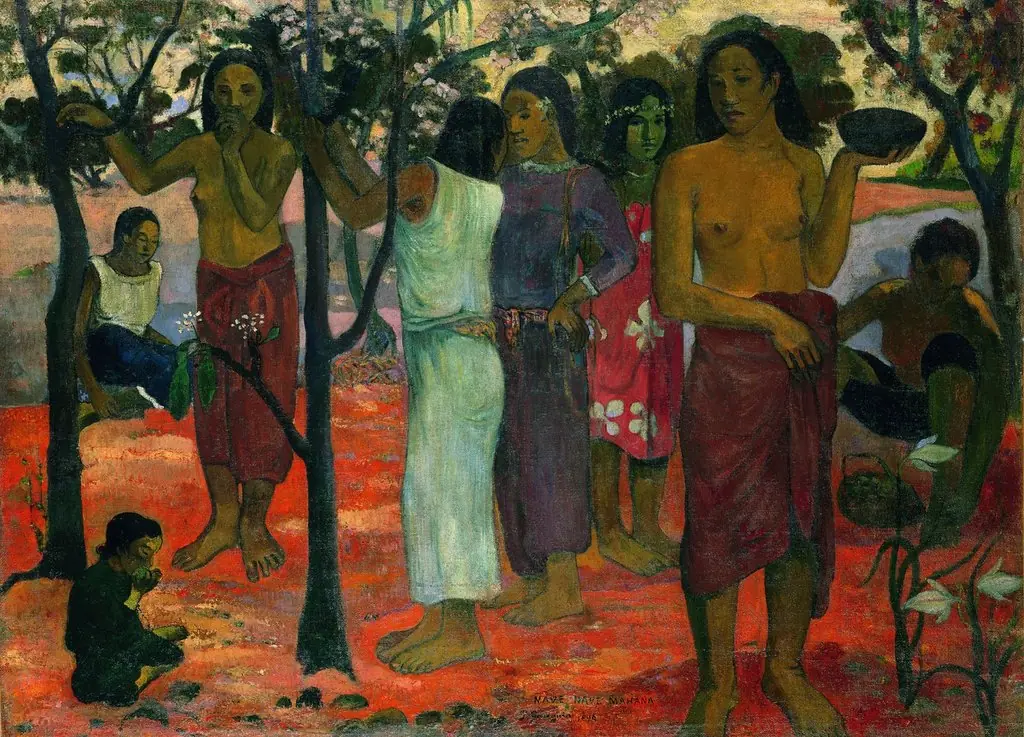
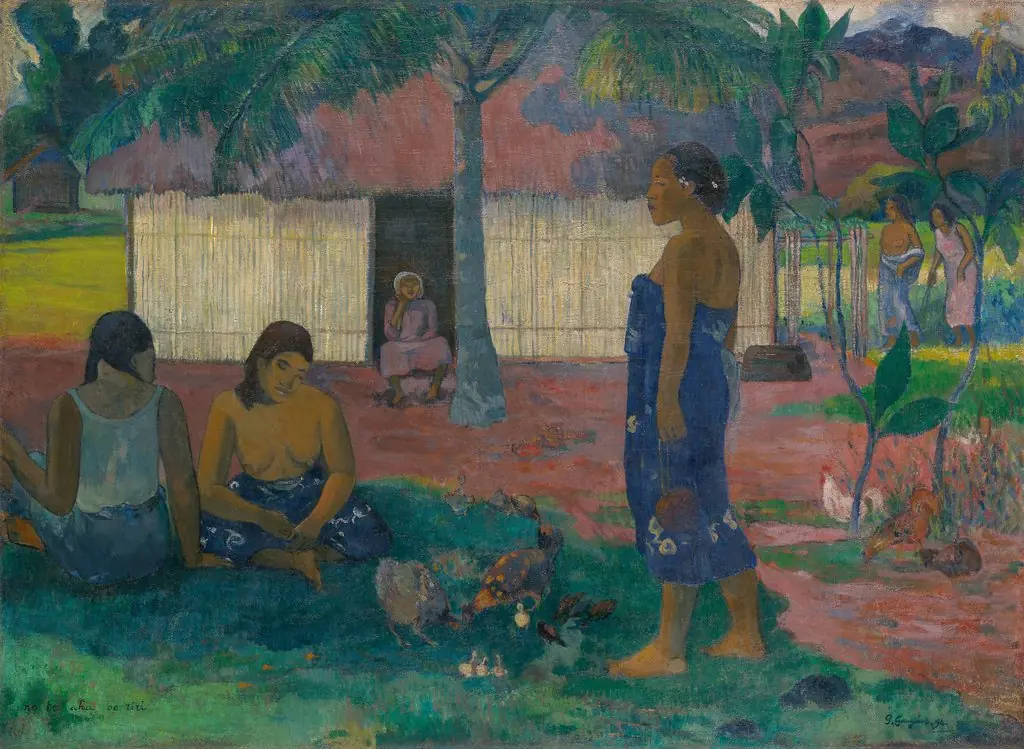
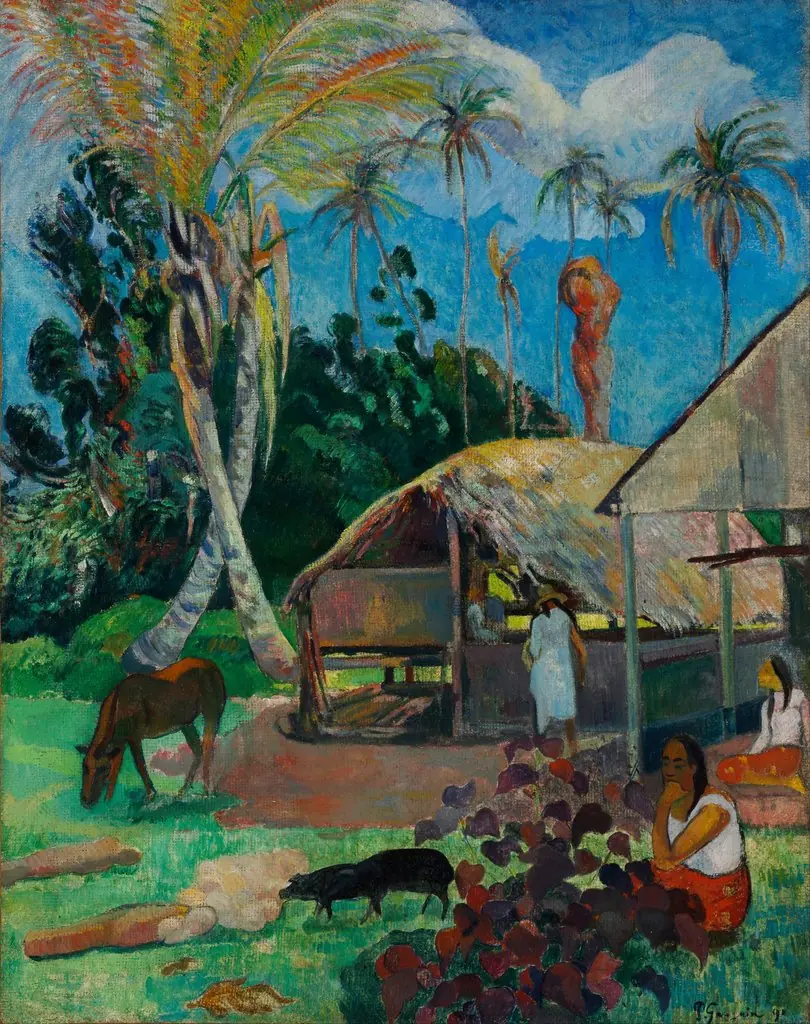
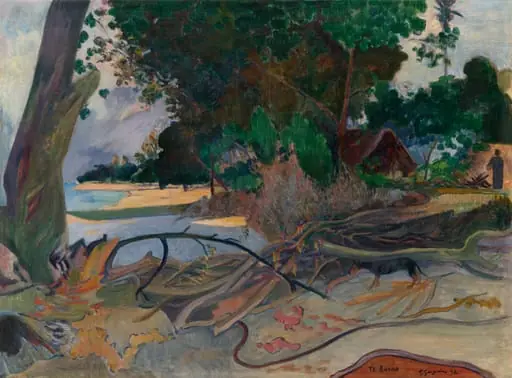
Painted in 1901 during Paul Gauguin’s second residence in Tahiti, this oil on canvas work reflects his continued engagement with the island’s landscape and people. Executed in a Post-Impressionist idiom, the painting departs from naturalistic representation, favoring flattened forms and heightened color to evoke mood over literal description. It resides today in the Kunsthaus Zürich collection.
Subject & Meaning
The man’s bare torso and the woman’s white garment suggest a deliberate simplification of local dress, framing them as archetypes rather than individuals.
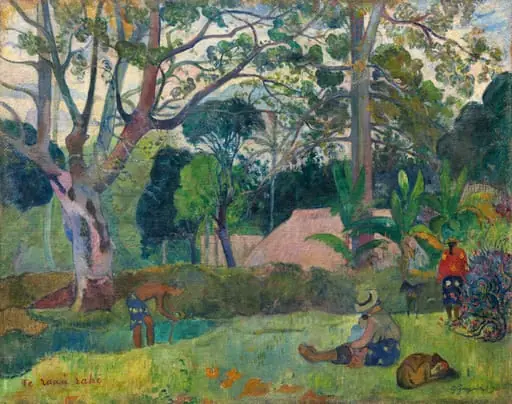
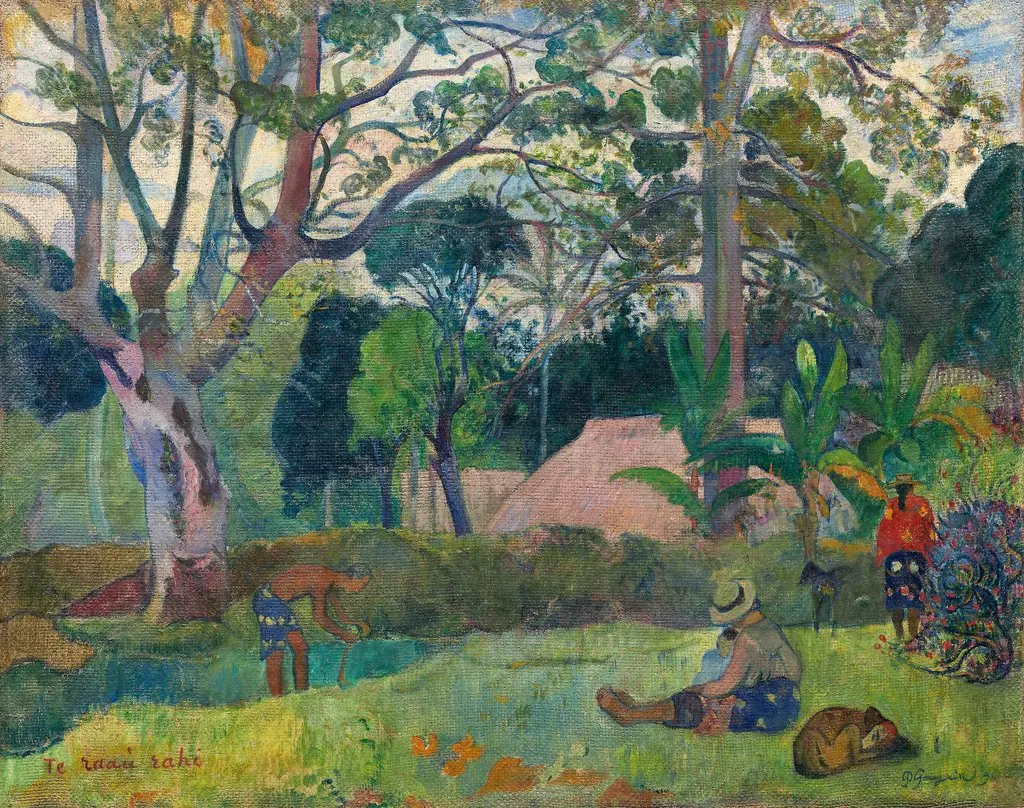
A man and woman stroll along a narrow path, their figures integrated into the surrounding vegetation. The man’s bare torso and the woman’s white garment suggest a deliberate simplification of local dress, framing them as archetypes rather than individuals. The distant ship and thatched hut imply a quiet tension between isolation and outside influence, hinting at the cultural shifts occurring in Tahiti under colonial presence.
Technique & Style
Gauguin employed broad, unblended areas of color and loose, expressive brushwork to construct the scene. Outlines are softened, forms are simplified, and the palette leans toward earthy greens, ochres, and blues, with the white skirt acting as a focal contrast. The composition avoids perspective depth, instead organizing space through rhythmic patterns and symbolic color relationships, characteristic of his Synthetist method.
History & Provenance
Created during Gauguin’s final years in French Polynesia, the painting emerged from a period of personal hardship and artistic experimentation. It was acquired by the Kunsthaus Zürich in the early 20th century, likely through the artist’s network of European patrons or dealers. Its presence in the museum reflects early European institutional interest in Gauguin’s non-Western subjects.
Context
Gauguin sought in Tahiti an escape from European modernity, envisioning the island as a site of spiritual and aesthetic renewal. While his depictions often romanticized local life, they also responded to the real social transformations brought by colonial administration and missionary activity. This painting, like others from the period, mediates between idealization and the visible signs of cultural change.
Legacy
The work contributes to a broader body of Gauguin’s Tahitian paintings that influenced early 20th-century modernism, particularly in the use of color and symbolic form. Though later criticized for exoticism, these works prompted artists to reconsider representation beyond realism. Its presence in a major European collection underscores its role in shaping perceptions of non-Western cultures within modern art history.
Artist & collection
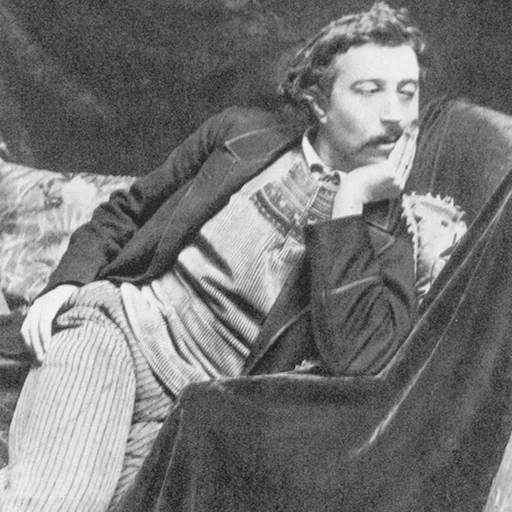
Artist
Eugène Henri Paul Gauguin (; French: ; 7 June 1848 – 8 May 1903) was a French painter, sculptor, printmaker, ceramist, and writer, whose work has been primarily associated with the Post-Impressionist and Symbolist movements.