Artwork
Mahana no atua (Day of the God)
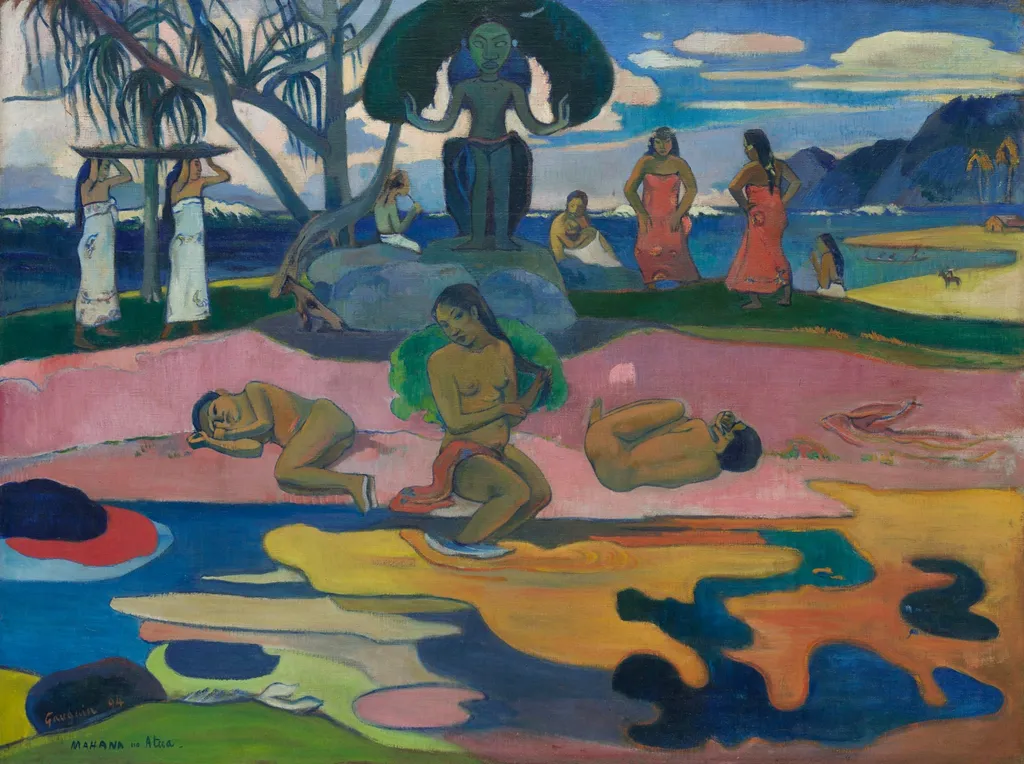
Mahana no atua (Day of the God) is an oil painting by the Impressionist artist Paul Gauguin. It dates from 1894 and is held in the collection of the Art Institute of Chicago.
About this work
Overview
Mahana no atua (Day of the God) is an oil on linen canvas painting by Paul Gauguin, created in Paris after his first trip to Tahiti. The work depicts a fantastical scene of figures on an embankment surrounded by abstract, colorful zones.
Subject & Meaning
The painting shows a group of figures arranged rhythmically, appearing more symbolic than individualized. A bather is flanked by two prone figures, possibly representing a single person from different angles, amidst pools of water and abstract color zones.
Technique & Style
Gauguin's unique style blends reality and fantasy, evident in the impasto technique used to create textured, acidic-colored zones. The composition is characterized by its psychedelic and abstract qualities, marking one of the artist's most avant-garde works.
History & Provenance
Produced in Paris shortly after Gauguin's first trip to Tahiti, the painting draws on the artist's fantasy and memory rather than direct observation, differing from his other Tahitian-inspired landscapes.
Own this work as a print
Artist & collection
Artist
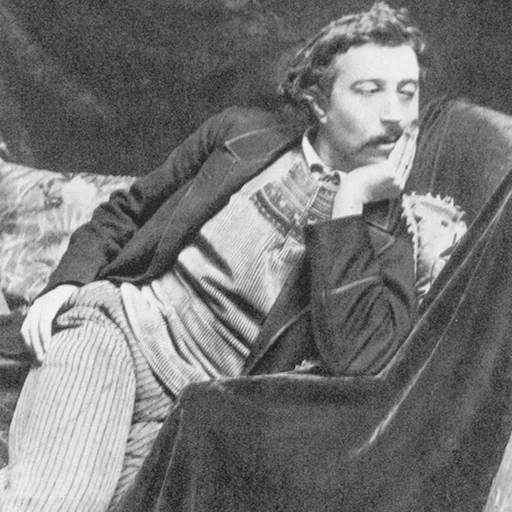
Eugène Henri Paul Gauguin (; French: ; 7 June 1848 – 8 May 1903) was a French painter, sculptor, printmaker, ceramist, and writer, whose work has been primarily associated with the Post-Impressionist and Symbolist movements.