Artwork
Still Life
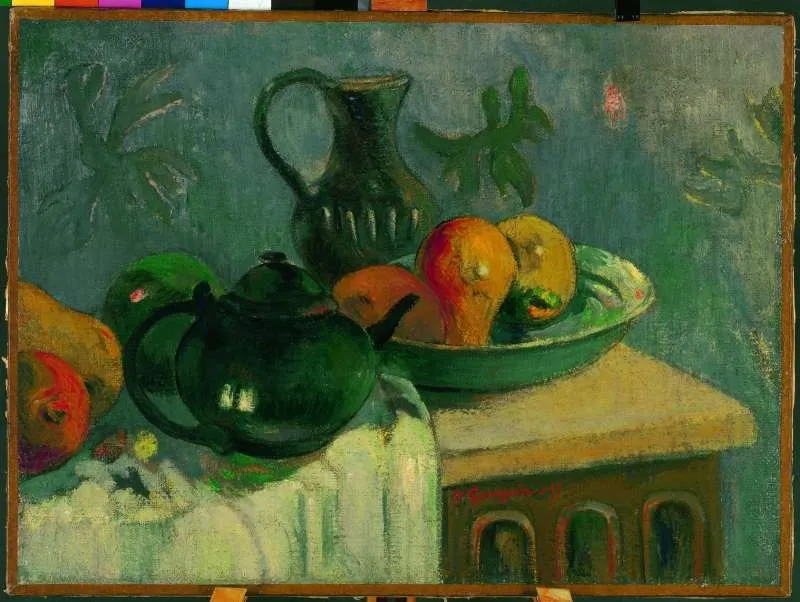
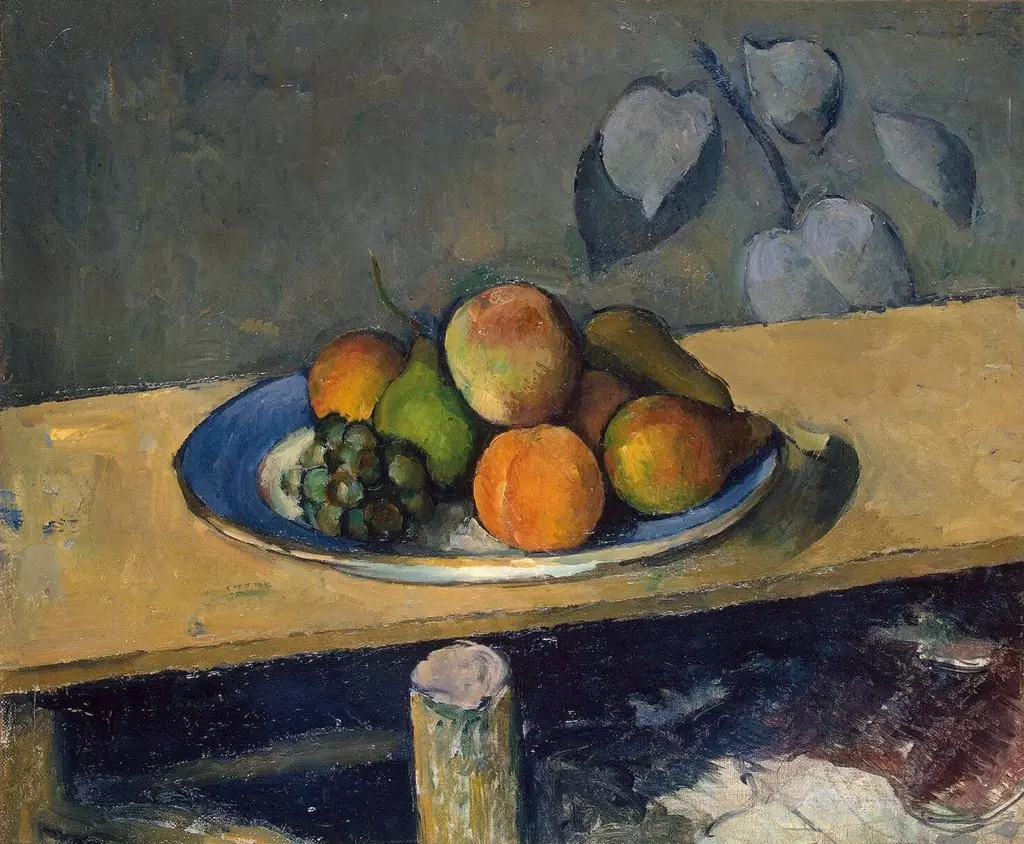
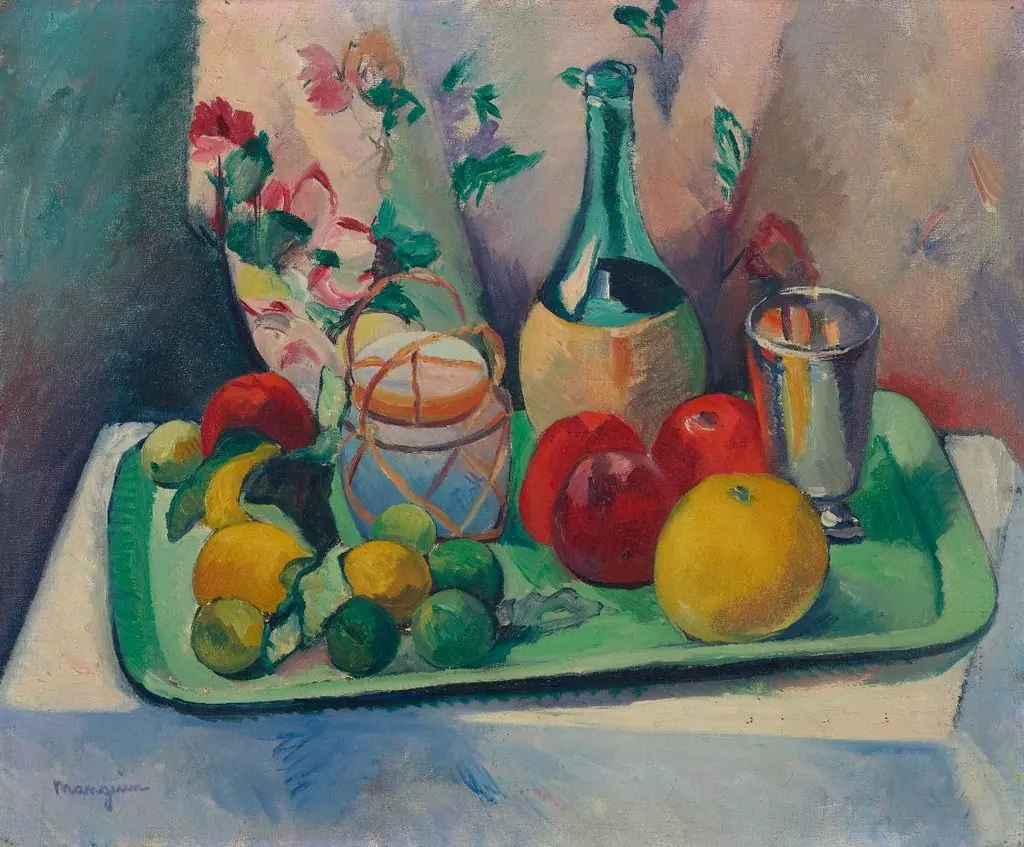
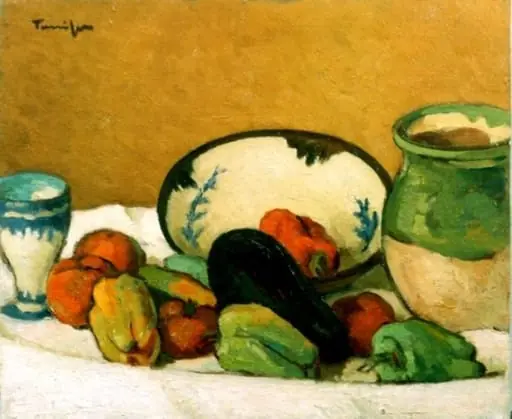
Still Life is an oil painting by the Post-Impressionist artist Paul Gauguin. It dates from 1900 and is held in the collection of the Israel Museum.
About this work
Overview
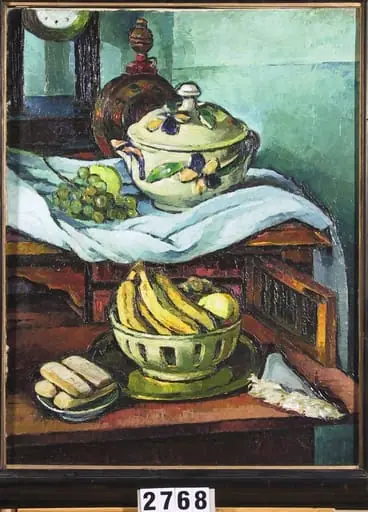
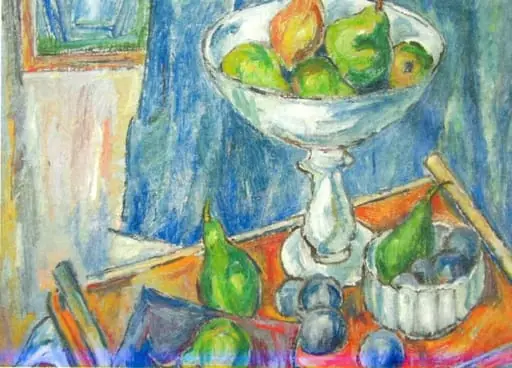
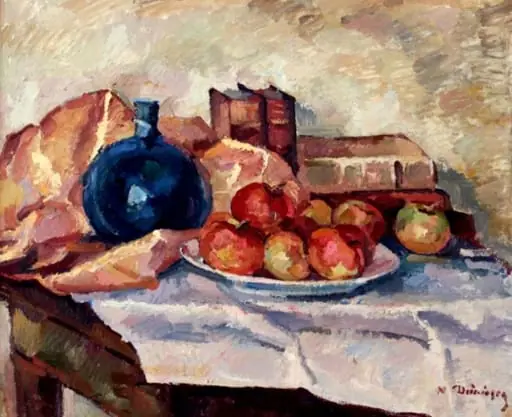
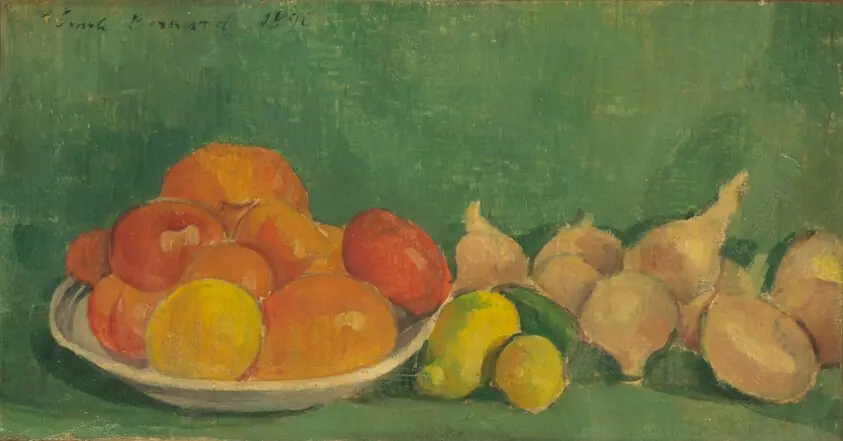
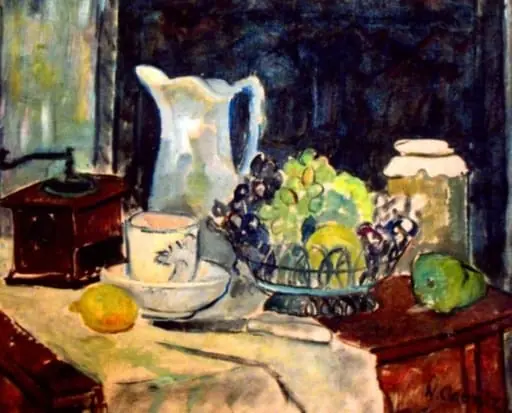
Painted in 1900, this oil-on-canvas still life by Paul Gauguin presents a quiet arrangement of fruit, a teapot, and a bowl on a draped table.
Painted in 1900, this oil-on-canvas still life by Paul Gauguin presents a quiet arrangement of fruit, a teapot, and a bowl on a draped table. Set against a green wall with faint plant forms, the composition reflects Gauguin’s departure from naturalistic representation. His use of muted greens and browns, combined with visible brushwork, signals a deliberate move away from Impressionist light studies toward a more personal, symbolic language.
Subject & Meaning
The arrangement—fruit, ceramic vessel, and cloth—draws from traditional still life motifs, yet Gauguin strips them of conventional symbolism. Rather than evoking abundance or transience, the objects feel isolated, almost elemental. The subdued palette and flattened space suggest an interior world shaped by introspection, aligning with his broader interest in spiritual and emotional resonance over literal depiction.
Technique & Style
Gauguin applied oil paint with broad, deliberate strokes, emphasizing texture over fine detail. Colors are restrained—dominated by olive, ochre, and moss greens—with no sharp contrasts or highlights. The background and tablecloth merge in tone, dissolving spatial depth. This approach, influenced by cloisonnism and non-Western art, prioritizes emotional tone and formal harmony over optical realism.
History & Provenance
Created during Gauguin’s final years in France after his return from Tahiti, the painting entered the Israel Museum’s collection through documented acquisitions in the 20th century. It reflects a transitional phase in his career, when he revisited familiar subjects with renewed formal experimentation. No major exhibitions or ownership changes are recorded prior to its institutional acquisition.
Context
In 1900, Gauguin was distancing himself from European artistic norms, seeking alternatives in non-Western aesthetics and spiritual themes. Though this still life lacks overt exoticism, its simplification of form and color echoes his broader rejection of academic conventions. It aligns with contemporaneous efforts by Symbolists to convey inner states through reduced visual language.
Legacy
This work contributes to Gauguin’s reputation as a bridge between 19th-century painting and modern abstraction. His use of flat planes and subjective color influenced later movements, including Fauvism and Expressionism. Though not among his most famous pieces, it exemplifies his consistent pursuit of artistic autonomy and emotional authenticity over decorative convention.
Artist & collection
Artist
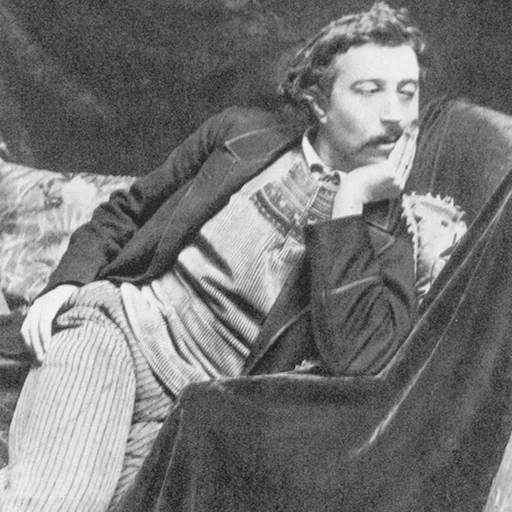
Eugène Henri Paul Gauguin (; French: ; 7 June 1848 – 8 May 1903) was a French painter, sculptor, printmaker, ceramist, and writer, whose work has been primarily associated with the Post-Impressionist and Symbolist movements.