Artwork
Still Life: Wood Tankard and Metal Pitcher
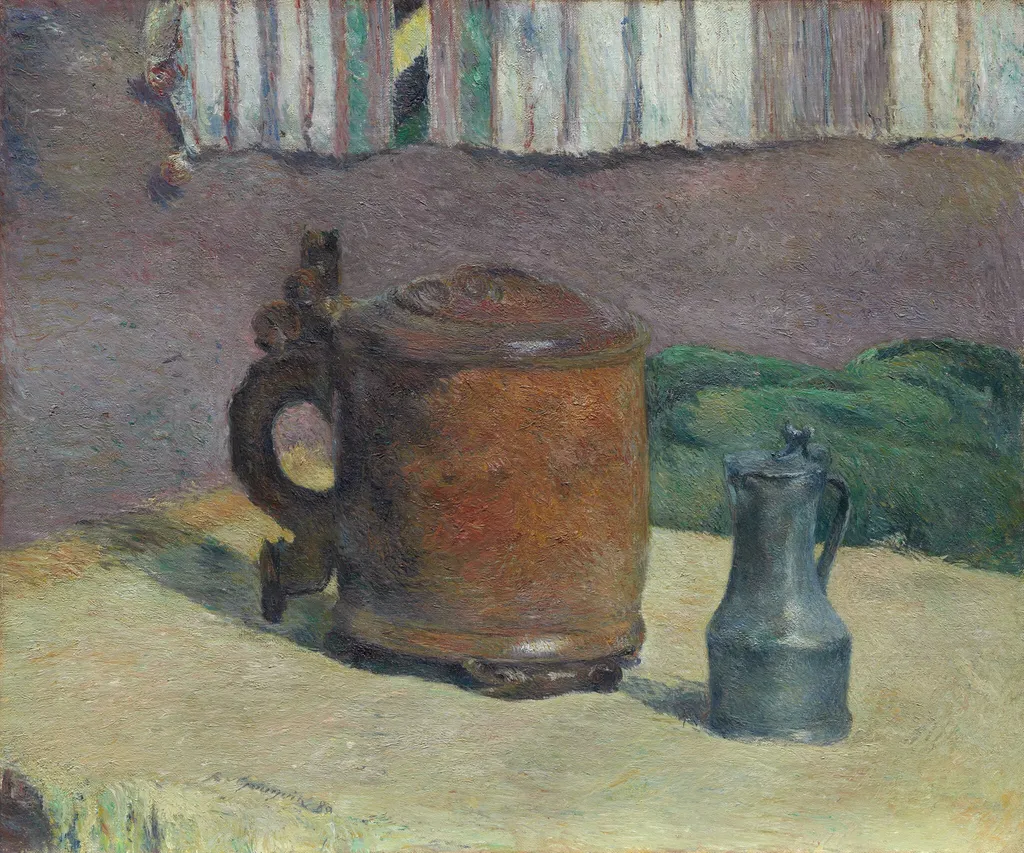
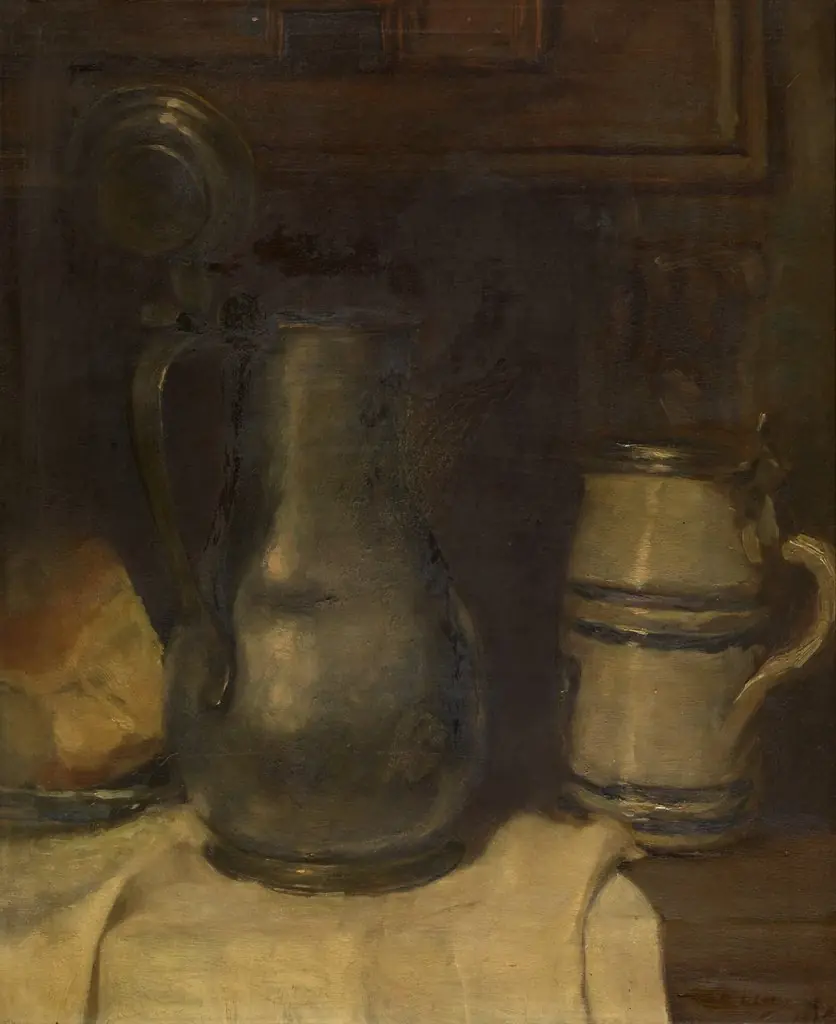
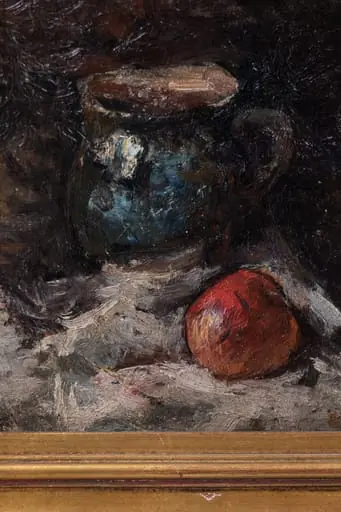
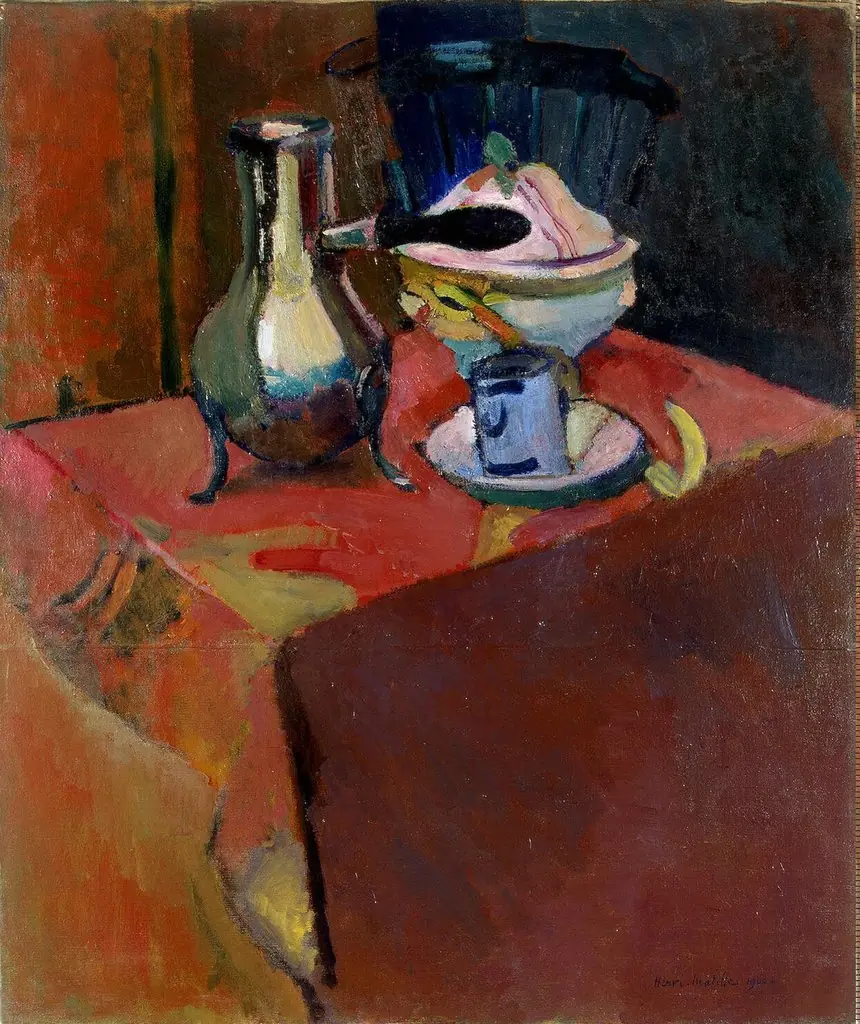
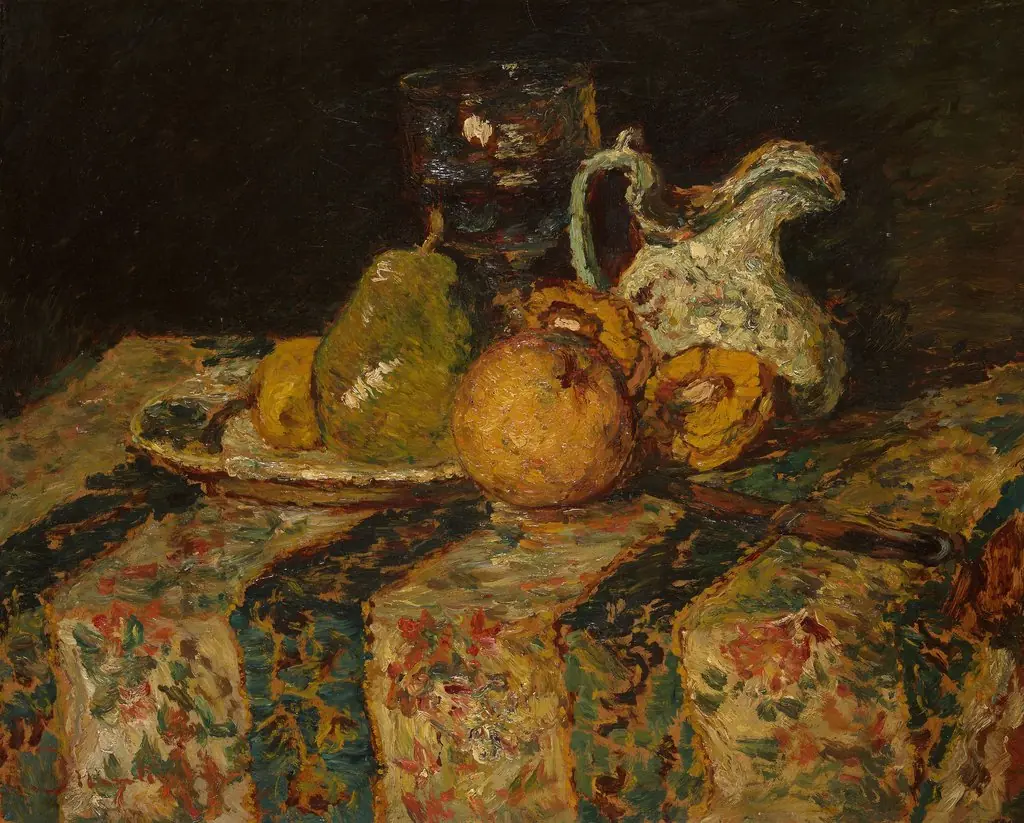
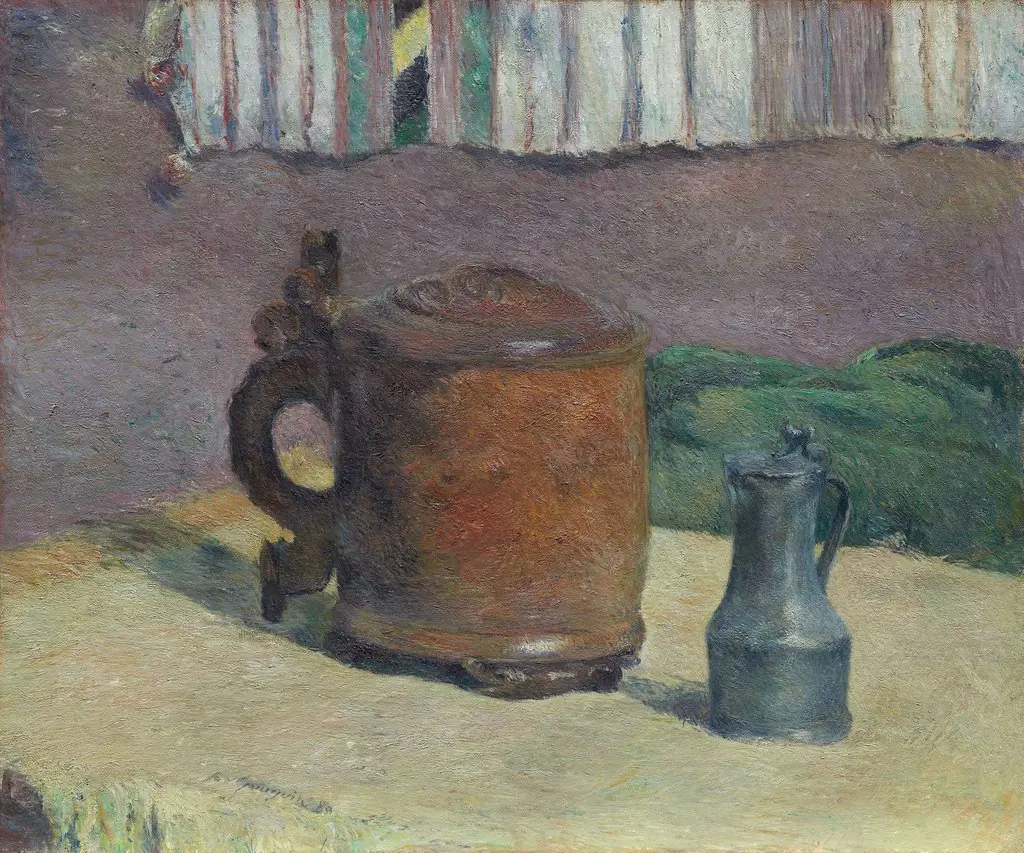
Still Life: Wood Tankard and Metal Pitcher is an oil painting by the Impressionist artist Paul Gauguin. It dates from 1880 and is held in the collection of the Art Institute of Chicago.
About this work
Overview
Painted in 1880, *Still Life: Wood Tankard and Metal Pitcher* is an early oil on linen work by Paul Gauguin. Created before his fully developed Post-Impressionist style, the piece captures a quiet moment in domestic still life, revealing an artist in transition. It reflects his engagement with contemporary painting practices while hinting at the formal simplifications he would later pursue.
Subject & Meaning
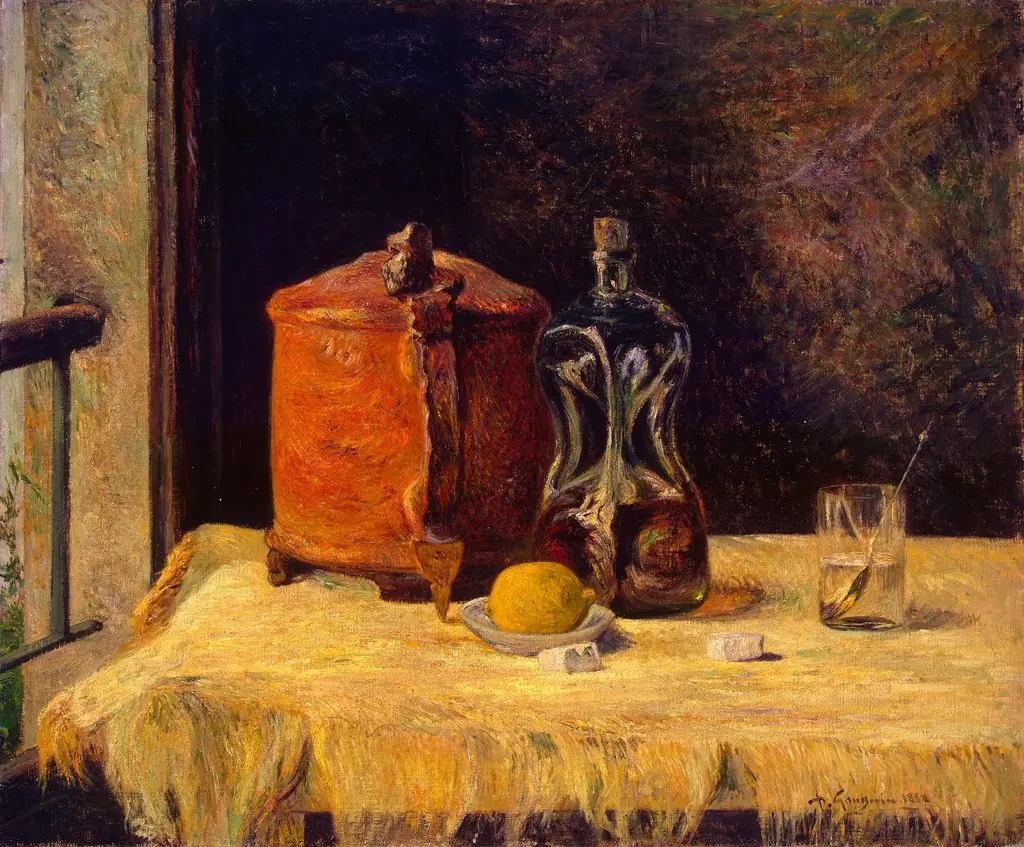
The composition features two ordinary objects—a wooden tankard and a metal pitcher—arranged without narrative or symbolism. Their placement suggests a momentary observation rather than a staged tableau. Gauguin’s focus on humble, utilitarian items signals a shift away from grand themes, aligning with his interest in the quiet dignity of everyday things.
Technique & Style
Gauguin employs muted tones and loose brushwork, avoiding the luminous effects of Impressionism. Forms are softened and slightly flattened, with attention to surface texture rather than precise modeling. The handling of light shows tentative exploration of chiaroscuro, but without dramatic contrast, indicating an artist testing alternatives to academic conventions.
History & Provenance
This painting originates from Gauguin’s early period in Paris, when he was still an amateur painter balancing art with a career in finance. It was likely kept in private hands during his lifetime, undocumented in major exhibitions until later scholarly reassessments. Its survival offers rare insight into his pre-Tahiti development.
Context
In 1880, Gauguin was influenced by Camille Pissarro and other Impressionists, yet already seeking a more structured approach to color and form. This still life emerged amid a broader European interest in non-traditional subjects, as artists moved beyond historical and mythological themes toward the ordinary and the personal.
Legacy
Though not among Gauguin’s most recognized works, this painting is a critical marker in his artistic evolution. It demonstrates the early seeds of his move toward symbolic simplification and expressive color, foreshadowing the stylistic innovations that would define his mature work and influence modernist developments in the early 20th century.
Own this work as a print
Artist & collection
Artist
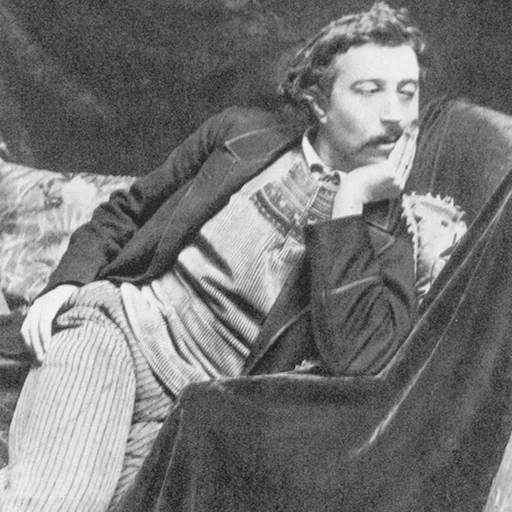
Eugène Henri Paul Gauguin (; French: ; 7 June 1848 – 8 May 1903) was a French painter, sculptor, printmaker, ceramist, and writer, whose work has been primarily associated with the Post-Impressionist and Symbolist movements.