Artwork
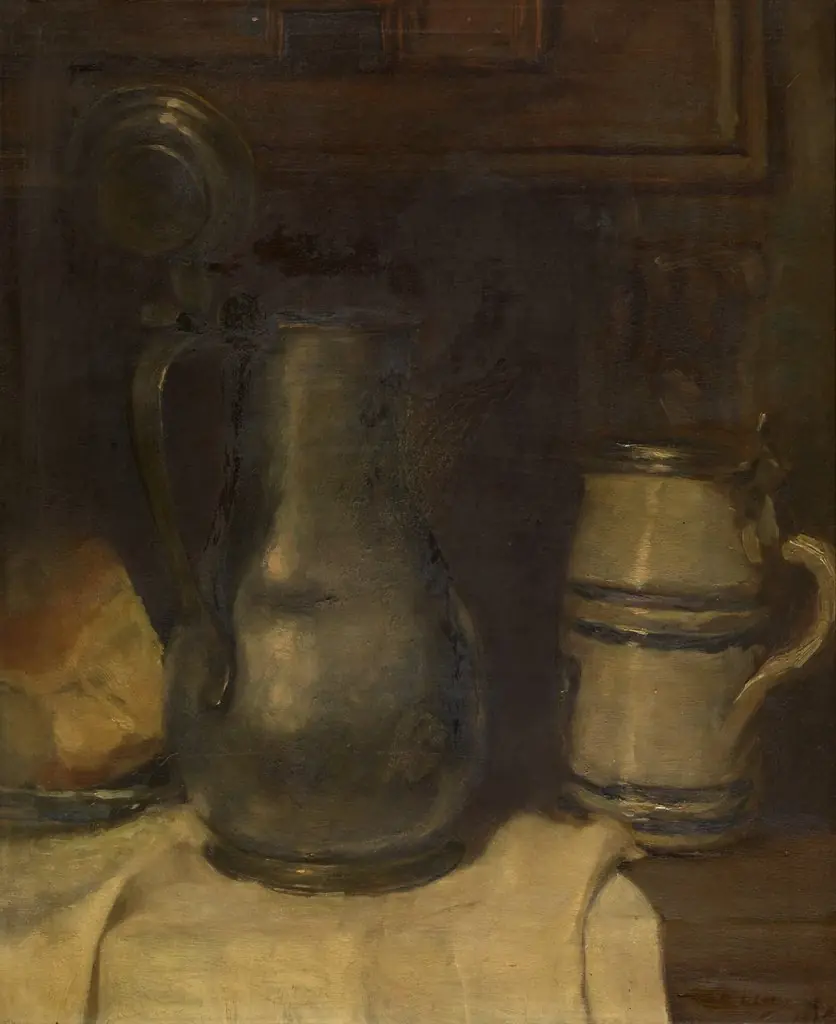
Wood Tankard and Metal Pitcher
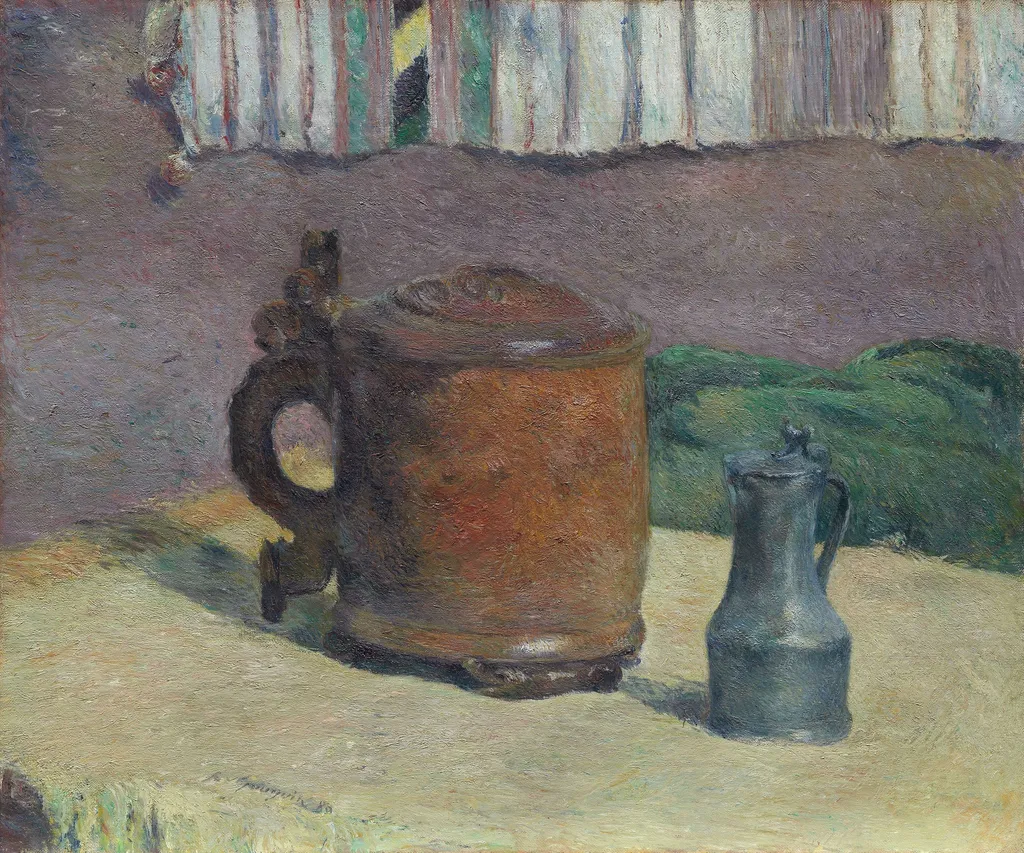
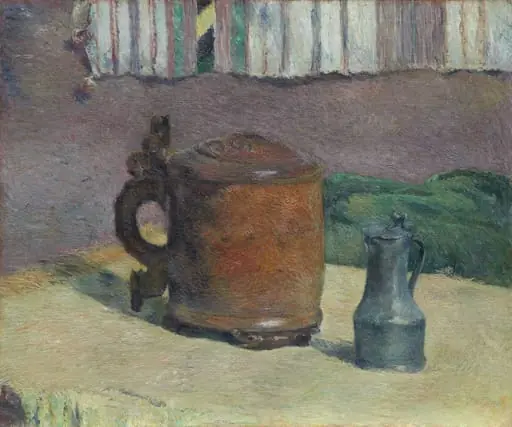
Wood Tankard and Metal Pitcher is an oil painting by the Impressionist artist Paul Gauguin. It dates from 1890 and is held in the collection of the Art Institute of Chicago.
About this work
Overview
Painted in 1890, *Wood Tankard and Metal Pitcher* exemplifies Paul Gauguin’s transitional phase between Impressionism and the more personal stylistic innovations that would define his later work. Executed in oil, the composition isolates two ordinary vessels—a carved wooden tankard and a polished metal pitcher—on a plain surface, stripping away narrative in favor of formal exploration. The restrained palette and deliberate brushwork signal Gauguin’s departure from fleeting optical effects toward a more structured, almost meditative approach to still life.
Subject & Meaning
The painting presents two utilitarian objects devoid of human presence, yet their juxtaposition invites scrutiny of material contrasts.
The painting presents two utilitarian objects devoid of human presence, yet their juxtaposition invites scrutiny of material contrasts. The rough-hewn wood of the tankard, with its earthy tones and visible grain, opposes the smooth, reflective surface of the metal pitcher, which catches and scatters light. These opposing textures may suggest broader themes of rustic simplicity versus industrial refinement, though Gauguin leaves interpretation open, prioritizing visual harmony over symbolic clarity.
Technique & Style
Gauguin’s handling of paint here balances Impressionist immediacy with emerging Post-Impressionist concerns. Broad, flat areas of color define the background wall and curtain, while shorter, directional strokes model the vessels and table. The muted palette—dominated by browns, grays, and subdued greens—creates a quiet, almost somber atmosphere. Unlike the high-keyed luminosity of his Impressionist contemporaries, Gauguin’s restrained tones emphasize volume and weight, foreshadowing his later experiments with symbolic color.
History & Provenance
Created in 1890, *Wood Tankard and Metal Pitcher* dates to a period when Gauguin was refining his artistic direction while still engaging with the Impressionist circle. The painting entered the collection of the Art Institute of Chicago, where it remains part of the museum’s holdings on European modernism. Little documentation survives regarding its early ownership, but its inclusion in major Gauguin retrospectives confirms its place within his evolving body of work.
Context
This still life reflects Gauguin’s broader artistic concerns during the late 1880s and early 1890s, a time of transition marked by his search for authenticity beyond Western academic traditions. While still lifes were a staple of Impressionist practice, Gauguin’s approach here signals a shift toward simplification and emotional resonance. The painting predates his relocation to Tahiti but aligns with his growing rejection of naturalism in favor of a more subjective, expressive style.
Own this work as a print
Artist & collection
Artist
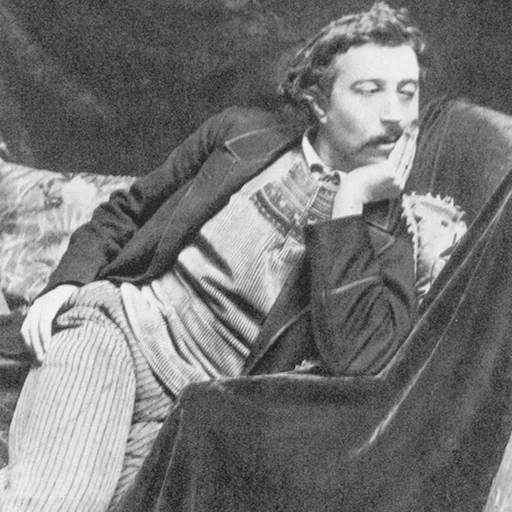
Eugène Henri Paul Gauguin (; French: ; 7 June 1848 – 8 May 1903) was a French painter, sculptor, printmaker, ceramist, and writer, whose work has been primarily associated with the Post-Impressionist and Symbolist movements.