Artwork
The Hibiscus Tree (Te Burao)
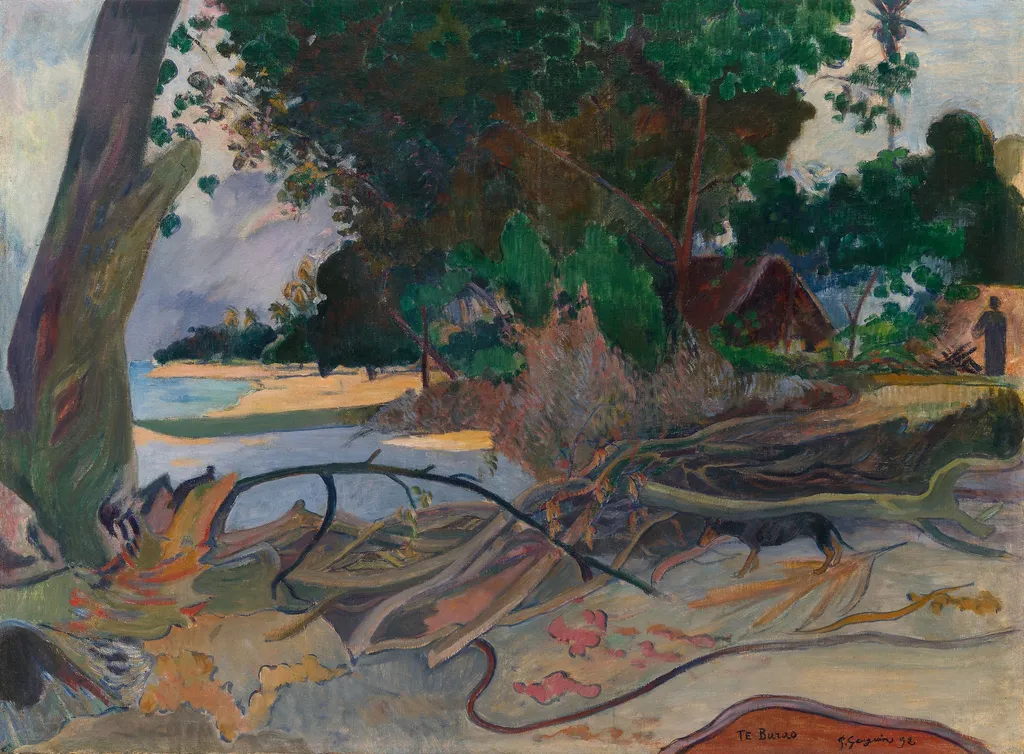
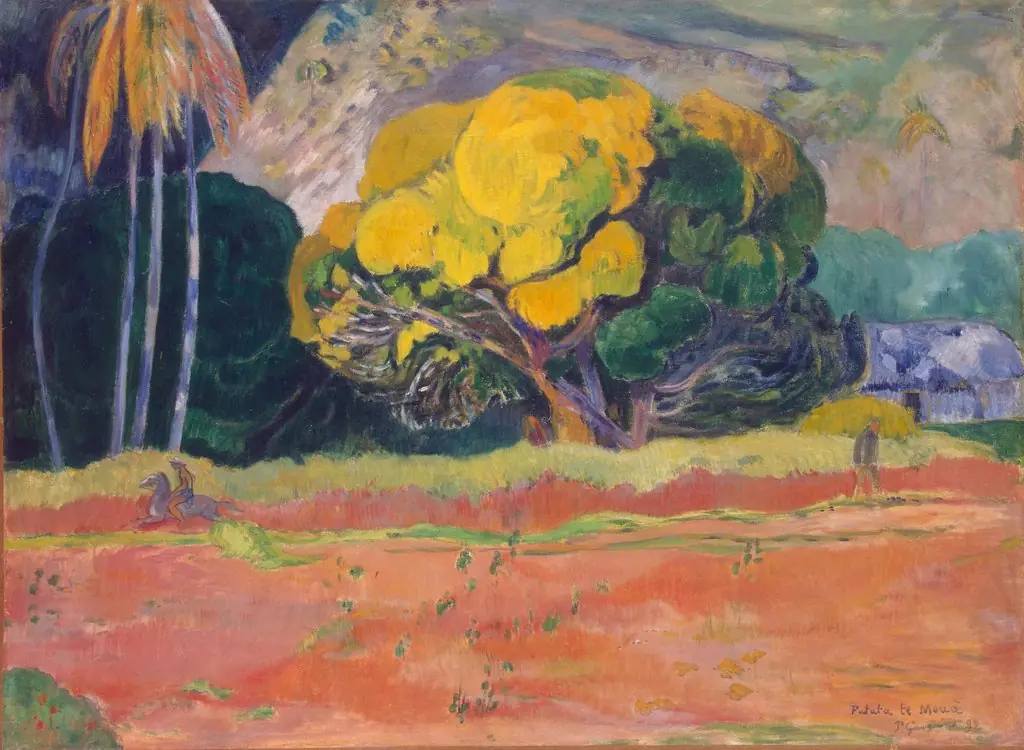
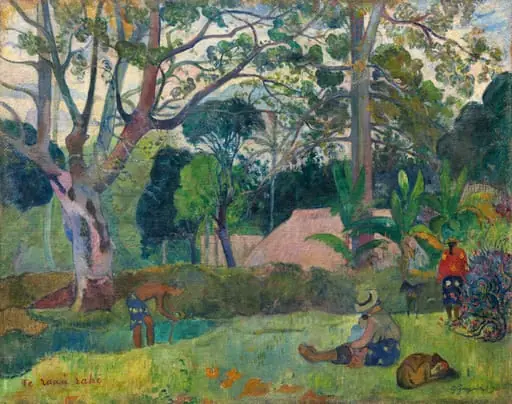
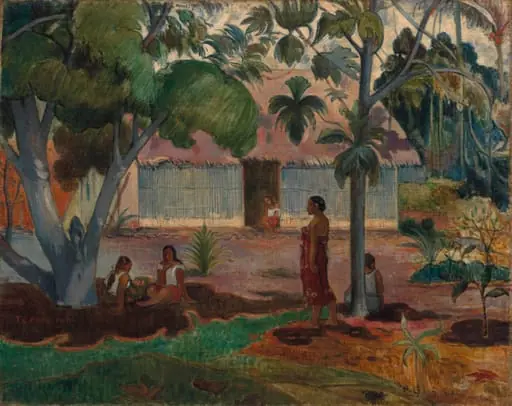
The Hibiscus Tree (Te Burao) is an oil painting by the Post-Impressionist artist Paul Gauguin. It dates from 1896 and is held in the collection of the Art Institute of Chicago.
About this work
Overview
Paul Gauguin’s oil painting *The Hibiscus Tree (Te Burao)* was completed in 1896, during the later phase of his career when he was exploring Post‑Impressionist ideas. The work is part of the Art Institute of Chicago’s permanent collection, where it is displayed among other late‑19th‑century modernist pieces.
Subject & Meaning
The composition centers on a solitary hibiscus tree, its massive trunk and spreading branches dominating the foreground. A modest shelter appears amid the surrounding foliage, while a lone figure stands nearby, suggesting a quiet, perhaps contemplative, interaction between humanity and the natural environment.
Technique & Style
Gauguin employs a Synthetist approach, flattening forms and emphasizing bold, simplified color fields. Broad, decisive brushstrokes render the bark’s texture, while softer strokes suggest the leafy canopy. The palette is restrained, dominated by muted greens, browns and tans, creating a calm atmosphere that contrasts with the vivid hues typical of his earlier Tahitian works.
History & Provenance
After its creation, the painting entered the European market before being acquired by the Art Institute of Chicago. It has remained in the museum’s collection, serving as a representative example of Gauguin’s mature period and his ongoing experimentation with color, form, and symbolic content.
Own this work as a print
Artist & collection
Artist
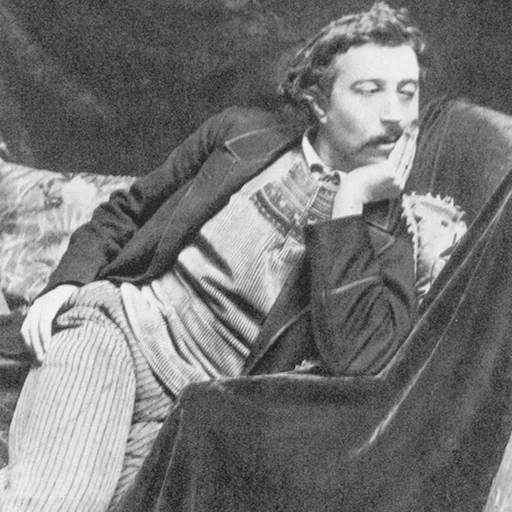
Eugène Henri Paul Gauguin (; French: ; 7 June 1848 – 8 May 1903) was a French painter, sculptor, printmaker, ceramist, and writer, whose work has been primarily associated with the Post-Impressionist and Symbolist movements.