Artwork
Wheat Harvest
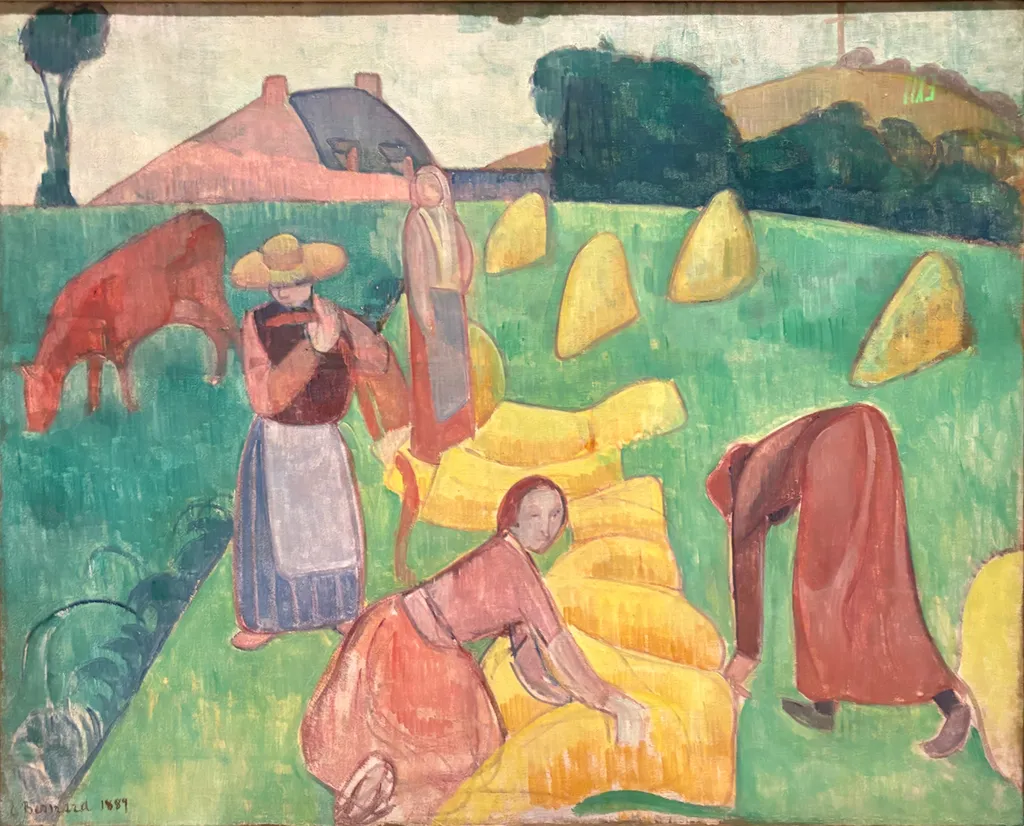
Wheat Harvest is an oil painting by the Post-Impressionist artist Émile Bernard. It dates from 1895 and is held in the collection of the Hammer Museum.
About this work
Overview
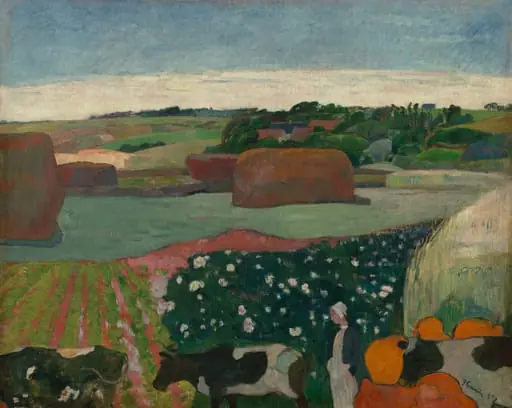
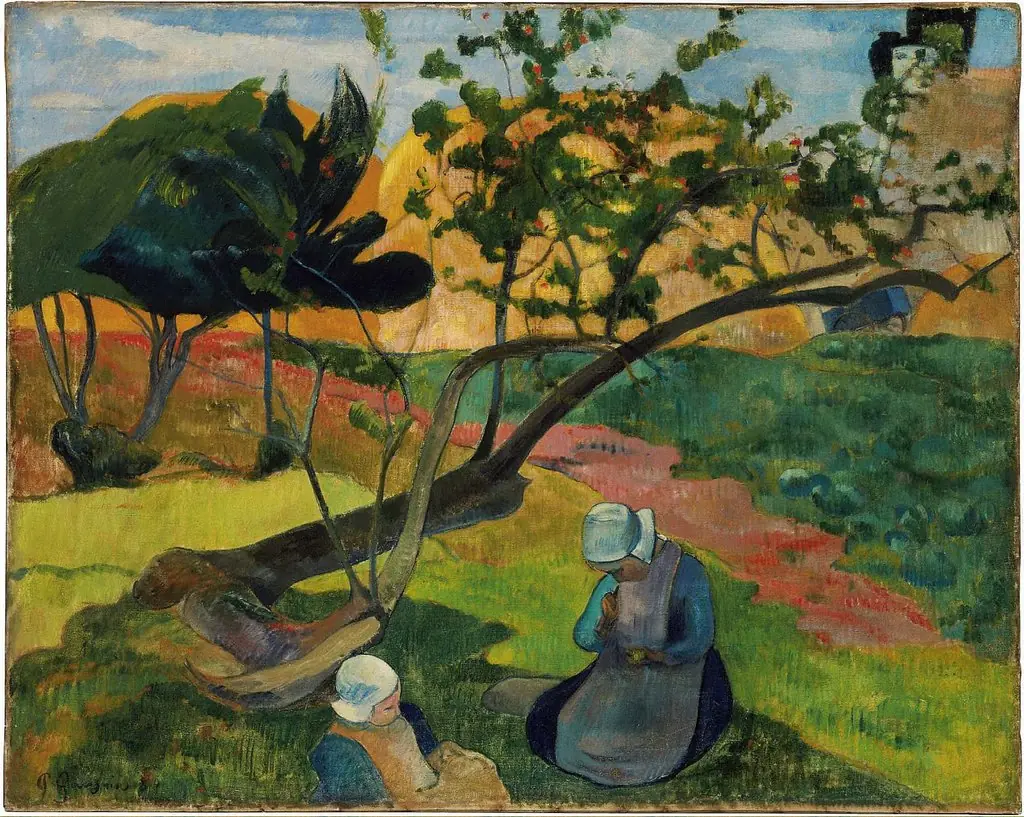
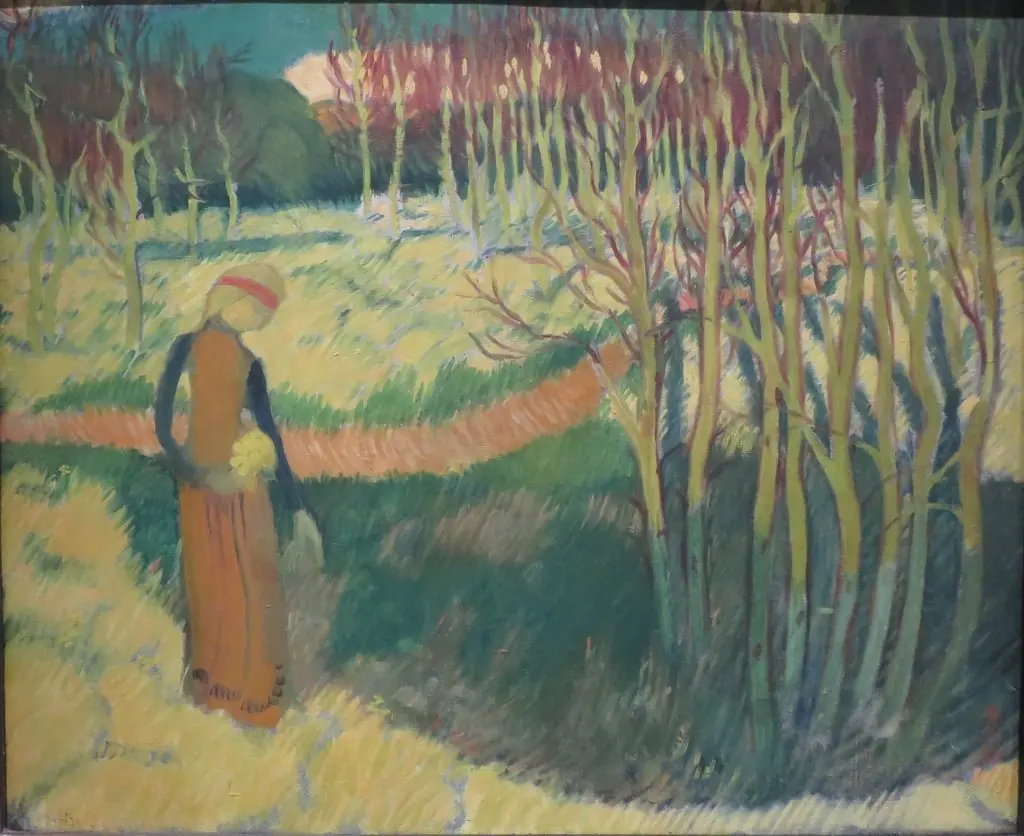
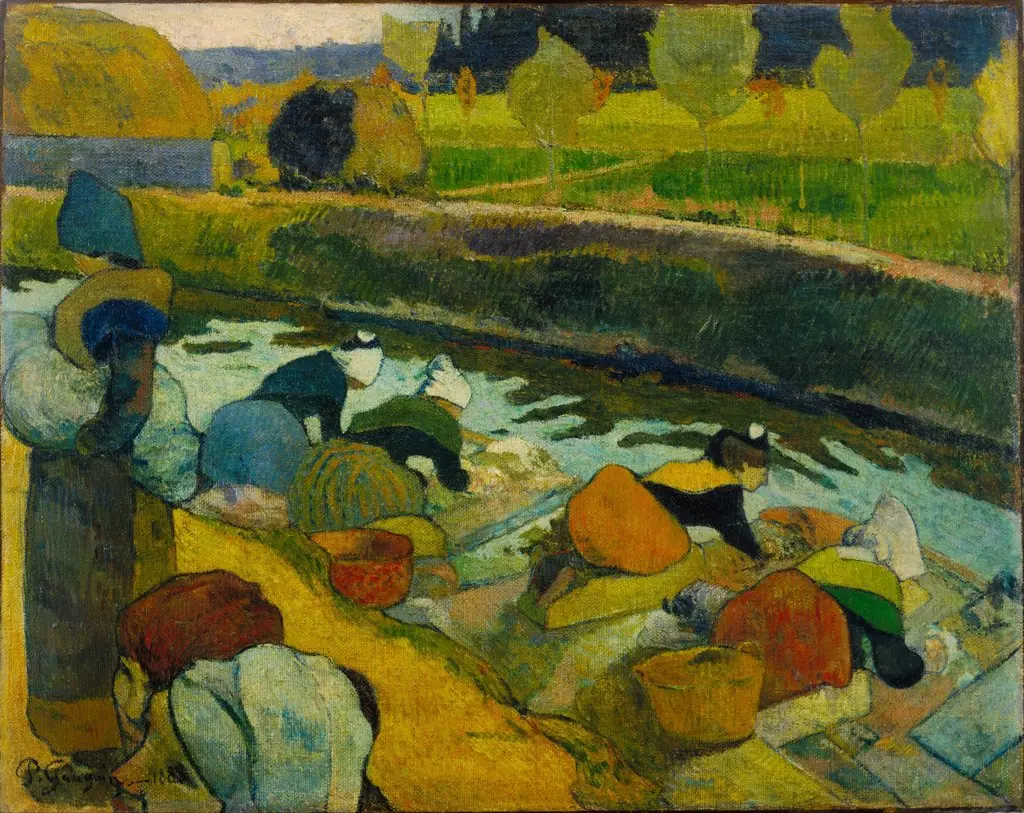
Émile Bernard, a French painter active in the late 19th century, completed the oil work *Wheat Harvest* in 1895. The canvas records a rural labor scene, showing men and women at work in a wheat field under a bright sky. It is presently held by the Hammer Museum in Los Angeles.
Subject & Meaning
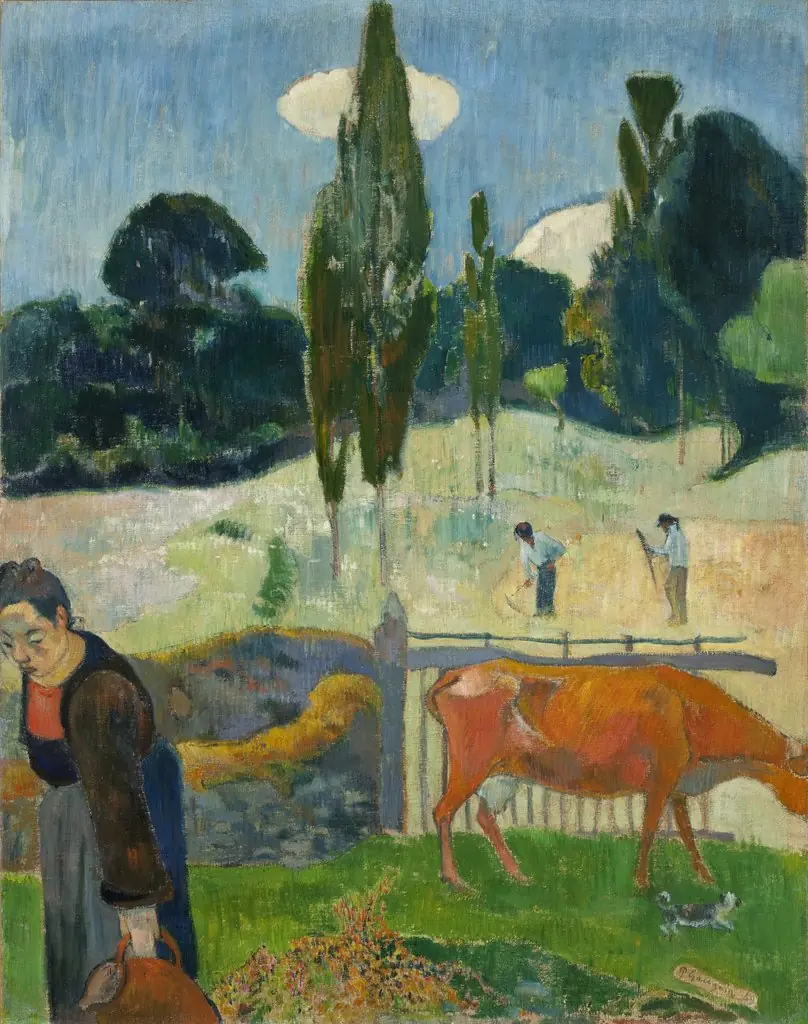
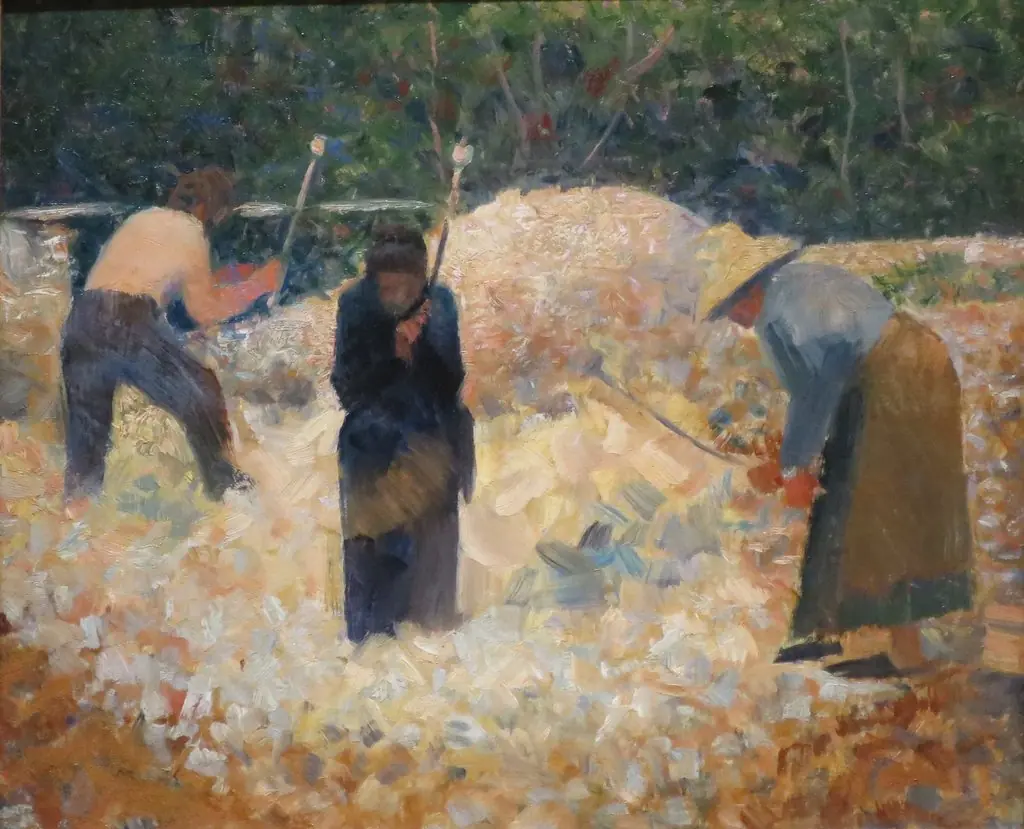
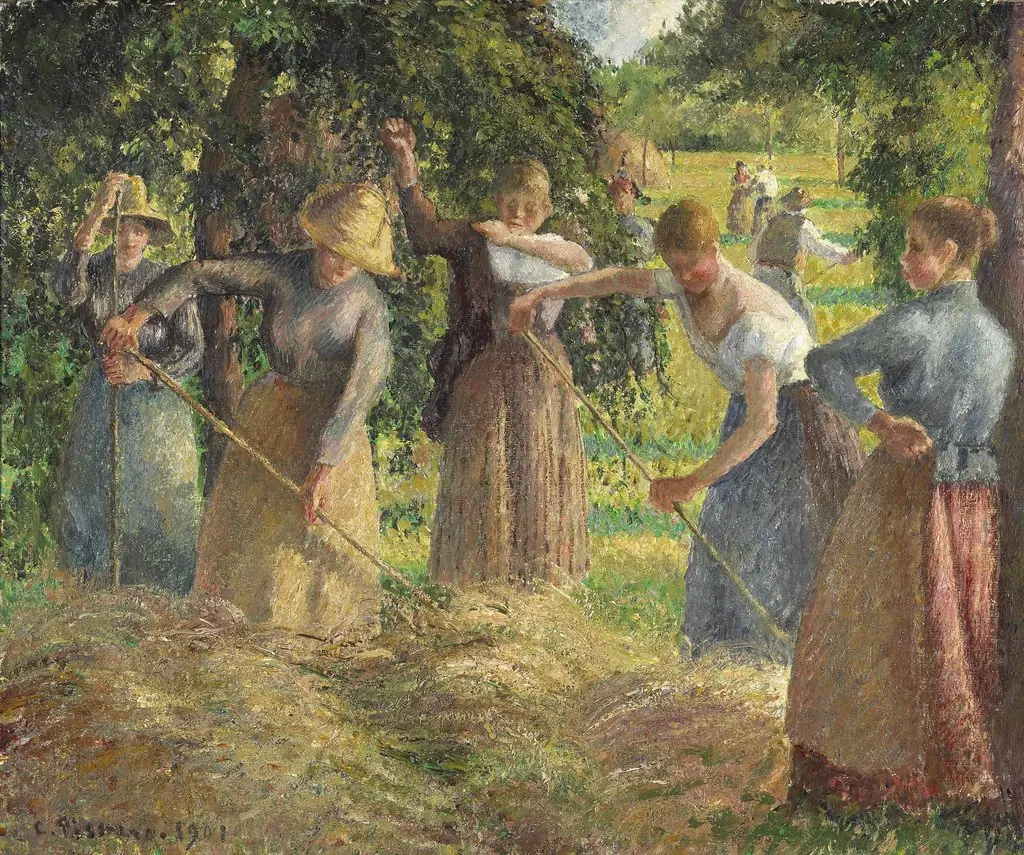
The composition centers on agricultural activity: figures in long skirts and aprons bend to cut stalks, while a lone individual in a wide-brimmed hat watches outward. A modest farmhouse, scattered trees, and a grazing cow complete the landscape, suggesting a harmonious connection between human effort and the countryside.
Technique & Style
Bernard employs a limited palette of greens, yellows and earth tones, applying bold, gestural brushstrokes that convey movement and the rustle of wheat. The flattened forms and strong outlines reflect his involvement with Cloisonnism and Synthetism, emphasizing decorative color over strict naturalism.
History & Provenance
Created during the most productive period of Bernard’s career (1886‑1897), the painting later entered the collection of the Hammer Museum. Bernard’s ties to contemporaries such as Vincent van Gogh and Paul Gauguin situate the work within the broader network of Post‑Impressionist experimentation.
Context
At the time of its execution, French art was moving away from academic realism toward more subjective, color‑driven approaches. Bernard’s *Wheat Harvest* illustrates this shift, merging a realistic rural subject with a stylized, almost symbolic treatment of color and form.
Artist & collection
Artist
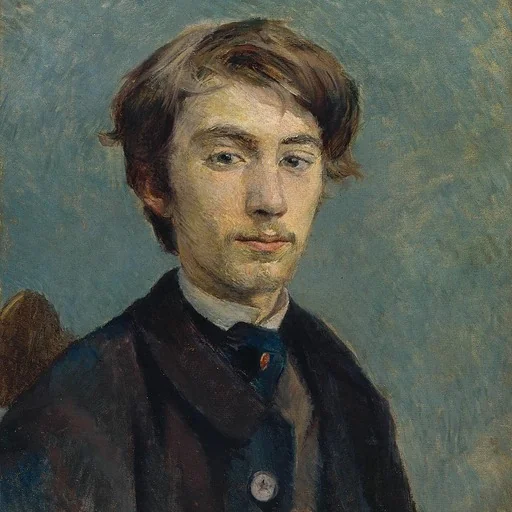
Émile Henri Bernard (French pronunciation: ; 28 April 1868 – 16 April 1941) was a French Post-Impressionist painter and writer, who had artistic friendships with Vincent van Gogh, Paul Gauguin and Eugène Boch, and at a later time, Paul…