Artwork
La Vie de Jeune Homme
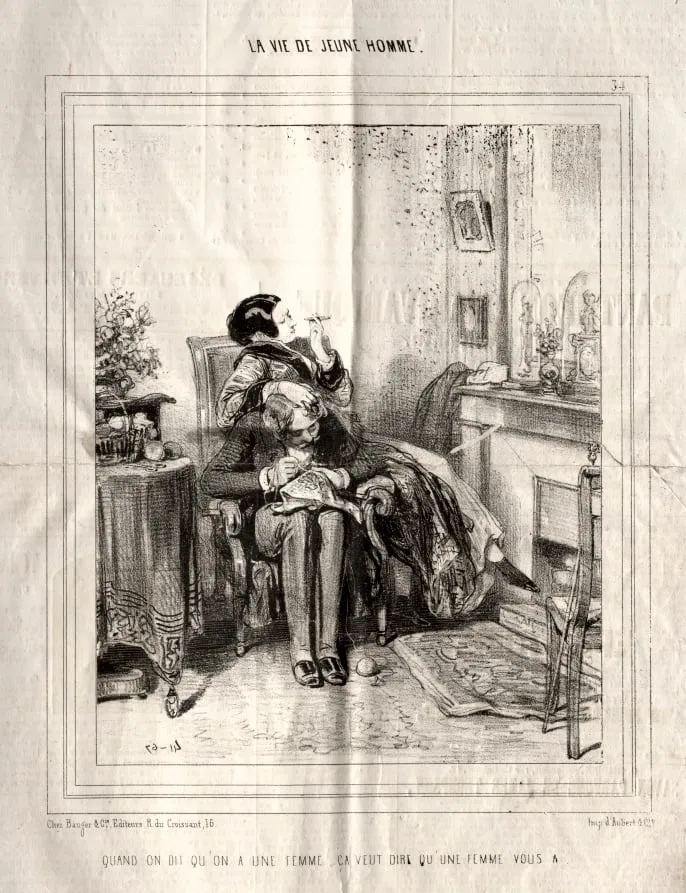
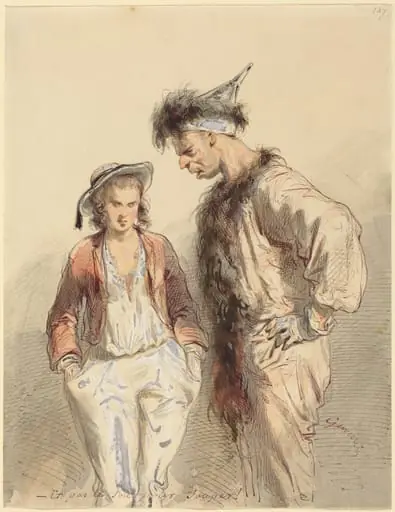
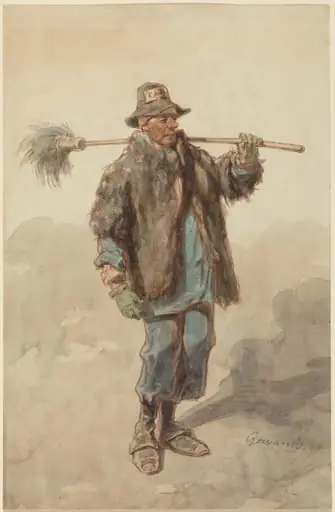
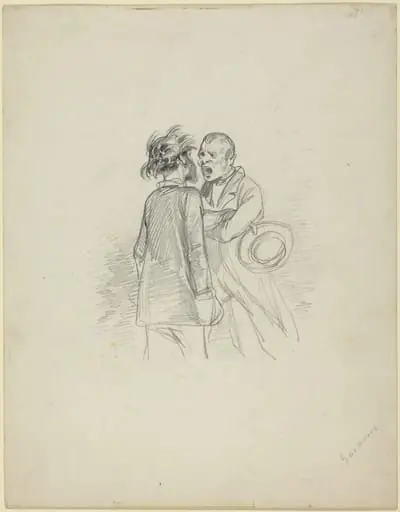
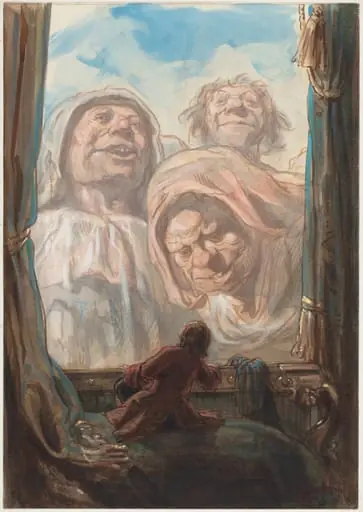
La Vie de Jeune Homme is a print by the Romanticist artist Paul Gavarni. It dates from 1842 and is held in the collection of the Cleveland Museum of Art.
About this work
Overview
La Vie de Jeune Homme is an 1842 print by French artist Paul Gavarni, part of a series capturing domestic life in mid-19th-century Paris.
La Vie de Jeune Homme is an 1842 print by French artist Paul Gavarni, part of a series capturing domestic life in mid-19th-century Paris. It is held in the collection of The Cleveland Museum of Art. The work is rendered in ink and wash, emphasizing tonal contrast and delicate line work to convey mood rather than detail. Its intimate scale and quiet subject reflect Gavarni’s interest in everyday human interactions.
Subject & Meaning
The scene portrays a young man seated in a chair, attended by a woman leaning over him with tender attention. Their posture suggests a private, possibly familial or romantic, moment of care. The absence of overt narrative cues invites interpretation: is she offering comfort, tending to illness, or sharing quiet companionship? The work avoids melodrama, instead presenting emotional nuance through subtle physical proximity and stillness.
Technique & Style
Gavarni employed ink wash with controlled brushwork to model form and suggest texture. Light falls selectively, creating soft shadows that define the figures and furnishings without harsh outlines. The background is minimally detailed, allowing the central interaction to dominate. The technique echoes etching traditions but adapts them for expressive immediacy, prioritizing atmosphere over precision.
History & Provenance
Created during Gavarni’s prolific period illustrating Parisian social life, the print was likely produced for publication in a periodical or album. It entered the Cleveland Museum of Art’s collection in the 20th century, part of a broader acquisition of 19th-century French graphic art. Its provenance prior to museum acquisition remains undocumented in public records.
Context
Gavarni’s work emerged amid a surge of interest in bourgeois domesticity in French visual culture. While contemporaries like Daumier focused on satire, Gavarni often depicted quiet, unguarded moments within homes. This print aligns with a growing trend in printmaking that valued emotional realism over grand historical themes, reflecting changing tastes in urban middle-class audiences.
Legacy
Though less widely known than his satirical illustrations, La Vie de Jeune Homme exemplifies Gavarni’s capacity for lyrical observation. It influenced later artists interested in intimate genre scenes, particularly those working in print media. The work remains a quiet testament to the dignity found in ordinary gestures, contributing to the broader recognition of printmaking as a vehicle for psychological depth.
Artist & collection

Artist
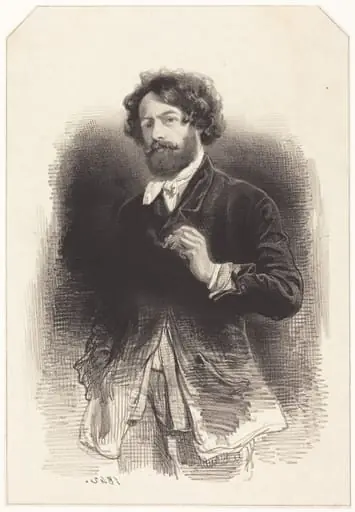
Paul Gavarni was the pen name of Sulpice Guillaume Chevalier (13 January 1804 – 24 November 1866), a French illustrator, born in Paris.

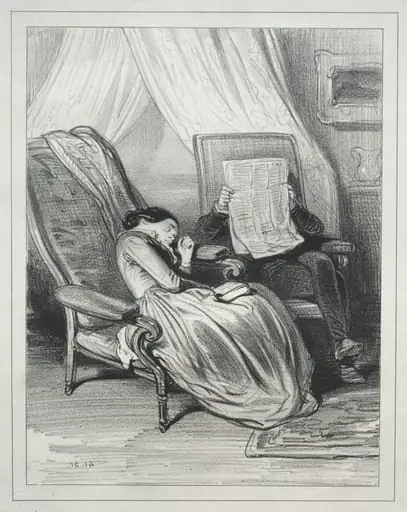 Les Martyrs
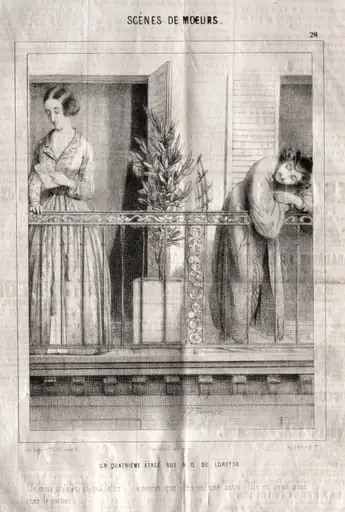 Scènes de moeurs: Un quatrieme étage rue N. D. de Lorette. Je crois qu'elle lit ma lettre...à moins que c'en soit une autre. Elle en avait neuf chez le portier
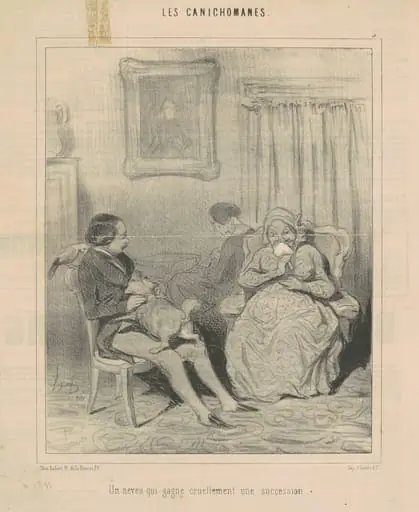 Un neveu qu gagne cruellement une succession
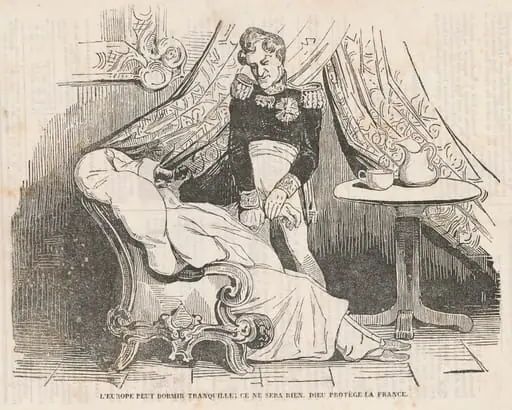 L'europe peut dormir tranquille ...
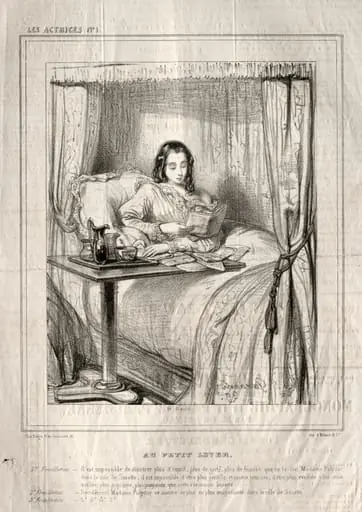 Les Actrices: Au petit lever...
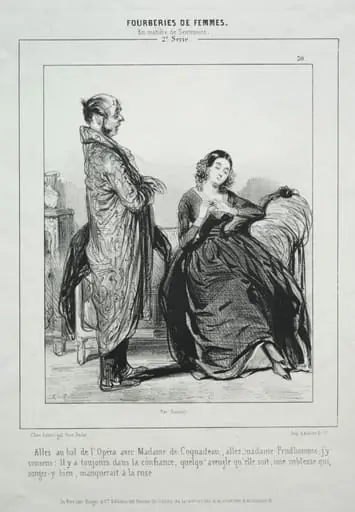 Fourberies de Femmes En Matière de Sentiment
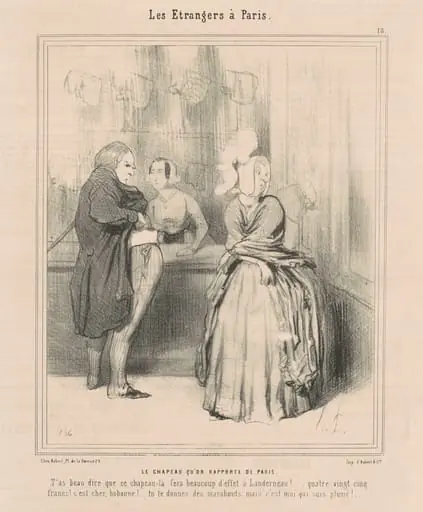 Le chapeau qu'on rapporte de Paris